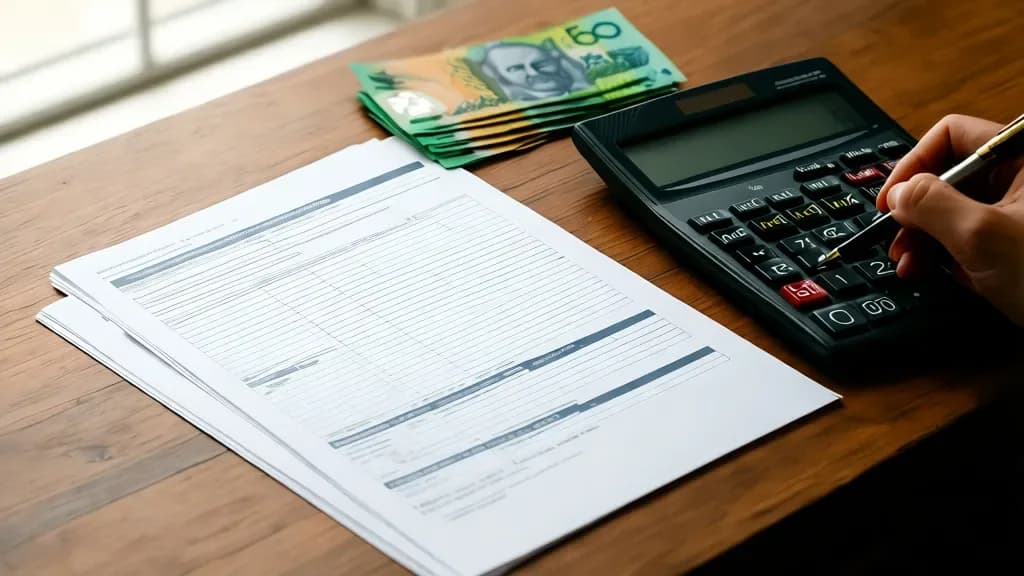
Australian visa fees range from free (eVisitor) to about $50,000 (contributory parent visas). The most common fees in 2026 are: tourist visa (subclass 600) from $250 AUD, student visa (subclass 500) at $2,500, skilled independent visa (subclass 189) at $6,135, and partner visa (subclass 820/801) at $11,710. Fees are paid to the Department of Home Affairs when you apply (some visas add a second instalment before grant), and the charge is not refunded if the visa is refused.
Visitor and Tourist Visa Fees
Planning a trip to Australia? Here's what you'll pay for the visa itself, from the Home Affairs visa pricing table:
| Visa | Subclass | Fee (AUD) |
|---|---|---|
| ETA | 601 | $20 (service charge) |
| eVisitor | 651 | Free |
| Visitor (tourist stream) | 600 | $250 outside Australia; $630 in Australia |
| Visitor (business stream) | 600 | $250 |
| Visitor (sponsored family) | 600 | $250 |
| Visitor (frequent traveller) | 600 | $1,845 |
| Transit visa | 771 | Free |
The eVisitor is genuinely free, making it the cheapest entry point for eligible European passport holders. The ETA's $20 is technically a "service charge" rather than a visa fee, but the distinction won't matter to your wallet.
If you're visiting regularly, the frequent traveller stream at $1,845 grants a 10-year visa with stays of up to 3 months per visit. For business travellers making multiple trips, it can work out cheaper than applying repeatedly.
Student Visa Fees
The student visa (subclass 500) base application charge is $2,500 AUD for the primary applicant. But the total cost of studying in Australia goes well beyond the visa fee.
Additional applicant charges:
- Secondary applicant (18 or over): $1,530
- Secondary applicant (under 18): $500
Students in the ELICOS (English course) or non-award sector pay a lower base charge of $2,050.
Associated costs you should budget for:
- Overseas Student Health Cover (OSHC): $500-$700 per year
- Skills assessment (if applicable): $300-$1,000
- English language test (IELTS/PTE): $300-$400
- Police clearances: $40-$100 per country
- Medical examination: $300-$500
- Biometrics (some nationalities): $80
So while the visa fee is $2,500, the realistic total cost for a student visa application sits between $3,600 and $5,400 when you factor in all the mandatory supporting requirements.
Skilled Migration Visa Fees
Skilled visas represent a significant financial investment. These fees increased substantially in recent years, particularly the subclass 485, which has roughly tripled since 2024.
| Visa | Subclass | Primary Applicant | Additional (18+) | Additional (under 18) |
|---|---|---|---|---|
| Skilled Independent | 189 | $6,135 | $3,070 | $1,540 |
| Skilled Nominated | 190 | $6,140 | $3,070 | $1,535 |
| Skilled Work Regional | 491 | $6,140 | $3,070 | $1,535 |
| Skilled Regional (PR) | 191 | $630 | $315 | $160 |
| Temporary Graduate | 485 | $5,750 | $2,875 | $1,450 |
Charges checked against the Home Affairs pricing table on 28 October 2026.
Hidden costs of skilled migration:
- Skills assessment: $500-$3,500 (varies by assessing authority)
- English language test: $300-$400
- Points test advisory (state nomination): $300-$500 in some states
- Police clearances from every country you've lived in: $40-$100 each
- Medical examination: $300-$500
- Migration agent fees (optional but recommended): $3,000-$8,000
For a family of four applying for a subclass 189, budget the $6,135 primary charge plus $3,070 for your partner and $1,540 for each child under 18. Any applicant aged 18 or over who is assessed as not having functional English also pays a second instalment of $4,885 before the visa is granted. Add skills assessments, medicals, police checks, and agent fees, and you could easily spend $20,000-$25,000 on the entire process.
Employer-Sponsored Visa Fees
Employer sponsorship involves fees paid by both the employer and the visa applicant.
| Visa | Subclass | Applicant Fee | Employer Nomination Fee |
|---|---|---|---|
| Skills in Demand (temp) | 482 | $4,015 | $540 |
| Employer Nomination (PR) | 186 | $6,140 | $540 |
| Skilled Employer Regional | 494 | $6,140 | $540 |
The Skills in Demand visa charge is the same $4,015 for the Core Skills, Specialist Skills and Labour Agreement streams.
Full dataset of every published charge: Australian visa statistics
See every subclass, including family-member charges, in our complete Australian visa fee schedule.
Many employers cover some or all of these fees as part of their sponsorship arrangement, but they're not legally required to. Clarify this before accepting a sponsored position.
Partner and Family Visa Fees
Partner visas are the most expensive standard visa category, and the fees have climbed sharply over the past decade.
| Visa | Subclass | Primary Applicant | Additional (18+) | Additional (under 18) |
|---|---|---|---|---|
| Partner (onshore) | 820/801 | $11,710 | $5,860 | $2,935 |
| Partner (offshore) | 309/100 | $11,710 | $5,860 | $2,935 |
| Prospective Marriage | 300 | $11,710 | $5,860 | $2,935 |
| Parent (contributory) | 143 | $49,900 (2 instalments) | $2,125 + second instalment | $1,065 + second instalment |
| Parent (non-contributory) | 103 | $8,665 (2 instalments) | $3,300 + $2,065 | $1,655 + $2,065 |
| Child | 101/802 | $4,040 | $2,020 | $1,015 |
Charges checked against the Home Affairs pricing table on 28 October 2026.
That $49,900 figure for contributory parent visas isn't a typo. Home Affairs lists it as "From AUD49,900 over 2 instalments for a single applicant": the first at application and the second (the larger portion) when the visa is ready to be granted. A second parent applying with you adds their own charges.
Fees You Might Not Expect

Second Visa Application Charge (VAC2): Some visas charge a second instalment before the visa is granted. For example, an Employer Nomination Scheme (186) applicant aged 18 or over who does not have functional English pays a second instalment of $9,800 ($4,890 for secondary applicants).
Subsequent temporary application charge: Some temporary visa applicants who apply for another temporary visa while in Australia face an additional charge of $700.
Biometrics fee: Applicants from certain countries must provide fingerprints and a photograph at a collection centre. Collection centres charge a service fee for biometrics collection.
Nomination and sponsorship fees: Employers pay separate nomination fees ($540) and may need to pay a Skilling Australians Fund levy ($1,200-$1,800 per year of the visa).
Are Visa Fees Refundable?
No. Australian visa application charges are non-refundable regardless of the outcome. If your visa is refused, you don't get your money back. If you withdraw your application, you don't get your money back. If you make a mistake and lodge the wrong visa, you don't get your money back.
The only narrow exception is if the Department made an error in processing your payment (like charging you twice), in which case you can request a refund of the overcharge.
This non-refundable policy makes it essential to ensure you're eligible before applying. A free visa check can help you avoid wasting thousands of dollars on an application that was never going to succeed.
Fee Waivers and Concessions
Fee waivers exist but are extremely limited:
- Humanitarian and protection visas: Application fees are generally waived
- Certain family violence provisions: Partner visa holders who have experienced family violence may have fees waived
- Norfolk Island residents: Some concessions apply for certain visa types
There are no fee waivers based on financial hardship for standard migration visa applications.
FAQ
Do visa fees increase every year? Yes. The Department typically adjusts visa fees on 1 July each year in line with CPI increases. Occasionally, specific subclasses see above-CPI increases through legislative changes, as happened with the subclass 485 in 2024.
Can I pay visa fees in instalments? Home Affairs charges every visa in two instalments, but for most visas the second one is nil. Visas with a real second instalment include the parent visas (143, 103, 804, 864) and some employer-sponsored visas for applicants without functional English. The first instalment is paid in full when you apply.
Are migration agent fees included in the visa cost? No. Agent fees are separate and vary widely. A registered migration agent can charge anywhere from $1,500 for a simple tourist visa to $15,000+ for complex skilled or partner visa applications.
What currency are visa fees charged in? All fees are in Australian dollars (AUD). If you're paying from overseas, your bank's exchange rate and any international transaction fees will apply on top.
How much does it cost to add my partner or children to my visa application? Each family member pays their own charge on top of the main applicant's. For a partner visa (820/801 or 309/100) it is $5,860 for each person aged 18 or over and $2,935 for each child under 18. For a Skilled Independent (189) visa it is $3,070 and $1,540, and for a Student visa it is $1,530 and $500 (checked 28 October 2026). Use the Home Affairs visa pricing estimator to confirm the total before you pay.