Australian Visa Health Examination Guide
Most Australian visa applicants need a health examination before their visa can be granted. The process is managed through Bupa Medical Visa Services (formerly known as the Health Services Unit), and examinations must be conducted at approved panel clinics by panel physicians. You can't just visit your regular doctor — the results need to come from an approved clinic and be transmitted electronically to the Department of Home Affairs. This guide covers who needs a health exam, what's tested, how to book, and what to expect.
Quick Facts: Visa Health Examinations
| Detail | Information |
|---|---|
| Managed By | Bupa Medical Visa Services |
| Where | Approved panel clinics worldwide |
| Cost | Varies by country and tests required (typically AUD $300-$500) |
| HAP ID | Required — generated through ImmiAccount |
| Results Sent To | Department of Home Affairs (electronically) |
| Validity | 12 months from examination date |
| Booking | Through Bupa panel clinic directly |
Current as of September 2026
- Health examinations are required for student, skilled, employer-sponsored, partner and parent visas and any stay over 12 months; short visits from low-risk countries usually need none.
- You must attend an approved panel clinic with a HAP ID generated in ImmiAccount; results from your own doctor are not accepted.
- Results go electronically to the Department of Home Affairs, usually within 3 to 5 business days, and stay valid for 12 months.
- Clinic fees are paid to the clinic and are separate from the visa application charge.
Figures on this page were reviewed on 8 September 2026. Fees are Department of Home Affairs visa application charges in AUD; check the current charge on the Department of Home Affairs website before you pay.
Who Needs a Health Examination?
Always Required
- Student visa (subclass 500) applicants
- Skilled migration visa (189, 190, 491) applicants
- Employer-sponsored visa (482, 494, 186) applicants
- Partner visa (820/801, 309/100) applicants
- Parent visa applicants
- Any visa with a stay longer than 12 months
Sometimes Required
- Visitor visa (600) applicants staying more than 3-6 months
- Applicants from countries with high TB prevalence (even for short stays)
- Applicants who will work in healthcare, childcare, or aged care
- Applicants who will study a healthcare-related course
Generally Not Required
- ETA (601) applicants from low-risk countries for short visits
- eVisitor (651) applicants for short visits
- Visitor visa applicants for stays under 3 months from low-risk countries
The HAP ID: Your Health Examination Identifier
The Health Assessment Protocol (HAP) ID is a unique reference number that links your health examination to your visa application. You cannot attend a panel clinic without one.
How to Get Your HAP ID
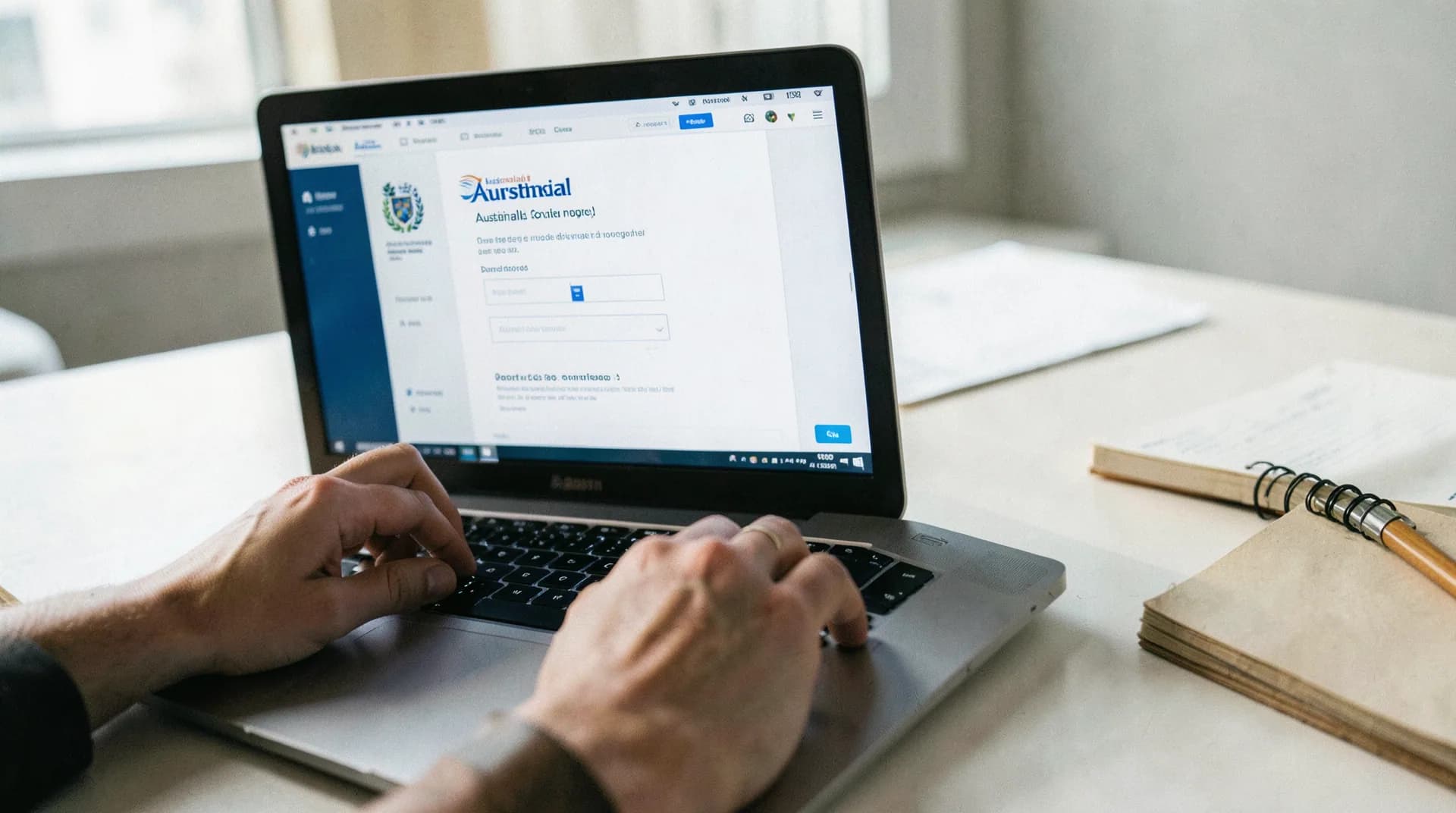
- Log into ImmiAccount
- Go to your visa application (or start a new one)
- Navigate to the health section
- The system generates your HAP ID based on your details and visa type
- Print or save the HAP ID letter — you'll need it at the panel clinic
In some cases, the Department will request a health examination after you've submitted your application. The request will include your HAP ID and instructions on which examinations are required.
Organising Health Exams Before Applying
You can arrange your health examination before lodging your visa application using the "My Health Declarations" feature in ImmiAccount. This is useful if you want your medical results ready when you submit your application, potentially speeding up processing.
- Log into ImmiAccount
- Select "My Health Declarations"
- Complete the health declaration form
- Receive your HAP ID
- Attend the panel clinic
- When you later lodge your visa application, the results will already be in the system
What's Tested
The specific examinations depend on your visa type, how long you plan to stay, and your country of origin. Here's what each examination involves.
Standard Medical Examination (Form 26)
Required for most visa types. Includes:
- General physical examination: Heart, lungs, blood pressure, BMI, eyesight
- Medical history review: Pre-existing conditions, medications, surgeries
- Mental health assessment: Basic screening for mental health conditions
- Urinalysis: Testing for diabetes, kidney conditions, and other markers
The examining physician conducts a thorough physical examination and reviews your medical history. They're looking for conditions that might:
- Be a public health risk in Australia
- Require healthcare that would impose significant costs on the Australian community
- Limit your ability to work or study as intended
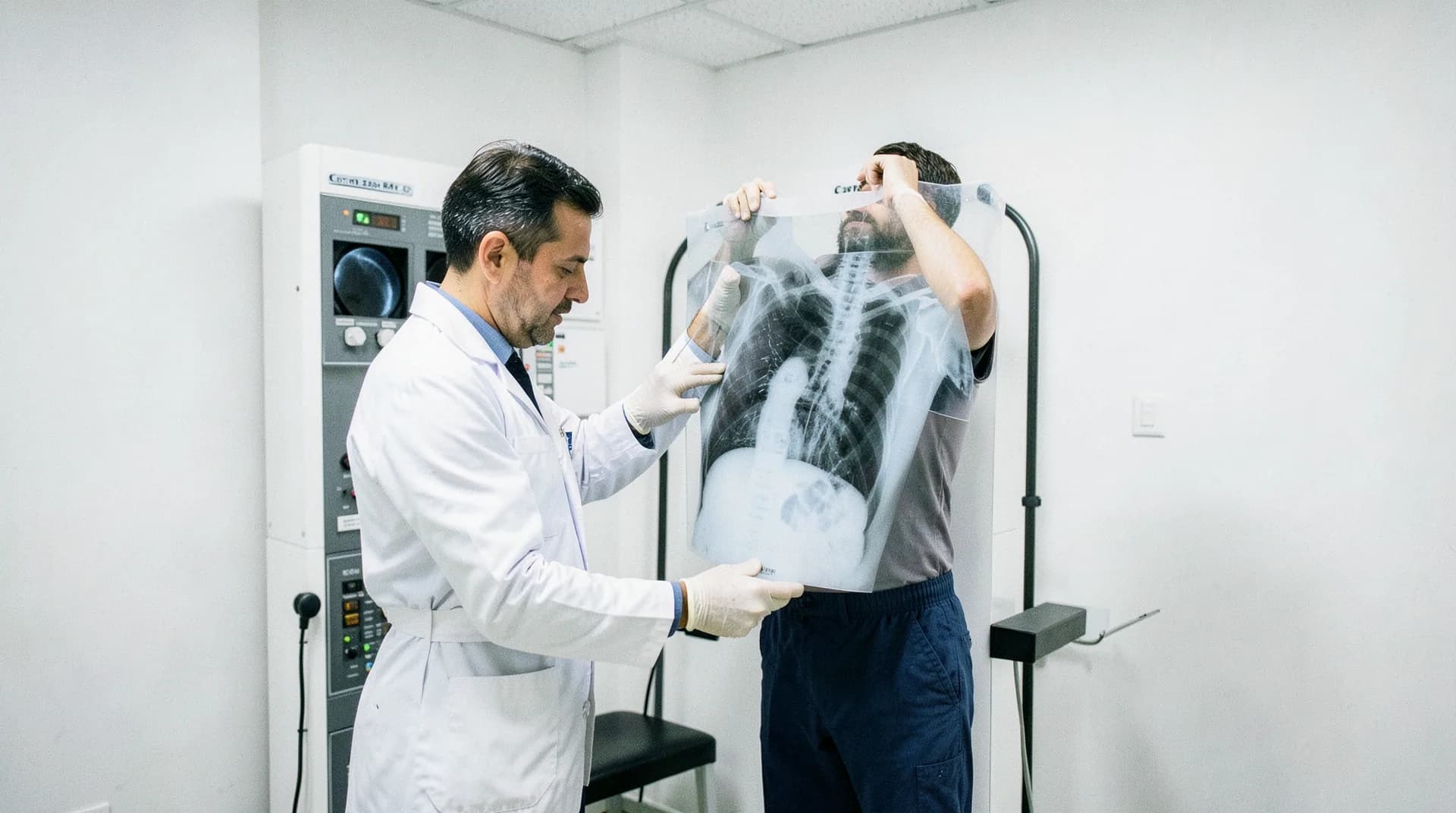
Chest X-Ray (Form 160)
Required for:
- All applicants from countries with high TB prevalence
- Applicants aged 11 and over who plan to stay more than 6 months
- Anyone who has spent three or more cumulative months in a high-TB country
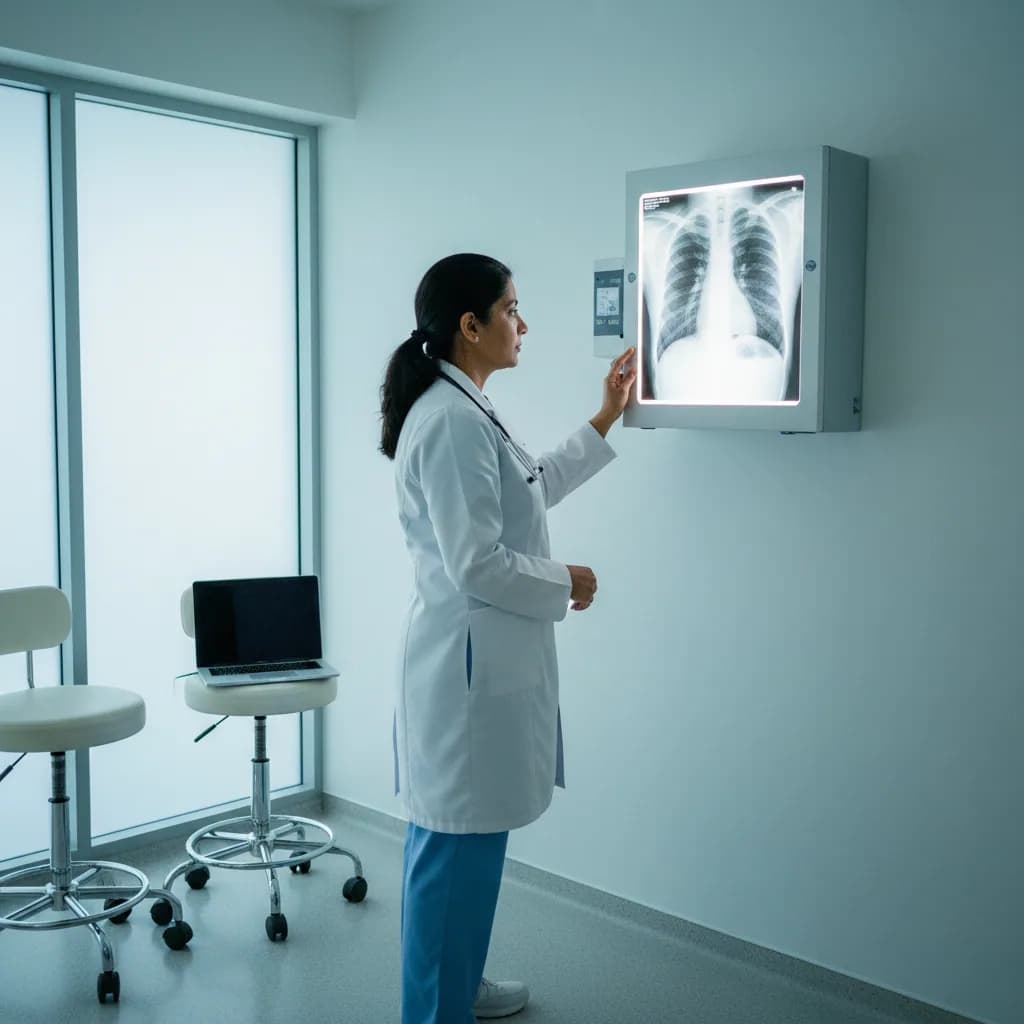
The chest X-ray screens for tuberculosis and other lung conditions. It's a standard PA (posteroanterior) X-ray of the chest.
High-TB countries include most of South and Southeast Asia (India, Nepal, Pakistan, Bangladesh, Philippines, Indonesia, Vietnam), most of Africa, and parts of Eastern Europe and the Pacific. The full list is maintained by the Department of Home Affairs.
Blood Tests
Required for applicants aged 15 and over who plan to stay more than 12 months:
- HIV: Mandatory testing
- Hepatitis B: Surface antigen testing
- Hepatitis C: Antibody testing
- Syphilis: Serology testing
- Full blood count: In some cases
Additional blood tests may be required based on the initial examination findings or your medical history.
Additional Examinations
In certain circumstances, the panel physician or the Department may request:
- Chest CT scan: If the X-ray shows abnormalities
- Sputum testing: If TB is suspected
- Specialist consultations: Cardiologist, psychiatrist, etc.
- Pregnancy test: If pregnancy is suspected and may affect the health assessment
- Hearing and vision tests: For certain occupation-specific requirements
Finding a Panel Clinic
Panel clinics are approved by the Australian government and operate in most countries worldwide. Only examinations conducted at approved panel clinics are accepted.
How to Find One
- Visit the Department of Home Affairs website
- Navigate to the health examination section
- Use the panel physician search tool
- Search by country and city
- Contact the clinic directly to book
Major Panel Clinic Locations
| Country | Cities |
|---|---|
| India | Delhi, Mumbai, Chennai, Bangalore, Hyderabad, Kolkata, Ahmedabad |
| China | Beijing, Shanghai, Guangzhou, Chengdu, and 10+ others |
| Philippines | Manila (multiple), Cebu |
| UK | London, Birmingham, Manchester, Edinburgh |
| USA | New York, Los Angeles, San Francisco, Chicago, Houston |
| Nepal | Kathmandu |
| Pakistan | Islamabad, Karachi, Lahore |
| Australia | Sydney, Melbourne, Brisbane, Perth, Adelaide, and regional centres |
Booking Your Appointment
Contact the panel clinic directly to book. You'll need:
- Your HAP ID letter
- Your passport
- Any current glasses or contact lenses
- A list of current medications
- Any relevant medical records (if you have a pre-existing condition)
- Previous chest X-rays (if you've had TB treatment or abnormal results before)
Most clinics can accommodate appointments within 1-2 weeks, though popular clinics in high-demand cities may have longer wait times.
What Happens at the Appointment
Duration
Expect to spend 1-3 hours at the clinic, depending on which examinations are required. If you need a chest X-ray and blood tests in addition to the general medical, allow for the longer end of this range.
The Process
- Registration: Present your HAP ID, passport, and complete any clinic paperwork
- Chest X-ray: If required, usually done first
- Blood draw: If required
- Urine sample: Usually collected at the clinic
- Physical examination: By the panel physician
- Medical history discussion: The physician reviews your health history and current medications
- Completion: The physician uploads results to the Department's system
What to Bring
- HAP ID letter (printed)
- Valid passport
- Glasses or contact lenses
- List of current medications (names, dosages)
- Previous medical records if relevant
- Payment (the clinic will advise on cost and accepted methods)
Cost
Health examination costs vary by country and by which tests are required. Typical ranges:
| Country | Approximate Cost |
|---|---|
| India | INR 5,000-10,000 |
| Philippines | PHP 8,000-15,000 |
| UK | GBP 200-400 |
| USA | USD 300-600 |
| Australia | AUD 300-500 |
| Nepal | NPR 8,000-15,000 |
These costs are paid directly to the panel clinic — they're not included in your visa application fee.
Results and Outcomes
How Results Are Transmitted
Panel clinics upload examination results electronically to the Department of Home Affairs' eMedical system. You don't need to collect results or upload them yourself. The transmission usually happens within 3-5 business days of your appointment, though some clinics are faster.
Possible Outcomes
Clear: No health concerns identified. Your health requirement is met, and processing of your visa continues.
Further investigation needed: The panel physician or the Department requests additional tests (specialist consultation, CT scan, etc.). This delays processing but doesn't necessarily mean a problem.
Health condition identified: A condition is found that may affect your visa. The Department assesses whether the condition:
- Poses a public health risk
- Would impose significant healthcare costs on Australia
- Would limit access to healthcare for Australian citizens and residents
Health waiver: If a condition would normally result in refusal, some visa types allow you to request a health waiver. This is assessed case-by-case, considering factors like:
- The anticipated cost of your healthcare
- Your other contributions to Australia
- Whether you have health insurance
- Compassionate circumstances
Conditions That May Affect Your Visa
- Active tuberculosis (treatable — but treatment must be completed before the visa can be granted)
- HIV (assessed on a case-by-case basis, considering treatment costs)
- Hepatitis B and C (assessed on cost and public health risk)
- Conditions requiring expensive ongoing treatment
- Conditions requiring organ transplantation or dialysis
- Significant mental health conditions requiring ongoing treatment
Having a health condition doesn't automatically mean refusal. The Department considers each case individually.
Validity of Health Examinations
Health examination results are valid for 12 months from the date of the examination. If your visa isn't decided within 12 months, you may need to undergo a new examination.
For visa types with long processing times (partner visas, some skilled visas), timing your health exam is important. Don't do it too early — if it expires before your visa is decided, you'll need to pay for and attend another examination.
Frequently Asked Questions
Can I use my own doctor for the health examination?
No. The examination must be conducted at an approved panel clinic by a panel physician. Results from your regular doctor will not be accepted.
How long do health examination results take to reach the Department?
Typically 3-5 business days after your appointment. Some clinics are faster. You can check the status in ImmiAccount — once results are received, the health section of your application will update.
What if I fail the health examination?
There's no pass or fail in the traditional sense. If a health condition is identified, the Department assesses whether it meets the health requirement criteria. If it doesn't, you may be asked to provide additional information, undergo treatment, or apply for a health waiver (if available for your visa type).
Do children need health examinations?
Yes, in most cases. Children included in a visa application need their own health examinations. The specific tests depend on their age — younger children generally need a physical examination only, while children 11+ may need a chest X-ray, and those 15+ may need blood tests.
Can I do my health exam before applying for the visa?
Yes. Use the "My Health Declarations" feature in ImmiAccount to generate a HAP ID before lodging your application. This can speed up processing because results are already in the system when you apply.
What happens if my health exam expires before my visa is decided?
You'll need to undergo a new examination. The Department will contact you with a new HAP ID and request that you attend a panel clinic again. This is common with partner visas and some skilled visas that have long processing times.