How Long Do Australian Visa Processing Times Take?
Australian visa processing times vary dramatically depending on the visa subclass. Tourist visas (subclass 600) typically take 1 to 4 weeks, student visas (subclass 500) take 4 to 12 weeks, skilled worker visas take 6 to 18 months, and partner visas can take 15 to 28 months. These timeframes represent the 75th to 90th percentile of applications processed by the Department of Home Affairs.
Tourist and Visitor Visa Processing Times
If you're planning a holiday or visiting family in Australia, you're looking at the shortest wait times in the system.
ETA (subclass 601): Usually processed within minutes to 24 hours. This is the fastest option, available to passport holders from countries like the US, Canada, Japan, and South Korea. You apply through the Australian ETA app, and most approvals come through almost instantly.
eVisitor (subclass 651): Typically processed within 1 to 5 business days. Available to passport holders from European countries and a handful of others. Apply online through ImmiAccount.
Visitor visa (subclass 600): This is where things slow down. Standard tourist stream applications take 1 to 4 weeks, but the business visitor stream and sponsored family stream can stretch to 2 to 3 months. If you're applying from a high-risk country or your application requires additional character or health checks, expect the longer end of that range.
The Department publishes processing times as percentile ranges. When they say "75% of applications processed in 29 days," that means one in four applicants waited longer than 29 days.
Current as of September 2026
- The $20 ETA (601) is usually decided within minutes to 24 hours, the free eVisitor (651) within days, and the $250 subclass 600 tourist stream within 1 to 4 weeks.
- Skilled visas (189, 190, 491) take 6 to 18 months and the onshore partner visa (820) 15 to 28 months.
- All figures come from Home Affairs global processing times, published as 75th and 90th percentiles and updated monthly.
- A complete application with health and police checks done up front is the biggest factor you control.
Figures on this page were reviewed on 8 September 2026. Fees are Department of Home Affairs visa application charges in AUD; check the current charge on the Department of Home Affairs website before you pay.
Student Visa Processing Times
The student visa (subclass 500) has seen significant processing time fluctuations over the past few years.
As of early 2026, most student visa applications are processed within 4 to 12 weeks. However, several factors can push your application well beyond that window:
- Genuine Student (GS) assessment: Since the GS requirement replaced the old GTE test, officers spend more time scrutinising your study intentions. If your application raises questions, it gets flagged for manual review.
- Health examinations: If you haven't completed your medical before applying, the clock doesn't really start until the Department has those results.
- National security checks: Applicants from certain countries face additional vetting that can add weeks or months.
- Incomplete applications: Missing documents are the single biggest cause of avoidable delays.
Student visa processing also follows seasonal patterns. Applications lodged in October through January (ahead of Semester 1) face heavier volumes and longer waits. Mid-year intake applications submitted around April tend to move faster.
Skilled and Work Visa Processing Times
This is where patience becomes a genuine virtue. Skilled migration applications involve the most complex assessments, and the processing times reflect that.
Subclass 189 (Skilled Independent): 6 to 12 months for most applicants, though some straightforward cases clear in 4 to 5 months. Complex cases with employment verification or qualification assessment issues can stretch to 18 months.
Subclass 190 (Skilled Nominated): Similar to the 189, typically 6 to 12 months. State nomination adds a preliminary step, but the overall processing time is comparable.
Subclass 491 (Skilled Work Regional): 6 to 14 months on average. Regional visa applications can sometimes move faster because the Department prioritises regional workforce needs.
Subclass 482 (now Skills in Demand): The employer-sponsored temporary work visa has seen improvements since the SID reforms. Processing times sit at 1 to 4 months for most applications, though some labour market testing requirements and nomination processing can add time.
Subclass 186 (Employer Nomination Scheme): The Direct Entry stream takes 6 to 12 months. The Temporary Residence Transition stream, where you've already worked for your employer on a 482, typically processes in 6 to 9 months.
Partner and Family Visa Processing Times
Partner visas consistently have the longest processing times in the Australian immigration system, and they're not getting shorter.
Subclass 820/801 (onshore partner): The temporary (820) stage takes 15 to 28 months. After two years from the date of application, you become eligible for the permanent (801) stage, which adds another 6 to 12 months of processing.
Subclass 309/100 (offshore partner): Similar timeframes. The 309 temporary stage takes 15 to 27 months, with the 100 permanent stage following after the two-year relationship period.
Parent visas (subclass 143): The contributory parent visa queue stretches to 5 to 7 years. The non-contributory parent visa (subclass 103) has an estimated processing time of 29 years or longer, making it effectively a generational wait.
Child visas (subclass 101/802): Relatively faster at 8 to 14 months, though this varies significantly.
What Affects Your Processing Time?
Beyond the visa subclass, several factors influence how quickly your application moves through the system:
-
Completeness of your application. Submit every required document upfront. Applications that trigger information requests go to the back of the queue each time the Department has to contact you.
-
Health and character checks. Complete your medical examination and police clearances before or immediately after lodging. These are the most common bottlenecks.
-
Country of passport. Some nationalities face additional security assessments that are entirely outside the Department's control.
-
Time of year. Application volumes spike around key intake dates, creating seasonal backlogs.
-
Complexity of your case. Multiple previous visa refusals, gaps in employment history, or complicated relationship evidence all add processing time.
How to Track Your Application
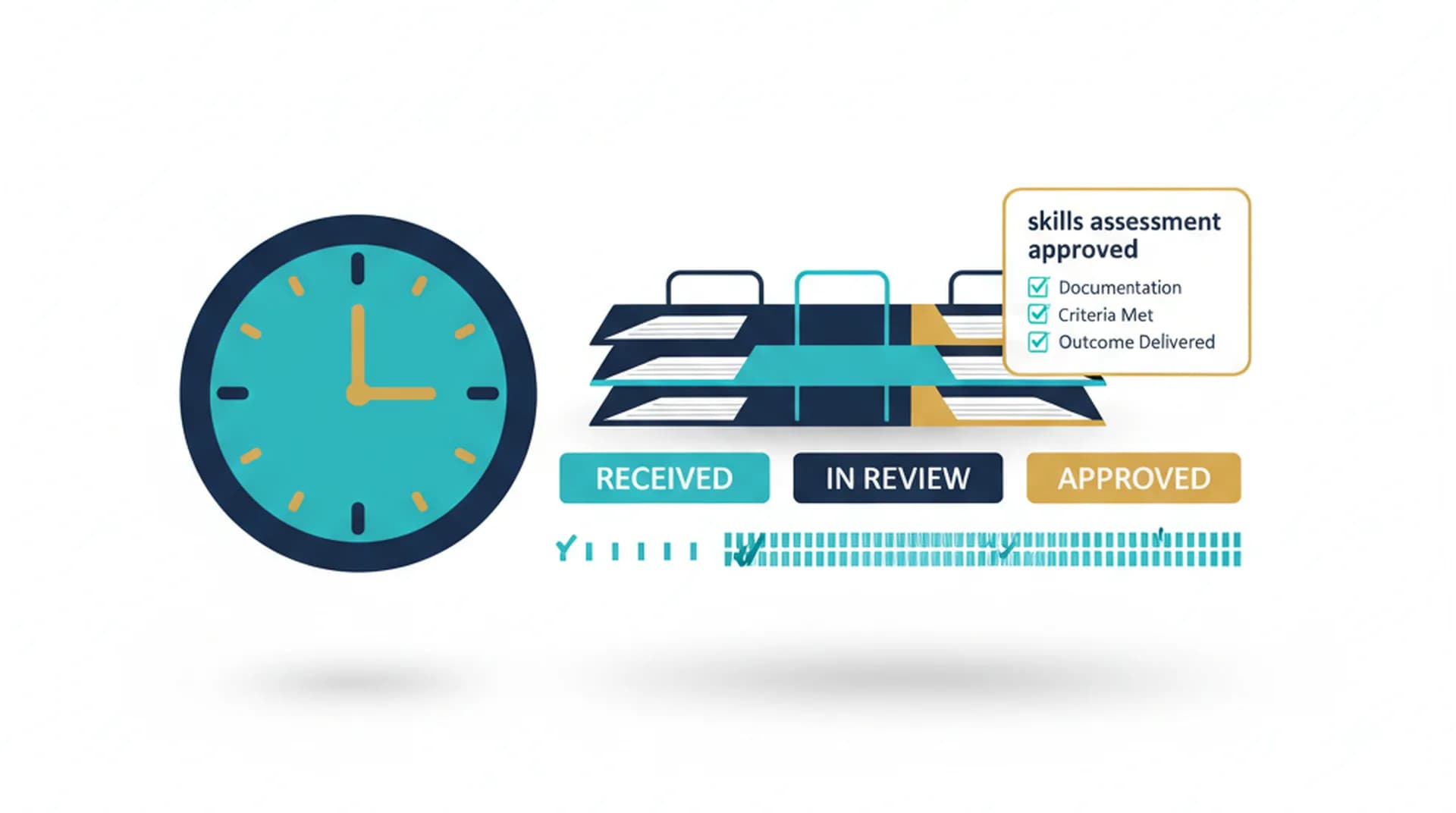
You can monitor your application status through ImmiAccount, the Department's online portal. The status will show as "Received," "Initial Assessment," "Further Assessment," or "Finalised."
For a more detailed check, use the VEVO system to verify your current visa entitlements while you wait.
The Department also publishes global processing times on their website, updated monthly. These figures show the time taken to process 75% and 90% of applications for each visa subclass.
FAQ
Can I expedite my Australian visa application? There's no official fast-track option for most visa subclasses. However, the ETA and eVisitor are inherently quick. For other visas, submitting a complete application with all supporting documents is the best way to avoid delays.
Do processing times include weekends and public holidays? Processing times are counted in calendar days, not business days. The Department operates on business days, but the published timeframes account for this.
What happens if my visa isn't processed before my travel date? For visitor visas, the Department may prioritise your application if you provide evidence of confirmed travel bookings. For other visa types, there's generally no mechanism to speed things up based on travel plans.
Has processing gotten faster or slower in 2026? The government introduced legally binding processing time targets in early 2026. Skilled visa processing has improved compared to the 2023-2024 backlog period, but partner and parent visas remain stubbornly slow.