Second Installment Visa Application Charge: Which Visas, When You Pay, How Much
Updated: 18 May 2026
The Second Installment Visa Application Charge: which visas, when you pay, how much in 2026. The second instalment VAC is a charge payable BEFORE a visa is granted, not at lodgement, and most visa subclasses don't have one at all. The big exceptions are partner visas (for applicants who can't prove functional English) and contributory parent visas, where the second instalment can be tens of thousands of dollars. For a full breakdown of every Australian visa fee, see Australian Visa Fees: Complete Schedule 2026.
What the second instalment actually is
Australian visa charges are legislated in two parts. The first instalment is paid at lodgement through ImmiAccount. The second instalment, where one applies, is paid after the Department of Home Affairs has assessed eligibility and is ready to grant the visa.
For most visa subclasses, the second instalment is nil. That includes Visitor 600, Student 500, Working Holiday 417/462, Skilled 189/190/491, employer-sponsored 482/186/494, and Temporary Graduate 485.
For a small set of subclasses, the second instalment is a substantial charge that must be paid BEFORE grant, after the Department has finished assessing the case. If it isn't paid within the window, the visa is not granted and the application can be refused on that basis alone.
Which visas have a second instalment in 2026
| Visa subclass | Second instalment trigger | Amount (main / secondary, AUD) |
|---|---|---|
| 820/801 Partner (onshore) | Applicant 18+ without functional English | $9,800 / $4,890 |
| 309/100 Partner (offshore) | Applicant 18+ without functional English | $9,800 / $4,890 |
| 300 Prospective Marriage | Applicant 18+ without functional English | $4,890 |
| 143 Contributory Parent (offshore) | Per applicant 18+ | ≈ $43,600 each |
| 864 Contributory Aged Parent (onshore) | Per applicant 18+ | ≈ $43,600 each |
| 173 Contributory Parent (temp.) | Per applicant 18+ | Smaller; pays larger second when transitioning to 143 |
| 884 Contributory Aged Parent (temp.) | Per applicant 18+ | Same pattern as 173 |
| 485 Temporary Graduate | — | Nil |
| Most other subclasses | — | Nil |
Amounts are indicative and intended for planning. Confirm the exact figure that applies to your application on the Department of Home Affairs Charges Schedule current at the date the second instalment is requested.
When you pay the second instalment
The sequence is fixed and chronological:
- Lodge the application and pay the first instalment through ImmiAccount. Nothing more is owed on the second instalment yet.
- The Department processes and assesses the application. Health, character, sponsorship, English, and visa-specific criteria are all checked.
- If your application carries a second instalment, the Department issues a request once the case is "decision ready" — typically uploaded as a message and an outstanding charge in ImmiAccount.
- You pay within the defined window, usually 28 days from the date of the notice. The exact period is set in the request itself.
- The visa is granted once payment is received and cleared. If payment is missed, the visa is not granted and the application can be refused.
Plan ahead. A second instalment of $9,800 or $43,600 doesn't sit comfortably on a credit card, and the 28-day window is short.
Partner visa second instalment — the functional English rule explained
For partner visas (820/801 onshore, 309/100 offshore, and 300 Prospective Marriage), the second instalment is tied directly to functional English. If the visa applicant is 18 or over and cannot demonstrate functional English at the time of decision, the second instalment applies. If they can, it's nil.
Functional English is defined in the Migration Regulations. The most common ways to prove it:
- An IELTS test score of at least 4.5 (average across all four components), or an equivalent score on PTE Academic, TOEFL iBT, OET, or Cambridge.
- Completion of all years of primary education and at least three years of secondary education in a recognised institution where English was the medium of instruction.
- At least five years of secondary, tertiary, or vocational education in English.
- A passport from the United Kingdom, United States, Canada, Republic of Ireland, or New Zealand — used for the English-test exemption in many migration contexts (always confirm against the current regulation for the specific visa).
If the applicant cannot prove functional English, the second instalment funds tuition under the Adult Migrant English Program (AMEP), which the visa holder is entitled to attend after grant.
The charge can be avoided. If the applicant sits and passes a qualifying English test before the second instalment becomes due, the Department records functional English and the charge falls to nil. This is worth doing — a $300 test fee replaces a $9,800 charge.
One point that often confuses sponsors: the second instalment is the visa applicant's charge, not the sponsor's. Sponsorship doesn't shift the obligation. Whoever the visa applicant is on the application is the person who pays.
Contributory Parent second instalment — why it's so high
The ~AUD $43,600 second instalment for the Subclass 143 Contributory Parent visa (and the equivalent 864 Contributory Aged Parent visa) is the largest single charge in the Australian visa system. It exists because the Contributory Parent stream is a buy-in: the second instalment funds the parent's expected use of Medicare, the Pharmaceutical Benefits Scheme, and aged-care services once they're permanent residents.
Combined with the 2026 first instalment of $47,955 for Subclass 143, the total cost of a Contributory Parent visa lands at roughly $48,000–$50,000 per applicant once the second instalment is added. For a couple, that's close to $100,000 before migration agent fees, medicals, police checks, and the Assurance of Support bond.
The Assurance of Support (AOS) is separate. It's a legal undertaking by a person in Australia (often an adult child) to repay any social security payments the parent claims during the assurance period — generally 10 years from grant for Contributory Parent visas. The AOS includes a refundable bond lodged with Services Australia. It is not the second instalment, and paying one does not satisfy the other.
The non-contributory Subclass 103 Parent visa has a far smaller second instalment, but it isn't a real alternative for most families: queue times for the 103 currently run to multiple decades. The contributory streams exist because most applicants need the visa within their lifetime.
For broader context on how these charges have moved, see Australian Visa Fee Increase History.
How you actually pay
The second instalment is paid through ImmiAccount, under "Pay Outstanding Charges" against the relevant application, once the Department has issued the request. Accepted methods (subject to the current Surcharge Schedule):
- Credit and debit card — Visa, Mastercard, and American Express. A surcharge of roughly 1.32% applies to most card payments. On a $43,600 second instalment, that's about $575 in surcharge alone.
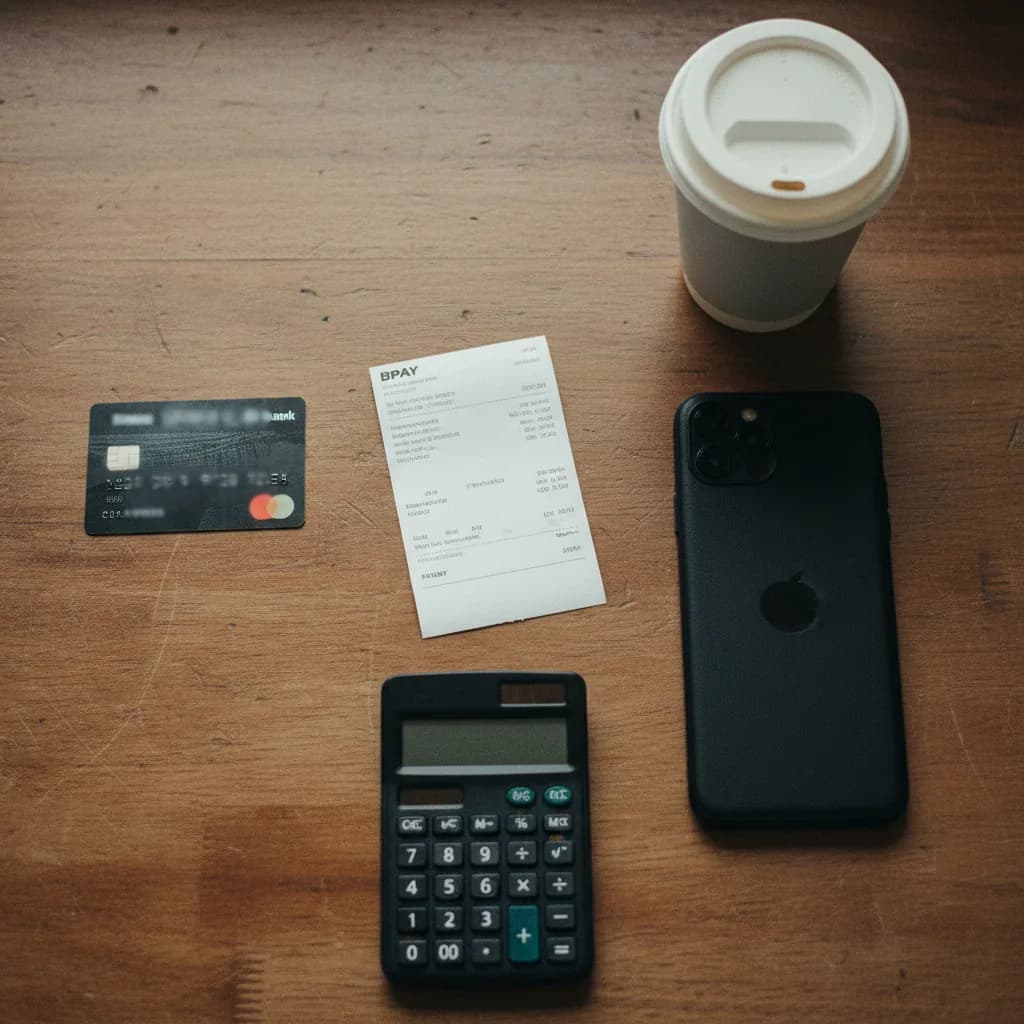
- BPAY — supported for larger charges. No surcharge. Allow 1–3 business days for clearance, which matters when the payment window is 28 days.
- Bank transfer (PayTo / direct debit from Australian accounts) — available for some charges. Confirm in the payment request itself.
For Contributory Parent second instalments and other large amounts, BPAY or bank transfer is normally the cheapest route. For partner visa second instalments at $9,800, the surcharge is around $130 on a card — sometimes worth paying for the points or for guaranteed same-day clearance close to the deadline.
Full payment-method detail, including current surcharge rates and timing, is covered in How to Pay Australian Visa Fees.
Can you get a refund of the second instalment?
The refund rules for the second instalment are more generous than for the first.
- Visa refused after the second instalment was paid: a refund is generally available if the refusal was on grounds that arose after the second instalment was charged, or if the Department made an error. Refunds are not automatic — the applicant or their migration agent must apply in writing.
- Application withdrawn before grant: if you withdraw after paying the second instalment but before the visa is granted, the second instalment is generally refundable. The first instalment is generally not refundable on withdrawal.
- Applicant dies before grant: the second instalment is generally refundable to the estate.
- Second instalment paid but visa never granted for other administrative reasons: refundable on application.
The first instalment behaves the opposite way: paid at lodgement, generally non-refundable regardless of outcome. The second instalment, because it's paid against an almost-granted visa, is treated as a charge for something the applicant hasn't yet received.
FAQ
Is the second instalment paid at the same time as the first?
No. The first instalment is paid at lodgement, through ImmiAccount, before the application is accepted. The second instalment is paid after the Department has assessed the case and only when they request it — typically once the application is decision-ready. The two payments can be months or years apart on slower-processing visas.
Which partner visa applicants don't pay the second instalment?
Partner visa applicants aged 18 or over who can demonstrate functional English at the time of decision pay nil. Applicants under 18 don't pay the second instalment regardless of English. Functional English can be proved by IELTS 4.5, equivalent test scores, qualifying education in English, or holding a passport from the UK, USA, Canada, Republic of Ireland, or New Zealand for relevant exemptions.
How much is the Contributory Parent visa second instalment in 2026?
Approximately AUD $43,600 per applicant aged 18 or over for the Subclass 143 (offshore) and Subclass 864 (onshore aged) Contributory Parent visas. Combined with the first instalment, total visa cost lands at roughly $48,000–$50,000 per applicant. Confirm the exact figure on the Department of Home Affairs Charges Schedule at the date the second instalment is requested.
Can I avoid the partner visa second instalment by passing an English test?
Yes. If the visa applicant sits a qualifying English test (such as IELTS with an overall average of 4.5) and lodges the result before the Department finalises the case, functional English is recorded and the second instalment falls to nil. A $300–400 test fee replaces a $9,800 charge — for most applicants without other proof of English, sitting the test is the right move.
Is the spelling "instalment" or "installment"?
Both refer to the same charge. The Australian Department of Home Affairs uses British spelling — instalment (single L) — on all official pages, regulations, and ImmiAccount screens. American spelling installment (double L) is what most international searchers type into Google. The Migration Regulations 1994 use "instalment". When dealing with the Department, use "instalment".