Australian Partner Visa for Indian Citizens: 2026 Guide
Updated: 16 August 2026
Indian citizens partnering with Australian citizens, permanent residents, or eligible New Zealand citizens apply for the offshore subclass 309/100 or the onshore subclass 820/801 partner visa. The base charge is around AUD $11,710. Indian applicants face closer scrutiny of relationship evidence than many nationalities, especially for arranged marriages and short-relationship files.
Quick Facts: Partner Visa for Indian Citizens
| Detail | Information |
|---|---|
| Offshore route | Subclass 309 (temporary) leading to 100 (permanent) |
| Onshore route | Subclass 820 (temporary) leading to 801 (permanent) |
| Base charge | AUD $11,710 |
| Two-stage structure | Temporary first, then permanent after ~2 years |
| Health exam | Required, Bupa panel physician |
| Police clearance | PCC from PSK or RPO, plus any other country lived in |
| Sponsor | Australian citizen, PR, or eligible NZ citizen |
| Arranged marriages | Recognised but require ongoing relationship evidence |
| Embassy | Australian High Commission, New Delhi |
Offshore vs Onshore: Which One Applies
Where you are at the time of lodgement decides which subclass you use. You can't be onshore in Australia and apply for the offshore 309, and you can't be outside Australia and apply for the onshore 820. The full breakdown is in the onshore vs offshore comparison. For Indian applicants:
- 309/100 (offshore): You're in India or a third country at lodgement and at grant of the temporary 309. Most Indian applicants partnering with an Australian-based partner use this route.
- 820/801 (onshore): You're already in Australia on another substantive visa (often a 482, 500, or 462).
Both routes lead to permanent residency with largely the same fees and evidence. The main differences are eligibility timing and the rights you hold while waiting: bridging visa A onshore, no automatic Australian work rights offshore.
The Two-Stage Structure
Partner visas are granted in two stages. The temporary stage (309 or 820) is decided first. Roughly two years after lodgement, the Department assesses the permanent stage (100 or 801), looking at whether the relationship has continued.
This is where Indian applicants face their second-most-common refusal pattern: weak ongoing-relationship evidence at the second stage. Applicants who go quiet after a strong initial file, with no further joint financials or cohabitation evidence, can be refused at the permanent stage even after a temporary grant.
Who Can Sponsor
Your partner needs to be an Australian citizen, an Australian permanent resident, or an eligible New Zealand citizen (most NZ citizens in Australia on a Special Category visa qualify).
Sponsors are limited in how many partner sponsorships they can lodge over a lifetime, with a cool-down period between sponsorships. Sponsors with criminal history or character issues can be barred, and the Department runs character checks on the sponsor as part of the application.
Evidence of a Genuine Relationship
The Department's four pillars are well-established and apply to every partner visa worldwide:
- Financial: joint or interlocking finances, shared expenses, joint accounts or assets
- Social: friends, family, and the broader community knowing you as a couple
- Commitment: joint plans, statutory declarations from both partners explaining the relationship, evidence of a shared future
- Household: living together, sharing domestic responsibilities, joint household arrangements
The full evidentiary catalogue is in the evidence of relationship guide. For Indian applicants, the practical translation is:
Financial evidence
- Joint bank account if you have one
- Money transfers between you across the period of the relationship (remittances are common where one partner is in Australia and the other in India)
- Joint property ownership, joint lease, or jointly named utility bills
- Insurance policies naming each other as beneficiaries
- Joint loans or credit facilities
Social evidence
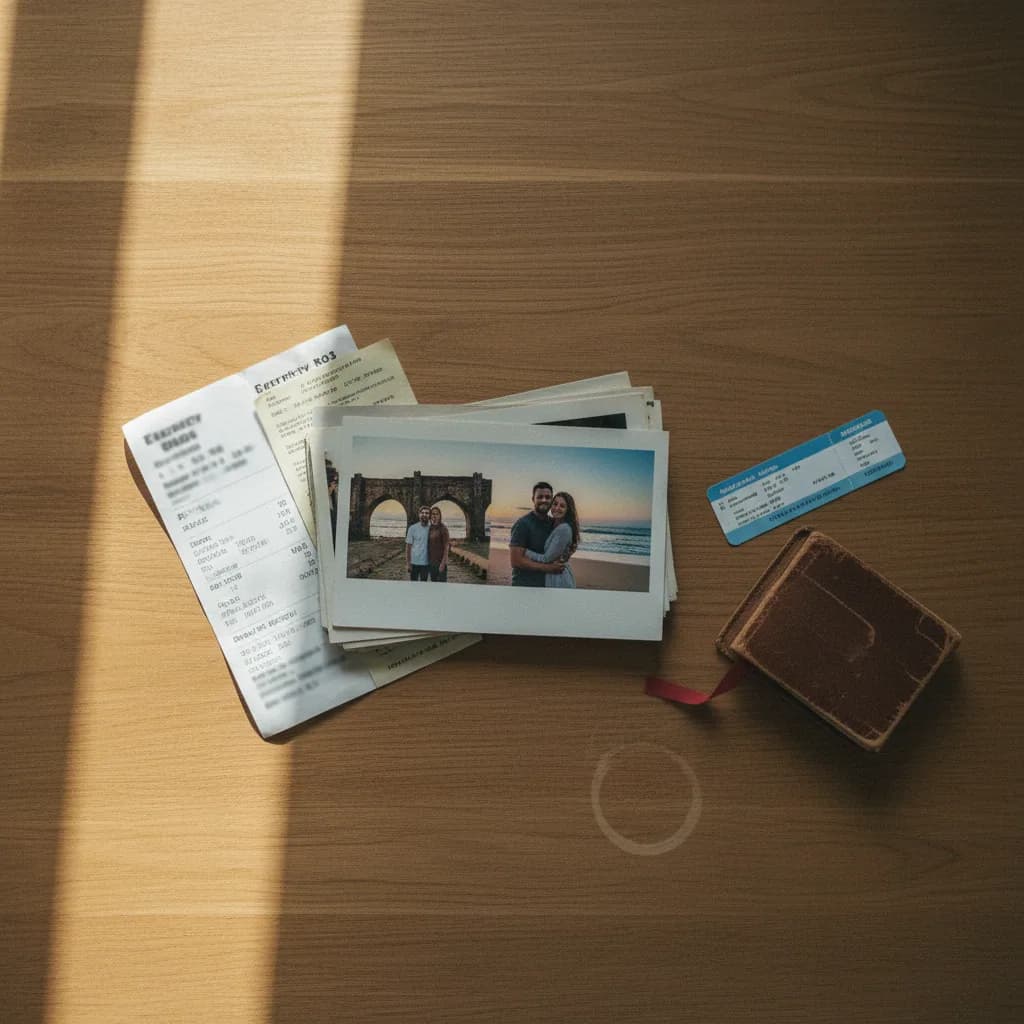
- Wedding photographs (with date, location, named guests)
- Statutory declarations from family and friends
- Photographs together over time, with metadata where possible
- Social media posts showing the relationship publicly
- Travel together: boarding passes, hotel bookings, photographs from trips
Commitment evidence
- A long, detailed statutory declaration from each partner describing how you met, the relationship history, joint plans, and current life together
- Communication records: WhatsApp, calls, emails over the relationship's duration
- Evidence of milestones: engagement, wedding, honeymoon, family events
Household evidence
- Joint lease, joint utility bills, joint contents insurance
- Photographs of your shared home
- Mail addressed to both of you at the same address
- Evidence of how you share household tasks and finances
How Arranged Marriages Are Treated
Arranged marriages are explicitly recognised under Australian migration law. The Department does not refuse partner visas because the marriage was arranged. What it does scrutinise is whether the relationship is genuine, meaning whether, after the arrangement, you and your partner have actually built a relationship together. The standard four pillars still apply.
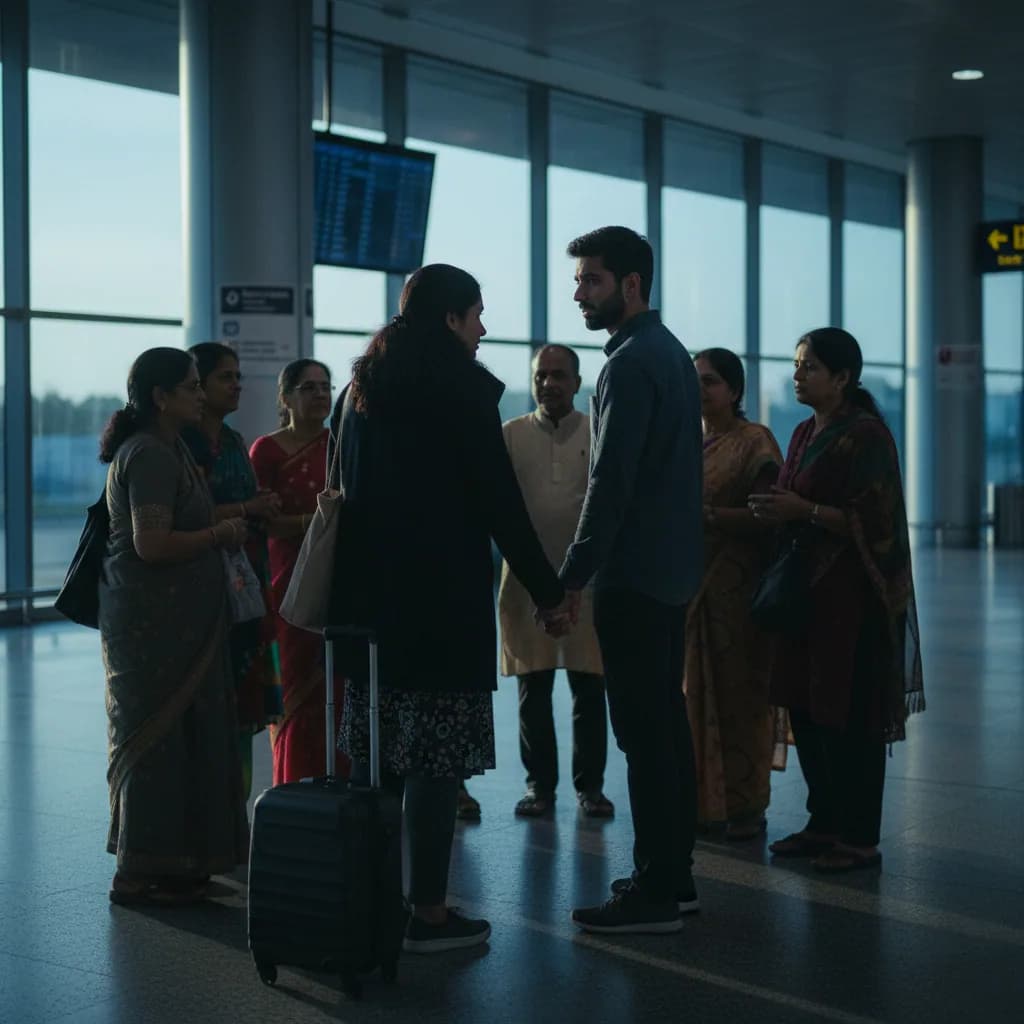
For Indian applicants, the practical implication is that a short timeline between introduction and wedding does need to be addressed in the statutory declarations. Case officers see hundreds of arranged-marriage files; they're not surprised by the format. They are looking for what happened after the wedding: cohabitation evidence (or extensive communication and visits if you've been separated by visa timing), joint financial life, family involvement on both sides, and joint planning.
The weakest arranged-marriage files share a pattern: lavish wedding documentation followed by sparse post-wedding evidence. The strongest files have wedding documentation, then a year of joint life on top of it: joint accounts, lease, photographs from after the wedding, dated communication records.
Cost and Processing Times
| Item | Cost |
|---|---|
| Combined 309/100 or 820/801 charge | AUD $11,710 (primary applicant) |
| Additional applicant (under 18) | — (confirm on the fee schedule) |
| Additional applicant (18+) | — (confirm on the fee schedule) |
| Health exam | ₹5,000-7,000 |
| PCC | ₹500-2,000 |
| Sponsorship form (no separate fee, lodged with primary) | Included |
Processing times for the temporary stage typically run 12 to 22 months for Indian applicants. The permanent stage is assessed roughly two years after lodgement and is generally faster, often inside six months once eligibility is reached, though the partner visa processing time guide carries current published medians.
How to Apply Step by Step
- Confirm eligibility: relationship is married or de facto (typically 12 months of cohabitation, with exceptions for registered relationships), and your sponsor is eligible.
- Gather identity documents, marriage certificate, PCC, HAP ID, and the four pillars of relationship evidence.
- Sponsor lodges the sponsorship through ImmiAccount.
- You lodge the visa application, paying AUD $11,710, attaching the evidence bundle.
- Both partners submit detailed statutory declarations.
- Complete the medical with a Bupa panel physician once you have your HAP ID, and attend biometrics at a VFS Global centre if requested.
- Respond to any requests for additional information.
- Receive the temporary stage decision (309 or 820).
- Continue to build joint-life evidence over the next two years.
- Submit second-stage evidence when invited, approximately two years after lodgement.
- Receive the permanent stage decision (100 or 801).
The step-by-step apply guide covers the lodgement mechanics, and the offshore 309/100 and onshore 820/801 pages cover the subclass-specific detail.
What Indian Applicants Need to Know
Higher scrutiny is real, and it's documentary
Australia treats India as a high-volume partner-visa source country, and case officers see the full range of applications, from genuine multi-year relationships to clearly contrived files. The protection against extra scrutiny isn't a clever statutory declaration; it's an evidence bundle so comprehensive that no reasonable case officer can question it. Volume of evidence, not eloquence, is what wins these files.
PCC for every country you've lived in
Indian PCC from PSK or RPO is the baseline. If you've lived in another country for 12 months or more since age 16 (common for IT applicants who've worked in the UAE, Singapore, the UK, or the US), you'll need a PCC from that country too. Get them all started early. The police clearance guide has the country-by-country process.
Document authentication
Indian marriage certificates issued by the registrar of marriages are accepted directly. Religious-only marriage certificates (without civil registration) are not sufficient. You'll need to register the marriage civilly. Birth certificates from the Registrar of Births, Deaths, and Marriages, or municipal authorities, are accepted. Older documents from villages may need re-issue.
Second-stage evidence has to be built deliberately
The Department asks for evidence covering the period from temporary-stage grant onward. Couples who stop building joint records once the 309 or 820 is granted run into trouble at the second stage. Keep generating evidence over the two-year window: joint accounts active, joint lease renewed, photographs together, shared travel, statutory declarations from people who've seen you together since.
Onshore applicants should watch the section 48 bar
If you've had a visa refused or cancelled while onshore in Australia, you may not be able to lodge a partner visa from inside Australia under section 48 of the Migration Act. The section 48 bar guide explains the rule and the limited exceptions.
Common Pitfalls for Indian Applicants
Wedding-heavy evidence, life-light. A 200-photo wedding album with nothing for the six months that followed. Address this directly. Keep building evidence from the wedding onward.
Statutory declarations that are too short. Two pages is the working minimum from each partner. The strong version covers how you met, the relationship development, key dates, joint life today, and joint plans. Generic "we love each other and intend to spend our lives together" declarations are visibly insufficient.
Inconsistencies between the two partners' statements. Where one statement says you met in March and the other says February, the file becomes a credibility problem. Compare the drafts before lodging.
Skipping the sponsor's financial evidence. Even when the Indian applicant is independently funded, the sponsor's financial and character documents are part of the file. Skipping these slows the case down.
Going quiet during the two-year wait. The temporary stage isn't the finish line. Treat the file as alive until the 100 or 801 is granted.
Frequently Asked Questions
How much does an Australian partner visa cost for Indian citizens in 2026?
The base charge is AUD $11,710 for the primary applicant. Dependent children have their own charges. Other costs include the health exam (around ₹5,000-7,000), PCC (₹500-2,000 per country), and any authentication or translation fees.
How long does an Australian partner visa take for Indian applicants?
The temporary stage (309 or 820) typically takes 12 to 22 months. The permanent stage (100 or 801) is assessed roughly two years after lodgement, usually within six months once eligibility is reached. End-to-end, plan for three to four years from lodgement to permanent grant.
Are arranged marriages accepted for Australian partner visas?
Yes. Arranged marriages are explicitly recognised. The Department does not refuse partner visas on the basis that the marriage was arranged. The standard four-pillar evidence applies, with extra attention to what the relationship looks like after the wedding.
Can I work in Australia while my partner visa is being processed?
Onshore (820) applicants on a bridging visa A with full work rights can work. Offshore (309) applicants do not have Australian work rights until the temporary stage is granted, after which the 309 carries full work rights.
Do my parents need to be on my partner visa application?
No. Parents are not included on partner visas. Dependent children in your care can be included as secondary applicants with their own charges and documentation.
What happens if my relationship ends during the partner visa process?
The pathway changes substantially. There are exceptions for relationships that end due to family violence or the death of the sponsor. The general rules and exceptions are covered in what happens to your visa if separated or divorced.
Related Guides
- Australian Visa for Indian Citizens (country overview)
- Offshore Partner Visa Subclass 309/100
- Onshore Partner Visa Subclass 820/801
- Onshore vs offshore partner visa comparison
- Evidence of relationship for a partner visa
- Partner visa processing time 2026
- Police clearance certificates guide
- Section 48 bar explained
- Step-by-step apply guide