Australian eVisitor Visa (651) for Spanish Citizens
Updated: 16 August 2026
Spanish citizens visiting Australia for tourism or business need the eVisitor (Subclass 651), not the ETA. Spain is an EU member on the eligible passport list, so the eVisitor is free, applied for online through ImmiAccount, and allows multiple entries with stays of up to three months per visit across a 12-month validity.
Independent guide — not a government service. Australian Visa Online is an independent information resource. We are not affiliated with the Australian Government or the Department of Home Affairs, and we do not lodge applications on your behalf. Always confirm current requirements before you apply.
Are Spanish Citizens Eligible for the eVisitor (651)?
Yes. Spain sits on the list of countries eligible for the eVisitor (Subclass 651), the short-stay visa built specifically for European passport holders travelling to Australia. If you carry a valid Spanish passport, you can apply for the eVisitor to visit as a tourist or for business visitor activities. Eligibility flows directly from Spain's membership of the European Union — you don't need a special arrangement or an invitation.
Here is the point that trips people up most often: for years, Spanish citizens were not eligible for the Electronic Travel Authority (ETA) Subclass 601. That list has now been expanded to include Spain and most other European countries — but the ETA carries a $20 service charge and runs through a phone app, while the eVisitor is free. The two visas grant almost identical travel rights, so a Spanish passport still opens the eVisitor door first.
Keep one rule in mind above all else: Spanish passport → eVisitor (651). The $20 ETA is now open to you too, but there is no reason to pay for what the eVisitor does free.
Quick Facts: eVisitor for Spanish Citizens
| Detail | Information |
|---|---|
| Visa subclass | 651 (eVisitor) |
| Who it's for | Spanish and other eligible European passport holders |
| Visa application charge | Free — AU$0 (see the visa fees schedule) |
| Apply via | ImmiAccount (online, web browser) — not the ETA app |
| Maximum stay | Up to 3 months per visit |
| Validity | 12 months from grant (or until the passport expires, whichever is first) |
| Multiple entries | Yes — unlimited within the 12-month validity |
| Work rights | No (tourism and business visitor activities only) |
| Where to apply | Online through ImmiAccount |
| Must be outside Australia | Yes — when applying and when granted |
For a full breakdown of the product itself, see the dedicated eVisitor (Subclass 651) guide. Decision timeframes are not quoted here because they change — check the live position on the visa processing times guide. The eVisitor is usually one of the quicker visas to be decided, but a minority of applications go to manual review, so timing is never guaranteed.
How Spanish Citizens Apply for the eVisitor (651)
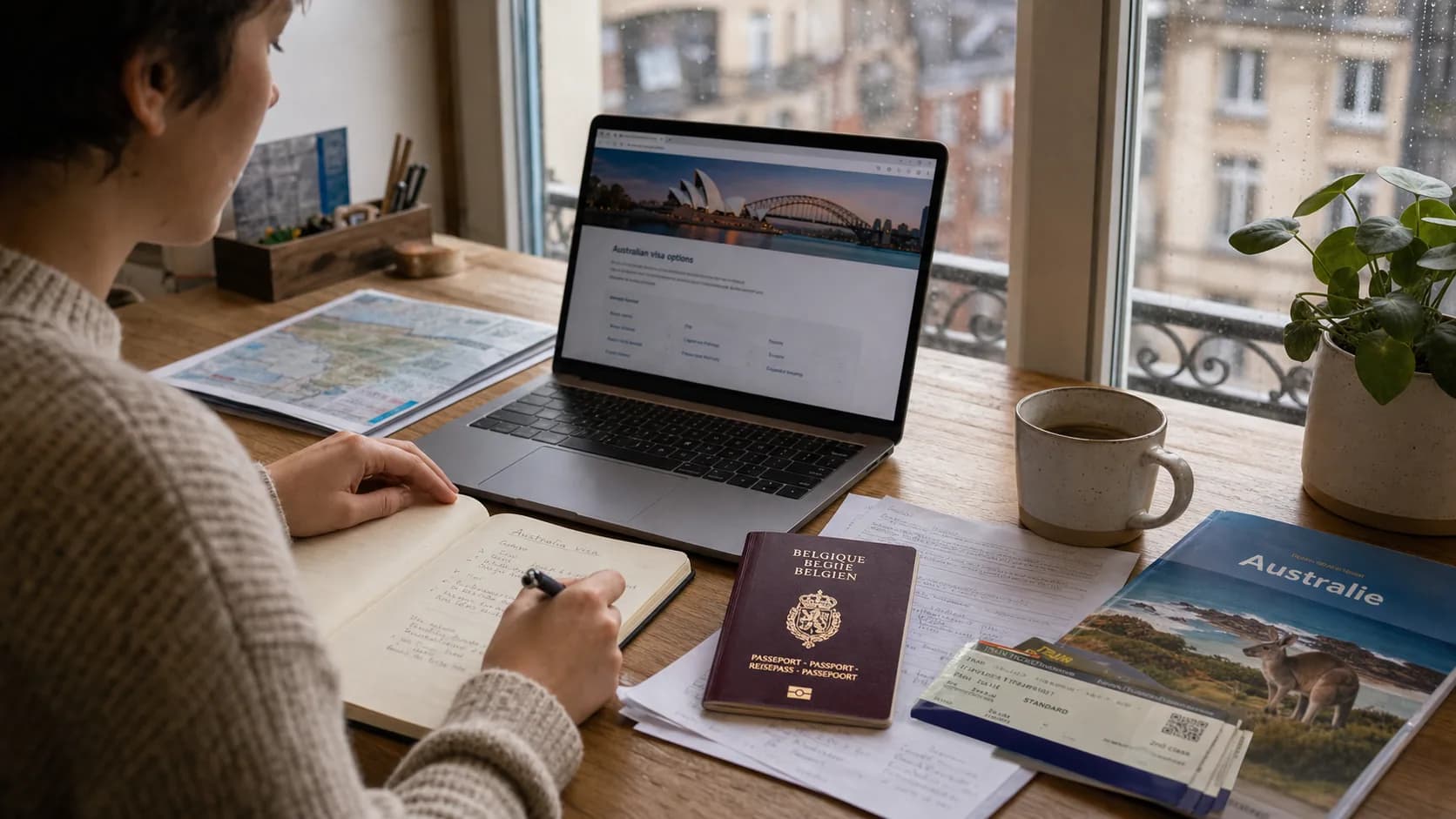
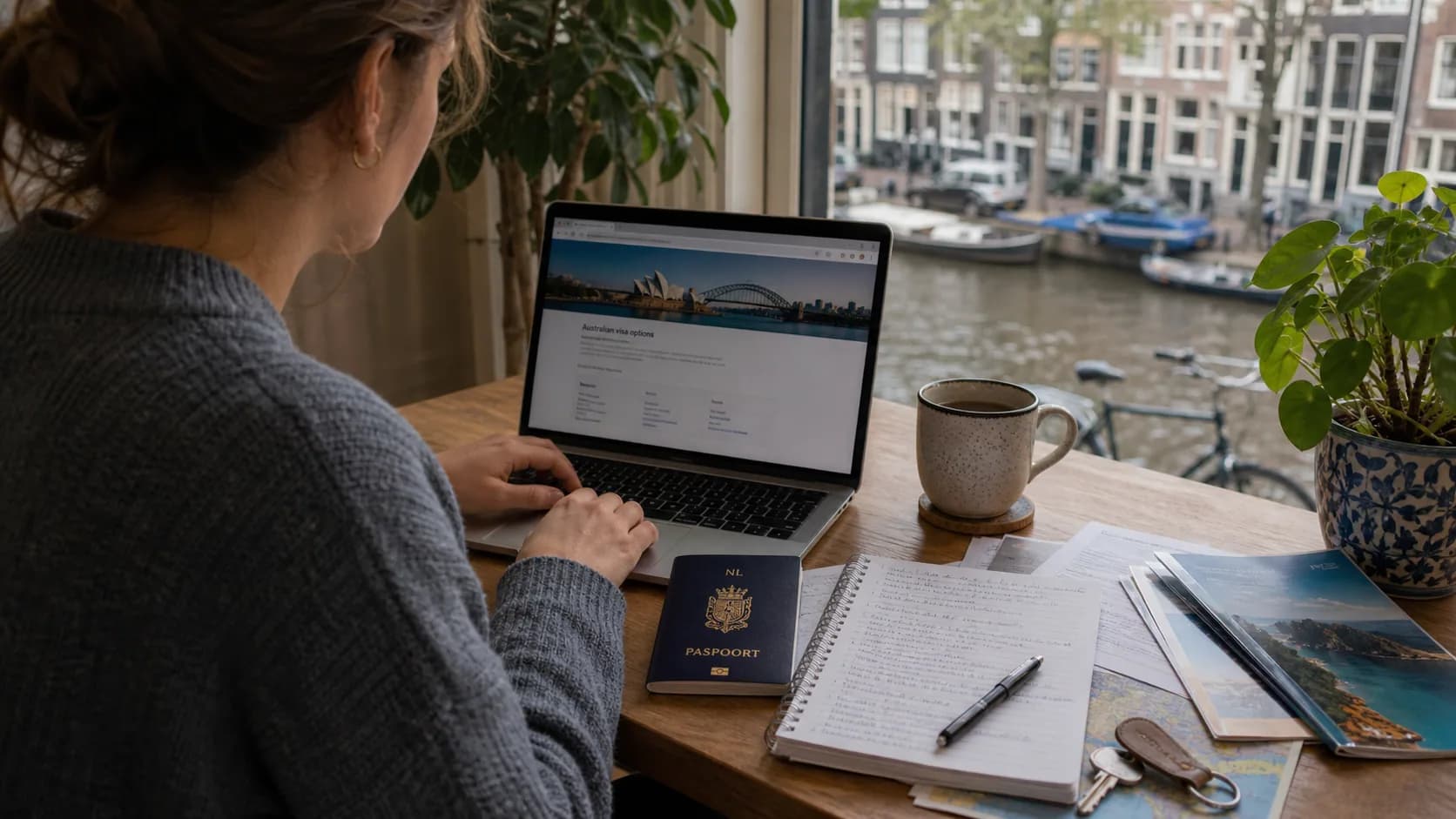
The eVisitor is lodged online through ImmiAccount, the Department of Home Affairs' web portal — the same system used for most Australian visa applications. There is no mobile app for this visa, which is the single biggest practical difference from the ETA. Here is the sequence for a Spanish passport holder.
Step 1: Create an ImmiAccount. Register a free account on the official Home Affairs immigration portal using an email address you check regularly. Your grant notification lands in that inbox, so pick one you'll still have access to while travelling.
Step 2: Start an eVisitor (Subclass 651) application. Choose the eVisitor from the list of visa types. Be careful to select 651 specifically and not a different visitor product — the names look similar in the menu.
Step 3: Enter your Spanish passport details. Provide your passport number, full name exactly as printed, date of birth and nationality. Accuracy is critical: the visa is linked electronically to this passport number, and a mismatch is the most common cause of trouble at airline check-in.
Step 4: Answer the declaration questions. A short set of questions covers character (any criminal history), health, and the purpose of your trip. Answer honestly. A false or misleading declaration can lead to refusal, cancellation, or a ban on future Australian visas.
Step 5: Submit — with no payment step. The eVisitor carries no visa application charge (AU$0), so there is nothing to pay for the visa itself. Lodge the application while you are outside Australia.
Step 6: Receive your grant notice. You'll be notified by email through ImmiAccount. The eVisitor is entirely electronic and linked to your passport — there is no label, sticker or stamp. Save the grant notification for your own records.
You must be outside Australia both when you apply and when the eVisitor is granted. If you are already onshore on another visa, the eVisitor is the wrong product and you would look at an onshore alternative instead.
Validity, Stay Length and Multiple Entries
Once granted, the eVisitor runs on the same clock for a Spanish citizen as for every other eligible European traveller.
| Rule | How it works for Spanish citizens |
|---|---|
| Validity period | 12 months from the date of grant, or until your Spanish passport expires — whichever comes first |
| Stay per visit | Up to 3 months in Australia on each entry |
| Number of entries | Unlimited within the 12-month validity |
| Resetting the stay | Each time you leave and re-enter, a fresh 3-month stay period begins |
| Longer-stay cap (condition 8558) | You may not stay in Australia for more than 12 months in total within any 18-month period, even though each visit resets the 3-month clock |
| Extending a stay | Not possible — the eVisitor cannot be extended past 3 months in a single visit |
This flexibility suits many Spanish travellers: a holiday in one part of the year, a return trip a few months later, all on the same free grant. But two limits are firm. The three-month cap per visit cannot be stretched, and visa condition 8558 means your total time in Australia cannot exceed 12 months across any rolling 18-month window — so you cannot use back-to-back visits to live in Australia indefinitely. The Department monitors travel patterns, and repeatedly chaining stays can prompt questions at the border or a cancelled visa.
If you need a single continuous stay longer than three months — a long family visit, an extended holiday — the eVisitor will not work. In that case you would look at the Subclass 600 Visitor visa, which can be granted with longer stay periods.
What Spanish Citizens Can (and Cannot) Do on an eVisitor
The eVisitor covers two broad categories — tourism and business visitor activities — and grants no work rights at all.
Tourism activities include:
- Holidays, sightseeing and travelling around Australia
- Visiting family and friends
- Recreational trips (surfing the east coast, diving the reef, road trips)
- Short-term study or training of up to three months
- Receiving medical treatment, where you are not a public-health risk
Business visitor activities include:
- Attending conferences, seminars and trade fairs
- Making general business enquiries
- Conducting negotiations or contract discussions
- Attending business meetings
What the eVisitor does not allow:
- Working for an Australian employer
- Selling goods or services directly to the public
- Providing a service to an Australian business
- Any paid work, including freelance, contract or gig work
- Remote work performed on Australian soil — being paid by a Spanish or other overseas employer while physically in Australia is still work, and the eVisitor does not authorise it
The grey zone for many Spanish professionals is the line between a "business visitor activity" and "work." Flying to Melbourne to attend an industry conference is fine. Being paid to run a workshop at that same conference is work, and that needs a different visa. If any part of your trip involves paid activity carried out on Australian soil, the eVisitor is the wrong visa. For work, working-holiday or skilled options, the eVisitor won't help.
What's Different for a Spanish Passport Compared to ETA Nationalities
A Spanish traveller and, say, an American or Japanese traveller end up with very similar rights at the Australian border — but the route each takes to get there is not the same.
| Feature | eVisitor (651) — Spanish citizens | ETA (601) — e.g. US, Japan, Canada |
|---|---|---|
| Eligible nationality | Spain and other listed European passports | 30+ passports, now including most European countries |
| How you apply | Online via ImmiAccount | Via the Australian ETA mobile app |
| Visa application charge | Free — AU$0 | A service charge applies through the app |
| Maximum stay | Up to 3 months per visit | Up to 3 months per visit |
| Validity | 12 months | 12 months |
| Multiple entries | Yes | Yes |
| Work rights | No | No |
The headline difference is the application channel: Spanish citizens apply online through ImmiAccount, while ETA nationalities use the phone app. A second difference is cost — the eVisitor has no visa application charge, whereas the ETA carries a service charge. Everything else — stay length, validity, permitted activities — is effectively the same once the visa is granted, which is why our ETA vs eVisitor comparison treats the two as twins separated mainly by cost and application channel.
If you hold dual nationality — for instance a Spanish passport and a passport from an ETA-eligible country — apply for the visa product that matches the passport you'll actually present at the Australian border, and travel on that same document.
Common Mistakes Spanish Applicants Make
Trying to use the ETA app. Spanish passports are now on the ETA list, so the app will take your $20 — but the eVisitor covers the same trip at no charge. Use ImmiAccount and apply for the eVisitor (651).
Applying from inside Australia. The eVisitor must be applied for, and granted, while you are outside Australia. If you're already onshore, this is not the right pathway.
Assuming it covers remote work. Doing paid work for a Spanish or other overseas employer while physically in Australia is work performed on Australian soil. The eVisitor does not authorise it, however remote the job.
Renewing your passport after the grant. The eVisitor is tied to a specific passport number. Renew your Spanish passport and the visa attached to the old one no longer works for travel — you'll need to re-apply with the new passport details. The good news: it's free again.
Ignoring the 12-in-18 limit. Even though each visit resets the three-month clock, condition 8558 caps your total time in Australia at 12 months within any 18-month period. Plan long or frequent trips around that ceiling.
Overstaying. Staying beyond your permitted period — even by a few days — can trigger an exclusion period and serious consequences for future Australian visas. Track your three-month limit carefully.
eVisitor vs Other Options for Spanish Travellers
For the overwhelming majority of Spanish tourists and business visitors, the eVisitor is the obvious choice: it's free, fast, and purpose-built for European passports. But it isn't the only route into Australia.
- For a single continuous stay longer than three months, the Subclass 600 Visitor visa can be granted with longer stay periods.
- To see how the eVisitor compares with the near-identical ETA, read the ETA vs eVisitor comparison.
- For the complete feature breakdown of the visa itself, see the eVisitor (Subclass 651) guide.
- For every current charge across visitor products, check the visa fees complete schedule.
- For a wider view of every pathway open to Spanish nationals — work, study, family and skilled routes included — see our Australia visa guide for Spanish citizens.
Reach for an alternative only when your stay length or your planned activity falls outside what the eVisitor permits. For a short, visa-free-cost trip, the eVisitor is almost always the right answer for Spanish citizens.
Frequently Asked Questions
Do Spanish citizens need a visa to visit Australia?
Yes. There is no fully visa-free entry for Spanish passport holders, but the visa you need — the eVisitor (Subclass 651) — has no visa application charge and is applied for online through ImmiAccount. It permits tourism and business visitor activities for up to three months per visit across a 12-month validity.
Can Spanish citizens use the Australian ETA?
Yes, since the ETA (Subclass 601) list was expanded to include Spain and most other European countries. It costs $20 through the ETA app, though, and there is rarely a reason to pay it: as an EU citizen you can apply for the eVisitor (651) through ImmiAccount instead, which offers near-identical travel rights at no charge.
How long can a Spanish citizen stay in Australia on an eVisitor?
Up to three months per visit. The eVisitor is valid for 12 months from grant, and within that window you can enter multiple times — each entry allows a fresh stay of up to three months. It cannot be extended beyond three months in one visit, and condition 8558 caps total time at 12 months in any 18-month period.
Is the eVisitor free for Spanish passport holders?
Yes. The eVisitor carries no visa application charge for eligible applicants, including Spanish citizens — it costs AU$0. Because government fees and any related costs can change, confirm the current position on the Australian visa fees schedule before you apply.
Can Spanish citizens work in Australia on an eVisitor?
No. The eVisitor allows tourism and business visitor activities — meetings, conferences, negotiations — but grants no work rights. Paid work is not permitted, and that includes remote work for a Spanish or overseas employer while you are physically in Australia. Any paid activity on Australian soil requires a different visa.
What happens if a Spanish citizen needs to stay longer than three months?
The eVisitor cannot be extended past three months per visit. For a longer continuous stay, the Subclass 600 Visitor visa can be granted with longer stay periods. You would generally apply for it before your eVisitor stay runs out, so you don't become unlawful in Australia.
Does a Spanish citizen need to print the eVisitor before flying?
No. The eVisitor is fully electronic and linked to your passport number, so airlines and border systems read it automatically at check-in and on arrival. There is no label or stamp to print, though it's sensible to keep a copy of your grant notification for your own records.