Living in Melbourne as an Immigrant: Jobs, Cost & Lifestyle Guide
Melbourne suits immigrants who want a big city without Sydney prices, strong public transport, and a deep migrant community to land in. As of the September 2025 quarter, the median asking rent across metropolitan Melbourne sat at $580 a week per the Homes Victoria Rental Report, and a graduate registered nurse in the Victorian public system starts on roughly $73,000 to $79,000. Victoria runs its own state nomination program for the subclass 190 and 491 skilled visas, with the 2025-26 allocation set at 2,700 and 700 places respectively. This guide covers the numbers, the suburbs, the visa pathway, and the practical trade-offs of choosing Melbourne over Sydney, Brisbane or Perth.
Quick Stats
- Population (Greater Melbourne): approximately 5.35 million as of June 2024-25 per ABS Regional Population estimates, with Melbourne adding roughly 105,000 people in 2024-25, the largest annual increase of any Australian capital
- State: Victoria
- Climate: Temperate oceanic (Köppen Cfb), known locally for "four seasons in one day"
- Time zone: AEST (UTC+10), AEDT (UTC+11) during summer daylight saving
- Distance to airport: Melbourne Airport (Tullamarine) is about 23 km north-west of the CBD, roughly 20 to 35 minutes by SkyBus or taxi depending on traffic
- Key industries: financial and insurance services, healthcare and social assistance, professional services, education, manufacturing and technology
Why Immigrants Move to Melbourne
Melbourne is Australia's most multilingual major city. The 2021 ABS Census recorded more than 230 languages spoken at home across Greater Melbourne, with Mandarin (4.6%), Vietnamese (2.5%), Greek (2.2%), Punjabi (2.0%) and Arabic (1.9%) the most common after English. For arrivals from India, China, the UK or Vietnam, there is almost always an established community, a place of worship, and a grocery store within a short tram or train ride.
The city is Australia's largest student hub. Monash University alone enrolled around 93,000 students in 2024 per Australian Universities data, with RMIT and the University of Melbourne each near 75,000. International students sit at the centre of this, and the infrastructure built around them (cheap eats, share-house markets, English support, part-time work pipelines) benefits every new arrival, not just degree seekers.
Lifestyle is the second pull. Public transport is genuinely usable beyond the CBD, the inner suburbs are walkable, and the cafe and food scene runs across cuisines because the migrant communities run it. Sport is woven into the calendar: nine AFL clubs based in Melbourne, the Australian Open every January at Melbourne Park, the Spring Racing Carnival at Flemington in November, and the Boxing Day Test at the MCG.
The third draw is comparison to Sydney. Median weekly rent in Greater Melbourne ($580 in September 2025 per Homes Victoria) sits well below Sydney equivalents, while salaries in healthcare, education and professional services are broadly comparable. For migrants on a tight first-year budget, that gap is meaningful.
Jobs and Economy
Victoria's professional services sector is the state's largest economic segment, generating around $65 billion in output and employing over 380,000 people per Live in Melbourne. Financial and insurance services account for over 10% of state output. Healthcare and social assistance is the single largest employer.
| Sector | Major employers | Typical salary range | Notes |
|---|---|---|---|
| Healthcare | Royal Melbourne, Alfred Health, Austin Health, Monash Health, Epworth | Graduate RN $73,000-$79,000; experienced RN approximately $90,000-$110,000+ (Victorian public EBA, as of late 2025) | EBA delivers 28.4% compounded wage increase by Nov 2027; $5,000 grad sign-on bonus available |
| Education | University of Melbourne, Monash, RMIT, Deakin, La Trobe, Swinburne, Victoria University, public and Catholic school systems | Highly variable by role | Sector employs tens of thousands; international student fees support a large casual market |
| Finance and insurance | NAB, ANZ, AustralianSuper, MLC, Bupa, Medibank | Wide range; mid-level analyst roughly $90,000-$130,000 (Hays FY25/26 indicative) | Largest output industry inside the City of Melbourne LGA per economy.id |
| Professional services | Big Four (Deloitte, EY, KPMG, PwC), Allens, MinterEllison, engineering consultancies | Graduate $65,000-$80,000; senior consultant $120,000+ | Includes legal, architecture, engineering, accounting, consulting |
| Technology and digital | REA Group, SEEK, MYOB, Xero (Melbourne office), Telstra | Software developer approximately $95,000-$130,000 mid-level per Glassdoor and Payscale 2025-26 | Victorian digital tech sector revenue near A$129 billion in FY23 per Live in Melbourne |
| Hospitality and retail | Independent venues, supermarket chains, hotel groups | Award rates apply; full-time often $55,000-$70,000 | High casual workforce, useful for new arrivals on student or working holiday visas |
Salary figures above are indicative ranges drawn from Hays FY25/26 commentary, Payscale, Glassdoor and the Victorian public sector EBA. Specific roles vary significantly by employer and experience.
Cost of Living Snapshot
The table below shows a single-person monthly budget for Melbourne as of the September 2025 quarter, using Homes Victoria rental medians and cost ranges reported by Cheapbills, Mozo and Wise (April-May 2026).
| Category | Weekly | Monthly | Notes |
|---|---|---|---|
| Rent, 1-bed inner suburb | $450-$650 | $1,950-$2,820 | Carlton, Fitzroy, South Yarra range per Homes Victoria and agency listings |
| Rent, 1-bed middle/outer | $380-$480 | $1,650-$2,080 | Brunswick, Footscray, Box Hill, Glen Waverley |
| Rent, 2-bed unit (shared) | $500-$650 (your share approximately $280-$360) | $1,200-$1,560 share | Common for new arrivals; splits costs heavily |
| Groceries | $120-$150 | $500-$650 | Aldi, Coles, Woolworths plus markets such as Queen Victoria, Footscray, Box Hill |
| Public transport | $51 (5-day work week at $10.20 daily cap, full fare) | $200-$240 | $11.40 daily cap from 1 Jan 2026; free in CBD tram zone |
| Utilities (power, gas, water) | n/a | $150-$220 | Single in a small apartment; varies by season |
| Internet and mobile | n/a | $80-$130 | NBN home plan plus mobile |
| Single-person monthly total | n/a | approximately $3,500-$4,500 | Excludes savings, travel, eating out beyond modest |
A single person living alone in a one-bedroom Melbourne apartment with a normal social life budgets closer to $4,500 to $5,000 per month all-in per recent cost-of-living estimates. Sharing a two-bedroom flat brings the all-in figure down to roughly $3,000 to $3,500.
For a deeper monthly breakdown including childcare and family scenarios, see the Melbourne cost of living guide.
Best Neighbourhoods for New Arrivals
Grouped by who they suit. Rent figures are weekly asking medians as of September 2025, drawn from Homes Victoria suburb data and Domain quarterly reports.
Young professionals
- Fitzroy – Cafes, bars, music venues, walking distance to the CBD. One-bedroom units roughly $500-$650 per week.
- Brunswick – Sydney Road, Middle Eastern and Italian food, the 19 tram. One-bedroom units roughly $420-$550.
- Carlton – Italian quarter on Lygon Street, dense with University of Melbourne students. One-bedroom units roughly $450-$600.
- Richmond – Bridge Road, Victoria Street (Little Saigon), MCG nearby. One-bedroom units roughly $450-$600.
Families
- Glen Waverley – Strong East Asian community, top-ranked state schools, train line to CBD. Two-bedroom units roughly $480-$580.
- Box Hill – Major Chinese community hub, three large shopping centres, Box Hill Hospital. Two-bedroom units roughly $450-$550.
- Berwick – South-east outer suburb, newer estates, family-priced housing. Two-bedroom houses from roughly $480.
Students
- Carlton – On the doorstep of the University of Melbourne and RMIT.
- Clayton – Adjacent to Monash University's main campus; lower rents than inner Melbourne, roughly $400-$500 for a one-bedroom unit.
- Hawthorn – Swinburne campus, leafy, good train and tram access.
Budget-conscious
- Footscray – Vietnamese, African and South Asian community, 10 minutes by train to Southern Cross. One-bedroom units from approximately $400.
- Sunshine – West of the CBD, large infrastructure works underway, lower rents.
- Dandenong – Major south-east hub, established Afghan, Sri Lankan and Sudanese communities.
- Frankston – End of the Frankston train line, beachside, two-bedroom units commonly under $450.
For broader advice on signing a lease as a new arrival, see finding accommodation in Australia.
Transport
Melbourne's public transport is a single Myki-card network covering trains, trams and buses, operated through Public Transport Victoria.
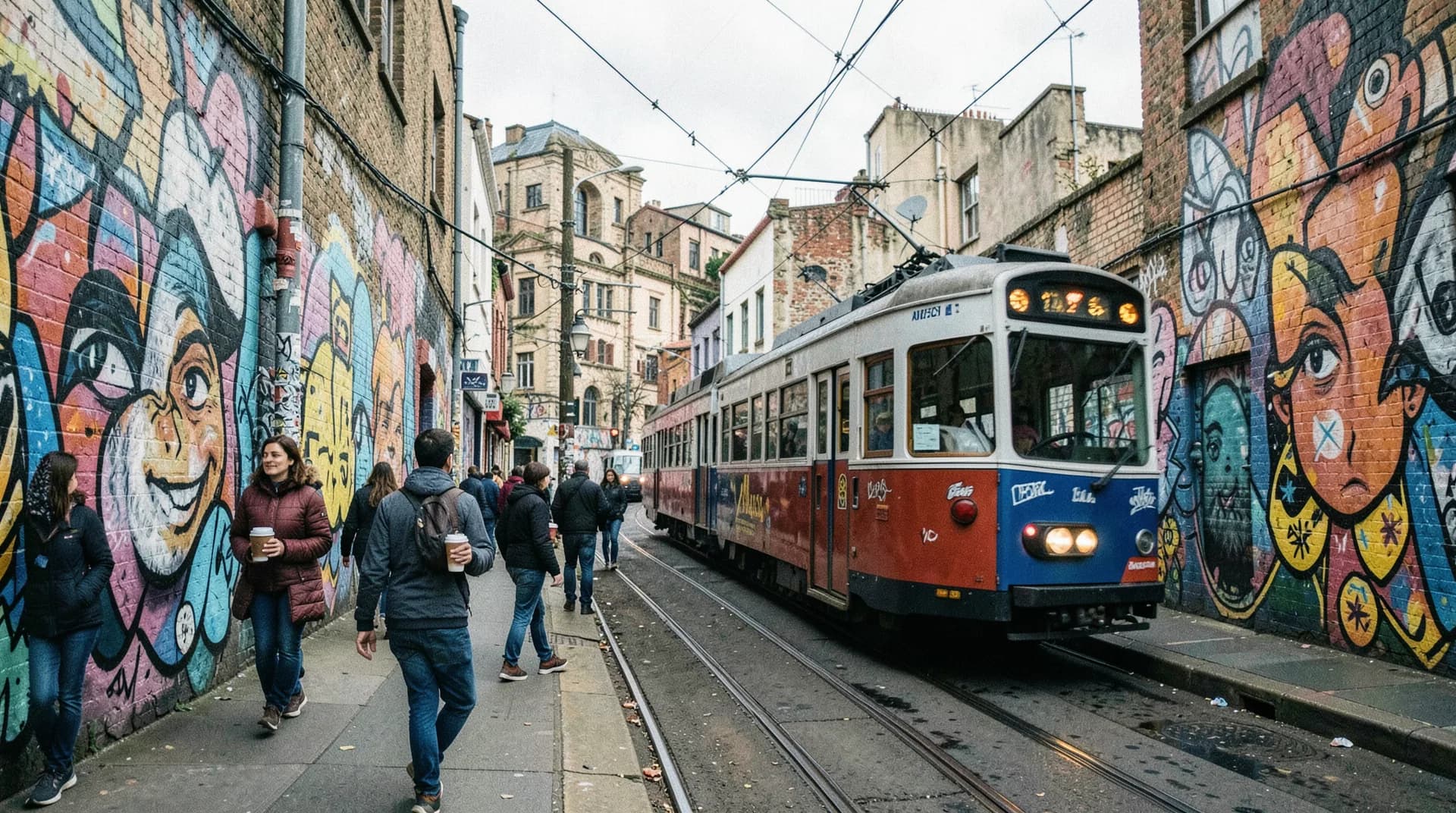
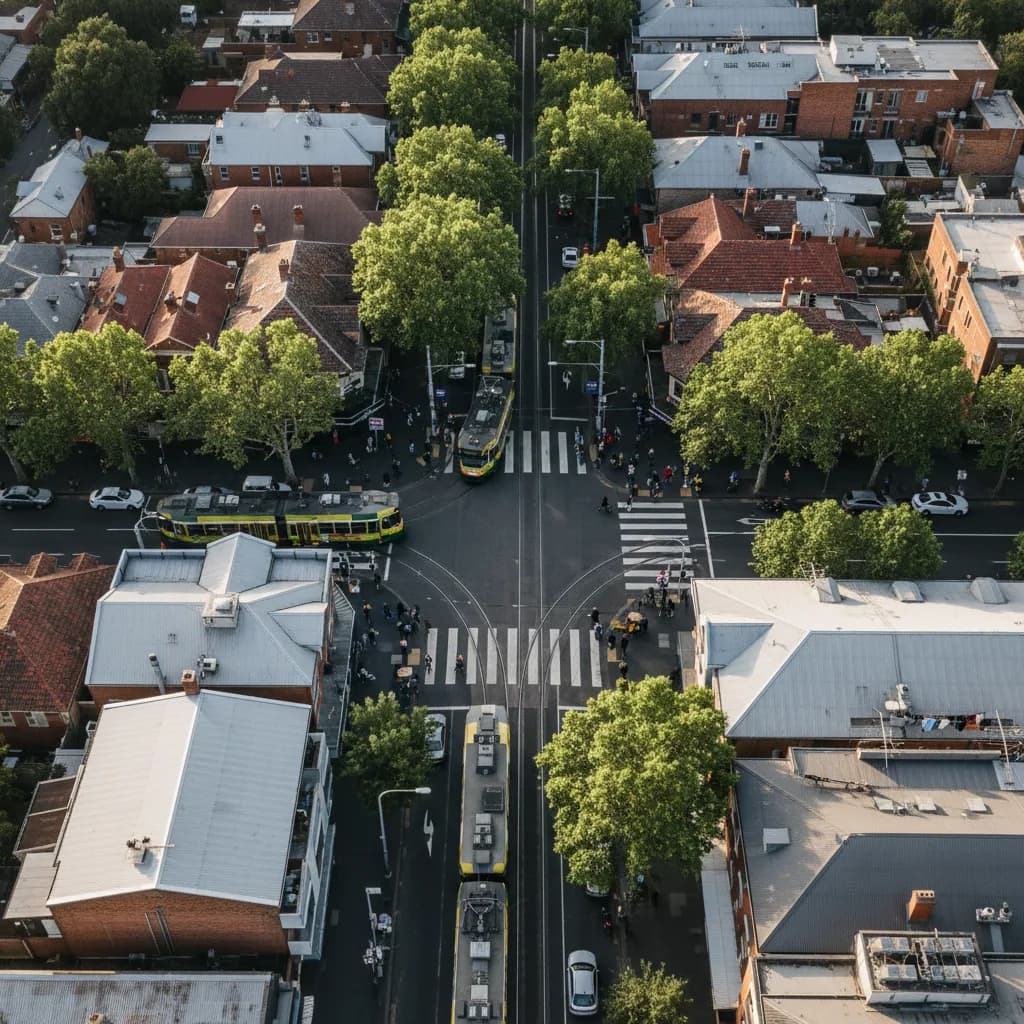
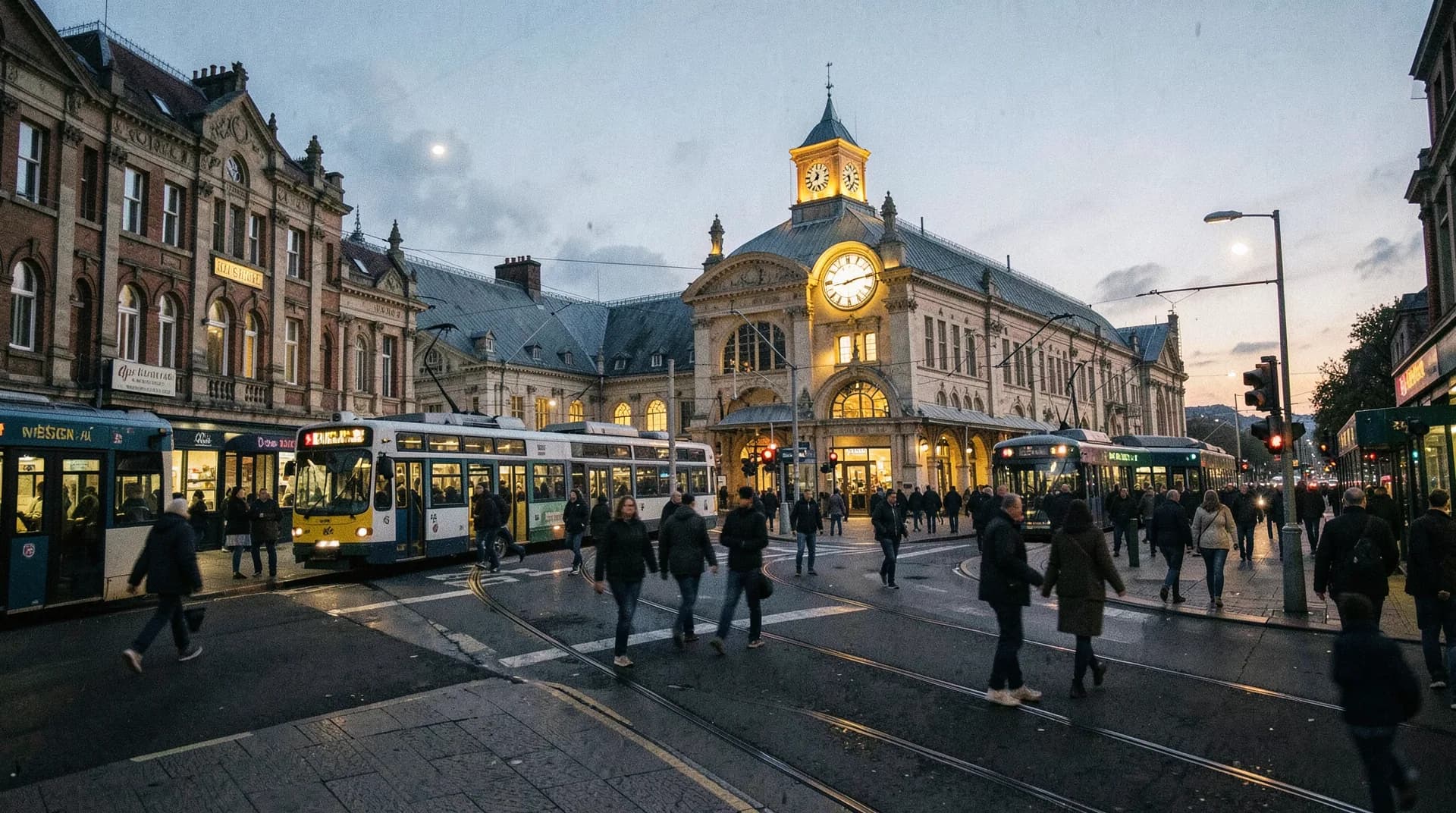
The tram network is the largest operational tram network in the world at around 250 km of double track, with 24 routes and approximately 1,700 stops per Yarra Trams. The train network runs on 16 metropolitan lines radiating from the City Loop, with the Metro Tunnel opening new through-running capacity from late 2025.
From 1 January 2026, the daily full fare Myki cap is $11.40 (concession $5.70). Weekend and public holiday daily caps are $8.00 (concession $4.00) per Transport Victoria announcements. There is no separate weekly cap product on Myki; the daily caps simply apply each day Myki Money is used, and seven-day Myki Pass options can be purchased for regular commuters.
The Free Tram Zone covers the Hoddle Grid CBD, Docklands and parts of Victoria Street near the Queen Victoria Market. Travel entirely within the zone is free without touching on. Touching on inside the zone wastes a daily cap, so only tap on when crossing the boundary.
For cars, Melbourne uses CityLink and EastLink toll roads which require a pre-paid e-tag or pass. Parking in the CBD is expensive (often $30-$50 a day commercially). Driving in inner suburbs is workable outside peak.
Airports
- Melbourne Airport (Tullamarine, MEL) – Primary international and domestic gateway, approximately 23 km north-west of the CBD. SkyBus runs around the clock and reaches Southern Cross Station in roughly 22 minutes off-peak.
- Avalon Airport (AVV) – Secondary airport 50 km south-west of Melbourne CBD and 15 km north-east of Geelong per Wikipedia, useful for Jetstar domestic and selected international flights.
Education
Victoria has eight universities physically based in Melbourne. Most recent published student numbers:
| University | Total students (most recent published) | Source year |
|---|---|---|
| Monash University | approximately 93,200 | 2024 |
| University of Melbourne | approximately 77,000 | 2024 |
| RMIT University | approximately 75,000 onshore (104,000+ globally) | 2024-25 |
| Deakin University | approximately 60,000 | 2024-25 |
| Victoria University | over 40,000 | 2024-25 |
| La Trobe University | approximately 35,000 | 2024-25 |
| Swinburne University of Technology | over 24,000 | 2024-25 |
Two of these (University of Melbourne and Monash) are ranked in the world's top 100 per Live in Melbourne.
Schools. Victoria runs three school sectors: government (state) schools, Catholic schools, and independent schools. State schools are free for Australian citizens, permanent residents and certain visa classes. Children of temporary visa holders may need to enrol through the Victorian Government's International Student Program and pay fees, which vary by year level and visa subclass per the Department of Education's International Student Visa Fee Table. Confirm your specific visa subclass before enrolling, and see our note on school enrollment for visa holders.
Healthcare
Melbourne's main public hospitals include:
- Royal Melbourne Hospital (Parkville) – one of Victoria's two major adult trauma centres, large emergency department
- The Alfred (Prahran) – the other major adult trauma centre, houses one of the largest ICUs in Australia
- Austin Hospital (Heidelberg) – spinal injuries unit, liver transplant, over 600 beds
- Monash Medical Centre (Clayton) – the main tertiary hospital for south-east Melbourne, part of Monash Health, Victoria's largest health service
- Royal Children's Hospital (Parkville) – primary paediatric centre for Victoria, Tasmania and parts of southern NSW
- Monash Children's Hospital (Clayton)
Permanent residents and most skilled visa holders nominated by Victoria get full Medicare access. Temporary visa holders should check eligibility carefully and consider Overseas Visitors Health Cover where required. See Medicare access for visa holders.
Bulk billing (full fee paid by Medicare, nothing out of pocket at the GP) sat at 77.6% nationally for the September 2025 quarter per federal Department of Health data, down slightly from the late 2024 peak. In practice, walk-in clinics in many inner Melbourne suburbs still bulk-bill, but private GP practices increasingly charge a gap of $40-$60. The November 2025 federal bulk billing incentive expansion is intended to improve this.
Climate
Melbourne sits in a temperate oceanic zone (Köppen Cfb). The Bureau of Meteorology's Olympic Park station records a long-term average annual rainfall of 578.3 mm, mean daily maximum of 20.4 °C and mean daily minimum of 11.7 °C.
| Season | Months | Avg High °C | Avg Low °C | Rainfall mm (approx) |
|---|---|---|---|---|
| Summer | Dec-Feb | 25-26 | 14-15 | 45-50 per month |
| Autumn | Mar-May | 17-22 | 9-13 | 45-55 per month |
| Winter | Jun-Aug | 13-14 | 6-7 | 40-50 per month |
| Spring | Sep-Nov | 17-22 | 8-11 | 55-65 per month |
Monthly figures above are rounded from the BOM long-term averages for Melbourne (Olympic Park station 086338) and the city's broader climate-of-Melbourne dataset.
Melbourne's variability is the real story. A January day can swing from 38 °C in the morning to 18 °C in the afternoon when a southerly change blows through. Bring layers. Pack a rain jacket year-round. Winter is mild compared to Europe or northern North America (lows rarely below 4 °C in the city) but the cold feels damp and few homes have central heating.
Culture and Lifestyle
Food is the most concrete benefit of moving to Melbourne. Lygon Street, Carlton runs Italian. Victoria Street, Richmond and Footscray's Hopkins and Nicholson Streets cover Vietnamese. Box Hill and Glen Waverley are the Chinese and Taiwanese heartland. Dandenong concentrates Afghan, Sri Lankan, Pakistani and Sudanese restaurants. Sydney Road, Brunswick covers Lebanese, Turkish and Italian.
Coffee is taken seriously. Specialty third-wave roasters opened across the inner suburbs in the 2000s and 2010s, and a flat white is closer to $5.50-$6.50 in 2026 than the $4.50 of pre-COVID years.
Sport runs the calendar. The AFL has nine clubs based in Melbourne (Carlton, Collingwood, Essendon, Hawthorn, Melbourne, North Melbourne, Richmond, St Kilda, Western Bulldogs) and grand final day at the MCG (capacity over 100,000) is effectively a public holiday. The Australian Open tennis runs at Melbourne Park each January, the Formula 1 Australian Grand Prix at Albert Park in March or April, and the Spring Racing Carnival at Flemington in November, with the Melbourne Cup public holiday on the first Tuesday.
Arts is the other anchor. The National Gallery of Victoria is the most-visited art gallery in Australia. The Melbourne International Comedy Festival in March and April and the Melbourne International Film Festival in August are large fixtures. Live music venues across Fitzroy, Collingwood, Brunswick and St Kilda support a working musician scene.
Immigration Pathways to Melbourne
The two main Victorian state-nominated pathways are the subclass 190 Skilled Nominated visa (permanent) and the subclass 491 Skilled Work Regional Provisional visa (provisional, 5 years, PR pathway after 3 years).
For 2025-26, the Australian Government allocated Victoria 3,400 nomination places: 2,700 for subclass 190 and 700 for subclass 491 per Live in Melbourne. Both require:
- Age under 45 at nomination
- At least Competent English (typically IELTS 6.0 in each band or equivalent)
- A positive skills assessment for an occupation on the relevant list
- Living in Victoria (190) or willingness to live and work in regional Victoria (491)
Victoria's 2025-26 program operates by invitation through a Registration of Interest process. New ROIs for 2025-26 closed after the allocation was exhausted; the next program year typically reopens around July. Priority sectors in recent program rounds have included health, education, advanced manufacturing, agri-food, digital technology and clean economy. Confirm priorities directly on the Live in Melbourne 2025-26 program page before applying.
Important regional distinction. Greater Melbourne is not in the Designated Regional Area for migration purposes. Under the Home Affairs definition, Sydney, Melbourne and Brisbane are the three excluded metropolitan areas; everywhere else in Australia counts as regional. That matters because the subclass 491 visa requires you to live and work in a regional area. For Victoria, that means regional Victoria, including Ballarat, Bendigo, Geelong, Shepparton, Warrnambool, the Latrobe Valley, and the rest of the state outside Greater Melbourne. If you accept a 491 nomination from Victoria, you cannot satisfy the regional condition by living in central Melbourne or its established suburbs.
For visa basics across categories, see working rights by visa type and bringing family members on an Australian visa.
Pros and Cons
| Pros | Cons |
|---|---|
| Median rent below Sydney and roughly comparable to Brisbane | Rents still rose roughly 3.2% year-on-year to Sept 2025 per Domain; supply tight |
| Largest tram network in the world, dense train coverage | Public transport thins quickly outside Zone 1; outer suburbs are car-dependent |
| Deep migrant communities for almost every origin country | Winter is grey, damp and longer than Sydney or Brisbane |
| Eight universities, major international student infrastructure | Job market is competitive, especially in finance and tech, in 2026 |
| Strong public hospital system, two major trauma centres | Bulk-billing GPs harder to find than five years ago |
| Excluded from regional migration so 190 nominations target metro skills | Excluded from regional migration so 491 cannot be used to live in Melbourne |
| Sport, arts and food scene with international depth | Cost of living above the Australian average for most categories |
FAQ
How much savings should I move to Melbourne with? Plan for roughly AUD 10,000 to 15,000 for a single adult to cover a bond (typically 4 weeks rent, approximately $1,800-$2,500 in the inner suburbs), first month's rent in advance, basic furniture, transport and a 2-3 month buffer while you find work. A family of four should plan closer to AUD 25,000-35,000.
Is Melbourne actually cheaper than Sydney? Yes, on rent. Median weekly rent in metropolitan Melbourne was $580 in September 2025 per Homes Victoria; Sydney medians have been consistently $150-$200 a week higher. Groceries, utilities and transport are broadly similar. Salaries in healthcare, education and government roles are close to identical.
How easy is it to get a Victorian state nomination? It is selective. Victoria received many more Registrations of Interest in 2025-26 than the 3,400 places available. The strongest applicants typically have skills on the state's priority sector list, two or more years of recent skilled work experience, Proficient or Superior English, and a genuine commitment to settle in Victoria. Check current priorities at the start of each program year on liveinmelbourne.vic.gov.au.
What are the best Melbourne suburbs under $450 per week for a one-bedroom unit? Footscray, Sunshine, West Footscray, Reservoir, Coburg North, Frankston, Dandenong, Noble Park, Springvale, Werribee. All have train access to the CBD and established immigrant communities. Listings under $450 do exist in early 2026 but vacancy is competitive.
Can children of temporary visa holders go to a public school? Sometimes free, sometimes fee-paying. It depends on the parent's visa subclass. Dependants of subclass 190 and 491 holders generally have access on similar terms to permanent residents; dependants of some temporary work visas enrol through the International Student Program and pay tuition fees. Confirm using the Department of Education's visa fee table before lodging an enrolment.
How do I cope with the Melbourne winter? Layered clothing (most homes have only reverse-cycle air-conditioning or wall heaters, not central heating), good rain jacket, indoor activities lined up, and a vitamin D check with a GP if you are coming from a tropical climate. Winter daytime maxima sit around 13-14 °C; sunshine hours are noticeably shorter June through August.
How long does a Melbourne job search take? For migrants with recognised qualifications, plan for 4-12 weeks of active applications in healthcare and education, and 8-16 weeks in finance, professional services and tech as of early 2026. Networking through industry meetups, university alumni groups and migrant professional associations consistently outperforms cold applications.
Do I need a car in Melbourne? In inner and middle-ring suburbs (within roughly 15 km of the CBD), no. Public transport plus occasional rideshare is enough. In outer suburbs (Berwick, Pakenham, Werribee, Craigieburn), most households have at least one car. Note that Victoria recognises most overseas driver's licences for the first 6 months as a permanent resident; conversion rules vary by country of issue.
Sources
- ABS Regional Population 2024-25 – Greater Melbourne population, growth rate
- Homes Victoria Rental Report (Dept of Families, Fairness and Housing) – Median weekly rent of $580 for metropolitan Melbourne, September 2025 quarter
- Domain rental market commentary, September 2025 quarter – 3.2% year-on-year rent growth, multi-quarter stability
- Live in Melbourne 2025-26 Skilled Visa Nomination Program – 3,400 places, 2,700 subclass 190 and 700 subclass 491
- Live in Melbourne, Victoria's industries pages – Sector size and employment figures for professional services, finance, healthcare
- Bureau of Meteorology – Climate of Melbourne (Olympic Park) – Long-term temperature and rainfall averages
- Climate of Melbourne, Wikipedia – Monthly averages, Köppen classification, variability notes
- Yarra Trams facts and figures – Largest operational tram network in the world, 250 km, 24 routes, 1,700 stops
- Transport Victoria – Public transport fares from 1 January 2026 – $11.40 daily full fare cap effective Jan 2026
- Melbourne Airport (Tullamarine), Wikipedia – Distance from CBD, route data
- Avalon Airport, Wikipedia – Secondary airport for Melbourne, 50 km south-west of CBD
- List of universities in Australia by enrollment, Wikipedia – Cross-reference for Monash, RMIT, UoM, Deakin, La Trobe, Swinburne, Victoria University numbers
- Demographics of Melbourne, Wikipedia – 233 languages spoken at home, country-of-birth data, 2021 Census
- Royal Melbourne Hospital, Wikipedia, The Alfred, Austin Hospital, Monash Medical Centre – Major hospital roles and capacities
- Department of Health, Disability and Ageing – Medicare bulk billing dashboard 2024-25 – National bulk-billing trends
- Study Victoria – International student school fees – Public school fee structure for visa-holder dependants
- ANMF Victoria – 2024-28 EBA outcome – 28.4% compounded wage increase by November 2027 for Victorian public sector nurses
Figures verified to the latest published quarter or program year available at the time of writing (May 2026). Salary ranges drawn from Hays FY25/26 indicative commentary, Glassdoor and Payscale rather than a single primary dataset, and should be treated as approximate.