Working Holiday Visa Australia for Spanish Citizens: 2026 Guide
Updated: 25 June 2026
Spanish citizens apply for Australia's Working Holiday programme under the Work and Holiday visa, subclass 462, not the subclass 417 used by British applicants. Spain's place on the 462 means an annual cap, an education requirement, and an English-language requirement apply. Holders get twelve months in Australia with full work rights and can extend to a second and third year.
This is an independent guide, not a government service and not affiliated with the Department of Home Affairs. Always confirm current requirements on the official Home Affairs pages before you lodge.
Quick Facts: Working Holiday Visa for Spanish Citizens
| Detail | Information |
|---|---|
| Visa subclass | 462 (Work and Holiday), not 417 |
| Nationality basis | Spanish citizenship (passport, not residency) |
| Age limit | 18 to 30 inclusive at time of application |
| Annual cap | Yes — Spain has a limited annual allocation of places |
| Education requirement | Yes — tertiary study or completed qualification |
| English requirement | Yes — functional English |
| Visa charge | See visa fees schedule |
| Visa duration | 12 months from first entry |
| Second-year extension | Specified regional work in year one |
| Third-year extension | Further specified regional work in year two |
| Application channel | ImmiAccount, applied from outside Australia |
Subclass 462 or 417: Which One Do Spanish Citizens Use?
Australia runs two parallel Working Holiday programmes, and the one you use is fixed by your nationality. You don't get to choose between them.
- Subclass 417 (Working Holiday) covers a set of countries with long-standing reciprocal arrangements, including the United Kingdom, Ireland, Germany, and several others. These typically have no annual cap and no education requirement.
- Subclass 462 (Work and Holiday) covers a separate set of partner countries. Spain sits on this list. The 462 generally carries an annual cap, an education requirement, and an English-language requirement.
Spanish passport holders are on the 462, never the 417. If you read a guide written for British or Irish travellers, the conditions described there (no cap, no degree, no English test) do not apply to you. The end result is similar — twelve months of working travel in Australia — but the eligibility gates are different, and confusing the two is the most common mistake Spanish applicants make.
For a side-by-side breakdown of the two streams, see subclass 417 vs 462 difference. To confirm Spain's status and see every eligible nationality, see every country eligible for the WHV in 2026.
Eligibility for Spanish Applicants
To qualify for a first-year subclass 462 as a Spanish citizen, you'll generally need to meet all of the following.
| Requirement | What it means for Spanish citizens |
|---|---|
| Spanish passport | The visa is for citizens, not residents. Living in Spain on a residence permit doesn't qualify you. |
| Age | 18 to 30 inclusive when you apply. There is no bilateral age extension for Spain — the cap stays at 30. |
| Education | Evidence of tertiary study or a completed post-secondary qualification. |
| English | Functional English, shown by an accepted English test or other evidence the Department accepts. |
| Funds | Enough money to support yourself (Home Affairs publishes a guideline figure) plus an onward or return ticket. |
| Character & health | A clean character record and any required health checks. A police clearance certificate may be requested. |
| No prior 462 | You haven't already held a first Work and Holiday visa (unless applying for a second or third year). |
| No dependent children | No dependent children may accompany you on the visa. |
The education and English requirements are the two gates that catch Spanish applicants who assumed the visa worked the same as the British 417. Build your evidence for both before you lodge.
The Annual Cap and Why Timing Matters
Unlike the uncapped 417, Spain's 462 allocation is limited each programme year. Once the year's places are taken, applications close until the allocation resets. Because of this, the practical advice for Spanish applicants is to prepare your documents early and lodge as soon as you are ready and the cap is open, rather than leaving it to the last minute. Cap availability and the programme-year reset are published by Home Affairs — check the current position before you plan travel dates.
This is a real, structural difference from the British and Irish experience. A UK applicant can essentially apply whenever they like. A Spanish applicant is competing for a finite pool of places.
What the Subclass 462 Lets You Do
Once granted, the conditions of the 462 are very close to the 417:
- Work for Australian employers, with a six-month limit per employer. This is the single most misunderstood condition — it applies to time with the same employer, not to a job type, and some sectors have exemptions.
- Study or train for a limited period over the life of the visa.
- Enter and leave Australia as many times as you want during the twelve months.
- Apply for a second-year visa if you complete the required period of specified regional work during your first year.
- Apply for a third-year visa after completing further specified work during your second year.
The twelve-month stay clock starts on first entry, not on the grant date, so you can hold the visa for a while before you fly out, as long as you make first entry within the period stated in your grant.
Specified Work for the Second and Third Year
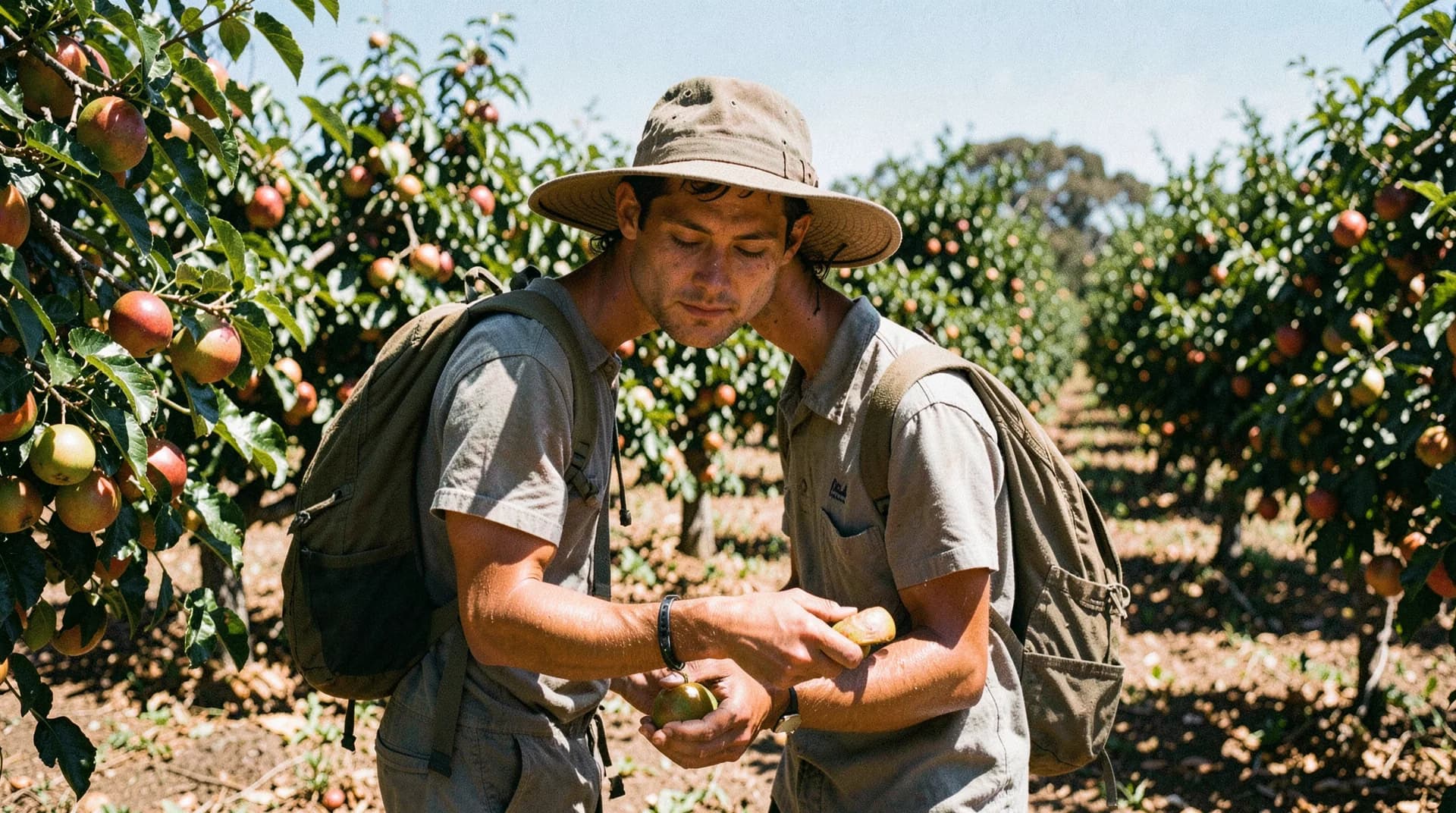
The 462 second-year and third-year extensions work on the same principle as the 417: you earn them through specified work in specified regional areas and eligible industries. Qualifying industries typically include agriculture (plant and animal cultivation), fishing and pearling, tree farming and felling, mining, construction, and certain tourism and hospitality work in northern and remote Australia.
A few rules trip people up every year:
- The work must be in an eligible postcode and an eligible industry. Hospitality in a regional town does not count unless it falls within the specified tourism categories for the relevant northern/remote zones.
- You must be paid at least the legal minimum. Cash-in-hand arrangements below award rates don't count, even if you can prove you worked.
- Keep payslips, a tax record, and employer details. The Department audits second and third-year claims, and weak documentation is a frequent refusal reason.
How to Apply
- Confirm Spain's cap is open and that you meet the age, education, and English requirements.
- Gather your evidence: Spanish passport, proof of tertiary study or qualification, English-language evidence, recent bank statements showing sufficient funds, and any prior visa history.
- Create or sign in to your ImmiAccount.
- Lodge a new subclass 462 application from outside Australia. First applications can't be made onshore.
- Pay the visa charge. The current amount is on the visa fees schedule — don't rely on a figure quoted in an old blog post.
- Complete any health checks or character requests the Department issues.
- Wait for the grant, then enter Australia within the period stated in your grant letter. For typical turnaround, see the visa processing times guide.
What Differs for Spanish Nationals Specifically
If you've been reading general "working holiday visa Australia" advice, here's what actually changes because you hold a Spanish passport:
- You're on the 462, not the 417. Every condition flows from that.
- There's an annual cap. Britons and Germans don't have one. You do, so timing your application matters.
- You need to prove education. A tertiary qualification or evidence of tertiary study is required. The 417 has no such gate.
- You need to prove English. Functional English evidence is required, where many 417 nationalities are exempt.
- No age extension. The Spain-applicable upper limit stays at 30, with no bilateral extension of the kind the UK negotiated.
None of this makes the visa harder to live once granted — the in-country experience is the same twelve months of working travel. It just means the front door has more locks, and you need the right keys ready before you knock.
Practical Notes for Spanish Holders in Australia
- You'll need an Australian tax file number (TFN) before you're paid through the standard payroll system. Apply online once you have an Australian address.
- The working-holiday tax rules apply to 462 holders the same as 417 holders — see the working-holiday tax rate guide.
- Most major Australian banks let you open an account before arrival; sort it out a few weeks ahead so your first wages have somewhere to land.
- Travel and health insurance is strongly recommended. Spain does not have a reciprocal healthcare agreement with Australia of the kind some other countries hold, so don't assume Medicare will cover you — carry adequate private cover.
Frequently Asked Questions
Do Spanish citizens use subclass 417 or 462 for the Working Holiday visa?
Spanish citizens use subclass 462, the Work and Holiday visa. The 417 is reserved for a different set of countries such as the UK and Ireland. Spain's place on the 462 means an annual cap, an education requirement, and an English-language requirement all apply.
What is the age limit for Spanish Working Holiday visa applicants?
You must be 18 to 30 inclusive at the time you apply. Unlike the UK, Spain has no bilateral agreement extending the upper age limit, so the cap stays at 30. Check the working holiday visa age limit guide for how the cut-off is assessed.
Is there a cap on the number of visas for Spanish citizens?
Yes. Spain's subclass 462 allocation is limited each programme year, unlike the uncapped 417 streams. Once the year's places are filled, applications pause until the allocation resets. Prepare early and apply when the cap is open.
Do Spanish applicants need a university degree?
You need evidence of tertiary study or a completed post-secondary qualification. This is a genuine 462 requirement that does not exist for 417 nationalities, so gather your academic evidence before lodging.
Can Spanish citizens extend to a second or third year?
Yes. Complete the required specified regional work in an eligible industry and postcode during your first year to qualify for a second-year 462, and a further period during your second year for a third year. Keep payslips and a tax record, because the Department audits these claims.
How much does the visa cost and how long does it take?
The current visa charge is published on the visa fees schedule, and typical turnaround is covered in the visa processing times guide. Avoid relying on figures from older guides, as both fees and processing times change.