Protection Visa (Subclass 866): Refugee Claims in Australia
The Subclass 866 Protection Visa is Australia's onshore refugee visa. It's for people already in Australia who fear persecution or serious harm if they return to their home country. If granted, it provides permanent residence. To qualify, you must meet the definition of a refugee under the 1951 Refugees Convention or satisfy the complementary protection criteria under Australian law. The application is free, but the process is rigorous — involving detailed interviews, country information research, and credibility assessments.
Quick Facts
| Detail | Information |
|---|---|
| Visa subclass | 866 |
| Cost | Free |
| Apply from | Inside Australia only |
| Visa type | Permanent (if granted) |
| Processing time | 6 months to 3+ years |
| Interview | Yes — in most cases |
| Legal aid | Available through specialist providers |
| Review rights | Yes — AAT (Immigration and Refugee Division) |
Who Can Apply?
You can apply for a Protection Visa if:
- You are in Australia (not in immigration detention in most cases)
- You hold a valid visa, or you are unlawful but eligible to apply
- You have not previously had a protection visa application refused (unless the Minister allows a further application)
- You fear persecution or serious harm if returned to your home country
The Refugee Criterion
Under the Refugees Convention, a refugee is a person who:
- Is outside their country of nationality (or habitual residence)
- Has a well-founded fear of persecution
- The persecution is for reasons of race, religion, nationality, membership of a particular social group, or political opinion
- Cannot or will not seek protection from their home country
"Well-founded fear" means there's a real chance — not just a theoretical possibility — that you would be persecuted if you returned.
"Persecution" means serious harm plus a failure of state protection. Examples include imprisonment, torture, physical violence, denial of fundamental rights, or severe discrimination that amounts to a threat to your life or freedom.
Complementary Protection
Even if you don't meet the refugee definition, you may qualify for complementary protection if there are substantial grounds for believing that returning you to your home country would result in:
- Arbitrary deprivation of life
- The death penalty
- Torture
- Cruel or inhuman treatment or punishment
- Degrading treatment or punishment
Complementary protection covers situations that fall outside the five Convention grounds (race, religion, nationality, social group, political opinion) but still involve serious harm.
The Application Process
Step 1: Lodge the Application
Complete and lodge the protection visa application (Form 866) with the Department. The application is free. Include:
- Your personal details and immigration history
- A detailed statement of your claims (why you fear returning)
- Any supporting evidence (documents, country information, medical reports)
- Identity documents
Step 2: Receive a Bridging Visa
After lodging, you'll receive a bridging visa allowing you to stay in Australia while the application is processed. After six months, you may receive work rights.
Step 3: The Interview
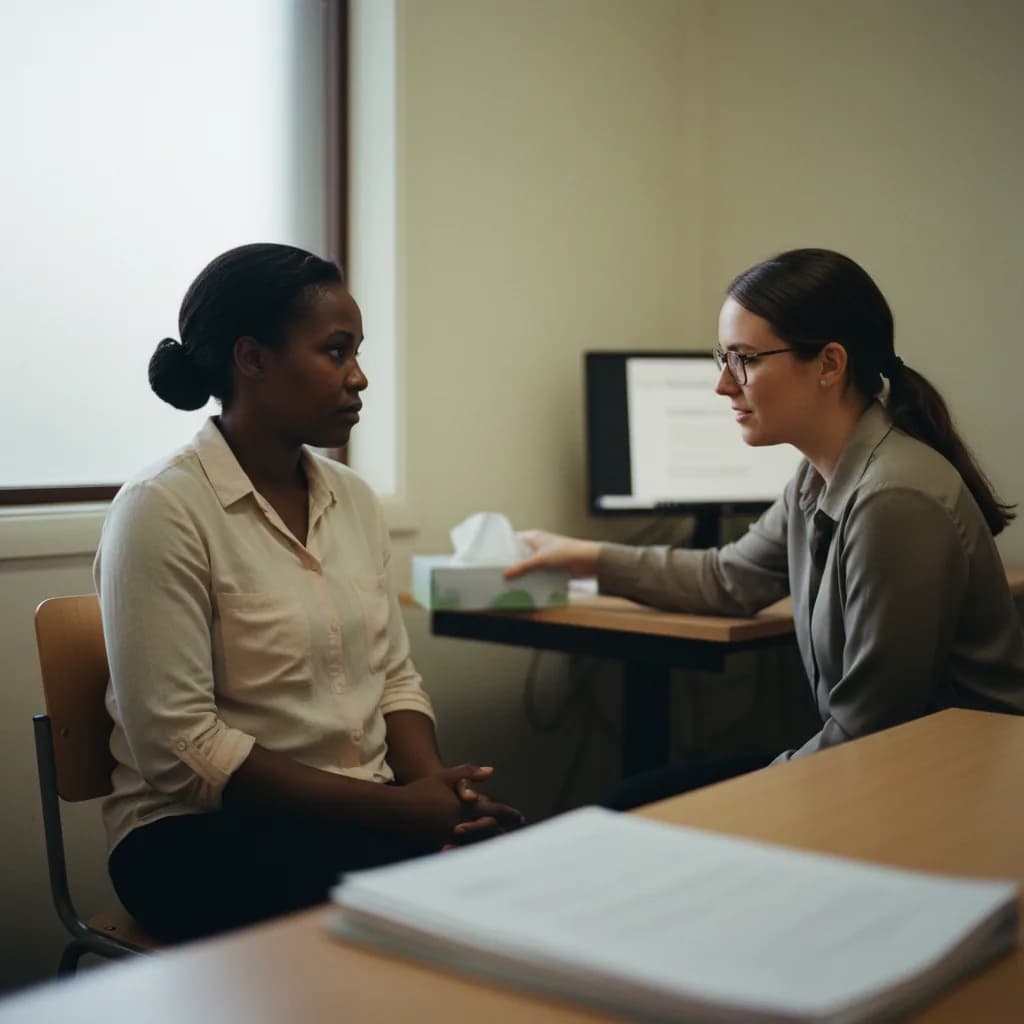
A delegate of the Department will interview you about your claims. This is the most important part of the process. The interview typically covers:
- Your personal background and history
- The events that led you to leave your country
- Why you fear returning
- Whether you've tried to get protection from your home country's authorities
- Whether you could safely relocate within your country
Interviews are conducted with an interpreter if needed and usually take 2-4 hours.
Step 4: Assessment
The Department assesses your claims against country information, your credibility, and the legal criteria. They use reports from DFAT (Department of Foreign Affairs and Trade), the UNHCR, human rights organisations, and other sources to understand conditions in your home country.
Step 5: Decision
The delegate makes a decision:
- Granted: You receive permanent residence
- Refused: You can appeal to the AAT
Evidence That Supports a Protection Claim
Strong evidence significantly improves your chances:
- Personal statement: A detailed, consistent written account of your experiences and fears. This is often the most important piece of evidence.
- Country information: Reports from DFAT, Human Rights Watch, Amnesty International, UNHCR, Freedom House, and other credible sources about conditions in your country.
- Identity documents: Passport, national ID, birth certificate. If you can't provide these, explain why.
- Medical and psychological reports: If you've experienced torture or trauma, reports from medical professionals or torture/trauma services.
- Witness statements: Statutory declarations from people who can corroborate your claims.
- Photos and documents: Anything that supports your account — photos of injuries, membership cards, arrest warrants, newspaper articles.
Credibility
Credibility is central to protection visa assessments. The Department assesses whether your account is believable by looking at:
- Consistency: Does your account remain consistent across your written statement, interview, and any previous statements?
- Detail: Can you provide specific details about events, dates, places, and people?
- Plausibility: Does your account make sense given what is known about conditions in your country?
- Corroboration: Is your account supported by evidence?
- Delay: If you've been in Australia for a long time before applying, why didn't you apply sooner?
Inconsistencies don't automatically mean your claims are rejected, but significant or unexplained contradictions can undermine credibility.
Appeal Rights
If your application is refused, you can apply for merits review at the AAT (Administrative Appeals Tribunal, Immigration and Refugee Division). The AAT conducts a fresh assessment of your claims, including a new hearing.
- Timeframe to appeal: 28 days from the date of the refusal decision
- Cost: $110 (fee may be reduced or waived in some cases)
- Processing time: Varies widely — months to years
- Bridging visa: You receive a bridging visa during the review
If the AAT also refuses, further options may include judicial review (Federal Circuit and Family Court) on legal grounds, or Ministerial intervention.
After the Visa Is Granted
If your Protection Visa is granted, you become a permanent resident of Australia with:
- Full work rights
- Access to Medicare and government services
- The right to travel (though you should not return to your home country — this can raise questions about whether your fear of persecution was genuine)
- A pathway to Australian citizenship
- The ability to sponsor family members through the Special Humanitarian Program
Common Issues
"Safe Third Country" Bar
If you spent seven or more days in a country where you could have sought protection before coming to Australia, you may be barred from applying for a protection visa. This doesn't apply to transit through airports.
Previous Refusal Bar
If you've previously had a protection visa refused, you generally cannot lodge another one unless the Minister lifts the bar. This is designed to prevent repeated applications.
Arrival by Boat
People who arrived in Australia by boat after certain dates are subject to different processing arrangements and may not be eligible for the Subclass 866. These cases are handled through separate fast-track assessment processes.
Frequently Asked Questions
How long does processing take?
Processing times vary enormously — from six months to over three years. Complex cases, security checks, and high caseloads all contribute to delays.
Can I work while waiting?
After your application has been with the Department for six months, you can typically request work rights on your bridging visa. Many protection visa applicants wait years for a decision, and work rights are essential during that period.
Do I need a lawyer?
You don't legally need one, but professional legal assistance significantly improves your chances. Specialist refugee legal services include the Refugee Advice and Casework Service (RACS), Asylum Seeker Resource Centre (ASRC), and state legal aid commissions.
Can I include my family?
Family members in Australia can be included as secondary applicants. Family members overseas cannot be included on the 866 but may be sponsored through the Special Humanitarian Program (Subclass 202) after your visa is granted.
What if I can't provide identity documents?
The Department understands that refugees often flee without documents. You'll need to explain why you can't provide identity documents and provide whatever alternative evidence you can. However, inability to prove identity can complicate and delay your case.
Can I return to my home country after getting the protection visa?
Technically, your visa allows travel. However, returning to the country you claimed to fear persecution from can raise serious questions about the genuineness of your claims and could, in extreme cases, lead to visa cancellation.