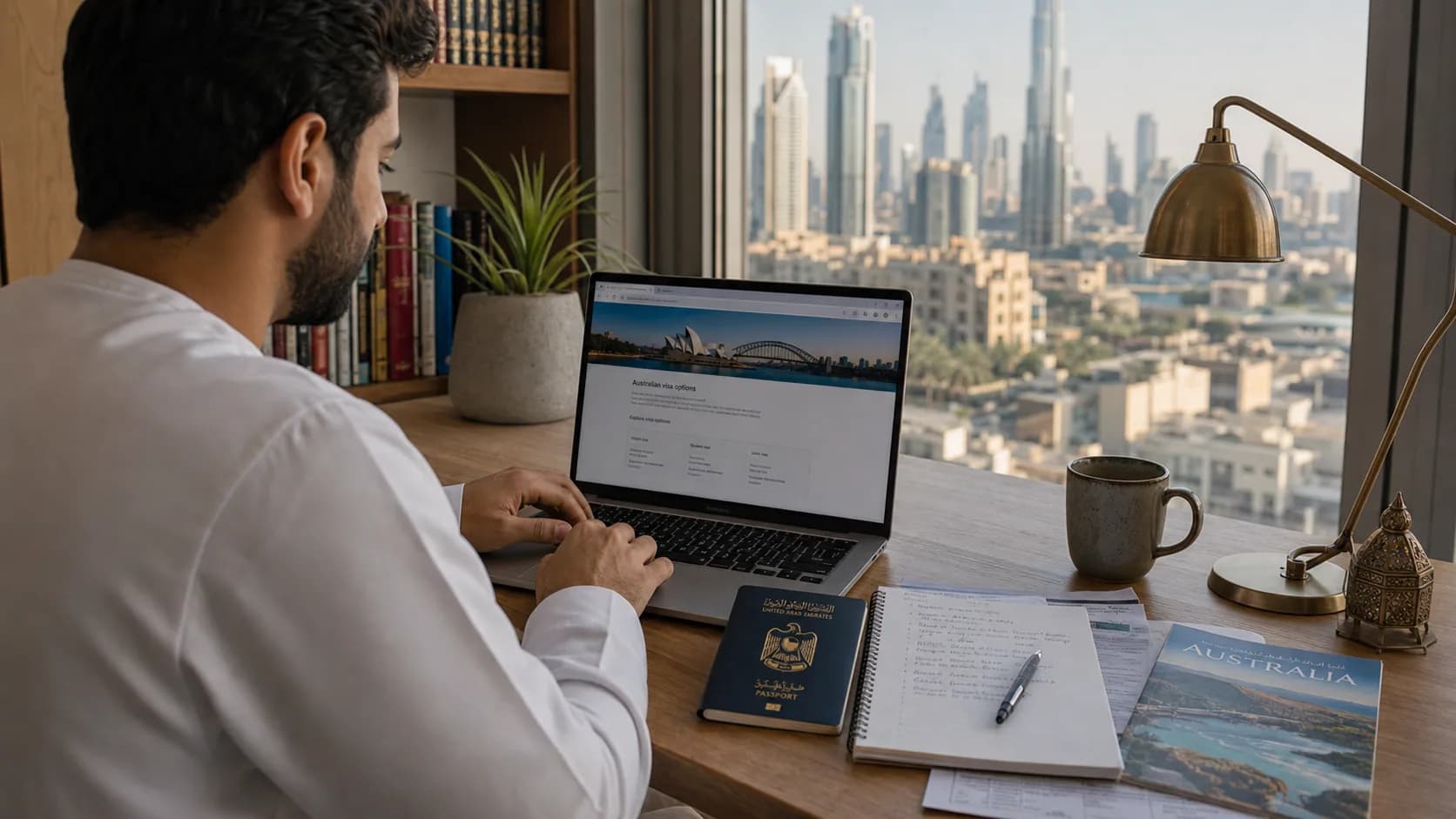
The Frequent Traveller Stream is part of Australia's Subclass 600 visitor visa. Home Affairs says it "can be granted for up to 10 years", and you can enter as often as you like while it is valid. Each stay is limited to 3 months, and to 12 months in total in any 24-month period. It costs $1,845. It is for citizens of 11 countries who travel often to Australia for tourism or business visitor activities, and you apply for it yourself in ImmiAccount.
Quick Facts
| Detail | Information |
|---|---|
| Visa subclass | 600 (Frequent Traveller Stream) |
| Cost | $1,845 |
| Processing time | Not published ("Processing times for this visa are unavailable") |
| Maximum stay per visit | 3 months |
| Total stay | 12 months in any 24-month period |
| Visa validity | Up to 10 years |
| Work rights | No. Tourism and business visitor activities only |
| Apply from | Outside Australia |
| Entry type | Multiple entry |
What Is the Frequent Traveller Stream?
The Frequent Traveller Stream sits within the broader Subclass 600 visitor visa framework. While the standard Tourist and Business Visitor streams grant single or limited entries, the Frequent Traveller Stream offers ongoing access to Australia over an extended period.
This stream is for citizens of 11 countries who travel often to Australia for tourism or business visitor activities. With it you can be a tourist, cruise or have a holiday, visit family or friends, and undertake business visitor activities such as meetings, conferences and trade fairs.
The key advantage is convenience. Instead of applying for a new visa before every trip, you hold a single visa that covers multiple visits over years. For executives, investors, and business professionals who travel to Australia several times a year, the time and hassle saved is considerable.
Who Can Apply?
Eligibility is set by nationality. The official page lists no invitation step: you apply yourself. You must:
- Hold a passport from an eligible country. Home Affairs limits the stream to citizens of the People's Republic of China, Brunei, Cambodia, the Philippines, Laos, Indonesia, Malaysia, Singapore, Thailand, Vietnam and Timor-Leste. You must hold a passport from, and be a citizen of, one of these countries.
- Give biometrics. You must provide biometrics at an Australian Biometric Collection Centre (ABCC).
- Be a genuine visitor. You must only intend to stay temporarily in Australia and obey any condition and stay period attached to your visa.
- Have enough money to support yourself in Australia and to leave at the end of your stay.
- Meet the health and character requirements, and have paid back, or arranged to pay back, any debt to the Australian Government.
- Be outside Australia when you apply and when the decision is made.
How to Apply
Home Affairs sets out five steps.
Step 1: Before you apply. Check your passport. If you plan to get a new passport, do this before you apply. You can do health examinations before you apply, or wait until you are asked.
Step 2: Gather your documents. Provide your passport pages and a national identity card if you have one. Add proof you are a genuine visitor, such as bank statements or pay slips, and proof of reasons to return home, such as a letter from your employer. If you are coming for business, add documents such as a conference registration or a letter from your employer. Have non-English documents translated into English.
Step 3: Apply online. Log in to or create an ImmiAccount, attach your documents and pay the fee. Home Affairs will not process your application until you pay.
Step 4: After you apply. Don't make travel arrangements until you are told in writing that the visa is granted. Home Affairs will tell you if you need to give biometrics or have health exams. In the People's Republic of China, biometric collection is currently available only in Hong Kong.
Step 5: Visa outcome. The decision comes in writing, with your visa grant number, the date your visa starts and your visa conditions.
Conditions and Limitations
The Frequent Traveller Stream comes with the same core conditions as other Subclass 600 visas, plus some specific to this stream.
3 months per visit: Regardless of your visa's total validity, each individual stay in Australia cannot exceed 3 months. The Department tracks your entries and exits. Home Affairs says "a re-entry ban may be applied if you overstay your visa by more than 28 days."
No work permitted: You cannot work for an Australian employer, provide services, or sell goods directly to the public. Permitted business activities include attending meetings, conferences, and trade fairs; making business enquiries; negotiating deals; and participating in government visits. For clarification on the distinction, see can you work on a tourist visa.
12-month cumulative stay: You can stay "for 12 months in total in any 24-month period". Home Affairs says you must not breach condition 8573 ("no more than 12 months stay in any 24-month period") if it is attached to your visa.
No study: Short business courses or conferences are fine, but enrolling in formal study is not permitted.
Cost and Value Comparison
At $1,845, the Frequent Traveller Stream is the most expensive Subclass 600 option. Is it worth it?
| Stream | Cost | Validity | Max Stay | Entries |
|---|---|---|---|---|
| Tourist | From $250 | Up to 12 months | 3, 6, or 12 months | Single or multiple |
| Business Visitor | $250 | Up to 12 months | 3 months | Single or multiple |
| Sponsored Family | $250 | Up to 12 months | 3, 6, or 12 months | Single or multiple |
| Frequent Traveller | $1,845 | Up to 10 years | 3 months | Multiple |
If you travel to Australia three or more times per year for business, the Frequent Traveller Stream pays for itself quickly compared to repeatedly applying for $250 Business Visitor visas. Over a 10-year validity period, the savings in application fees alone could be substantial — not to mention the time saved on repeated applications.
Tips for Maximising Your Chances
You apply yourself, so a complete application is what counts.
Show you are a genuine visitor. Home Affairs asks for as much proof as you can give: money for your stay, and reasons to return home, such as your job, your studies, family or property.
Keep business documentation. Maintain records of your business activities in Australia — meeting agendas, conference registrations, letters from Australian business contacts. These strengthen any future Frequent Traveller application.
Get help if you want it. You don't have to use a migration agent. If you want one, use a registered migration agent.
Don't overstay or breach conditions. Even minor violations on previous visas can disqualify you. If your visa says 3 months, leave at 2 months and 29 days at the latest.
Frequently Asked Questions
Can I use the Frequent Traveller Stream for tourism?
Yes. Home Affairs says that with this visa you can "be a tourist, cruise or have a holiday", visit family or friends, and undertake business visitor activities.
What happens if my passport expires before the visa?
Your visa remains valid, but you'll need to get a new passport and then contact the Department to link your visa to the new passport. You may need to apply for a new visa if the transfer process doesn't apply to your situation.
Can my family travel with me on this visa?
No. You can't include family members in your application. Each family member must make a separate application, for this stream if they are eligible, or for another visa.
Is the 10-year validity guaranteed?
No. Home Affairs says the visa "can be granted for up to 10 years". Your grant letter tells you how long you can stay.
Can I apply for a longer stay than 3 months per visit?
No. The Frequent Traveller Stream is fixed at 3 months per visit. If you need a longer stay, you would need to apply for a separate Tourist stream visa for that particular trip.
What counts as "business activities" versus "work"?
Business activities include attending meetings, conferences, and trade fairs, or exploring business opportunities. Work means providing services to, or being employed by, an Australian business. If money flows from an Australian entity to you for services rendered in Australia, that's work — and it's not permitted on this visa.