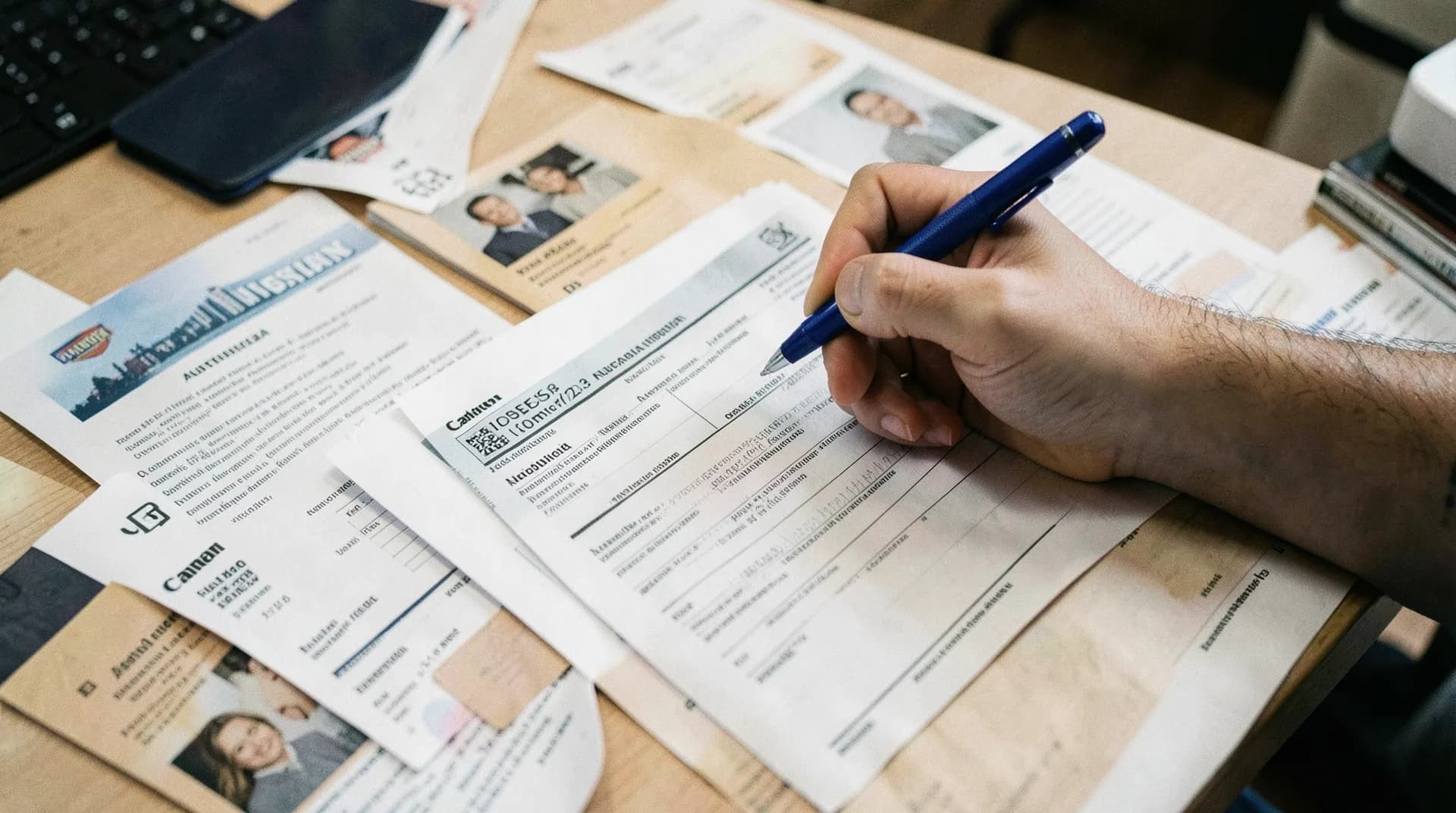
Australian Tourist Visa for Brazilian Citizens: 2026 Guide
Updated: 13 May 2026
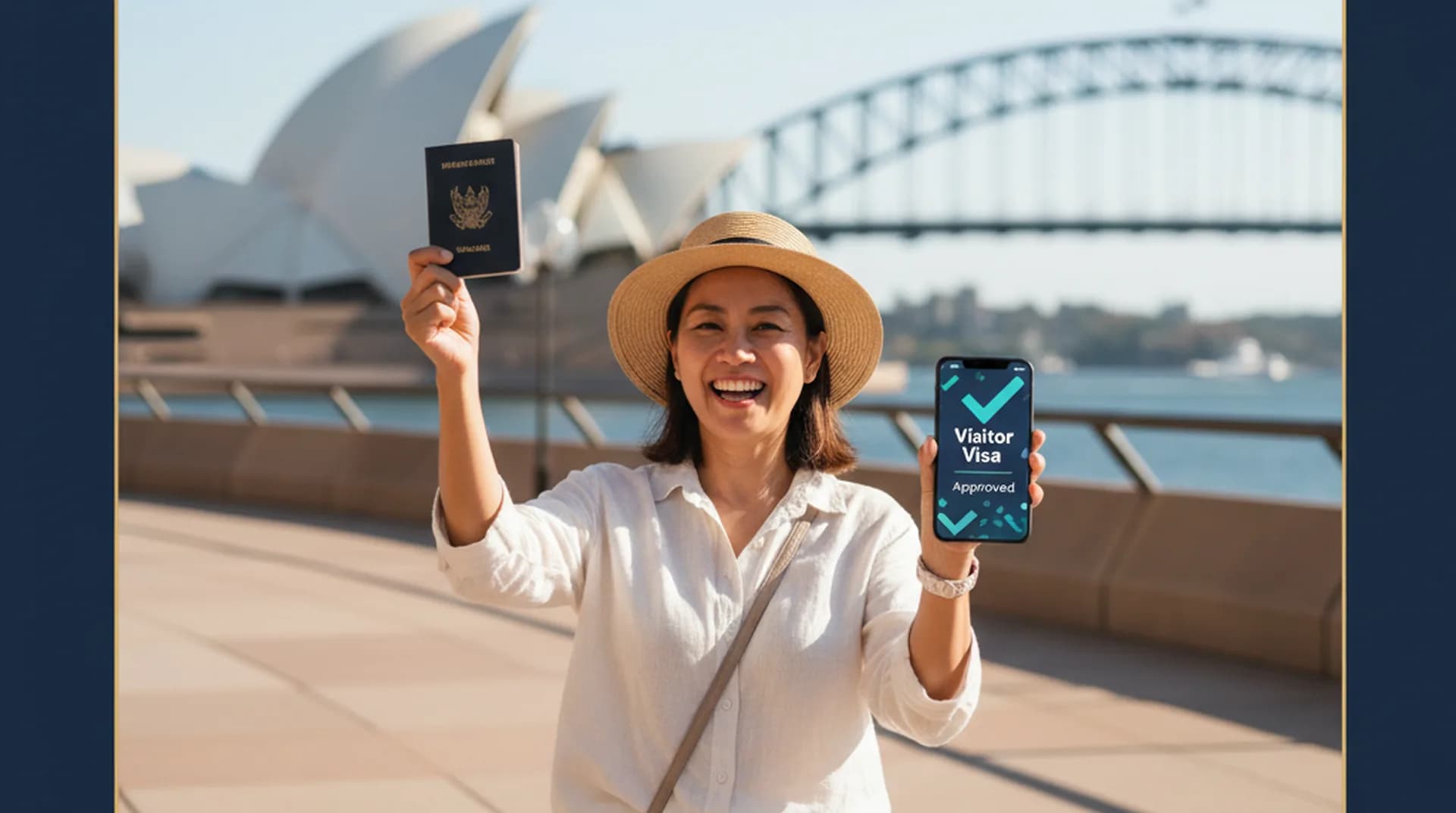
The Australian Visitor visa (subclass 600) is the tourist pathway for Brazilian passport holders, who aren't eligible for ETA or eVisitor. Applicants lodge online via ImmiAccount or VFS Global in Sao Paulo, Rio de Janeiro or Brasilia, pay an AUD $430 base fee, and must show genuine ties to Brazil and consistent financial capacity. Processing usually runs 15-30 days.
Quick Facts: Tourist Visa for Brazilian Citizens
| Detail | Information |
|---|---|
| Visa | Subclass 600 (Visitor), Tourist stream |
| Eligible for ETA/eVisitor | No; full application required |
| Base application fee | AUD $430 |
| Stay length | Usually 3, 6 or 12 months per entry, decided by the case officer |
| Processing time | 15-30 days under normal conditions |
| Application centres | VFS Global in Sao Paulo, Rio de Janeiro and Brasilia |
| Biometrics | Usually required at VFS |
| Police clearance | Not standard for short-stay tourist applications |
| Health exam | Not generally required for short visits |
| English test | Not required |
Who the Tourist Visa Is For
The subclass 600 covers Brazilian citizens travelling to Australia for holidays, visiting relatives or friends, attending family events such as weddings or graduations, short business meetings, or accompanying a relative who is in Australia for a defined period. You can't work on a 600. Study is permitted but capped at three months in total across the stay.
If your real reason for travel is something else, such as moving in with an Australian partner, taking up paid work, or staying for extended medical care, the 600 is the wrong subclass. The application will likely be refused if that purpose surfaces during assessment.
Eligibility and Core Requirements
To be granted a Visitor visa as a Brazilian citizen, you'll need to satisfy the case officer that you:
- Hold a valid Brazilian passport with at least six months remaining
- Have a specific, plausible reason to visit Australia
- Can fund the entire trip without working in Australia
- Have real reasons to come back to Brazil at the end of the visit
- Meet Australia's standard health and character requirements
- Aren't intending to use the visa as a workaround for a longer-term plan
The case officer isn't looking for a perfect applicant. They're looking for an application that holds together. Your stated reason for travel, your finances, your work or study situation in Brazil, and your travel history should all tell the same story.
Documents You'll Need
Lodgement is done online, but the file you submit does most of the talking. A typical Brazilian Visitor visa application includes:
Identity and passport
- Bio page of your Brazilian passport
- Recent passport-style photo
- Previous passports if you hold them, to show travel history
Purpose of visit
- Cover letter explaining the trip, dates and itinerary
- Flight bookings or held reservations
- Accommodation bookings (hotel, Airbnb, or letter from the relative hosting you)
- Invitation letter from the family member or friend in Australia, if applicable, with their visa or citizenship evidence
Financial evidence
- Three to six months of bank statements (Banco do Brasil, Itau, Bradesco, Caixa or your usual bank)
- Recent payslips and a current employment letter, on company letterhead
- For business owners: CNPJ, recent declarations and a statement from your accountant
- Tax declaration (Imposto de Renda) for the most recent year
- Property deeds, vehicle ownership or other assets that anchor you in Brazil
Family and ties evidence
- Marriage certificate, children's birth certificates
- Letters from employer confirming approved leave and your return date
- Enrolment letters if you're a student in Brazil
Anything in Portuguese should be translated by a translator recognised by JUCESP or another state board, or by a NAATI-accredited translator. The Department doesn't reject documents purely for being in Portuguese, but a clean English version speeds the assessment.
How to Apply
Brazilian applicants have two practical lodgement routes.
Online through ImmiAccount. You create an account, complete Form 1419, upload the supporting file and pay by card. This is the most common pathway and the one most travel agents use. After lodgement you'll typically be invited to attend a VFS Global centre for biometrics. Our ImmiAccount setup guide walks through the account creation, password rules and document upload limits.
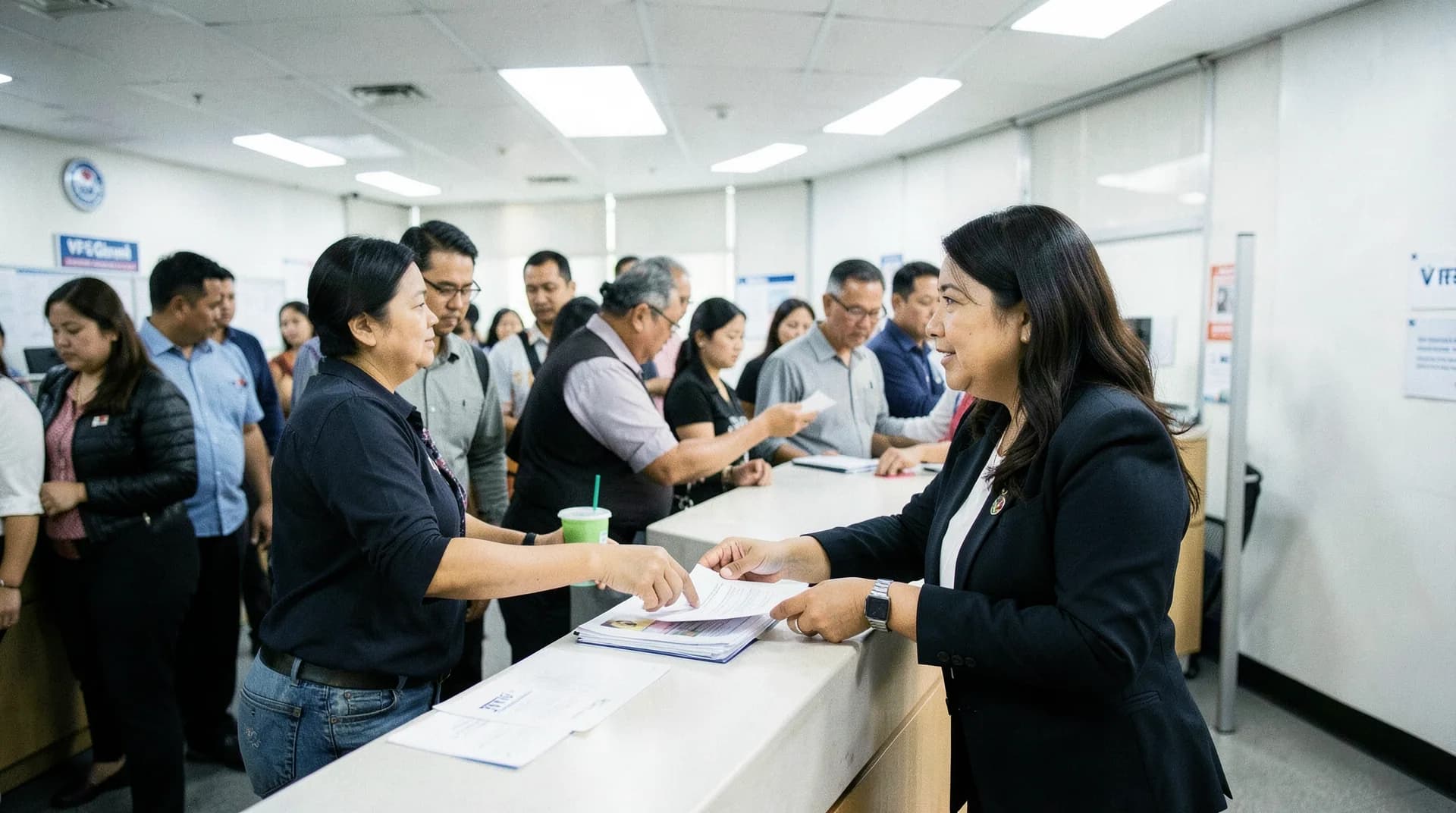
Through VFS Global as a paper-assisted application. VFS centres in Sao Paulo, Rio de Janeiro and Brasilia accept paper applications on your behalf, handle biometrics and courier documents. There's a service fee on top of the AUD $430 visa fee. Useful if you're not confident uploading documents yourself or you want someone to check the file before submission.
For a deeper walkthrough that applies to any subclass, see our step-by-step application guide and the Visitor visa subclass 600 pillar.
Cost and Processing Times
The base fee for the Tourist stream is AUD $430, paid in Australian dollars at lodgement. If you use a VFS centre, there's an additional VFS service fee paid locally in reais.
Processing for Brazilian applicants generally falls inside 15-30 days, but this isn't a deadline the Department commits to. Applications lodged during the Brazilian winter holiday wave (June-July) and the December-February period can take longer because of volume. Applications with weak financial evidence, inconsistent stories or limited travel history go into manual review, which adds weeks.
Practical rule: lodge six to eight weeks before your planned departure. Don't book non-refundable flights before grant. Use held reservations or refundable fares while the visa is pending.
What Brazilian Applicants Need to Know
Brazilian Visitor visa applications usually turn on three factors: stated purpose, financial pattern and ties.
Stated purpose. Be specific. "Tourism for two weeks in Sydney and Melbourne, then a week visiting my sister in Brisbane" is a clearer story than "holiday in Australia". Attach the actual itinerary, accommodation references and any pre-booked tours.
Financial pattern. Case officers look at the shape of your finances, not just the closing balance. Three to six months of statements showing regular salary, normal spending and savings looks honest. A single large deposit a week before lodgement looks coached. If money came from a relative, document the transfer and the relationship.
Ties to Brazil. Stable employment, property, family commitments, ongoing study, business interests; any of these counts. The Department refuses Brazilian applicants more often where the file shows someone with limited job stability and no obvious reason to return.
Brazilian citizens have a generally moderate approval rate. First-time applicants with strong jobs, clean travel history to Schengen, US or UK destinations, and clear funds tend to clear without trouble. Younger applicants with thin work history and no prior international travel face more scrutiny.
Common Pitfalls for Brazilian Applicants
A few patterns repeatedly cause delays or refusals.
Coached bank statements. Borrowing money from family to "look richer" on paper rarely works. Case officers see plenty of these and tend to ask for source-of-funds evidence. A genuine, modest balance with consistent income is a stronger file than an inflated balance with no history.
Mismatched purpose. Saying you're visiting for two weeks of tourism while flights are one-way and accommodation is booked for three months is a refusal trigger.
Missing or weak return-ties evidence. Self-employed applicants, recent graduates and people between jobs need to work harder here. A CNPJ printout, ongoing contracts, family responsibilities or property documentation all help.
Untranslated Portuguese documents. Acceptable in principle, but a NAATI-accredited or JUCESP-recognised translation removes friction.
Last-minute lodgement. Brazilians regularly try to lodge two weeks before flight time. Some applications go through. Many don't, and refunds on the AUD $430 fee aren't available.
If you've been refused before, that history follows the passport. See our police clearance and character guide for how previous immigration history is handled. Don't omit a refusal on a later application, because the Department keeps the record.
Frequently Asked Questions
Can Brazilians get an Australian tourist visa online?
Yes. Brazilian passport holders are not eligible for the ETA or eVisitor, so the route is a full subclass 600 application. This is lodged online through ImmiAccount, or paper-lodged through VFS Global in Sao Paulo, Rio de Janeiro or Brasilia. There's no shortened electronic version for Brazilian nationals.
How much does the Australian tourist visa cost from Brazil?
The base Tourist stream fee is AUD $430 at lodgement. If you use a VFS Global centre, you'll also pay a local service fee in reais. The visa fee is non-refundable if the application is refused.
How long does the tourist visa take from Brazil?
Most Brazilian applications are decided in 15-30 days. Files lodged during peak Brazilian travel periods or with weaker documentation can take longer. The Department doesn't publish a Brazil-specific service standard, so the safest plan is six to eight weeks before departure.
Do Brazilians need biometrics for the Visitor visa?
In most cases yes. VFS Global centres in Sao Paulo, Rio de Janeiro and Brasilia handle biometric capture (photograph and fingerprints) on the Department's behalf. You'll be invited after lodgement.
Can I work or study on a tourist visa from Brazil?
No work is permitted on a subclass 600. Short, incidental study up to three months is allowed. If your plan involves paid work or a longer course, you'll need a different subclass. The Work and Holiday visa (subclass 462) or Student visa (subclass 500) usually fit better.
What if my application is refused?
You receive written reasons. There's no merits review for offshore Visitor visa refusals, but you can re-apply once the issues are addressed. Common fixes: stronger ties evidence, a clearer financial story, a more specific itinerary, and full disclosure of any prior refusal history.