How to Extend Your Australian Tourist Visa: Step-by-Step Guide
You can extend your stay in Australia by applying for a new Subclass 600 visitor visa from within Australia before your current visa expires. The extension costs from $250 for the Tourist stream and must be lodged while you still hold a valid visa. If your current visa carries Condition 8503 ("no further stay"), you generally cannot apply for an extension. Processing times vary from days to months, and a Bridging Visa A is granted automatically to keep you lawful while you wait.
Quick Facts
| Detail | Information |
|---|---|
| Cost | From $250 (Tourist stream application) |
| When to apply | Before your current visa expires |
| Processing time | 2 days – 8 months |
| Apply through | ImmiAccount (online) |
| Bridging visa | Bridging Visa A granted automatically |
| 8503 condition | If present, extension generally not possible |
| Maximum extensions | No formal limit, but scrutiny increases |
Can You Extend a Tourist Visa?
Yes — but with conditions. Extending a tourist visa in Australia technically means applying for a new Subclass 600 visa while you're already in the country on an existing visitor visa. It's not an "extension" in the traditional sense; it's a fresh application assessed on its own merits.
The critical question is whether your current visa carries Condition 8503 — "No Further Stay." This condition appears on many visitor visa grants and means you cannot apply for most other visas while in Australia. Check your visa grant letter or your VEVO (Visa Entitlement Verification Online) record to see if 8503 is attached to your visa.
If you have Condition 8503: You generally cannot apply for an extension. The only exception is in compelling and compassionate circumstances — a medical emergency, a death in the family, or a natural disaster preventing travel. You'd need to apply for a waiver of Condition 8503 first, and approval is rare.
If you don't have Condition 8503: You can lodge a new Subclass 600 application from within Australia.
When to Apply
Timing matters. Apply too late and you're in trouble; apply too early and you might waste time unnecessarily.
Apply at least 2-4 weeks before your current visa expires. This gives you a buffer in case there are issues with your application. The moment you lodge a valid application, a Bridging Visa A is associated with your record. This bridging visa activates automatically when your current visa expires, keeping you lawful while the new application is processed.
Don't leave it until the last day. While technically you can apply up until midnight on your visa expiry date, last-minute applications carry risks. If there's a technical issue with ImmiAccount or your payment doesn't process, you could become unlawful — and that changes everything.
Don't apply on day one either. Applying for an extension the day you arrive looks suspicious and suggests you may have misrepresented your intentions in your original application.
Step-by-Step Extension Process
Step 1: Check Your Visa Conditions
Log into VEVO or check your visa grant letter. Confirm that Condition 8503 is NOT on your current visa. If it is, skip to the "What If You Have Condition 8503" section below.
Step 2: Log Into ImmiAccount
Access ImmiAccount at the Department of Home Affairs website. If you applied for your original visa through ImmiAccount, you'll already have an account.
Step 3: Start a New Application
Select "New Application" and choose the Subclass 600 Visitor Visa. When asked about your location, indicate that you're applying from inside Australia.
Step 4: Complete the Application
Fill in all required fields. The application is similar to your original one, but you'll need to explain why you want to stay longer. Be specific and honest. "I want to extend my holiday" is weaker than "My mother (Australian citizen) is recovering from surgery and I need to assist her for an additional 3 months."
Step 5: Upload Supporting Documents
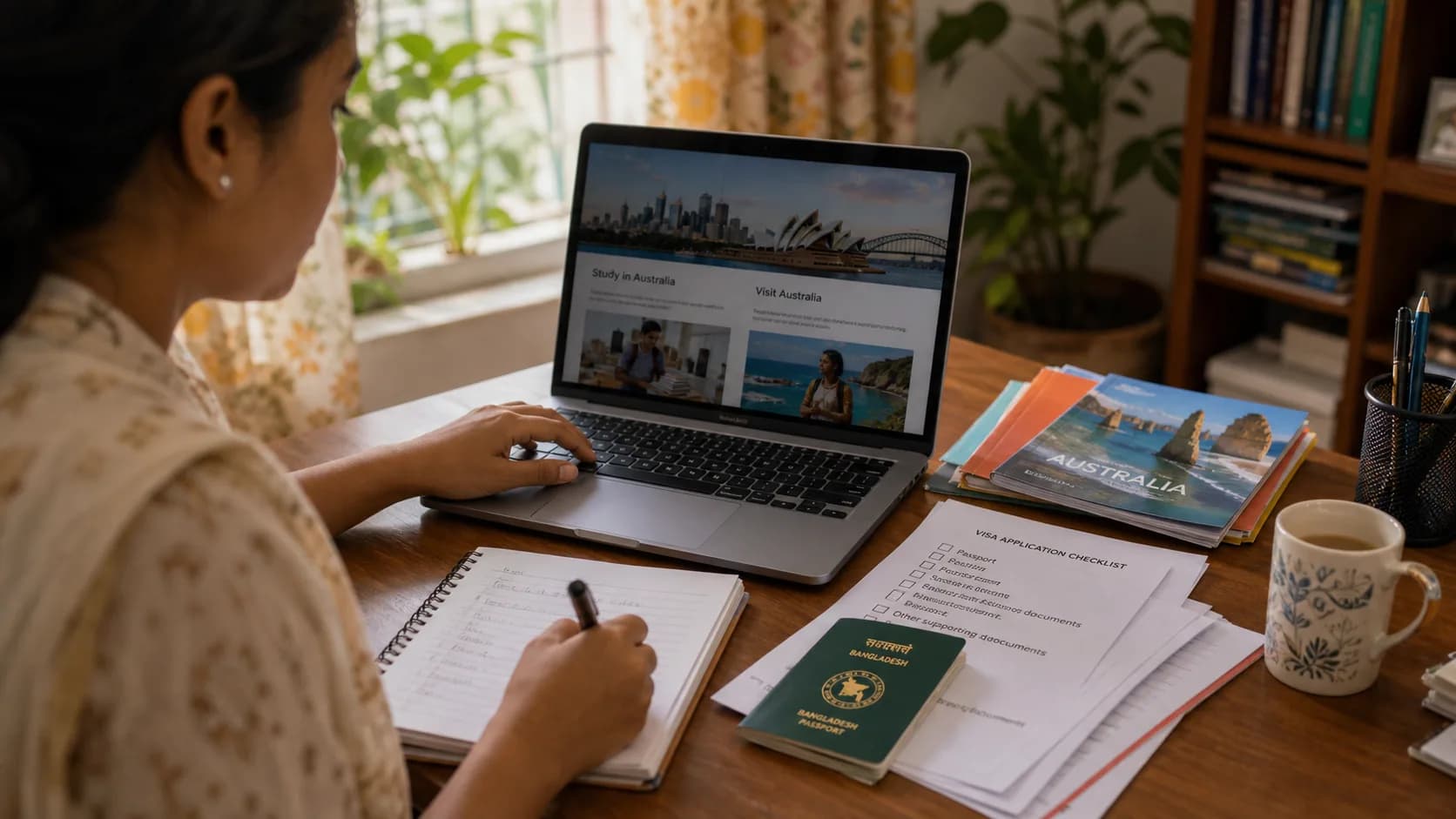
You'll need:
- Passport bio page (updated scan)
- Bank statements showing sufficient funds for the extended stay
- Evidence supporting your reason for extension
- Health insurance for the extended period
- Evidence of ties to your home country (employment letter, property, return flight)
- Proof you've complied with all current visa conditions
Step 6: Pay the Fee
From $250 for the Tourist stream. Payment is made through ImmiAccount by credit card.
Step 7: Wait for a Decision
A Bridging Visa A is automatically associated with your record upon application. If your current visa expires before a decision is made, the bridging visa kicks in. You can check your visa status through VEVO at any time.
What Happens While You Wait
Once you lodge the application, you're in one of two states:
Current visa still valid: You continue on your existing visa with its conditions. The bridging visa sits in the background.
Current visa expired, BVA active: Your Bridging Visa A activates. It typically carries the same conditions as your last substantive visa — meaning no work rights if your tourist visa didn't have them. You can stay in Australia lawfully, but check whether the BVA allows travel. Standard BVAs do not permit re-entry if you leave Australia. If you need to travel, apply for a Bridging Visa B before departing.
What If You Have Condition 8503?
Condition 8503 is the biggest barrier to extending a tourist visa. If it's on your visa, your options are limited.
Request a waiver: You can ask the Department to waive Condition 8503 on compelling and compassionate grounds. Examples include:
- A serious medical condition preventing travel
- A family emergency in Australia
- Circumstances beyond your control (natural disaster, war in your home country)
The waiver request is free, but approval rates are low. You need strong documentary evidence — a medical certificate from a specialist, death certificate of a family member, or similar.
Leave Australia and reapply: If you can't get a waiver, the alternative is to leave Australia, wait for your current visa to expire, and apply for a new visa from outside the country.
Costs and Financial Requirements
The application fee starts at $250, but the real cost is broader. The Department expects you to demonstrate financial capacity for your entire extended stay. As a rough guide:
- Living expenses: $2,500–$4,000 per month depending on location
- Health insurance: $150–$300 per month
- Return airfare: evidence of funds or a booked ticket
If a friend or family member in Australia is supporting you financially, include a statutory declaration from them along with their bank statements or payslips.
How Many Times Can You Extend?
There's no legal limit on the number of extensions, but the Department becomes increasingly sceptical with each one. By your second or third extension, case officers will question whether you're genuinely a temporary visitor or attempting to live in Australia indefinitely.
The 12-month rule is relevant here — the Department generally doesn't want visitor visa holders in Australia for more than 12 months out of every 18.
Alternatives to Extending
If you need a long-term stay, a tourist visa extension may not be the best option.
- Partner visa: If you're in a relationship with an Australian citizen or permanent resident, a partner visa provides long-term stability
- Student visa: Enrolling in a course gives you a longer, more structured stay
- Working holiday visa: If you're under 31 (or 36 for some countries), this provides up to 3 years of stay with work rights
- Skilled visa: If you have skills on the occupation list, employer sponsorship or points-based migration may be viable
Frequently Asked Questions
Can I extend an ETA or eVisitor visa from within Australia?
You can't extend an ETA or eVisitor directly, but you can apply for a Subclass 600 visa from within Australia while on an ETA or eVisitor. This effectively gives you a new visa with a potentially longer stay.
What if my extension is refused?
You'll typically receive 28 days to leave Australia (or a period specified in the refusal notice). You may be eligible to appeal to the Administrative Appeals Tribunal (AAT), but the review fees ($3,374) and processing times make this impractical for most tourist visa holders.
Will I get a bridging visa if I apply for an extension?
Yes. A Bridging Visa A is automatically associated with your record when you lodge a valid onshore visa application. It activates when your current visa expires.
Can I work on a bridging visa while waiting for the extension?
Generally, no. The BVA for tourist visa extension applications typically carries Condition 8101 (no work). If you have a compelling need to work, you can request permission, but it's rarely granted for visitor visa applicants.
How long does the extension process take?
Processing times range from a few days to several months. Straightforward cases with strong documentation are faster. Applications that trigger additional scrutiny — multiple previous extensions, weak home ties, or complex circumstances — take longer.