Living in Sydney as an Immigrant: Jobs, Cost & Lifestyle Guide
Sydney suits immigrants who want the highest concentration of finance, professional services and technology jobs in Australia and are willing to pay for it. Greater Sydney holds about 5.64 million people, making it the country's largest labour market. The median weekly unit rent sits near $750 and a Sydney accountant typically earns $80,000 to $95,000, with software engineers commonly $120,000 to $170,000. NSW nominates skilled migrants under subclasses 190 and 491, but Sydney itself sits outside the Designated Regional Area, which limits 491 options inside the city. This guide covers jobs, rent, suburbs, transport, schools, healthcare, climate and the visa pathways that lead here.
Quick Stats
- Population (Greater Sydney): 5,638,830 at 30 June 2025 (ABS Estimated Resident Population)
- State: New South Wales
- Climate: Köppen Cfa (humid subtropical), warm humid summers, mild winters, no dry season
- Time zone: AEST (UTC+10) / AEDT (UTC+11) from October to April
- Distance to airport: Sydney Kingsford Smith is about 8 km south of the CBD, 13 minutes by Airport Link train
- Key industries: financial and insurance services, professional and technical services, healthcare, technology, education, construction
Why Immigrants Move to Sydney
Sydney has the largest economy of any Australian city. It hosts the Australian Securities Exchange, the Reserve Bank of Australia and the head offices of the country's four big banks (Commonwealth Bank, Westpac, NAB, ANZ). Finance and insurance employs roughly one in five workers in the City of Sydney local government area, and professional, scientific and technical services employs more than one in four (City of Sydney 2023/24 figures). For a migrant arriving with finance, consulting, law or actuarial credentials, Sydney is where the work concentrates.
Tech is the second pull. Tech Central, the precinct anchored around Central Station, is home to Atlassian (which has built a new headquarters there), Canva, Rokt, SafetyCulture, Zip and the Sydney Quantum Academy. Australian software salaries lag the United States but beat most of Europe, and 482 sponsorship is common in the sector.
The third pull is community. Sydney has the largest population of Chinese, Vietnamese, Indian, Korean, Lebanese and Filipino-Australians of any Australian city. About a third of Greater Sydney residents were born overseas (ABS Census 2021). Practical effect: a Filipino arrival in Blacktown, a Korean arrival in Eastwood or an Indian arrival in Parramatta finds groceries, places of worship, professional networks and weekend cricket leagues already in place.
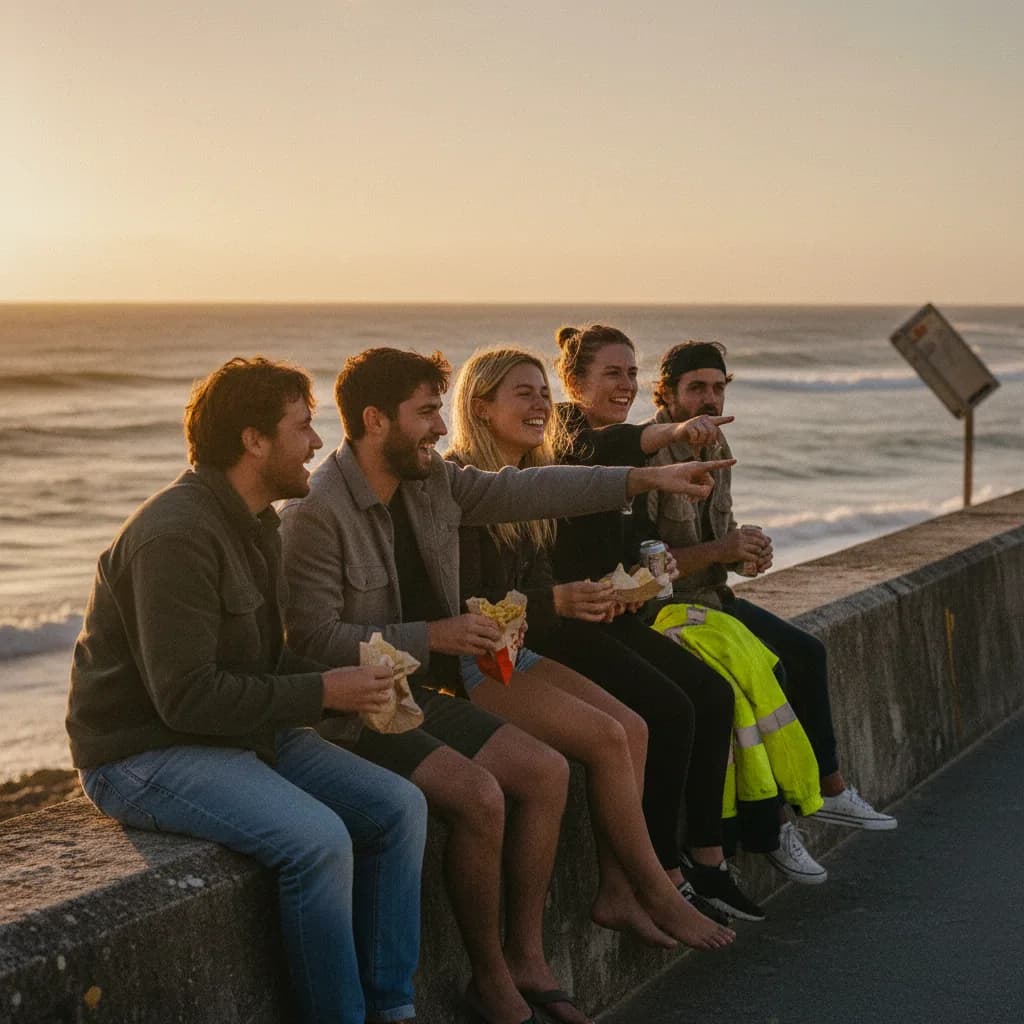
The fourth pull is lifestyle. Sydney has more than 100 ocean and harbour beaches inside the metropolitan boundary. The Bondi to Coogee coastal walk runs six kilometres along the eastern beaches. Royal National Park (the world's second-oldest national park) sits 30 minutes south of the CBD. Outdoor swimming, surfing and bushwalking are normal weekday activities, not annual events.
Jobs and Economy
| Sector | Major Sydney Employers | Typical Salary (AUD, full-time) | Notes |
|---|---|---|---|
| Banking and finance | CBA, Westpac, NAB, ANZ, Macquarie Group, AMP, ASX | Accountant $80k-$95k; Financial accountant $100k-$120k; Analyst $90k-$130k | Highest concentration in Australia; CBD and Barangaroo |
| Technology | Atlassian, Canva, Google, Amazon, Microsoft, Rokt, SafetyCulture, Zip | Software engineer entry $72k-$88k; mid $95k-$125k; senior $130k-$170k+ (SEEK 2025-26) | Tech Central precinct; 482 sponsorship common |
| Professional services | PwC, Deloitte, KPMG, EY, Allens, Herbert Smith Freehills, McKinsey, Bain | Consultant $90k-$140k; Lawyer (2-4 yr PAE) $120k-$180k | Most international firms have ANZ HQ in Sydney |
| Healthcare | NSW Health (Westmead, RPA, Royal North Shore, St Vincent's), Ramsay, Healthscope | Registered nurse median around $85k-$90k (SEEK Sydney 2025) | Priority occupations on NSW Skills List |
| Construction and engineering | Lendlease, Multiplex, John Holland, CPB, Transport for NSW | Civil engineer $95k-$140k; Site manager $130k-$180k | Western Sydney Airport and Sydney Metro pipelines |
| Hospitality and retail | Merivale, Solotel, hotel groups, Coles, Woolworths | $25-$32/hr full-time award rates; chef $65k-$95k | Award-based pay; weekend penalty rates apply |
Salary ranges drawn from SEEK Career Advice salary pages (Sydney, 2025-26) and broadly consistent with the Hays Salary Guide FY25/26.
Cost of Living Snapshot
| Item | Weekly cost (AUD) |
|---|---|
| Rent, 1-bed unit, inner Sydney (Surry Hills, Newtown, Pyrmont) | $550-$650 |
| Rent, 1-bed unit, outer/Western Sydney (Parramatta, Liverpool, Bankstown) | $430-$500 |
| Rent, 2-bed unit, metro median | approximately $750 (Domain Rent Report, Sept quarter 2025) |
| Groceries, single person | $100-$160 |
| Public transport (Opal weekly cap, adult) | $50 |
| Utilities (electricity + gas + water + internet, single person, monthly) | approximately $180-$280 |
| Single-person monthly total (excluding entertainment) | approximately $3,500-$4,800 |
For a full line-by-line breakdown see /living-guides/cost-of-living-sydney-2026.
Best Neighbourhoods for New Arrivals
Young professionals
- Newtown (2042): inner-west, music venues, 1-bed units around $600/week, 10 minutes by train to Central.
- Surry Hills (2010): cafes and design studios next to the CBD, 1-bed units $550-$600/week.
- Pyrmont and Ultimo (2009, 2007): walking distance to the CBD and Tech Central, 1-bed units typically $650-$750/week.
- Bondi and Bondi Junction (2026, 2022): beach access, eastern suburbs, 1-bed units $600-$700/week.
Families
- Castle Hill (2154): in the Hills District, large blocks, well-regarded public and private schools, family houses $900-$1,200/week.
- Hornsby (2077): bushland and rail to the CBD (40 minutes), strong school options, family houses $750-$950/week.
- Epping (2121): on the Metro line, popular with Chinese and Korean-Australian families, strong selective school feeders.
- Carlingford and Beecroft (2118, 2119): quiet north-western pocket close to Macquarie Park employment.
Students
- Kingsford and Kensington (2032, 2033): walking distance to UNSW, share-house bedrooms commonly $300-$400/week.
- Camperdown and Darlington (2050, 2008): next to the University of Sydney, share houses similar range.
- Ultimo (2007): UTS precinct, mostly purpose-built student accommodation and small apartments.
Budget-conscious
- Parramatta (2150): median unit rent about $500/week, second CBD with Westmead Hospital, Western Sydney University and major government employers nearby.
- Liverpool (2170): unit rents from about $430/week, on the T2 line, Western Sydney Airport accessible.
- Bankstown (2200): about $480/week median, large Vietnamese and Lebanese-Australian communities.
- Blacktown (2148): big shopping centres, strong public transport, family houses noticeably cheaper than the eastern suburbs.
Transport
The Opal card (or contactless bank card) covers trains, buses, light rail, ferries and the Metro. Adult weekly fare cap is $50; concession and child weekly cap is $25 (Transport for NSW, fares effective 14 July 2025). Daily caps moved to $19.30 Monday-Thursday and $9.65 Friday-Sunday at the same change.
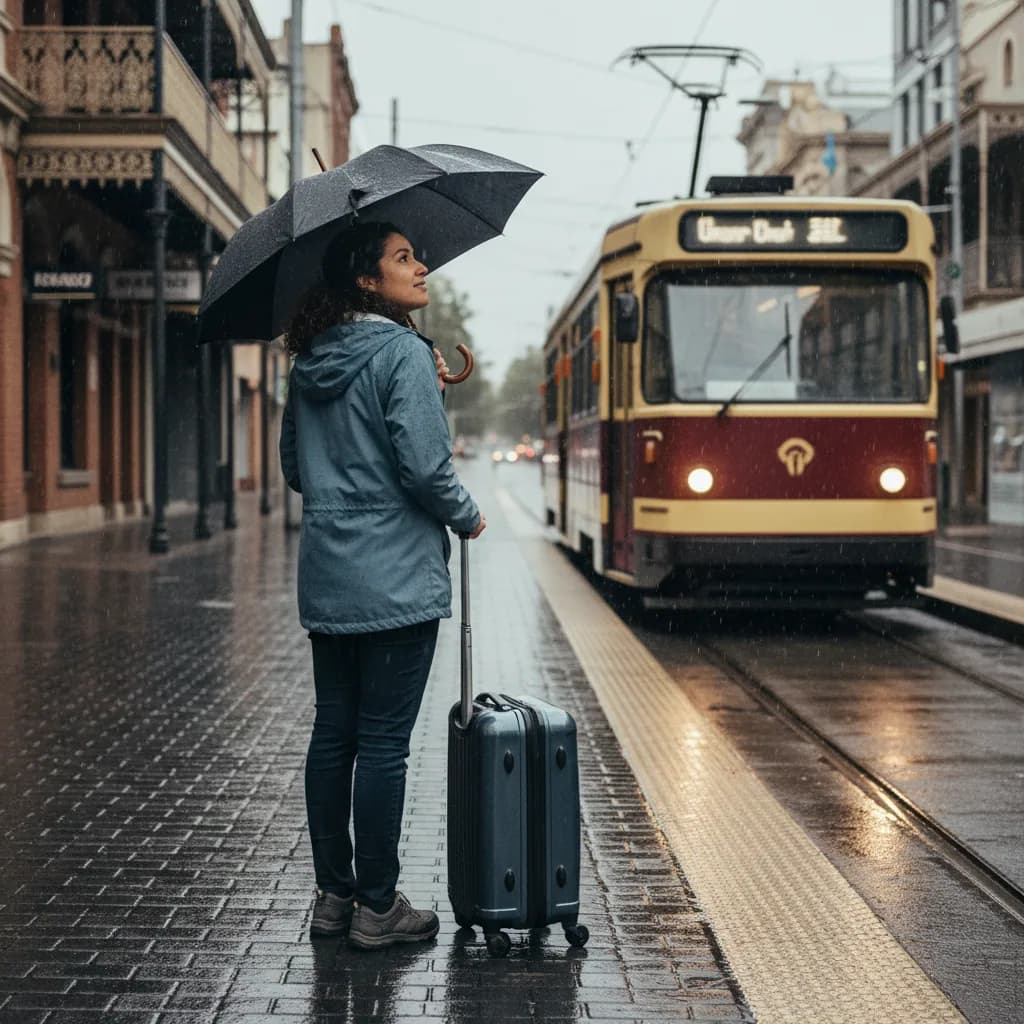
The Sydney Trains network reaches most of Greater Sydney. Sydney Metro (driverless) runs from Tallawong through Macquarie Park, Chatswood, the CBD and out to Sydenham, with the City and Southwest extension opened in 2024. Light rail covers the CBD to Randwick (UNSW) and Kingsford. Ferries run from Circular Quay across the harbour and up the Parramatta River.
Sydney Kingsford Smith Airport sits about 8 km from the CBD. The Airport Link (T8) reaches Central in around 13 minutes; an adult one-way fare is roughly $19-$21 because of the airport station access fee. Domestic and international terminals are on opposite sides of the runway, both on the train line.
Cars are common in outer suburbs but not necessary in the inner ring. Parking in the CBD is expensive and most apartment buildings in Surry Hills, Newtown or Bondi have limited or no resident parking. Tolls apply on most major motorways; an electronic tag (E-Toll or Linkt) is effectively mandatory for car-based commuting from the west.
Education
Higher education. Sydney hosts five large universities. Figures below are the most recent published totals.
| University | Total student enrolment | Year of figure |
|---|---|---|
| University of Sydney | approximately 70,000+ | 2023-24 annual reporting |
| UNSW Sydney | 70,238 (42,543 domestic, 27,695 international) | UNSW at a Glance, 2024 |
| University of Technology Sydney (UTS) | 51,038 | 2024 |
| Macquarie University | more than 44,000 | 2024 |
| Western Sydney University | approximately 37,000-47,000 across multi-campus network | 2023-24 |
UNSW, USyd and UTS all sit inside the inner Sydney CBD-to-Eastern Suburbs corridor. Macquarie is on the M2 in the north-west and Western Sydney University runs campuses at Parramatta, Penrith, Bankstown, Liverpool, Campbelltown and Parramatta City.
Schools. In NSW, government (public) schools enrolled about 76% of students in 2025, Catholic systemic schools 18.6%, Catholic independent schools 3.3% and independent (private) schools the remainder (Independent Schools NSW 2025 snapshot, ABS Schools 2025). Public school enrolment is generally based on catchment, so the address you rent or buy determines which school your children attend. Selective public high schools (James Ruse Agricultural High, North Sydney Boys, Sydney Girls, North Sydney Girls and others) use academic entry tests and dominate state ATAR results.
Visa holders on most temporary visas can enrol children in NSW public schools but may be charged the temporary residents tuition fee set by the NSW Department of Education (waivers apply for refugee and humanitarian visa holders). See /living-guides/school-enrollment-children-visa-holders for the visa-by-visa breakdown.
Healthcare
Sydney has three principal referral hospital networks: Sydney Local Health District (Royal Prince Alfred at Camperdown, Concord), South Eastern Sydney LHD (Prince of Wales at Randwick, St George at Kogarah), and Western Sydney LHD (Westmead, Blacktown). Each is the major tertiary centre for several million people.
- Royal Prince Alfred (RPA): approximately 1,200 beds, the largest hospital in Sydney LHD; delivers about 4,000 babies and treats around 45,000 emergency presentations a year.
- Westmead Hospital: 975 beds, serving a catchment of about 1.85 million; more than 75,000 emergency presentations a year.
- St Vincent's (Darlinghurst): principal referral hospital, Level 1 Trauma Centre, the national hub for heart and lung transplantation.
- Royal North Shore (St Leonards): major north-shore trauma and tertiary centre.
Medicare covers Australian citizens, permanent residents and certain visa holders. Reciprocal Health Care Agreements give limited Medicare access to citizens of the UK, Ireland, New Zealand, Italy, Belgium, the Netherlands, Sweden, Finland, Norway, Slovenia and Malta. Most temporary visa holders need private Overseas Visitors Health Cover or Overseas Student Health Cover. See /living-guides/medicare-australia-visa-holders for the eligibility detail.
The GP bulk billing rate in NSW was about 82% in 2023, with about 78% of attendances bulk billed in the second half of 2024 (AIHW). From 2024 the NSW Bulk Billing Support Initiative requires metropolitan Sydney clinics to bulk bill at least 80% of services to qualify for the payroll tax rebate. Translation: finding a fully bulk-billing GP in Sydney is realistic but not universal; many practices charge a gap fee of around $40-$60 for working-age adults.
Climate
| Season | Months | Avg High (°C) | Avg Low (°C) | Avg Rainfall (mm/month) |
|---|---|---|---|---|
| Summer | Dec-Feb | 25.7-27.0 | 18.4-20.0 | 73-132 |
| Autumn | Mar-May | 20.9-25.7 | 12.3-18.4 | 101-118 |
| Winter | Jun-Aug | 17.9-19.3 | 8.9-10.0 | 75-142 |
| Spring | Sep-Nov | 21.6-24.2 | 12.3-16.6 | 63-91 |
Source: Bureau of Meteorology, Sydney (Observatory Hill) station 066062, 1991-2020 long-term averages. Annual rainfall around 1,150 mm spread fairly evenly across the year, with a slight winter peak in June.
Two things surprise most new arrivals. First, summer humidity. January and February dewpoints often sit in the low 20s °C, which feels stickier than the air temperature suggests; air conditioning in older apartments is not standard. Second, summer storms. East-coast lows and afternoon thunderstorms produce sudden heavy downpours; June 2016 and February 2020 storms delivered more than 200 mm of rain in 24 hours in parts of Sydney. Winters are mild by world standards (lows around 9 °C at Observatory Hill, slightly colder in the western suburbs), but many homes are poorly insulated, so power bills spike from June to August.
Culture and Lifestyle
Food. Sydney's everyday food culture is built around its immigrant communities. Cabramatta in the south-west has one of the largest Vietnamese populations in Australia, with pho, banh mi and Cambodian and Lao restaurants along John Street. Marrickville in the inner-west combines a long-standing Greek community with newer Vietnamese, Lebanese and Filipino businesses; Illawarra Road and Marrickville Road are the eat streets. Eastwood splits across the train line: Korean (KMALL09, 888 Gogi, Pu Ji Mi) to the east, Cantonese and Chinese to the west. Auburn for Turkish, Lakemba for Lebanese, Harris Park for Indian, Strathfield for Korean.
Sport. NRL (rugby league) is the dominant winter code, with the Sydney Roosters, South Sydney Rabbitohs, Penrith Panthers, Parramatta Eels, Canterbury Bulldogs, Wests Tigers, Cronulla Sharks and Manly Sea Eagles all based in Sydney. The Sydney Swans play AFL out of the SCG. Cricket runs in summer; the Boxing Day Test is in Melbourne but Sydney hosts the New Year Test at the SCG. A-League soccer (Sydney FC, Western Sydney Wanderers) draws strong inner-west and western-suburbs crowds. Surf clubs operate the lifeguard service on most ocean beaches.
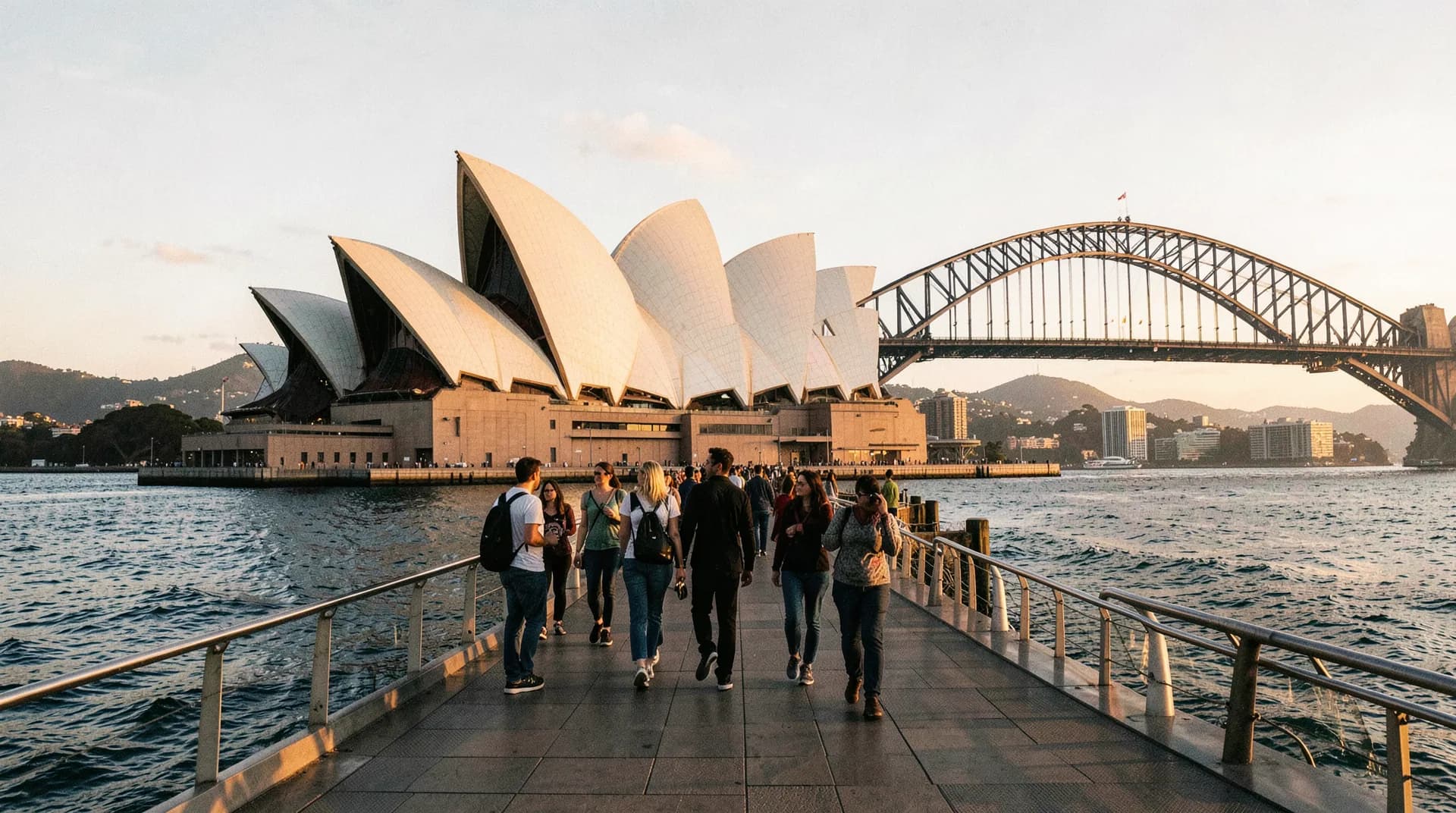
Arts. The Sydney Opera House hosts the Sydney Symphony Orchestra, Opera Australia and Bangarra Dance Theatre. Vivid Sydney (light, music, ideas) runs in May-June. The Sydney Festival is in January. The Art Gallery of NSW (with the Sydney Modern wing opened in 2022) and the Museum of Contemporary Art at Circular Quay are free general entry.
Outdoors. The Bondi to Coogee coastal walk (6 km, about two hours) is the most famous, but the Spit to Manly walk (10 km) on the north shore is longer and quieter. Royal National Park is 30 minutes south of the CBD; Ku-ring-gai Chase National Park is on the northern edge. Manly and Watsons Bay ferries from Circular Quay double as cheap harbour cruises (covered by your Opal fare).
Religion. Census 2021 recorded Sydney as the most religiously diverse Australian city. Anglican and Catholic churches are present in most suburbs; Lakemba Mosque is the largest mosque in Australia; major Hindu temples operate in Helensburgh and Westmead; Buddhist temples are concentrated in Cabramatta, Bonnyrigg and Wollongong-adjacent areas.
Immigration Pathways to Sydney
Three main skilled visa routes lead to Sydney:
-
Subclass 189 (Skilled Independent). Points-tested, no state nomination, full PR on grant. Most competitive: passmark sits well above 65 points for most occupations. You do not need NSW involvement.
-
Subclass 190 (Skilled Nominated). Requires NSW nomination; grants permanent residence. You must hold a positive skills assessment for an occupation on the NSW Skills List at the ANZSCO unit-group level, and meet one of three NSW criteria: currently employed in NSW in your nominated field, resided in NSW continuously for at least six months, or resided offshore continuously for at least six months (nsw.gov.au/visas-and-migration). NSW issues invitations throughout the year and applicants have 14 days to respond. The 2024-25 NSW Skills Lists prioritise health, education, construction trades, technical engineering, and selected science occupations.
-
Subclass 491 (Skilled Work Regional). Provisional five-year visa, points-tested, leads to subclass 191 PR after three years of regional living and working. This is where Sydney becomes a problem. Sydney CBD and inner suburbs (postcodes 2000-2234, broadly) are NOT part of the Designated Regional Area, so a 491 holder cannot satisfy the regional residence and work requirement from a Sydney CBD address. Newcastle, Wollongong, the Central Coast and all of regional NSW outside Greater Sydney ARE in the Designated Regional Area. Always check the official postcode list at immi.homeaffairs.gov.au/visas/working-in-australia/regional-migration/eligible-regional-areas before signing a lease.
Employer sponsorship. Subclass 482 (Skills in Demand) is the standard work-sponsored visa; Sydney has the largest pool of standard business sponsors in Australia. Subclass 186 (Employer Nomination Scheme) leads to PR through the Direct Entry or Temporary Residence Transition streams.
Competitiveness. NSW 190 nomination is selective. Health, teaching, and trades roles on the priority list get invited at lower point totals; finance, accounting and ICT roles compete with high-points candidates from across the country and frequently need 90-100 points (including state nomination) to be invited. If your occupation is on the NSW Skills List but you have only 65 points, prepare a Plan B in regional NSW (Newcastle, Wollongong, Wagga Wagga, Albury) where 491 is available.
For visa-by-visa work rights see /living-guides/working-rights-by-visa-type.
Pros and Cons
| Pros | Cons |
|---|---|
| Largest job market in Australia, particularly for finance, professional services, tech | Highest cost of living of any Australian capital |
| Five large universities, multiple selective public high schools | Median weekly unit rent near $750; entry to property ownership is hard |
| Best public transport network in Australia (Opal-integrated train, metro, bus, ferry, light rail) | Sydney CBD and inner suburbs not in Designated Regional Area, so 491 visa is not viable from a Sydney address |
| Established communities from almost every major migrant-source country | Long commutes from the affordable west to the CBD-concentrated jobs (45-75 minutes each way) |
| Beaches, harbour, national parks inside city limits | Summer humidity and east-coast storms; older housing stock poorly insulated |
| English-speaking, strong rule of law, ranked 5th-6th in global liveability and safety indices | NSW 190 nomination competitive in ICT, accounting; high-points candidates dominate |
FAQ
How much should I have saved before moving to Sydney? Plan for AUD 12,000-18,000 for a single person and AUD 20,000-30,000 for a couple. The rental bond (four weeks' rent up front) plus two to four weeks' rent in advance can absorb $4,000-$6,000 for an inner-suburb unit. Add temporary accommodation, health cover, set-up costs, and three months of living expenses.
Is Sydney safe? Yes by international comparison. Sydney sat 4th on the EIU 2021 Safe Cities Index and 6th on the 2025 Global Liveability Index. NSW recorded crime trended down 2023-2024 (BOCSAR). Petty theft on public transport happens; violent crime against strangers is uncommon by capital-city standards.
How fast will I find a job in Sydney? Skilled professionals in priority sectors (nurses, doctors, civil engineers, software engineers, accountants) typically secure a role in 4-12 weeks if qualifications are recognised. Working holiday and student arrivals find hospitality and retail work within 2-4 weeks. Two delays are common: skills assessment, and employers preferring candidates already onshore with full work rights.
Which suburbs can I find under $500/week? For one-bedroom units: Liverpool (around $430), Bankstown (around $480), Parramatta edges (around $500), Blacktown, Granville, Auburn, Lidcombe, Mount Druitt and Campbelltown. All 30-60 minutes from the CBD by train.
Can I get an NSW 190 nomination easily? Not usually. Health, teaching and trades occupations on the NSW Skills List have the highest invitation rates. ICT and accounting candidates regularly need 90+ total points (including the state nomination boost). If your occupation is not on the NSW list, consider South Australia, Tasmania or the ACT.
Can children on temporary visas attend public schools? Yes, but most temporary visa holders pay a Temporary Residents Tuition Fee set by the NSW Department of Education. Permanent residents and humanitarian visa holders are exempt. See /living-guides/school-enrollment-children-visa-holders for the current fee schedule.
Can I live in Sydney without a car? In the inner and middle suburbs, yes. Surry Hills, Newtown, Pyrmont, Bondi, Chatswood, Parramatta and Kogarah have frequent public transport and walkable shopping. In the outer suburbs and the northern beaches a car is close to essential.
How bad is the Sydney summer? Hotter and stickier than first-time visitors expect. January-February daytime highs average 27 °C at Observatory Hill but western suburbs (Penrith, Parramatta) regularly hit 35-40 °C with high humidity. Air conditioning is standard in newer apartments; older terrace houses and walk-up flats often have only ceiling fans.
Sources
- ABS Regional Population, latest release — Greater Sydney ERP 5,638,830 at 30 June 2025.
- ABS National, state and territory population, September 2025 — national context for NSW share.
- NSW Government, Skilled Nominated visa (subclass 190) — eligibility criteria, residence options, invitation process.
- NSW Government, NSW Skills Lists — 2024-25 occupation lists for subclass 190 and 491.
- Home Affairs, Designated regional areas — confirms Sydney CBD and inner suburbs are not in the Designated Regional Area.
- Bureau of Meteorology, climate averages Sydney (Observatory Hill) 066062 — monthly temperature and rainfall normals.
- Wikipedia: Climate of Sydney — 1991-2020 BOM averages collated into a single table; Köppen Cfa classification confirmed.
- Transport for NSW, Opal fare changes from 14 July 2025 — $50 adult weekly cap, $25 concession cap, daily caps.
- IPART, Opal fares from 14 July 2025 fact sheet — fare regulator confirmation of the same numbers.
- SEEK Career Advice, Software Engineer salary in Sydney — Sydney tech salary bands.
- SEEK Career Advice, Registered Nurse salary in Sydney — nursing salary $85k-$90k Sydney.
- SEEK Career Advice, Accountant salary — $80k-$95k average for accountants.
- Hays Salary Guide FY25/26 (Australia) — corroborating salary bands across sectors.
- Domain Rent Report, September quarter 2025 commentary — Sydney unit median $750/week, house $780/week.
- UNSW at a Glance 2024 — UNSW 70,238 total students.
- University of Technology Sydney profile — UTS 51,038 students (2024).
- Macquarie University — more than 44,000 students.
- Royal Prince Alfred Hospital — approx 1,200 beds, sets out the RPA catchment and emergency volumes.
- Westmead Hospital — 975 beds, 1.85m catchment, 75,000+ ED presentations.
- AIHW Medicare bulk billing trends — NSW GP bulk billing rates.
- Revenue NSW, Bulk Billing Support Initiative — 80% metro Sydney bulk billing threshold.
- Independent Schools NSW 2025 snapshot — NSW public/Catholic/independent school enrolment split.
- ABS Schools, 2025 — national education sector splits.
- Sydney Airport transport options — Airport Link train, 13 minutes to Central.
- City of Sydney employment by industry — finance and professional services share of CBD employment 2023/24.
- Destination NSW: Marrickville food guide — Vietnamese and Greek community profile.
- Sydney.com Bondi to Coogee Coastal Walk — 6 km coastal walk reference.
- UNSW, Safety in Sydney for international students — Sydney 5th safest city globally; EIU Safe Cities Index citation.
Notes on uncertainty flagged in this guide: precise 2024 University of Sydney total enrolment was not extracted directly from the annual report PDF, so the figure is given as approximate (70,000+) consistent with prior years; Western Sydney University total is given as a range because campus-level totals were available but a single consolidated 2024 figure was not retrieved. Property rent figures for individual suburbs are drawn from secondary aggregators citing Domain and realestate.com.au quarterly data and should be treated as indicative for Q3-Q4 2025.