Driving in Australia: How to Convert Your International Licence
Driving in Australia runs on one fundamental rule that trips up every newcomer: you drive on the LEFT side of the road. If you've spent your entire driving life on the right side, this adjustment takes genuine concentration — especially at roundabouts, when turning, and in car parks. Beyond that, Australia's driving licence system is managed state by state, meaning the rules for converting your overseas licence differ depending on whether you settle in NSW, Victoria, Queensland, or elsewhere. This guide covers everything: how long you can drive on your foreign licence, which countries have mutual recognition agreements, and what to do when it's time to convert.
Driving on the Left: What You Need to Know
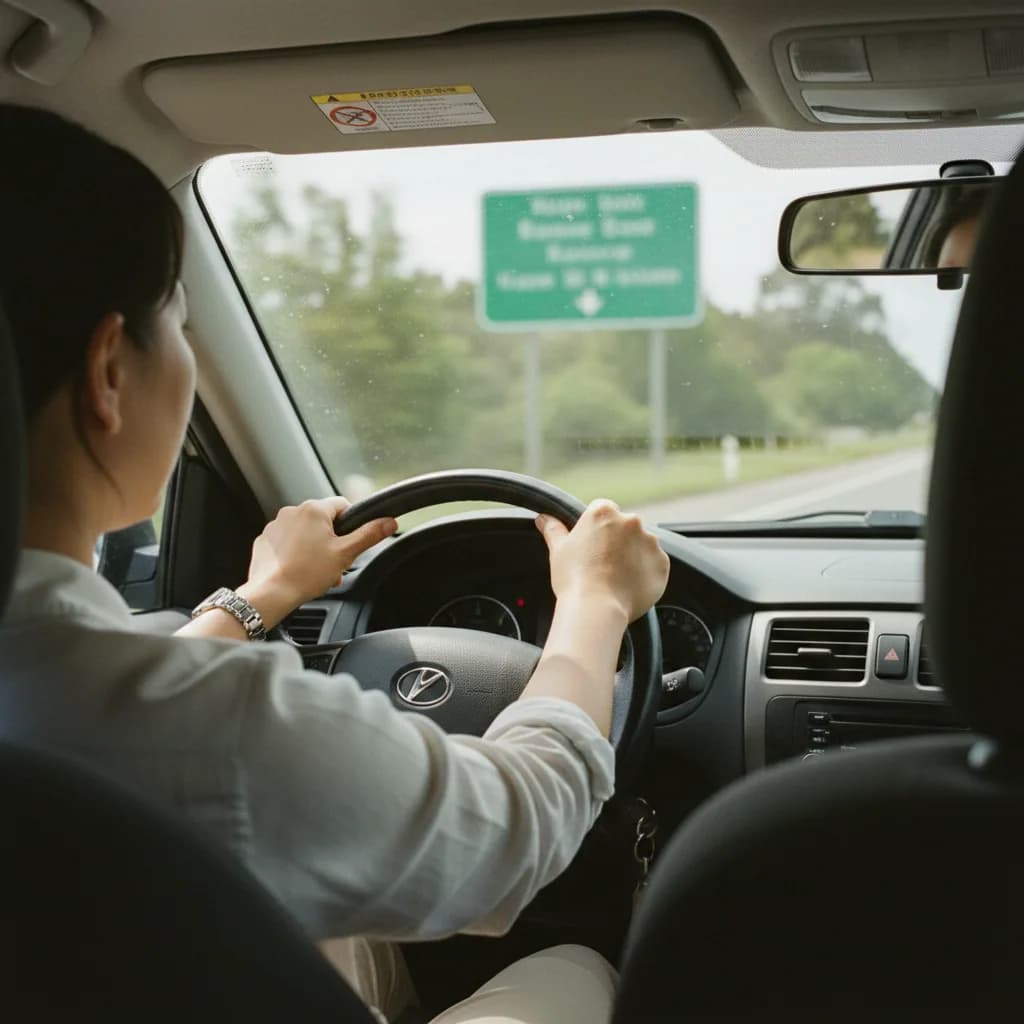
Australia drives on the left. The steering wheel is on the right side of the car. Everything is mirrored from what you're used to if you come from a right-hand traffic country (which includes most of the world — the US, Europe, South America, most of Asia).
Common mistakes new drivers make in Australia:
- Turning into the wrong lane (especially at T-intersections)
- Going the wrong way around roundabouts (go clockwise in Australia)
- Reaching for the gear stick on the wrong side
- Activating the windscreen wipers instead of the indicator (they're swapped)
- Drifting too far to the left because your spatial reference is off
Tips for adjusting:
- Start driving in quiet suburban streets, not highways
- Give yourself extra time to make decisions at intersections
- Put a small sticker on your dashboard reminding you "KEEP LEFT"
- Practice in an empty car park before hitting the road
- Be extra cautious for the first 2-3 weeks — that's when most mistakes happen
Other countries that drive on the left include the UK, Japan, India, South Africa, New Zealand, and most Southeast Asian nations. If you've driven in any of these, the adjustment will be minimal.
How Long Can You Drive on Your Overseas Licence?
This depends on your state of residence and your residency status. As a general rule, you can drive on a valid overseas licence for 3-6 months after becoming a resident of a state. After that, you must convert to an Australian licence.
| State/Territory | Temporary Visitors | After Becoming Resident |
|---|---|---|
| NSW | Indefinitely (while visa valid) | Must convert within 3 months |
| Victoria | Indefinitely (while visa valid and not PR) | Must convert within 6 months of becoming PR |
| Queensland | Indefinitely (while on temporary visa) | Must convert within 3 months of becoming resident |
| Western Australia | Up to 3 months | Must convert within 3 months |
| South Australia | Indefinitely (while on temporary visa) | Must convert within 3 months |
| Tasmania | Indefinitely (while on temporary visa) | Must convert within 3 months |
| ACT | Indefinitely (while on temporary visa) | Must convert within 3 months of becoming resident |
| Northern Territory | Up to 3 months | Must convert within 3 months |
Victoria is the notable exception — if you're on a temporary visa (not PR), you can drive on your overseas licence indefinitely without converting. This changes the moment you become a permanent resident.
For a detailed breakdown of the rules in each state, see our state-by-state driving guide.
What You Need to Carry While Driving
When driving on your overseas licence in Australia, you must carry:
- Your original overseas licence — not a photocopy
- An International Driving Permit (IDP) — recommended if your licence isn't in English
- An English translation — if your licence isn't in English and you don't have an IDP, you need a NAATI-certified translation
International Driving Permit (IDP)
An IDP is a document that translates your licence into multiple languages. It doesn't replace your licence — it supplements it. You must carry both.
Key facts about IDPs:
- Must be obtained in your home country before departure (you can't get one in Australia)
- Valid for 12 months from date of issue
- Issued by your country's automobile association (e.g., AA in the UK, AAA in the US)
- Costs approximately $20-$50 depending on your country
- Not technically mandatory if your licence is in English, but recommended regardless
Countries with English-language licences (IDP less critical): UK, Ireland, USA, Canada, New Zealand, South Africa, India, Philippines, Singapore, Hong Kong, Malaysia.
Even if your licence is in English, an IDP provides an extra layer of documentation that can help with car rental, insurance claims, and interactions with police.
Converting Your Licence: The Process
When it's time to convert, the process varies depending on your country of origin.
Countries with Mutual Recognition (Direct Conversion)
If your licence was issued by a country with a mutual recognition agreement, you can convert without sitting a driving test. You'll typically only need to pass an eyesight test and provide documentation.
Countries eligible for direct conversion in most Australian states:
| Region | Countries |
|---|---|
| Europe | Austria, Belgium, Bosnia and Herzegovina, Croatia, Denmark, Finland, France, Germany, Greece, Ireland, Italy, Luxembourg, Netherlands, Norway, Poland, Portugal, Spain, Sweden, Switzerland, UK |
| North America | Canada, USA |
| Asia-Pacific | Hong Kong, Japan, New Zealand, Singapore, South Korea, Taiwan |
| Other | Isle of Man, Jersey, Guernsey |
Note: The exact list varies slightly between states. Always check with your state's transport authority for the current list.
Direct Conversion: What You'll Need
-
Visit your state's transport authority:
- NSW: Service NSW centre
- VIC: VicRoads (now Department of Transport)
- QLD: Department of Transport and Main Roads
- WA: Department of Transport
- SA: Service SA centre
- TAS: Service Tasmania
- ACT: Access Canberra
- NT: Motor Vehicle Registry
-
Bring these documents:
- Current overseas licence (original)
- Passport
- Proof of Australian address (utility bill, rental agreement, bank statement)
- Proof of residency status (visa grant notice)
- NAATI-certified translation of your licence (if not in English)
- IDP (if available)
- Passport-sized photos (some states)
-
Pass an eyesight test — conducted on-site at the transport authority
-
Pay the fee — varies by state, typically $50-$180 for a 1-5 year licence
-
Surrender your overseas licence — most states require you to hand in your foreign licence. Some will post it back to your home country's licensing authority; others return it to you marked as "surrendered."
Countries Requiring a Driving Test
If your licence was issued by a country not on the mutual recognition list, you'll need to pass both a theory test (knowledge test) and a practical driving test before you can get an Australian licence.
Countries typically requiring testing include: China, India (some states), Vietnam, Thailand, Indonesia, Philippines, Brazil, most African countries, most Middle Eastern countries.
The Theory Test (Knowledge Test)
- Format: Multiple-choice, computer-based
- Questions: 30-45 questions depending on the state
- Pass mark: Varies (typically 75-85%)
- Content: Road rules, signs, speed limits, right-of-way, safe driving practices
- Study material: Available free from each state's transport authority website
- Cost: $20-$50
- Languages: Available in English and some other languages depending on the state
Study resources:
- NSW: Roads & Maritime Services handbook
- VIC: VicRoads learner handbook
- QLD: "Your Keys to Driving in Queensland" handbook
- Each state publishes practice tests online — use them
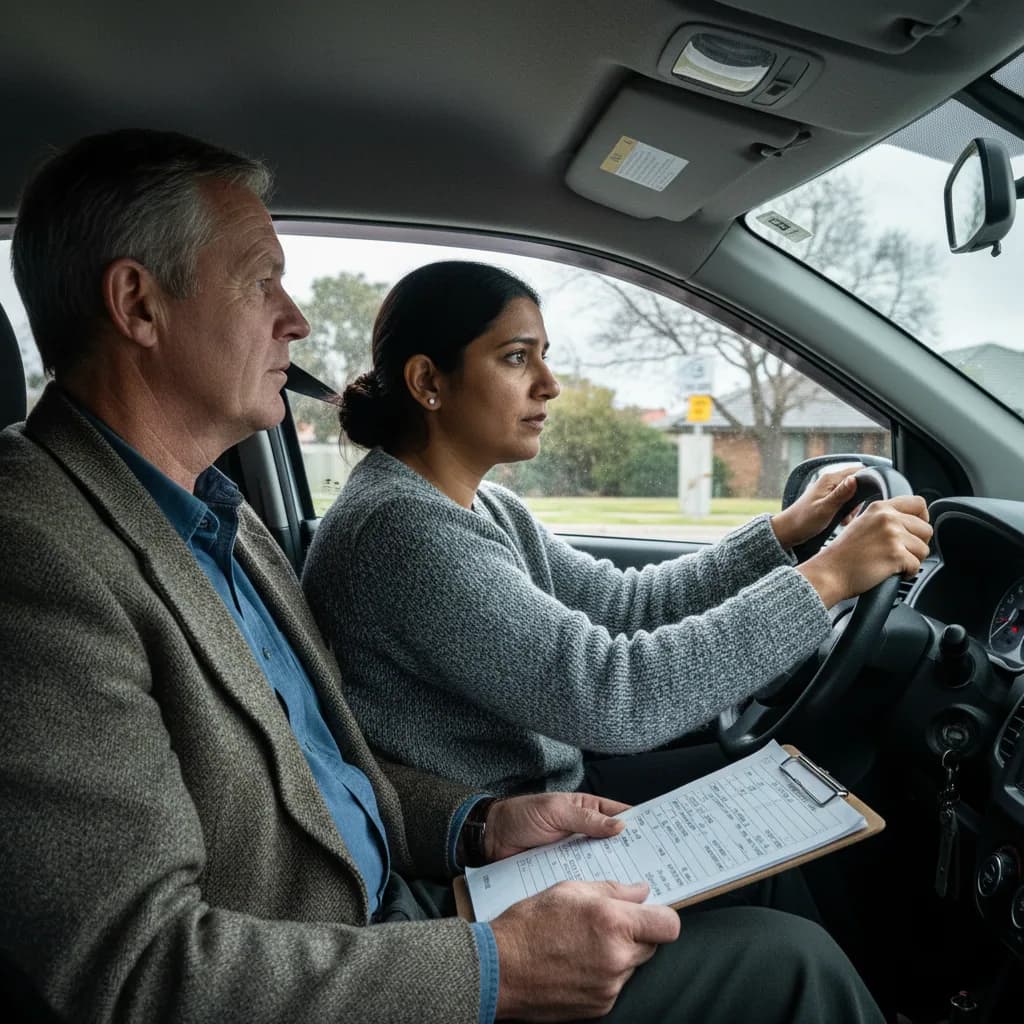
The Practical Driving Test
- Duration: 30-45 minutes
- What's assessed: Vehicle control, observation, road positioning, speed management, giving way, parking, reversing
- Cost: $50-$100 depending on the state
- Vehicle: You must provide a roadworthy vehicle for the test (or some driving schools offer their car for an additional fee)
- Booking: Usually needs to be booked 2-4 weeks in advance
Tips for passing the practical test:
- Take at least 2-3 professional driving lessons in Australia before the test, even if you're an experienced driver. You need to learn Australian-specific road rules and demonstrate them
- Practice the route around your testing centre — routes are often predictable
- Check mirrors frequently and make it obvious (head checks)
- Don't exceed the speed limit, even by 1-2 km/h
- Signal every time you change lanes, turn, or pull over
- Give way correctly at roundabouts (give way to vehicles already in the roundabout, approaching from your right)
- The number one reason for failing: insufficient observation at intersections
Australian Road Rules You Should Know
These rules catch out many newcomers:
Speed Limits
| Zone | Speed Limit |
|---|---|
| School zones (during school hours) | 40 km/h |
| Residential streets (default) | 50 km/h |
| Main roads (default) | 60-80 km/h |
| Highway | 100-110 km/h |
| Northern Territory (some roads) | 130 km/h |
Speed cameras are widespread in Australia, including fixed cameras, mobile vans, and average speed detection on highways. Fines are steep — $200-$900+ depending on how far over the limit you were, with licence suspension for serious offences.
Blood Alcohol Limit
- Full licence holders: 0.05% BAC
- Learner and provisional drivers: 0.00% BAC
- Practical advice: One standard drink is about the limit for most people; two drinks puts most people over 0.05%. Penalties for drink driving include fines, licence suspension, and potential imprisonment.
Mobile Phone Use
Using a handheld mobile phone while driving is illegal in all Australian states. This includes holding the phone to make calls, texting, or scrolling. Penalties range from $300-$1,000+ and 3-5 demerit points.
Hands-free phone use (Bluetooth, car-mounted) is permitted for full licence holders.
Roundabouts
Give way to vehicles already in the roundabout. In Australia, traffic flows clockwise through roundabouts. Signal left when exiting. Multi-lane roundabouts require you to be in the correct lane before entering.
Seatbelts
All occupants must wear seatbelts. Children under 7 must be in approved child restraints. Fines for not wearing a seatbelt: $300-$600+.
Unique Australian Road Hazards
- Kangaroos and wildlife: Particularly dangerous at dawn, dusk, and night in rural and semi-rural areas. A kangaroo collision at highway speed can total a vehicle and cause serious injury.
- Fatigue: Distances between towns in regional Australia are vast. Rest every 2 hours on long drives.
- Flooding: Don't drive through floodwater. "If it's flooded, forget it" is an Australian road safety slogan for good reason.
- Gravel roads: Common in regional areas. Reduce speed significantly on unsealed roads.
Car Insurance
In Australia, car insurance operates at multiple levels:
| Type | What It Covers | Mandatory? | Cost (annual) |
|---|---|---|---|
| CTP (Compulsory Third Party) | Injury to other people | Yes (included in registration) | $400-$700 (varies by state) |
| Third Party Property | Damage to other people's property | No, but strongly recommended | $200-$400 |
| Third Party Fire & Theft | Above + fire and theft of your car | No | $300-$600 |
| Comprehensive | All of the above + damage to your own car | No | $700-$1,500+ |
CTP insurance is included in your vehicle registration fee — you can't register a car without it. Everything else is optional but recommended, especially comprehensive cover if your car has significant value.
Costs of Driving in Australia
| Cost | Amount |
|---|---|
| Licence conversion | $50-$180 |
| Vehicle registration (annual) | $350-$900 (state dependent) |
| CTP insurance (included in rego) | $400-$700 |
| Comprehensive insurance | $700-$1,500/year |
| Petrol | $1.70-$2.10/litre |
| NRMA/RACV roadside assist | $80-$150/year |
| Average parking (CBD) | $15-$40/day |
| Tolls (Sydney/Brisbane/Melbourne) | $3-$10 per trip |
For new arrivals weighing up whether to buy a car or use public transport, check the cost of living guides for your city to understand transport options.
Tips for New Drivers in Australia
- Get an IDP before leaving your home country — you can't get one in Australia
- Convert your licence early — don't wait until the deadline
- Take professional lessons — even experienced drivers benefit from learning Australian-specific rules and left-hand driving
- Download a fuel price app — petrol prices fluctuate daily, and apps like FuelCheck (NSW) or PetrolSpy help you find the cheapest station
- Join a roadside assistance program — NRMA (NSW), RACV (VIC), RACQ (QLD), RAC (WA), RAA (SA) — breakdown cover is worth having
- Open your bank account first — you'll need it to pay registration, insurance, and fines
- Be cautious in your first month — statistics show newly arrived drivers are overrepresented in accidents during their first 30 days
Frequently Asked Questions
Can I drive in Australia with just my overseas licence?
Yes, temporarily. Visitors and temporary visa holders can drive on a valid overseas licence (with an IDP or English translation if needed) for 3-6 months depending on the state. Victoria is an exception — temporary visa holders can drive indefinitely. Once you become a resident or permanent resident, you must convert within the state's deadline.
Do I need an International Driving Permit?
An IDP isn't strictly mandatory if your licence is in English, but it's strongly recommended. If your licence is in a non-English language, you need either an IDP or a NAATI-certified translation. Without one, you're technically driving without valid documentation. IDPs must be obtained in your home country.
Which side of the road does Australia drive on?
Australia drives on the LEFT side of the road. The steering wheel is on the RIGHT side of the vehicle. This is the same as the UK, Japan, India, and New Zealand, but opposite to the US, Europe, China, and most of South America.
How much does it cost to convert my licence?
Licence conversion fees range from $50-$180 depending on the state and licence duration. If you need to sit a theory test ($20-$50) and practical test ($50-$100), add those costs. Professional driving lessons run $60-$90 per hour if you want practice before the test.
What happens if I drive on an expired overseas licence?
Driving on an expired licence — or driving past the allowed period without converting — is an offence in all states. Penalties include fines ($500-$2,000+) and your car insurance may be voided, meaning you'd be personally liable for any damage in an accident. Convert on time.