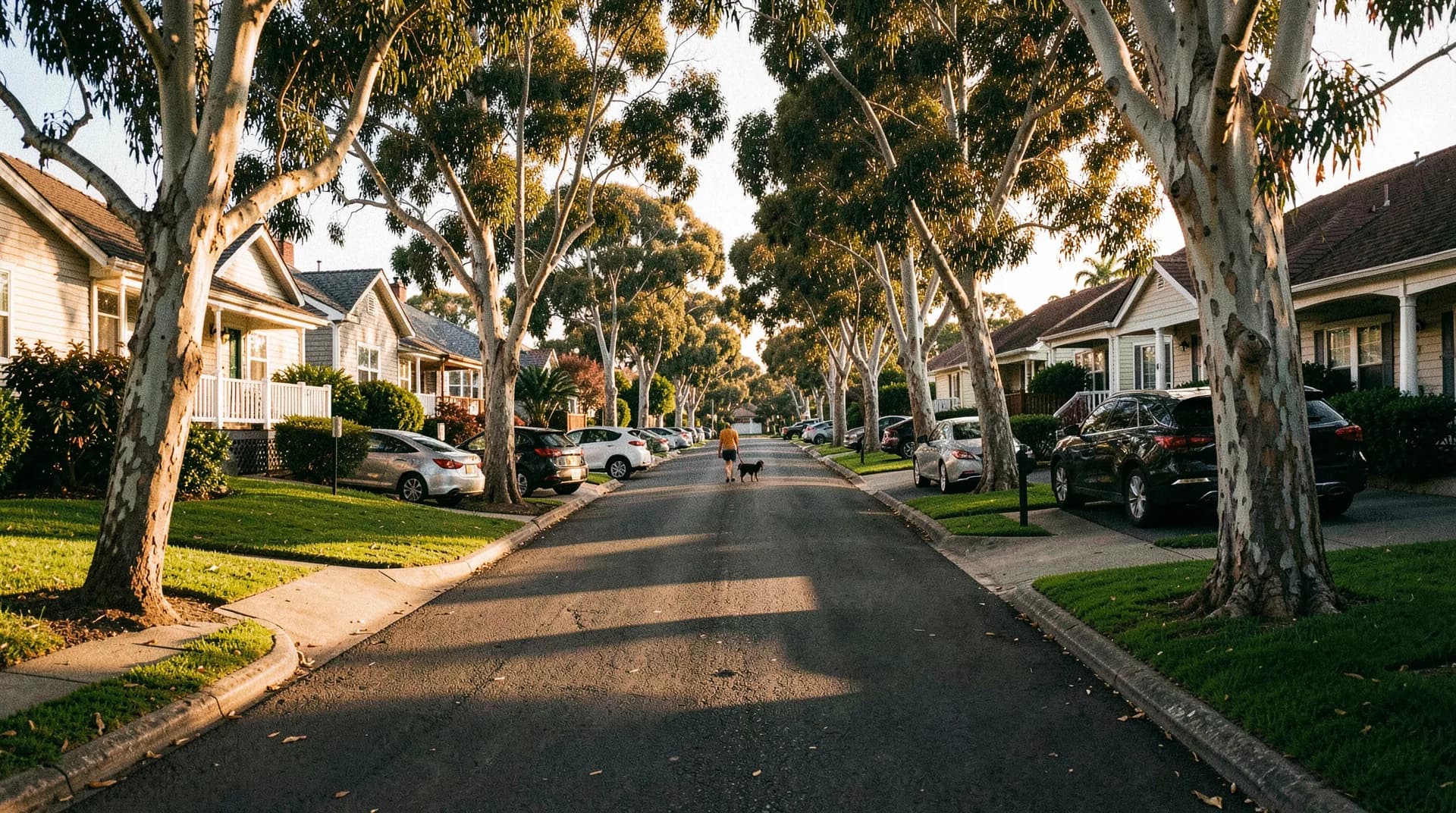
Finding Accommodation in Australia: The Complete Renting Guide for Migrants
Finding a place to rent in Australia is one of the most stressful parts of settling into the country — and in 2026, it's harder than ever. Vacancy rates across major cities sit at historically low levels of 1-2%, meaning competition for rental properties is fierce. A single listing in Sydney or Melbourne can attract 30-50 applications. But don't panic. With the right preparation, an understanding of how the system works, and realistic expectations about timelines, you'll find somewhere to live. This guide walks you through every step of the Australian rental process, from your first search to signing the lease.
The Rental Crisis: What You're Walking Into
Let's be upfront about the market. Australia is experiencing a prolonged rental shortage driven by population growth, insufficient housing construction, and strong demand from returning migrants and international students. National average weekly rents have climbed to approximately $580/week for a house and $530/week for an apartment.
What does this mean for you as a new arrival?
- Expect competition: Popular properties receive dozens of applications
- Be ready to compromise: Your first rental may not be your dream home
- Move quickly: Good properties get snapped up within days of listing
- Have your documents ready: Landlords and agents favour applicants who submit complete applications on the spot
The tightest markets are in Sydney and Melbourne, but Brisbane, Perth, and even Adelaide have felt the squeeze. Regional areas generally have more availability, though options can be limited in smaller towns.
Step 1: Start with Temporary Accommodation
Here's the single most important piece of advice for new migrants: don't try to sign a lease before you arrive. Attempting to secure a long-term rental from overseas is extremely difficult. Most landlords and agents want to verify your identity in person, and you need to inspect properties before committing.
Instead, plan for 2-4 weeks of temporary accommodation while you search:
Temporary Accommodation Options
| Option | Cost Range (per week) | Best For |
|---|---|---|
| Hostel / Backpackers | $200-$350 | Solo arrivals, short stays |
| Airbnb (private room) | $300-$500 | Couples, flexibility |
| Airbnb (entire apartment) | $500-$900 | Families, more space |
| Serviced apartment | $600-$1,200 | Professionals, longer stays |
| Share house (short-term) | $200-$400 | Budget-conscious, social |
Budget $1,500-$3,000 for temporary accommodation during your search period. Book before you arrive — don't leave this to chance.
During this temporary phase, focus on getting your essential admin sorted: open a bank account, apply for your TFN, and start attending property inspections.
Step 2: Where to Search
Australia's rental market operates primarily through online platforms and real estate agents. Here are the main channels:
Major Rental Platforms
| Platform | Best For | URL |
|---|---|---|
| Domain.com.au | Broadest listings | domain.com.au |
| Realestate.com.au | Largest audience | realestate.com.au |
| Flatmates.com.au | Share housing | flatmates.com.au |
| Fairy Floss Real Estate | Rooms in share houses | fairyflossrealestate.com.au |
| Gumtree | Private listings, rooms | gumtree.com.au |
| Facebook Marketplace | Private rentals, sublets | facebook.com/marketplace |
Tips for searching:
- Set up alerts on Domain and Realestate.com.au for your preferred suburbs and budget
- Check listings daily — new properties often appear on weekdays
- Expand your search radius — consider suburbs 15-20 minutes from your ideal location
- Be wary of scams on Gumtree and Facebook. Never transfer money without inspecting a property in person and verifying the landlord or agent's identity
Understanding Real Estate Agents vs. Private Landlords
Most Australian rentals are managed through licensed real estate agents. The agent acts as an intermediary between you and the landlord (property owner). Some properties are rented directly by the owner — these are called "private rentals" and you'll find them on Gumtree, Facebook, and sometimes Domain.
Both arrangements are covered by tenancy law, but agent-managed properties typically follow more standardised processes.
Step 3: Inspecting Properties
In Australia, rental inspections (also called "open homes" or "viewings") are usually held as group inspections — everyone turns up at the same scheduled time and walks through the property together.
What to expect:
- Inspections typically last 15-20 minutes
- The agent will be present to answer questions
- Multiple groups will be viewing simultaneously
- Bring your application paperwork so you can submit it on the spot
What to check during an inspection:
- Water pressure (turn on taps and showers)
- Condition of appliances (oven, stovetop, dishwasher if present)
- Signs of mould, water damage, or pest issues
- Natural light and ventilation
- Lock and security quality
- Phone reception inside the property
- Proximity to transport, shops, and schools (if applicable)
- Noise levels — visit at different times if possible
Take photos during the inspection. If the property becomes yours, these photos help establish the property's condition at move-in, which protects your bond when you leave.
Step 4: The Application Process
This is where preparation makes the difference. A strong application submitted quickly gives you the best chance in a competitive market.
What You'll Need: The 100 Points of ID
Australian rental applications use a "100 points of ID" system. You need documents totalling at least 100 points:
| Document | Points |
|---|---|
| Passport | 70 |
| Australian driver licence | 40 |
| Medicare card | 25 |
| Bank statement | 25 |
| Utility bill (in your name) | 25 |
| International driving permit | 25 |
| Foreign driver licence (with certified translation) | 25 |
| Student ID card | 25 |
| Employment letter | 25 |
As a new arrival, your passport (70 points) plus a bank statement (25 points) gets you to 95. Add a Medicare card, student ID, or foreign licence with translation to clear 100.
Complete Application Checklist
A competitive rental application includes:
- Completed application form — usually provided by the agent or available through 2Apply, Ignite, or 1Form
- 100 points of ID — copies of all documents
- Proof of income — payslips (last 2-3), employment contract, or bank statements showing savings
- Rental history — references from previous landlords or agents (or a letter explaining you're new to Australia)
- Personal references — from an employer, colleague, or community member
- Cover letter — optional but effective. Briefly introduce yourself, your employment status, and why you'd be a good tenant
For new migrants without Australian rental history:
- Provide a letter from your overseas landlord or agent
- Show substantial savings (3-6 months' rent in your bank account)
- Include a copy of your visa showing its validity period
- Offer to pay additional rent in advance (some applicants offer 3-6 months upfront)
- Get a reference letter from your Australian employer if you have one
Application Fees
Landlords and agents cannot charge you an application fee in most Australian states. This is the law in NSW, Victoria, Queensland, South Australia, and the ACT. Don't pay anyone to apply for a rental.
Step 5: Understanding the Lease
Once your application is approved, you'll sign a residential tenancy agreement (lease). Here's what you need to know:
Key Lease Terms
| Term | Standard Practice |
|---|---|
| Lease length | 6 or 12 months (12 is most common) |
| Rent payment | Fortnightly or monthly |
| Rent increases | Not permitted during a fixed-term lease (with limited exceptions) |
| Breaking the lease | Penalties apply (typically advertising costs + rent until new tenant found) |
| Condition report | Must be completed at move-in — document everything |
The Condition Report
This is critical. At move-in, you'll receive a condition report that documents the state of every room, fixture, and appliance. Go through it carefully, note any existing damage, take date-stamped photos, and return your copy within the timeframe specified (usually 3-5 business days).
Why does this matter? At the end of your tenancy, the condition report is the baseline against which any damage is assessed. If you don't note pre-existing issues, you could be charged for them from your bond.
Step 6: Bond (Security Deposit)
The bond is a security deposit paid at the start of your tenancy. It's your money, held in trust, and returned to you when you leave — provided you haven't damaged the property or left unpaid rent.
Bond Rules by State/Territory
| State/Territory | Maximum Bond | Held By |
|---|---|---|
| NSW | 4 weeks' rent | NSW Fair Trading |
| Victoria | 4 weeks' rent (if rent <$900/wk) | RTBA |
| Queensland | 4 weeks' rent | RTA |
| Western Australia | 4 weeks' rent | Bond Administrator |
| South Australia | 4 weeks' rent (6 weeks furnished) | Tenancies Branch |
| Tasmania | 4 weeks' rent | Rental Deposit Authority |
| ACT | 4 weeks' rent | Office of Rental Bonds |
| Northern Territory | 4 weeks' rent | NT Consumer Affairs |
Important: Your bond must be lodged with the relevant government authority — not kept by the landlord or agent personally. You should receive a receipt confirming the lodgement.
For a $500/week apartment, your bond will be $2,000. Combined with 2 weeks' advance rent ($1,000), you'll need $3,000 available at signing. Budget accordingly.
Step 7: Tenant Rights and Obligations
Australian tenancy law heavily protects tenants. Understanding your rights prevents exploitation and helps you navigate disputes confidently.
Your Rights as a Tenant
- Quiet enjoyment: The landlord can't enter your property without proper notice (typically 24-48 hours, except in emergencies)
- Repairs: The landlord must maintain the property in a reasonable condition and fix urgent repairs promptly
- No discrimination: It's illegal to discriminate against tenants based on race, religion, nationality, or family status
- Bond protection: Your bond is held by a government authority, not the landlord
- Dispute resolution: Every state has a tribunal (e.g., NCAT in NSW, VCAT in Victoria) for resolving tenancy disputes without needing a lawyer
Your Obligations as a Tenant
- Pay rent on time (late rent can trigger breach notices)
- Keep the property reasonably clean
- Report maintenance issues promptly
- Don't make alterations without written approval
- Give proper notice when ending the tenancy (varies by state, typically 14-28 days)
- Leave the property in the same condition as when you moved in (fair wear and tear excepted)
Share Housing: A Practical Starting Point
Share housing is where most new migrants start, and there's no shame in it. Sharing a house or apartment with others cuts costs dramatically and helps you build social connections in a new country.
Share Housing Costs by City
| City | Room in Shared House (per week) |
|---|---|
| Sydney | $250-$400 |
| Melbourne | $220-$350 |
| Brisbane | $200-$300 |
| Perth | $200-$320 |
| Adelaide | $150-$250 |
| Canberra | $200-$320 |
Finding share housing:
- Flatmates.com.au is the largest platform
- Fairy Floss Real Estate is popular in inner-city suburbs
- Facebook groups (search "[city] rooms for rent" or "[city] share house")
- University notice boards if you're a student
What to look for in a share house:
- Meet all housemates before committing
- Clarify what's included (utilities, internet, furnishings)
- Understand the lease structure — are you on the lease or subletting?
- Check the bond arrangement and how it's handled
- Ask about house rules (guests, noise, cleaning roster)
State-by-State Tenancy Contacts
If you run into problems, these are the organisations that can help:
| State/Territory | Tenancy Authority | Contact |
|---|---|---|
| NSW | NSW Fair Trading | fairtrading.nsw.gov.au |
| Victoria | Consumer Affairs Victoria | consumer.vic.gov.au |
| Queensland | Residential Tenancies Authority | rta.qld.gov.au |
| Western Australia | Consumer Protection WA | commerce.wa.gov.au |
| South Australia | Consumer and Business Services | cbs.sa.gov.au |
| Tasmania | Consumer Affairs Tasmania | cbos.tas.gov.au |
| ACT | Access Canberra | accesscanberra.act.gov.au |
| NT | Consumer Affairs NT | consumeraffairs.nt.gov.au |
Tips for Success in Australia's Rental Market
- Submit applications at the inspection — speed matters
- Write a cover letter — personalize yourself beyond the paperwork
- Be flexible on move-in dates — agents prefer tenants who can start the lease sooner
- Don't offer above the asking rent — in some states this is discouraged or restricted
- Keep records of everything — emails, receipts, condition reports, photos
- Know the visa implications — some agents ask for proof of visa validity matching the lease term
- Use your employer as a reference — a letter from your Australian workplace carries significant weight
- Consider areas you haven't heard of — the best-value suburbs are often ones that don't make the tourist brochures
Rental Red Flags: What to Avoid
Watch out for these warning signs:
- Requests for cash payments — always pay by bank transfer with a clear reference
- No formal lease offered — verbal agreements leave you unprotected
- Agent asking for fees — application fees are prohibited in most states
- Pressure to sign without inspection — never sign a lease sight unseen
- Bond not lodged with the government authority — insist on proper lodgement
- Unreasonably high utility estimates — get actual figures from the agent or previous tenants
Frequently Asked Questions
How long does it take to find a rental in Australia?
Most migrants secure a rental within 2-4 weeks of arriving, though it can take longer in Sydney and Melbourne during peak periods (January-March, when students return). Start searching online before you arrive and schedule inspections for your first week.
Can I rent a property in Australia before I arrive?
It's technically possible but very difficult. Most agents require in-person inspections and original ID documents. A better approach is to book temporary accommodation for 2-4 weeks and search after arrival. Some serviced apartment providers offer month-to-month leases that bridge the gap.
What happens if my visa expires during the lease?
If your visa expires, your lease doesn't automatically end — you're still legally bound by its terms. However, your inability to remain in Australia would constitute a reason to negotiate early termination. Always align your lease term with your visa validity where possible, and discuss your visa situation honestly with prospective landlords.
How do I get my bond back?
At the end of your tenancy, clean the property thoroughly (many tenants hire professional cleaners for $200-$400), repair any damage you caused, and attend the final inspection. If the landlord agrees the property is in acceptable condition, they'll sign the bond refund form. The bond authority then releases the funds to your bank account, typically within 7-14 business days.
Do I need renters insurance?
Renters insurance (contents insurance) isn't mandatory but is strongly recommended. It covers your belongings against theft, fire, flood, and other damage. Policies start from around $15-$30 per month. The landlord's insurance covers the building, not your possessions.