International Driving Licence Rules by State: Complete Australian Guide
Every Australian state and territory sets its own rules for international driving licences, and the differences between them are real enough to matter. Victoria lets temporary visa holders drive indefinitely on an overseas licence, while NSW requires conversion within 3 months of becoming a resident. Queensland has different rules again. If you're settling in Australia and planning to drive, you need to know the specific rules for your state — not a general summary, but the actual requirements that apply where you live. This guide covers all eight states and territories with detailed conversion timelines, testing requirements, and practical advice.
Quick Comparison: All States at a Glance
| State/Territory | Temporary Visitor | Resident Conversion Deadline | IDP Required? | Theory Test | Practical Test |
|---|---|---|---|---|---|
| NSW | Valid while visa is valid | 3 months | If licence not in English | Recognised countries: No | Recognised countries: No |
| VIC | Indefinitely (non-PR) | 6 months after PR | If licence not in English | Recognised countries: No | Recognised countries: No |
| QLD | Valid while on temp visa | 3 months after becoming resident | If licence not in English | Recognised countries: No | Recognised countries: No |
| WA | 3 months | 3 months | If licence not in English | Recognised countries: No | Recognised countries: No |
| SA | Valid while on temp visa | 3 months | If licence not in English | Recognised countries: No | Recognised countries: No |
| TAS | Valid while on temp visa | 3 months | If licence not in English | Recognised countries: No | Recognised countries: No |
| ACT | Valid while on temp visa | 3 months after becoming resident | If licence not in English | Recognised countries: No | Recognised countries: No |
| NT | 3 months | 3 months | If licence not in English | Recognised countries: No | Recognised countries: No |
"Recognised countries" refers to countries with mutual recognition agreements — drivers from these countries can convert without testing. Drivers from non-recognised countries must pass both a theory and practical test in all states.
New South Wales (NSW)
NSW is home to Sydney and the state most migrants arrive in. Its driving rules are administered by Transport for NSW.
Temporary Visitors and Visa Holders
- You can drive on your valid overseas licence for the duration of your visa
- Must carry your overseas licence at all times while driving
- If your licence is not in English, you must also carry an IDP or NAATI-certified English translation
- Your overseas licence must be current — an expired licence is not valid
Converting to an NSW Licence (Residents)
Once you become a permanent resident (or an Australian citizen), you have 3 months to convert your overseas licence to an NSW licence.
Recognised countries (direct conversion, no test): Austria, Belgium, Bosnia and Herzegovina, Canada, Croatia, Denmark, Finland, France, Germany, Greece, Guernsey, Hong Kong, Ireland, Isle of Man, Italy, Japan, Jersey, Luxembourg, Netherlands, New Zealand, Norway, Poland, Portugal, Romania, Singapore, South Korea, Spain, Sweden, Switzerland, Taiwan, UK, USA
Process for recognised countries:
- Visit a Service NSW centre
- Bring: passport, overseas licence, proof of address, visa evidence, NAATI translation (if needed)
- Pass an eyesight test
- Pay the fee (~$60-$180 depending on licence duration)
- Surrender your overseas licence
- Receive your NSW licence
Non-recognised countries:
- Pass a Driver Knowledge Test (DKT) — 45 questions, computer-based, pass mark of 12 correct in general knowledge and 3 correct in road safety
- Pass a driving test — practical assessment lasting approximately 30 minutes
- Some drivers may receive a provisional (P-plate) licence depending on their experience and test results
Key NSW Rules
- Default speed in built-up areas: 50 km/h
- School zones: 40 km/h during school hours
- Point-to-point speed cameras on some highways
- Double demerit points apply on long weekends and holidays
- Mobile phone detection cameras are active
Victoria (VIC)
Victoria, home to Melbourne, has the most lenient rules for temporary visa holders — but stricter requirements kick in once you become a permanent resident.
Temporary Visitors and Visa Holders
- You can drive indefinitely on a valid overseas licence as long as you hold a temporary visa (not PR)
- This is unique among Australian states
- Must carry your licence and IDP/translation at all times
- If you become a permanent resident, the clock starts ticking
Converting to a Victorian Licence (Residents)
Once you receive permanent residency, you have 6 months to convert — the most generous deadline of any state.
Recognised countries (direct conversion): Similar list to NSW — includes most EU countries, UK, USA, Canada, Japan, New Zealand, Hong Kong, Singapore, South Korea, Taiwan
Process for recognised countries:
- Visit a VicRoads customer service centre
- Bring: passport, overseas licence, proof of address, visa evidence, NAATI translation (if needed)
- Pass an eyesight test
- Pay the fee (~$80-$170)
- Surrender your overseas licence
Non-recognised countries:
- Pass a learner permit knowledge test (32 questions, pass mark varies)
- Complete a Hazard Perception Test
- Pass a practical driving test
- May need to hold a probationary licence before receiving a full licence
Key VIC Rules
- Default speed in built-up areas: 50 km/h
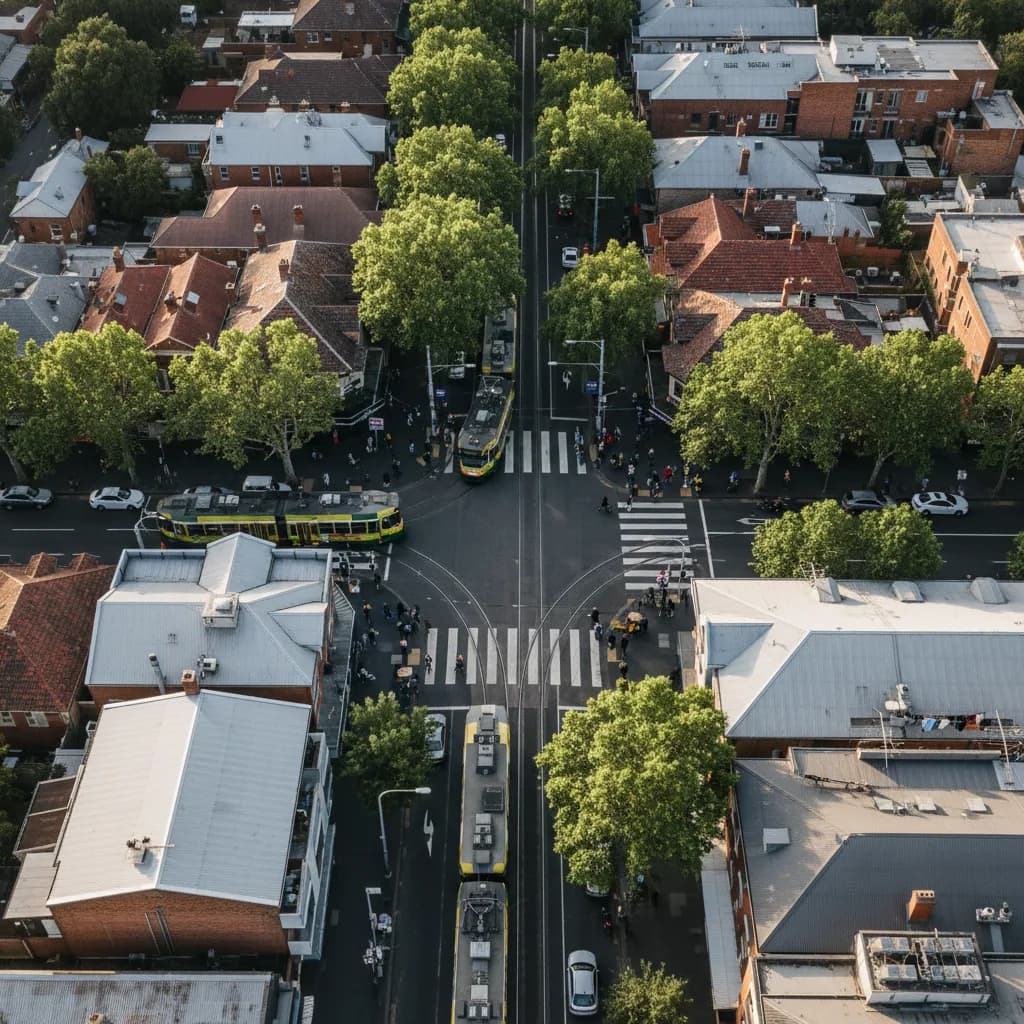
- Melbourne has an extensive tram network — you must stop behind a tram when it's picking up/dropping off passengers (no overtaking)
- "Hook turns" in Melbourne's CBD — right turns made from the left lane at marked intersections (unique to Melbourne)
- Unmarked speed cameras and red-light cameras are common
Melbourne's hook turn: This is genuinely confusing for newcomers. At certain CBD intersections marked with a "Right Turn from Left Only" sign, you must pull into the left lane, wait for the cross-street light to turn green, then complete your right turn. It exists because tram tracks occupy the centre lanes. Practice this in low-traffic conditions first.
Queensland (QLD)
Queensland covers a vast area from Brisbane in the southeast to Cairns in the tropical north. Rules are managed by the Department of Transport and Main Roads.
Temporary Visitors and Visa Holders
- You can drive on your overseas licence for the duration of your temporary visa
- Must carry your licence and IDP/translation
- Your licence must be current and valid for the class of vehicle you're driving
Converting to a Queensland Licence (Residents)
You must convert within 3 months of becoming a Queensland resident (including becoming a PR).
Recognised countries (direct conversion): Similar list to other states — most EU, UK, USA, Canada, Japan, NZ, etc.
Process for recognised countries:
- Visit a Department of Transport and Main Roads centre
- Bring: passport, overseas licence, proof of Queensland address, visa evidence, NAATI translation (if needed)
- Pass an eyesight test
- Pay the fee (~$75-$180)
- Surrender your overseas licence
Non-recognised countries:
- Pass a written road rules test (30 questions, pass mark ~80%)
- Pass a practical driving test
- Queensland also requires a medical assessment for some applicants
Key QLD Rules
- Default speed in built-up areas: 50 km/h
- School zones: 40 km/h during school hours
- Queensland has strict drink-driving enforcement with random breath testing common
- Different rules apply north of Cairns and in remote areas — be prepared for single-lane bridges, wildlife, and limited mobile coverage
Western Australia (WA)
WA is Australia's largest state by area, and Perth's growing population means more drivers on the road every year.
Temporary Visitors and Visa Holders
- You can drive on your overseas licence for 3 months after arriving in WA
- After 3 months, you must convert regardless of visa type
- Must carry licence and IDP/translation
Converting to a WA Licence
You have 3 months — one of the shorter deadlines.
Recognised countries (direct conversion): Comprehensive list including EU countries, UK, USA, Canada, Japan, NZ, Singapore, South Korea, Hong Kong
Process for recognised countries:
- Visit a Department of Transport centre or regional licensing agent
- Bring: passport, overseas licence, proof of WA address, visa evidence, NAATI translation (if needed)
- Pass an eyesight test
- Pay the fee (~$50-$140)
- Surrender your overseas licence
Non-recognised countries:
- Pass a theory test (30 questions, computerised)
- Pass a practical driving assessment
- May need a hazard perception test depending on experience
Key WA Rules
- Default speed in built-up areas: 50 km/h
- WA uses the SmartRider system for public transport, but most residents drive
- No toll roads in WA
- Regional WA has extreme distances — Perth to Broome is 2,200 km. Plan long trips carefully with fuel, water, and rest stops.
South Australia (SA)
Adelaide's affordable lifestyle attracts many migrants, and SA's driving rules are relatively straightforward.
Temporary Visitors and Visa Holders
- You can drive indefinitely on a valid overseas licence while on a temporary visa
- Must carry licence and IDP/translation
- Coverage lapses if your overseas licence expires
Converting to an SA Licence
Convert within 3 months of becoming a resident or PR.
Recognised countries (direct conversion): Broad list including EU, UK, USA, Canada, Japan, NZ, Singapore, South Korea
Process:
- Visit a Service SA centre
- Standard documentation requirements
- Eyesight test
- Fee: ~$50-$170
- Surrender overseas licence
Non-recognised countries: Theory test + practical test required.
Key SA Rules
- Default speed in built-up areas: 50 km/h
- Unique to SA: you must dip headlights when approaching another vehicle at night (common practice everywhere, but specifically enforced in SA)
- Adelaide has no toll roads
- Wine region driving: be aware of slower-moving agricultural vehicles and narrow roads in Barossa Valley and McLaren Vale
Tasmania (TAS)
Tasmania is smaller and more rural than the mainland states. Driving is practically essential outside Hobart.
Temporary Visitors and Visa Holders
- Drive on your overseas licence for the duration of your temporary visa
- Must carry licence and IDP/translation
Converting
Convert within 3 months of becoming a resident.
Recognised countries: Direct conversion. Non-recognised: theory + practical test.
Fee: ~$50-$130
Key TAS Rules
- Default speed in built-up areas: 50 km/h
- Tasmania has winding mountain roads — take them slowly, especially in wet weather
- Wildlife is a serious hazard — Tasmania has the highest roadkill rate in Australia. Avoid driving at dusk and dawn outside urban areas.
Australian Capital Territory (ACT)
Canberra is compact and car-dependent for many residents.
Temporary Visitors and Visa Holders
- Drive on your overseas licence for the duration of your temporary visa
- Must carry licence and IDP/translation
Converting
Convert within 3 months of becoming an ACT resident.
Recognised countries: Direct conversion. Non-recognised: theory + practical test.
Fee: ~$50-$120
Key ACT Rules
- Default speed in built-up areas: 50 km/h
- Canberra uses a unique road system with many roundabouts — you'll encounter more roundabouts in Canberra than almost anywhere else in Australia
- Black ice is a hazard on winter mornings (June-August)
- Free parking is more available in Canberra than in Sydney or Melbourne, but CBD parking is metered
Northern Territory (NT)
The NT is Australia's frontier — vast distances, remote roads, and some of the highest speed limits in the country.
Temporary Visitors and Visa Holders
- Drive on your overseas licence for 3 months
- Must carry licence and IDP/translation
Converting
Convert within 3 months.
Recognised countries: Direct conversion. Non-recognised: theory + practical test.
Fee: ~$40-$100
Key NT Rules
- Some open-speed-limit roads exist (130 km/h posted, some previously unrestricted)
- Darwin to Alice Springs is 1,500 km — approximately 15 hours of driving
- Fatigue and wildlife are the biggest hazards
- Flooding during the wet season (November-April) can close roads for days or weeks
The International Driving Permit (IDP)
An IDP translates your licence into 10 languages and is internationally recognised. Here's what you need to know:
| Question | Answer |
|---|---|
| Is an IDP mandatory in Australia? | Not if your licence is in English, but strongly recommended for all drivers |
| Where do I get one? | Your home country's automobile association (before departure) |
| Can I get one in Australia? | No — must be obtained before travel |
| How much does it cost? | $15-$50 depending on your country |
| How long is it valid? | 12 months from date of issue |
| Does it replace my licence? | No — you must carry both |
| Which states require it? | None explicitly mandate it for English-licence holders, but all require it or a certified translation for non-English licences |
Without an IDP or certified translation (for non-English licences):
- Police may issue a fine
- Your car insurance may not cover you in an accident
- You could be deemed as driving without a valid licence
Tips for Driving in Australia as a New Arrival
- Get your IDP before leaving home — this is your most important prep step
- Convert your licence early — don't wait for the deadline to approach
- Take professional lessons — even 2-3 hours with an instructor teaches you local road rules and left-hand driving
- Download your state's road rules handbook — it's free and covers everything you'll be tested on
- Use Google Maps or Waze — they'll help you navigate unfamiliar roads and alert you to speed cameras
- Join roadside assist — NRMA (NSW), RACV (VIC), RACQ (QLD), RAC (WA), RAA (SA), RACT (TAS) — costs $80-$150/year and is invaluable for breakdowns
- Budget for fuel — check your city's cost of living guide for fuel prices in your area
- Ensure you have proper insurance — at minimum third party property; ideally comprehensive
- Set up a bank account for toll and fine payments — electronic toll systems require a linked account
Frequently Asked Questions
Can I drive in every Australian state on the same overseas licence?
Yes. If your overseas licence is valid and you carry an IDP or English translation, you can drive in any Australian state while visiting or on a temporary visa. However, once you establish residency in a specific state, that state's conversion rules apply. Your NSW licence, once converted, is valid nationally.
What if my country isn't on the recognised list?
You'll need to pass both a theory knowledge test and a practical driving test to obtain an Australian licence. Study materials are available free from each state's transport authority website. Consider taking professional driving lessons to prepare for the practical test — Australian road rules and left-hand driving require adjustment.
Is an International Driving Permit the same as an international licence?
There's no such thing as an "international licence." The IDP is a translation document that supplements your existing licence. It doesn't authorise you to drive on its own — you must always carry your original overseas licence alongside it. Be wary of websites claiming to issue "international driving licences" — these are often scams.
Can I rent a car in Australia on my overseas licence?
Yes. Most rental companies accept overseas licences from recognised countries, along with an IDP or English translation. You'll need to be at least 21 (some companies require 25) and hold a credit card. Rental companies include Hertz, Avis, Budget, Europcar, and local operators.
What happens if I'm caught driving after my conversion deadline has passed?
You'll be treated as driving without a valid licence — which is a serious offence in all Australian states. Penalties typically include fines of $500-$2,500 and potential court appearances. Your car insurance is also likely void, making you personally liable for any accident damage. Don't take this risk — convert on time.