Hardware Technician Visa Pathway to Australia: Complete 2026 Guide
Updated: 16 August 2026
Australia classifies Hardware Technician under ANZSCO 313111. Trades Recognition Australia (TRA) conducts the Migration Skills Assessment for this code. The occupation sits on the Core Skills Occupation List (CSOL) and the Short-Term Skilled Occupation List (STSOL), unlocking subclasses 190, 491, 482 and 186. Typical 2026 salaries range AUD $65,000-$95,000. The 482 employer-sponsored pathway is the dominant route.
Quick Facts: Hardware Technician Migration Pathway
| Detail | Information |
|---|---|
| ANZSCO Code | 313111 (Hardware Technician) |
| Skill Level | 2 (AQF Associate Degree, Diploma or Advanced Diploma) |
| Skills Assessment | TRA (Trades Recognition Australia) |
| Occupation List | CSOL and STSOL |
| Visa Options | 190, 491, 482, 186 |
| Demand Level | Moderate — driven by managed service providers and corporate IT refresh cycles |
| Salary Range | AUD $65,000-$95,000 (SEEK / Jobs and Skills Australia 2025-26) |
| Typical 189 Score | Not eligible — 189 requires MLTSSL listing |
| Key Challenge | TRA documentary evidence requires demonstrable practical skill, not just certifications |
What Hardware Technicians Do in Australia
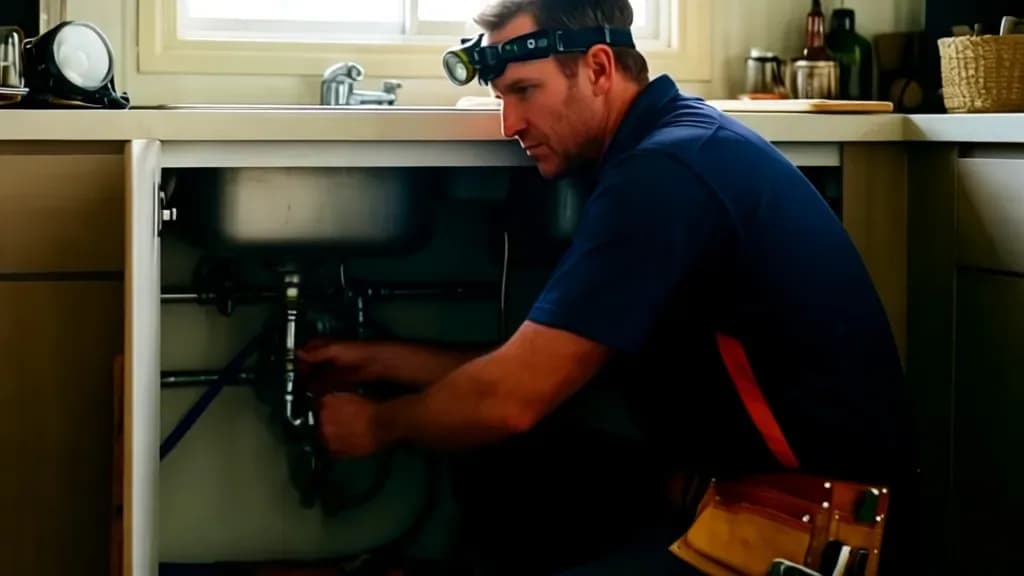
Hardware Technicians install, configure, test, troubleshoot and repair computer hardware, peripherals and networking equipment. The work covers desktop and laptop refreshes, server rack builds, point-of-sale and kiosk hardware, healthcare device support, and the physical layer of corporate networks — cabling, switches, patch panels.
In Australia, most 313111 roles sit with managed service providers (MSPs) servicing small and mid-market businesses, internal IT teams at corporates and large institutions (banks, universities, public hospitals), or contract field-services firms supporting retail and hospitality chains. The work is geographically distributed — every capital city has steady demand, and regional centres like the Sunshine Coast, Geelong and Newcastle have growing MSP markets serving local businesses and remote workforces.
Demand isn't concentrated in shortage hotspots the way nursing or construction trades are. Instead, the work follows hardware refresh cycles (corporate fleet rotation every 3-4 years), public sector procurement schedules, and the slow expansion of healthcare and education IT estates. Major employers include Brennan IT, Data#3, Dimension Data (NTT), Optus Business, Telstra Purple, and the in-house IT teams at the Big Four banks and state government agencies.
ANZSCO 313111 in Detail
The 313111 code covers technicians whose work centres on the physical computing infrastructure — installing and configuring hardware components, diagnosing faults, replacing parts, and providing first-line hardware support. The ABS ANZSCO 2022 rev 1 description lists tasks including installing and configuring computers and peripherals, testing computer hardware, troubleshooting and repairing hardware faults, and providing technical assistance.
The line between 313111 Hardware Technician and 313199 ICT Support Technicians nec sits at the share of hardware-versus-software work. If you spend most of your time physically working with hardware components, 313111 fits. If your work is predominantly remote troubleshooting, software configuration, or end-user support without significant physical hardware handling, 313112 ICT Customer Support Officer or 313199 may be the better mapping.
Skills Assessment — TRA Migration Skills Assessment
TRA is the assessing authority for 313111 under the Migration Skills Assessment (MSA) programme. The MSA evaluates whether your overseas qualifications, training and employment experience are equivalent to the Australian Certificate IV or Diploma standard for the nominated occupation.
Requirements:
- Relevant vocational qualification — Certificate IV, Diploma or equivalent in computer hardware, IT support, or networking
- At least 3 years of post-qualification employment in roles aligned with the ANZSCO 313111 task list
- Detailed employment evidence including payslips, employment contracts, tax records and duty statements
- Identity, work rights and English-language evidence
Assessment Cost: TRA Migration Skills Assessment fees start from approximately AUD $300 for the documentary stage, with total programme costs varying based on whether a Technical Interview or additional evidence is required. Always confirm current pricing in Section 1.5 of the official MSA Applicant Guidelines.
Processing Time: TRA aims to finalise MSA applications within 120 days of submission. Complex cases or those requiring additional evidence can extend further.
Common rejection reasons: Two patterns dominate TRA refusals. First, qualifications that are theoretical rather than practical — degree-level computer science qualifications without hands-on hardware training often don't meet the AQF Certificate IV/Diploma equivalence test for a hardware trade. Second, employment evidence that describes generic "IT support" without specific reference to hardware tasks. TRA wants to see installation, repair and troubleshooting work documented in detail.
Visa Pathways
Subclass 482 — Skills in Demand (Core Skills Stream)
The most realistic pathway for 313111 holders. CSOL listing makes the Core Skills stream available.
- Visa fee: AUD $4,015 (primary applicant, Core Skills stream)
- Salary threshold: Core Skills Income Threshold AUD $79,423 — this matters for Hardware Technicians because median salaries sit close to this floor
- Duration: Up to 4 years
- Pathway to PR: 186 transition after 2 years of employer-sponsored work
The salary threshold is the watch-out for this occupation. SEEK data shows IT Support Technician salaries between $65,000 and $85,000, and Hardware Technician roles cluster at the lower end. To use the 482, the offered salary must be at or above $79,423 — many entry-level Hardware Technician roles fall short. Mid-level and senior roles (5+ years experience, MSP team lead, or specialist healthcare/finance hardware) typically clear the threshold comfortably.
Subclass 190 — Skilled Nominated
State-nominated permanent residency. Adds 5 points to the points test.
- Visa fee: AUD $6,140
- Obligation: Live and work in the nominating state for 2 years
- Reality: Few states actively nominate 313111. NSW and Victoria draw from the federal CSOL and may include hardware-side ICT roles in slower invitation rounds.
Subclass 491 — Skilled Work Regional
Regional state or family-nominated provisional visa. Adds 15 points.
- Visa fee: AUD $6,140
- Duration: 5 years provisional, with PR via subclass 191 after meeting income and residence requirements
- Reality: Regional MSPs and healthcare IT teams in Tasmania, regional SA and regional Queensland are the most realistic 491 channels for this code
Subclass 186 — Employer Nomination Scheme
Permanent residency through employer sponsorship.
- Visa fee: AUD $6,140
- Streams: Direct Entry (3+ years skilled work and positive skills assessment) or Temporary Residence Transition (after 2+ years on the 482)
- Reality: TRT is the realistic route — get onto a 482 first, transition once eligible
State Nomination
New South Wales
NSW publishes a 190 and 491 skilled occupation list each program year. The state accepts occupations across ICT, healthcare and engineering. Hardware Technician (313111) appearance varies year to year — verify directly on the NSW Government skills lists before lodging an EOI. NSW prefers candidates with current NSW employment or a strong employment offer.
Tasmania
Tasmania actively recruits ICT support staff for the public sector, education and healthcare. The Tasmanian Skilled Occupation List has historically included support technician roles where the applicant has either completed a CQI Tasmanian qualification, has 6+ months of Tasmanian employment, or has a verified job offer from a Tasmanian employer.
South Australia
South Australia includes hardware and ICT support roles on its lists where applicants meet specific work or study triggers — current SA employment, Adelaide-region offers from listed employers, or completion of an SA qualification. Eligibility shifts each program year; the SA Skilled Migration team publishes detailed criteria.
Salary and Employment Outlook
What Hardware Technicians Earn in 2026
| Role | Typical Salary Range |
|---|---|
| Entry-level Hardware Technician | AUD $65,000-$75,000 |
| Mid-level Hardware Technician | AUD $75,000-$85,000 |
| Senior / Lead Hardware Technician | AUD $85,000-$95,000 |
| Field Services Engineer | AUD $80,000-$100,000 |
| Datacentre Hardware Technician | AUD $85,000-$110,000 |
| Specialist (healthcare, finance, defence) | AUD $90,000-$115,000 |
Salary sources: SEEK Career Advice (April 2026), supplemented by job listing analysis on SEEK and LinkedIn during early 2026. Total packages include the legislated 12% Superannuation Guarantee (from 1 July 2025). MSPs and contractors often pay on-call allowances; corporate roles typically pay bonuses tied to ITIL service-level performance.
Highest-Paying Sectors
- Datacentre operators — NEXTDC, AirTrunk, Equinix, Microsoft Azure datacentres
- Defence and government secure facilities — Australian Signals Directorate ecosystem, Defence Industry contractors
- Banking and finance — Big Four banks, Macquarie, Westpac, IT operations roles
- Healthcare — large public hospitals, eHealth NSW, Healthshare NSW, state healthcare IT bodies
- Managed Service Providers (MSPs) — Brennan IT, Interactive, Data#3, NTT (Dimension Data)
Tips for a Successful Application
1. Build a TRA Evidence File While You're Still Working
The single biggest gap in TRA applications is employment evidence. Start collecting reference letters, payslips, contracts and detailed duty statements at least 6 months before you intend to apply. Get the duty statements written while colleagues remember the specifics — once you've left the role, getting a detailed rewrite becomes hard.
2. Document Practical Hardware Work Specifically
TRA distinguishes hardware technicians from generalist IT support. Your evidence should describe rack-and-stack work, component replacement, hardware diagnostics with specific tools (e.g. multimeter, cable tester, manufacturer diagnostic suites), and physical installation work. Statements that read like a software helpdesk role won't pass.
3. Pursue Vendor Certifications Alongside the Skills Assessment
CompTIA A+, Network+, Server+, and vendor certifications (HPE ASE, Dell EMC, Cisco CCNA) significantly strengthen your file and help employers justify a 482 nomination. They also help with salary negotiation, which matters if you're trying to clear the $79,423 CSIT threshold.
4. Aim Above the CSIT Floor
Many Hardware Technician roles pay below the AUD $79,423 Core Skills Income Threshold for the 482. Target mid-level or senior roles, datacentre work, or specialist sector roles where salaries comfortably exceed the threshold. Accepting a $70,000 offer kills the 482 pathway.
5. Use the TRA Job Ready Programme as a Backup
For applicants whose overseas qualifications don't satisfy the standard MSA pathway, the TRA Job Ready Programme combines on-the-job assessment with formal evaluation. It's slower (typically 12+ months) but creates an alternative entry point for candidates who can't get a clean documentary MSA outcome.
Step-by-Step Migration Roadmap
- Confirm 313111 fits your role — review the ANZSCO code finder and check against 313112 and 313199
- Verify CSOL listing — confirm 313111 is on the Core Skills Occupation List for the current program year
- Compile TRA evidence — qualifications, employment references, payslips, tax records, contracts, ID
- Lodge TRA Migration Skills Assessment — documentary stage, 120-day target processing
- Sit your English test — IELTS, PTE Academic, or equivalent (Vocational English minimum for 482)
- Find an Australian employer — target MSPs, datacentres, and corporate IT teams that hold Standard Business Sponsor status
- Ensure the salary clears AUD $79,423 — the Core Skills Income Threshold is the gating condition for the 482
- Or apply for state nomination — NSW, Tasmania, or SA where 313111 is listed in the current program year
- Lodge the visa application — 482 is the most common starting point
- Complete health and character checks
- Receive grant and relocate — start counting time toward 186 TRT eligibility
- Transition to PR — 186 TRT after 2 years on the 482, or 191 after 3 years on a 491
Frequently Asked Questions
Why is Hardware Technician on the CSOL and not the MLTSSL?
Jobs and Skills Australia treats Hardware Technician demand as moderate and concentrated in metropolitan service economies rather than a structural national shortage. That keeps it off the MLTSSL but on the broader CSOL, which still gives full access to employer-sponsored visas (482, 186) and state nomination (190, 491) where states list it.
Should I use 313111 or 313112 for my application?
The decisive factor is the share of physical hardware work in your role. If most of your time is spent installing, configuring, diagnosing, and repairing physical hardware, 313111 fits. If you're predominantly providing user support, software configuration, ticket triage, and remote troubleshooting, 313112 ICT Customer Support Officer is a closer match. Your employment references must align with whichever code you nominate.
What if my salary offer is below the AUD $76,515 Core Skills Income Threshold?
The 482 Core Skills stream is not available below this threshold. Your options are: negotiate the offered salary up to or above $79,423 (often achievable for candidates with specialist certifications), pursue state nomination on the 491 instead (which has no minimum salary requirement), or take a Direct Entry 186 if you have 3+ years of skilled experience and a permanent role offer at the appropriate salary.
Can I bring family on a 482 if my salary is at the CSIT minimum?
Yes. The 482 allows dependants to join the primary applicant regardless of where the salary sits relative to the threshold, provided it meets or exceeds the CSIT. Family members must each pay the relevant visa application charges and meet health and character requirements. Children under 18 can attend school, and partners have full work rights.
How does the TRA Job Ready Programme differ from the documentary MSA?
The MSA documentary assessment evaluates evidence on paper. The Job Ready Programme combines a documentary stage with practical workplace assessment in Australia — you work for an approved Australian employer for a defined period (typically 1,725 hours over at least 12 months), during which a TRA assessor evaluates your practical skills. It's slower and more involved, but it suits applicants whose paper evidence is patchy or whose overseas qualification doesn't cleanly map to the Australian standard.
For a wider view of skilled migration options, see the most in-demand occupations in Australia for 2026 and the complete skills assessment bodies list.