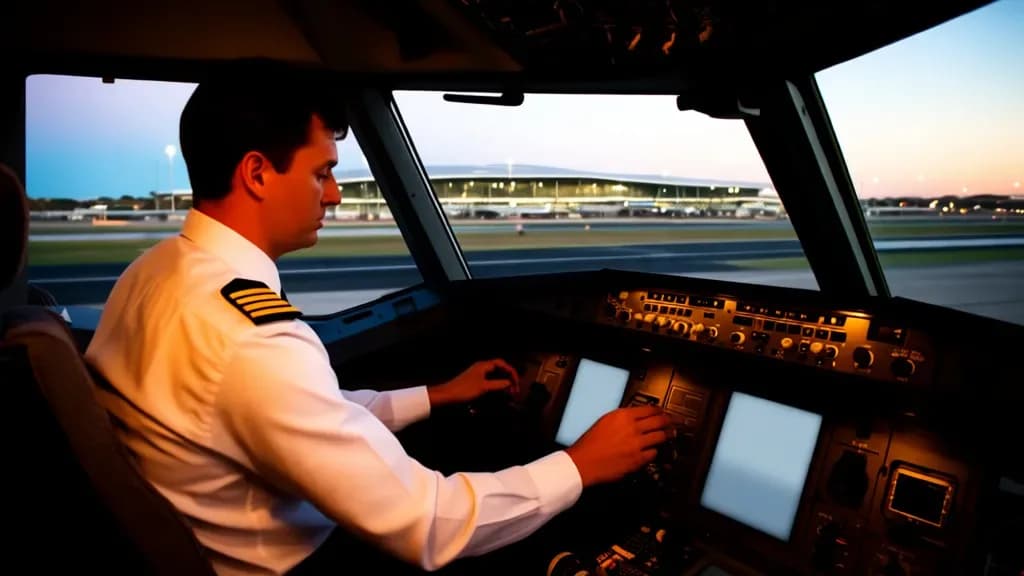
Aircraft Maintenance Engineer (Structures) Visa Pathway to Australia: Complete 2026 Guide
Updated: 16 August 2026
Australia classifies Aircraft Maintenance Engineer (Structures) under ANZSCO 323113. Trades Recognition Australia (TRA) conducts the skills assessment via the Migration Skills Assessment (MSA) program. The occupation sits on the CSOL, unlocking subclasses 190, 491, 482 and 186. Typical 2026 salaries range AUD $95,000-$150,000 depending on CASA licence category and aircraft type.
Quick Facts: Aircraft Maintenance Engineer (Structures) Migration Pathway
| Detail | Information |
|---|---|
| ANZSCO Code | 323113 (Aircraft Maintenance Engineer (Structures)) |
| Skill Level | 3 (AQF Certificate III/IV plus extensive on-the-job training) |
| Skills Assessment | TRA (Trades Recognition Australia) — Migration Skills Assessment (MSA) |
| Occupation List | CSOL |
| Visa Options | 190, 491, 482, 186 |
| Demand Level | High — aviation MRO backlog plus Qantas/Virgin fleet renewal |
| Salary Range | AUD $95,000-$150,000+ (SEEK, 2026; Glassdoor licensed AME data 2026) |
| Typical 491 Score | 70-85 points (including +15 regional nomination) |
| Key Challenge | CASA Part 66 licensing is separate from TRA migration assessment |
What an Aircraft Maintenance Engineer (Structures) Does in Australia
An Aircraft Maintenance Engineer (Structures) — AME(S) — inspects, repairs and maintains the structural components of aircraft: fuselage panels, wings, control surfaces, doors, frames, longerons, stringers, ribs, and composite assemblies. The role covers both metallic structure (riveted aluminium, titanium, magnesium) and composite structure (carbon fibre, fibreglass, honeycomb sandwich). It's distinct from AME (Mechanical) (323112) and AME (Avionics) (323111), each of which has its own ANZSCO code and CASA licence category.
Australia's aviation maintenance sector is anchored by Qantas Group (Qantas, QantasLink, Jetstar), Virgin Australia, Rex, and a thick mid-tier of MRO providers — Hawker Pacific, Skywest Aviation Services, Boeing Defence Australia, Northrop Grumman Australia, BAE Systems Australia, and Toll Aviation. Regional aviation, fly-in fly-out mining charter, agricultural aviation, and the Royal Flying Doctor Service all draw on the same labour pool.
Geographically, the densest demand sits in Brisbane (the Qantas heavy maintenance base), Melbourne (Qantas-Tullamarine and Jetstar engineering), Sydney (Mascot and Bankstown), Perth (BHP and Rio Tinto contract work, Cobham Aviation), and Adelaide (defence aviation). Regional bases — Cairns, Darwin, Townsville, Karratha, Port Hedland, Alice Springs — all carry persistent shortages and feed naturally into 491 regional pathways.
ANZSCO 323113 — How the Code Is Defined
ANZSCO places 323113 in Skill Level 3, requiring an AQF Certificate III or IV qualification plus three years of on-the-job training, or at least three years of relevant experience that has been formally recognised. In practice the international entry standard is a recognised aircraft maintenance qualification plus a CASA Part 66 Licensed Aircraft Maintenance Engineer (LAME) licence in the B1.1, B1.3 or B2 category that includes structural privileges, or an overseas equivalent (EASA Part-66, FAA A&P, TCCA AME).
Closely related codes:
- 323111 — Aircraft Maintenance Engineer (Avionics): electrical, instruments, radio, autopilot systems
- 323112 — Aircraft Maintenance Engineer (Mechanical): engines, hydraulics, pneumatics, fuel systems
- 323113 — Aircraft Maintenance Engineer (Structures): airframe, sheet metal, composites
- 323199 — Aircraft Maintenance Engineers nec: combination roles that don't fit cleanly
Choose the code that aligns with the bulk of your hands-on experience and the licence category you hold. TRA's MSA assesses against the specific code, not against a generic aviation profile.
Skills Assessment — Trades Recognition Australia
The TRA Migration Skills Assessment is the only pathway for offshore applicants in trades-coded ANZSCO occupations. The full list of Australian assessing bodies sets out TRA's scope versus other professional assessors. For background on how trades and professional occupations are listed, see how to find your ANZSCO code. It's a documentary assessment, not a hands-on practical test, but the evidence threshold is high.
Core requirements:
- A formal qualification comparable to an AQF Certificate III or IV in Aeroskills (or the overseas equivalent — EASA Part-66 B1/B2, FAA A&P, Civil Aviation Authority recognised AME licence).
- At least three years of paid post-qualification employment in the nominated occupation.
- Detailed employment evidence: licence documents, training records, work-package examples, and references that map duties to the ANZSCO 323113 description.
- English at IELTS 5.0 (Vocational) or higher — frequently exceeded by visa English requirements anyway.
Cost (2026): The MSA application fee starts from approximately AUD $300 — verify the current amount on the TRA MSA Applicant Guidelines before lodging.
Processing time: TRA does not publish a single processing-time figure for MSA. In practice, complete MSA applications typically resolve within 10-12 weeks. Requests for additional evidence extend this.
Common rejection reasons: Employment evidence that describes general mechanical work without specific structural-repair duties; missing licence endorsements that establish the structures privilege; over-reliance on a single employer reference without underpinning work-package or training records. TRA expects to see continuous structural-repair work, not a single project.
CASA Part 66 Licensing Is Separate
Holding an overseas LAME licence does not automatically grant Australian privileges. CASA's Part 66 LAME licensing is a separate process operated by the Civil Aviation Safety Authority. Recognition of overseas qualifications under Part 66 requires a syllabus mapping exercise, additional examinations on Australian Civil Aviation Safety Regulations (CASRs), and in some cases a basic-licence module top-up. Plan for 6-12 months and several thousand dollars in additional fees for full Part 66 conversion. Some employers will sponsor candidates to perform structural repairs under company authorisation while CASA licensing is finalised.
Visa Pathways for AME (Structures)
Subclass 482 — Skills in Demand Visa
For most overseas AMEs, the 482 is the fastest route. Australian MRO providers actively sponsor offshore engineers, especially those with B1/B2 licences and wide-body or modern fleet experience (A320neo, 737 MAX, A350, 787).
- Visa fee: AUD $4,015 (primary applicant)
- Stream: Core Skills stream — salary threshold AUD $76,515 for 2025-26, rising to AUD $79,423 from 1 July 2026. Most licensed AME salaries clear this comfortably; some senior B1.1 roles approach the Specialist Skills threshold (AUD $146,576)
- Processing time: Core Skills 90% finalised within roughly eight months; Specialist Skills 7-67 days
- Quirk: Qantas, Virgin, BAE Systems and the major MRO providers are all approved sponsors with experienced migration teams. Sponsorship paperwork moves faster with these employers than with smaller regional operators
Subclass 491 — Skilled Work Regional Visa
Strong fit for AMEs willing to base in regional Australia. Five-year provisional visa with permanent residency via 191 after three qualifying years.
- Visa fee: AUD $6,140 (primary applicant)
- Points boost: +15 regional nomination
- Eligibility: State or territory regional nomination plus minimum 65 points
- Quirk: Regional MRO bases — Tamworth, Cairns, Mackay, Port Hedland, Karratha, Alice Springs, Darwin — all run on chronic AME shortages and align well with 491 obligations
Subclass 190 — Skilled Nominated Visa
Permanent state-nominated pathway. Available for 323113 in metropolitan-eligible state lists where the occupation appears.
- Visa fee: AUD $6,140 (primary applicant)
- Points boost: +5 state nomination
- Processing time: 75% finalised within eight months in 2026
Subclass 186 — Employer Nomination Scheme
Permanent residency via employer sponsorship. Direct Entry or TRT (after two years on a 482 with the same employer).
- Visa fee: AUD $6,140 (primary applicant)
- Eligibility: Positive TRA assessment plus a nominating Australian aviation employer
- Quirk: Qantas, Virgin and the established MROs frequently take 482 holders to 186 TRT after the two-year qualifying period — the dominant permanent-residency path for AMEs in practice
Points Test Strategy for 190 and 491
| Points Factor | Points | Notes |
|---|---|---|
| Age 25-32 | 30 | Maximum bracket |
| Age 33-39 | 25 | |
| AQF Certificate III/IV / Diploma | 10 | Standard credential for AME |
| Bachelor of Aviation Maintenance / Aeronautical Engineering | 15 | Where held |
| English Proficient (IELTS 7.0) | 10 | |
| English Superior (IELTS 8.0+) | 20 | Difficult for many trades applicants |
| Overseas experience 5-8 years | 10 | |
| Overseas experience 8+ years | 15 | |
| State nomination (190) | 5 | |
| Regional nomination (491) | 15 | |
| Partner skills | 5-10 |
Realistic Scenarios
Scenario 1 — Indian-trained AME, age 31, AQF Diploma equivalent, EASA Part 66 B1.1 licence, IELTS 6.5 (Competent), 8 years experience including 4 years on A320 structures, applying for 491 regional:
30 (age) + 10 (diploma) + 0 (competent English does not score in points but meets the visa threshold for trades) + 15 (8+ years experience) + 15 (491) = 70 points. Borderline competitive — Superior English would push to 90.
Scenario 2 — UK-trained licensed AME, age 35, EASA B1.3 turbine-helicopter and B1.1 fixed-wing, IELTS 7.5, 12 years experience, applying for 190 NSW:
25 (age) + 10 (qualification) + 10 (proficient English) + 15 (8+ years experience) + 5 (190) = 65 points (eligible — many candidates target 75-80 with partner or NAATI boost).
State Nomination for AME (Structures)
New South Wales
NSW nominates aviation maintenance occupations periodically, with the largest concentration of suitable employment around Sydney's Mascot and Bankstown airports plus regional bases at Tamworth (which hosts BAE Systems' pilot training and maintenance operation). NSW exhausted its 2025-26 allocation by May 2026; the next intake opens with the 2026-27 program year.
Queensland
Brisbane is Australia's largest heavy-maintenance base. Queensland's 491 program covers regional aviation centres at Cairns, Townsville, Mackay and Toowoomba. The state's onshore-priority filter favours applicants already in Australia, but offshore applicants with confirmed regional job offers can still secure nomination.
Western Australia
Perth's general aviation sector plus the Pilbara mining charter network (Karratha, Port Hedland, Newman) underpin sustained AME demand. WA's 491 program reserves 1,000 places and treats aviation maintenance as a priority. The General stream of WASMOL covers transport-sector occupations including aviation roles.
South Australia
Adelaide's defence aviation sector — Boeing Defence Australia, Babcock, BAE Systems' Hawk and JSF support — creates persistent demand for structural AMEs cleared for defence work. SA's 190 and 491 programs both nominate aviation trades.
Northern Territory
Darwin's role as a defence and RFDS base, combined with remote-area mining and tourism aviation, makes the NT a consistently strong 491 destination for AMEs. Lower competition and faster processing on the state nomination side.
Victoria
Melbourne's Tullamarine maintenance hub and the Avalon Airport secondary base both run continuous AME recruitment. Victoria's regional nomination covers Avalon, Bendigo, Mildura and Latrobe Valley general aviation operations.
Salary and Employment Outlook
| Role | Typical Salary Range |
|---|---|
| Unlicensed AME / Aviation Maintenance Technician | AUD $75,000-$95,000 |
| Licensed AME (B1/B2, narrow-body) | AUD $110,000-$140,000 |
| Licensed AME (B1/B2, wide-body, A330/787) | AUD $130,000-$170,000+ |
| Senior LAME / Certifying Engineer | AUD $150,000-$200,000+ |
| Maintenance Supervisor / Quality Lead | AUD $150,000-$185,000 |
| Contract / Travelling AME (FIFO) | AUD $1,000-$1,600/day |
Source: SEEK Career Advice (April 2026) reporting AME average AUD $95,000-$115,000, Glassdoor Licensed AME average AUD $146,500, Qantas published earnings band AUD $95,000-$130,000 for entry to mid-level engineers and higher for wide-body work.
Total package commonly includes 11.5% superannuation, shift loadings, overtime (often substantial during heavy checks), and per-diem allowances for off-base postings. Remote and FIFO contracts attract premium hourly rates.
Highest-Demand Specialisations
- B1.1 wide-body (787, A330, A350) certifying engineers
- Composite structural repair specialists (carbon fibre, honeycomb)
- 737 MAX and A320neo family experience
- Defence aviation cleared (Australian Government Security Clearance)
- Helicopter (B1.3) — especially Bell, Airbus AS350/EC135, Sikorsky S-76
Tips for a Successful Application
1. Lock the Code Before Lodging
323113 (Structures) is distinct from 323111 (Avionics) and 323112 (Mechanical). TRA assessors match documentation to the nominated code — a generalist AME with mixed-domain experience needs to weight the evidence toward structural repair work to clear 323113. If most of your career is engine and component work, 323112 is the better match.
2. Build the MSA Evidence File Early
TRA wants licence documents, training records, work-package examples, and references that map duties to ANZSCO 323113. Start gathering structural-task evidence — sheet metal repairs, composite layup, damage assessments — at least three months before lodging. Generic "performed maintenance" letters fail.
3. Plan for CASA Part 66 Conversion Separately
Holding an overseas LAME does not authorise Australian certification. Part 66 conversion is a separate CASA process taking 6-12 months and additional fees. Many employers will sponsor a 482 candidate to perform structural repairs under company authorisation while Part 66 conversion progresses — discuss this in offer negotiations.
4. Target Wide-Body and Composite Experience
Qantas, Virgin and the major MROs prioritise candidates with wide-body type endorsement (A330, A350, 787) and composite repair skills. If your background is narrow-body only, even a short composite top-up course before applying improves sponsorship odds.
5. Use Regional 491 if Points are Tight
Regional MRO bases — Tamworth, Cairns, Karratha, Alice Springs, Darwin — carry chronic vacancies and uplift points by 15. For applicants in their mid-30s with Proficient (not Superior) English, the 491 is usually a better mathematical fit than 190.
Step-by-Step Migration Roadmap
- Confirm 323113 (not 323111 Avionics or 323112 Mechanical) matches your hands-on experience and licence category.
- Verify CSOL status on the 2026 Skilled Occupation List hub.
- Sit IELTS, PTE, or OET — meet the visa English threshold (typically Vocational 5.0 for trades-stream 482 / Competent 6.0 for points-based PR).
- Gather licence documents, training records, structural-work evidence, and three to four employment references.
- Lodge the TRA MSA application (from AUD $300; check current fee).
- Begin CASA Part 66 syllabus mapping inquiry in parallel with TRA.
- Calculate points and submit an EOI in SkillSelect for subclass 190 and/or 491, or pursue 482 employer sponsorship via the skills assessment guide.
- Apply for state or territory nomination, or progress 482 sponsorship with an Australian aviation employer.
- On invitation, lodge the visa within 60 days — $4,015 (482) or $6,140 (190/491/186).
- Wait for grant (482: 7-67 days Specialist, ~8 months Core; 190/491/186: 6-12 months).
- Arrive in Australia and finalise CASA Part 66 licence conversion.
- After two qualifying years on 482, transition to 186 TRT for permanent residency.
Frequently Asked Questions
Does my EASA Part 66 licence transfer automatically to Australian privileges?
No. EASA, FAA and TCCA licences are recognised by CASA only after a Part 66 syllabus-mapping process, regulatory examinations, and (in some cases) practical assessment. Migration assessment (TRA) is separate from regulatory licensing (CASA). Many overseas-trained AMEs work under company authorisation while Part 66 conversion is finalised.
Which is faster — 482 sponsorship or 190 state nomination for an AME?
For experienced licensed engineers, 482 with a major MRO sponsor is usually faster. The 482 Core Skills stream is processing 90% of applications within eight months, and employers like Qantas and BAE Systems have streamlined migration teams. State nomination depends on annual allocation cycles and may sit in queue for months. 482 with a clear 186 TRT path after two years is the dominant route.
Can I bring my structural-repair experience from defence aviation overseas?
Yes, provided the duties map to ANZSCO 323113 and you can produce employment evidence. Australian defence aviation (Boeing, BAE Systems, Babcock) actively recruits defence-cleared structural AMEs, particularly for Hawk, F/A-18, F-35, P-8 and MRH-90 platforms. Existing security clearance from a Five Eyes partner is a strong asset.
Are composite repair skills more valued than metal structures in 2026?
Both are in demand, but composite specialists are scarcer. Wide-body modern fleet (787, A350, A330neo) and modern narrow-body (A320neo, 737 MAX) have substantial composite primary structure. Carbon-fibre layup, vacuum bagging, honeycomb sandwich repair, and ultrasonic NDT skills carry a measurable salary premium.
What's the demand outlook for AME (Structures) in Australia in 2026?
Strong and sustained. Qantas Group is in the middle of a fleet renewal across A220, A321XLR, A350-1000, and 787-9. Virgin Australia is rebuilding capacity. Regional, mining-charter, defence and RFDS demand are all up. Jobs and Skills Australia continues to list aviation maintenance trades as in shortage, particularly in regional areas and for wide-body certifying engineers. See the most in-demand occupations hub for the wider 2026 shortage picture, or compare with the Helicopter Pilot pathway if your aviation career sits flight-side rather than engineering-side. Cross-check placement against the Core Skills Occupation List hub.