Aircraft Maintenance Engineer (Avionics) Visa Pathway to Australia: Complete 2026 Guide
Updated: 16 August 2026
Australia classifies Aircraft Maintenance Engineer (Avionics) under ANZSCO 323111. Trades Recognition Australia (TRA) conducts the trade skills assessment; CASA Part 66 governs the on-the-job licence. The occupation sits on the CSOL and STSOL, unlocking subclasses 190, 491, 482 and 186. Typical 2026 salaries range AUD $95,000-$135,000, with licensed AMEs (B2 category) at the top of the band. Defence spending and a national pilot-and-engineer shortage drive sustained demand.
Quick Facts: AME (Avionics) Migration Pathway
| Detail | Information |
|---|---|
| ANZSCO Code | 323111 (Aircraft Maintenance Engineer — Avionics) |
| Skill Level | 3 (AQF Certificate III with two years on-the-job training, or Certificate IV; CASA Part 66 B2 for certifying authority) |
| Skills Assessment | TRA (Trades Recognition Australia) |
| Occupation List | CSOL + STSOL |
| Visa Options | 190, 491, 482, 186 |
| Demand Level | Very high — defence acquisitions and airline fleet renewal both pulling on the same labour pool |
| Salary Range | AUD $95,000-$135,000 (SEEK, 2026; licensed AMEs higher) |
| Typical 189 Score | Not applicable — 323111 is not on the MLTSSL |
| Key Challenge | TRA assessment and CASA Part 66 B2 licensing run independently — both take time and must be planned together |
What an AME (Avionics) Does in Australia
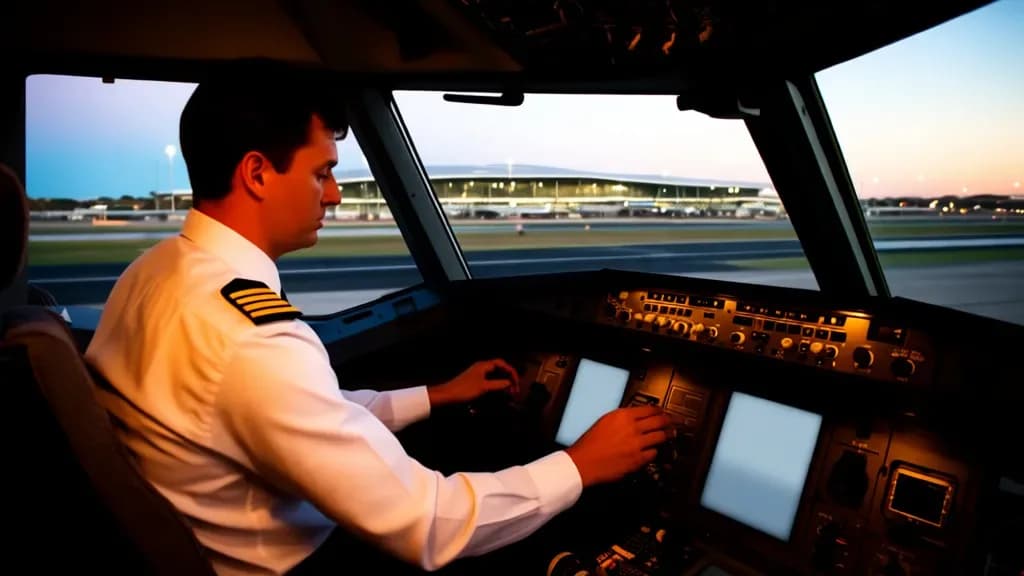
An AME (Avionics) inspects, tests, aligns, repairs and installs aircraft electrical and avionic system components — communication and navigation radios, autopilots, flight management systems, transponders, weather radar, electrical generation and distribution, instruments, and increasingly the integrated modular avionics found on new-generation airframes like the Boeing 787 and Airbus A350. Day-to-day work mixes scheduled maintenance (line and base check inspections), unscheduled snag rectification, modification embodiment, and component bench testing.
The Australian aviation workforce is concentrated around five hubs. Sydney Mascot and Bankstown for Qantas and the Cobham/Network Aviation operations, Melbourne Tullamarine and Avalon for Jetstar and BAE Systems, Brisbane for Virgin Australia heavy maintenance and the regional carriers, Perth and Karratha for FIFO support contracts, and Williamtown / Amberley / Edinburgh / Tindal for RAAF and defence prime contractor work. The major fleets — Boeing 737, 787, A320 family, A330, A350, plus the defence inventory (F-35, P-8 Poseidon, Wedgetail E-7, KC-30, MRH-90 successor) — all require avionics-qualified personnel.
Demand drivers in 2026 are pulling hard. Defence spending under the Australia-UK-US AUKUS framework is funding new platform acquisitions; airline fleet replacement post-COVID is now underway with both Qantas and Virgin taking large 737 MAX and A321XLR orders; and the existing licensed AME workforce is ageing. Regional Australia carries an acute shortage — regional charter operators in Cairns, Darwin, Kalgoorlie and Broome regularly offer above-market packages to attract qualified avionics engineers.
ANZSCO 323111 — The Code and Tasks
ANZSCO 323111 covers tradespeople who inspect, test, align, repair and install aircraft electrical and avionic system components. The Australian Bureau of Statistics describes core tasks as: studying technical specifications, drawings and operational manuals; testing aircraft electrical and avionic systems using diagnostic and calibration equipment; tracing and rectifying faults; removing and installing aircraft electrical and avionic components; modifying electrical wiring and systems; recording maintenance work and components used; and certifying maintenance work in accordance with regulatory standards (CASA Part 66 / CASR).
The companion codes are 323112 (AME — Mechanical, covering engines, airframes and hydraulics — see the AME Mechanical visa pathway) and 323113 (AME — Structures, covering airframe structural repairs — see the AME Structures visa pathway). The codes are mutually exclusive at the migration assessment level — pick the one that matches the majority of your work and your licence category.
Skills Assessment: TRA
Trades Recognition Australia (tradesrecognitionaustralia.gov.au) assesses 323111 against the AQF Certificate IV in Aeroskills (Avionics) — MEA40718 or its updated equivalent.
Migration Skills Assessment (MSA)
The MSA suits offshore-trained AMEs with a recognised qualification plus three or more years of post-qualification skilled employment on the avionics side of the trade.
- Fee: From AUD $300 for the documentary stage; full schedule in TRA section 2.1
- Processing time: 8-16 weeks standard
- Common rejection reasons: Employment references that describe general AME work without isolating the avionics task share; applicants whose actual work has shifted into management or production planning rather than hands-on avionics; missing CASA Part 66 evidence where it exists; conflating military avionics work without civil cross-credit documentation
Job Ready Program (JRP)
The JRP applies to AMEs who train through an Australian Aeroskills program (Aviation Australia, TAFE Queensland Aviation Australia, Box Hill Institute, TAFE NSW Bankstown). Four steps, total around AUD $3,540, 1,725 hours of paid skilled employment. Typical 12-18 months.
CASA Part 66 — running in parallel
A TRA-positive 323111 is sufficient for the skills-assessment requirement on every visa, but CASA Part 66 licensing is what authorises the migrant to certify maintenance work in Australia. The relevant category is B2 (Avionics) — covering electrical, instrument and radio systems. CASA Part 66 categories run B1.1 / B1.2 / B1.3 / B1.4 (mechanical sub-categories), B2 (avionics), and Category A (line maintenance certifier).
CASA accepts applications from offshore-qualified engineers under several recognition pathways depending on the source country and qualification. The UK CAA Part 66, EASA Part 66, FAA A&P (with avionics endorsement), Canadian TC AME M2 / E, and New Zealand CAA Part 66 licences all benefit from formal recognition arrangements. The application sequence is: TRA outcome → visa lodgement → CASA application → exam credits / gap assessment → Australian CASA Part 66 licence issue. Plan 6-12 months for the CASA step after arrival. The CASA portal is at casa.gov.au.
Visa Pathways for AMEs (Avionics)
Subclass 482 — Skills in Demand Visa
The 482 is the most common pathway because airlines and defence primes routinely sponsor avionics engineers.
- Visa fee: AUD $4,015 (primary applicant)
- Salary thresholds (until 30 June 2026): Core Skills Income Threshold AUD $76,515; Specialist Skills Income Threshold AUD $141,210. From 1 July 2026 these rise to $79,423 and $146,576
- Processing time: 51 days median for Core Skills, 8 days median for Specialist; 90% of Core Skills applications cleared within eight months as at April 2026
- Stream choice: Senior licensed AMEs often clear the Specialist threshold, especially in remote and FIFO charter operations. The Specialist stream's eight-day processing is a meaningful advantage when the employer needs the engineer on the floor quickly
Subclass 186 — Employer Nomination Scheme
Permanent residence through employer sponsorship.
- Visa fee: AUD $6,140 (primary applicant)
- Processing time: 12 months for 50% of applications; 19 months for 90% (Direct Entry, April 2026)
- TRT pathway: Available after two years on a 482 with the same sponsor
- Reality check: Direct Entry requires three years of post-qualification skilled employment plus a positive TRA outcome. TRT is the more common route because airlines prefer to trial on a 482 first
Subclass 190 — Skilled Nominated Visa
The 190 is available where a state lists 323111. The most common nominators in recent years have been Queensland (Brisbane heavy maintenance base, regional aviation hubs), Western Australia (FIFO charter, Perth heavy maintenance), and South Australia (Edinburgh defence aviation).
- Visa fee: AUD $6,140 (primary applicant)
- Points boost: +5
- Obligation: Live and work in the nominating state for at least two years
Subclass 491 — Skilled Work Regional (Provisional)
The 491 suits AMEs willing to commit to regional locations — Cairns, Darwin, Kalgoorlie, Broome, Townsville, Avalon, Tamworth. Five-year provisional visa with a pathway to PR through the subclass 191.
- Visa fee: AUD $6,140 (primary applicant)
- Points boost: +15
- Pathway to PR: Subclass 191 after three years of regional residence with the income thresholds met
State Nomination for AMEs (Avionics)
State nomination lists are reviewed annually. Always verify the current 2026 list on the state's migration portal before lodging an Expression of Interest.
Queensland
Queensland received 2,600 state nomination places for the 2025-26 program year. Brisbane carries the Virgin Australia heavy-maintenance base, Townsville hosts RAAF Base Townsville and significant rotary-wing aviation work, and Cairns supports the regional charter sector. AME (Avionics) typically features on the QLD list with priority for applicants holding a confirmed offer.
Western Australia
Perth Jandakot, Perth Airport heavy maintenance, and Karratha / Port Hedland FIFO support operations all sustain demand. WA's program prioritises occupations with regional shortage — AME work in the Pilbara qualifies on most years.
South Australia
The Edinburgh defence aviation complex (E-7A Wedgetail, P-8 Poseidon) generates demand for avionics specialists with defence-grade clearances. SA's nomination program has historically included 323111 with a defence industry overlay.
Tasmania
Tasmania confirmed 1,850 places for 2025-26 and runs weekly invitation rounds through the Migration Tasmania Application Gateway. The state's aviation sector is smaller but supports general aviation maintenance work for tourism and regional connectivity.
Salary and Employment Outlook
What AMEs (Avionics) earn in Australia
| Role | Typical Earnings (2026) |
|---|---|
| Unlicensed AME (post-Cert IV, pre-Part 66) | AUD $80,000-$95,000 |
| Licensed AME B2 (1-3 years post-licence) | AUD $100,000-$120,000 |
| Senior licensed B2 / Cat A certifier | AUD $120,000-$150,000 |
| Defence avionics specialist (cleared) | AUD $130,000-$170,000 |
| FIFO / remote charter AME | AUD $135,000-$180,000 |
| Quality / regulatory roles (above trade) | AUD $140,000-$200,000+ |
SEEK reports an Australian AME average between AUD $95,000 and $115,000, with licensed AME data closer to AUD $148,000. PayScale's 2026 Australian average sits around AUD $97,500. Glassdoor data shows top-quartile earnings approaching AUD $135,000. Overtime, shift loadings and remote-area allowances regularly lift realistic earnings above the base salary band.
Highest-paying sectors
- Defence prime contractors — BAE Systems Australia, Boeing Defence Australia, Lockheed Martin Australia, Northrop Grumman Australia
- RAAF civilian aviation technical roles — Australian Public Service positions supporting defence platforms
- Heavy maintenance — Qantas Engineering, Virgin Australia Engineering, third-party MRO providers
- FIFO charter — Cobham Aviation Services, Alliance Airlines, Network Aviation, Skippers Aviation (high turnover, premium rates)
- Business jet maintenance — ExecuJet, Jet Aviation, Universal Aviation, growing private aviation sector
Geographic variation
Sydney and Melbourne pay solid mid-band salaries with high cost of living. Brisbane offers a slight premium because Virgin's heavy maintenance is based there. Perth pays well, particularly the FIFO charter sector. Williamtown (NSW), Edinburgh (SA), Amberley (QLD) and Tindal (NT) defence bases command premiums for licensed AMEs with security clearance. Remote operations in Karratha, Broome, Darwin and Tindal pay 25-40% above metropolitan rates.
Tips for a Successful Application
- Plan TRA and CASA Part 66 as parallel tracks. TRA satisfies the visa skills assessment, but CASA Part 66 is what enables certifying authority in Australia. Start the CASA recognition assessment as soon as you have your TRA outcome — do not wait until after arrival.
- Document licence privileges accurately. Avionics engineers often hold a mix of B2 ratings, type ratings, and limited Cat A authorities. TRA wants the qualification credentials; CASA wants the type ratings and recent experience. Maintain a master logbook of authorisations and total hours by aircraft type.
- Specialist Skills stream is realistic for senior AMEs. The Specialist Skills threshold (AUD $146,576 from 1 July 2026, previously AUD $141,210) is within reach for senior licensed AMEs in defence and FIFO charter sectors. The 8-day median processing makes this stream a significant advantage where eligible.
- Avoid the military-to-civil gap. Ex-military AMEs from Commonwealth Air Forces commonly find that their military qualifications need civil cross-credit through CASA. UK ex-RAF, Indian Air Force technicians, Pakistan Air Force technicians and similar should pursue civil EASA Part 66 (or equivalent) recognition before TRA application — the migration outcome is much smoother.
- For regional 491, choose location strategically. Cairns and Darwin support active regional charter sectors; Kalgoorlie and Karratha support FIFO. Tasmania and remote NT have lower AME density and may struggle to provide three years of continuous skilled employment for the 191 transition.
Step-by-Step Migration Roadmap
- Confirm ANZSCO 323111 is the right code — work is primarily avionics, not mechanical or structures — using the how to find your ANZSCO code guide
- Verify CSOL eligibility on the Core Skills Occupation List page
- Gather employment references that isolate avionics task time on letterhead with TRA-compliant detail
- Sit an English test (IELTS 5.0 minimum for TRA; visa thresholds higher)
- Submit the TRA Migration Skills Assessment with logbook extracts, type-rating evidence and licence copies
- Start CASA Part 66 recognition application in parallel — casa.gov.au
- Pursue 482 sponsorship with airlines, defence primes or FIFO charter operators
- Once nominated, lodge the 482 within 28 days of the nomination decision
- If pursuing 190/491, submit an EOI in SkillSelect after the TRA outcome and apply to a state that lists 323111
- Complete health and character checks
- On arrival, complete CASA Part 66 examinations and type-rating gap training to obtain the Australian B2 licence
- Plan the 186 transition: TRT after two years with the sponsor or Direct Entry if eligibility met
Frequently Asked Questions
What's the difference between TRA assessment and CASA Part 66 licensing?
TRA assesses whether your trade qualifications and experience meet the Australian standard for migration purposes — it produces a positive or negative outcome on a paper file. CASA Part 66 is the operational licence that authorises you to certify maintenance work on Australian-registered aircraft. You need both. TRA opens the visa door; CASA Part 66 opens the workplace door.
Does my military avionics experience count for civil ANZSCO 323111?
It depends on the country and the specific role. Commonwealth military training that paralleled the civil EASA Part 66 framework (UK RAF, NZ Defence Force) is more readily recognised than purely military training without a civil cross-credit pathway. Most successful military-to-Australia transitions involve obtaining a civil EASA Part 66 or equivalent licence first, then applying through TRA.
Can I work in Australian aviation without CASA Part 66 if my TRA is positive?
Yes, in a limited sense. An unlicensed AME can work as a "maintenance assistant" performing tasks under the supervision of a licensed engineer, but cannot certify completed work. Salary is lower (the AUD $80,000-$95,000 unlicensed band) and the role is often a stepping stone while completing CASA exams. Plan to complete Part 66 within 12 months of arrival.
Which Australian states have the strongest AME (Avionics) demand in 2026?
Queensland (Brisbane heavy maintenance, regional charter), Western Australia (FIFO, Perth heavy maintenance), New South Wales (Sydney Mascot, Williamtown defence), and South Australia (Edinburgh defence aviation) carry the highest demand. Regional and remote operations consistently offer premium packages because the labour pool is narrowest there.
What's the realistic timeline from offshore decision to working in Australia?
For an offshore licensed AME with strong evidence: 3-4 months for TRA, 1-2 months for sponsor recruitment, 2-3 months for nomination and 482 grant (Core Skills) or shorter for Specialist stream. Total 6-10 months from decision to landing. CASA Part 66 recognition then runs in parallel with the first 6-12 months of Australian employment.
Is the AUKUS partnership creating AME jobs in 2026?
Yes. AUKUS pillar one (nuclear submarines) and pillar two (advanced capabilities including aviation) are driving defence acquisition through the late 2020s. The E-7 Wedgetail expansion, P-8 Poseidon fleet growth, F-35 sustainment, and the future MQ-28 Ghost Bat program all require avionics-qualified personnel with civil and defence credentials. Defence-cleared AMEs sit at the top of the salary band for this reason.