Working Holiday Visa Australia for South Korean Citizens: 2026 Guide
Updated: 25 June 2026
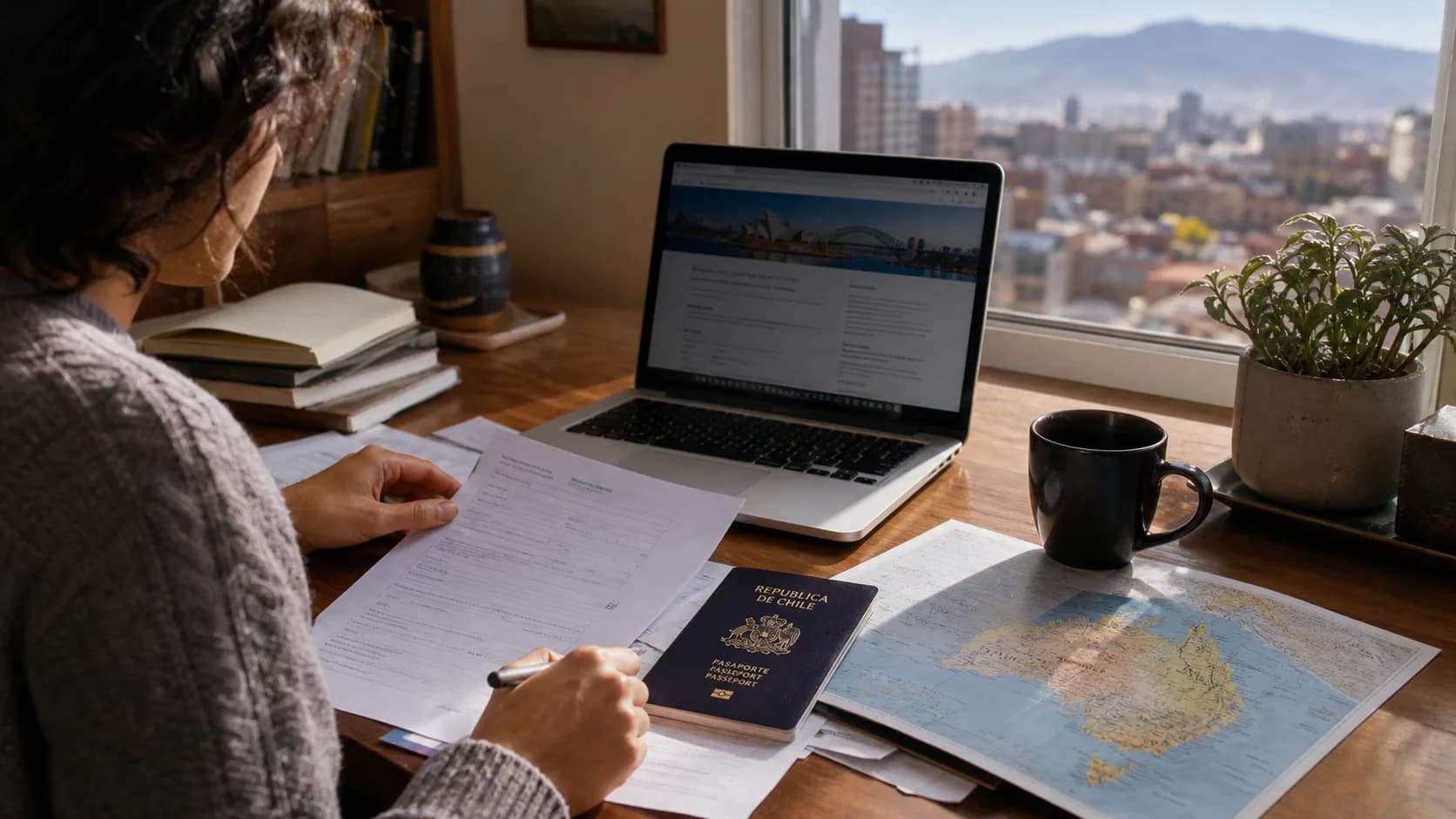
South Korean passport holders apply for Australia's Working Holiday under subclass 462 (Work and Holiday), not subclass 417. South Korea has a country cap, an English-language requirement, and a minimum education requirement. Eligible Koreans aged 18 to 30 get twelve months with full work rights, plus second and third-year extensions through specified regional work.
Independent guide, not a government service. Australian Visa Online is an independent resource. We are not affiliated with the Department of Home Affairs or any Australian government body. Always confirm current requirements on the official Home Affairs website before you lodge.
Quick Facts: Working Holiday Visa for South Korean Citizens
| Detail | Information |
|---|---|
| Visa subclass | 462 (Work and Holiday), not 417 |
| Age limit | 18 to 30 at the time of application |
| Annual cap | Yes — South Korea has a country cap (places are limited each programme year) |
| English requirement | Functional English required |
| Education requirement | Minimum post-secondary study or equivalent |
| Letter of government support | Not required for South Korea |
| Visa duration | 12 months from first entry |
| Work limit per employer | 6 months with the same employer |
| Second-year extension | Available via specified regional work in year one |
| Third-year extension | Available via further specified work in year two |
| Application channel | ImmiAccount, lodged from outside Australia |
| Visa charge | See the fee schedule |
Subclass 462, Not 417: Why It Matters for Koreans
Australia runs two parallel Working Holiday programmes that look almost identical from the outside but sit under different rules. Subclass 417 (Working Holiday) covers a set of countries with long-standing reciprocal arrangements, generally with no annual cap and no formal study or English requirement. Subclass 462 (Work and Holiday) covers a different set of countries, usually with annual caps and extra eligibility conditions.
South Korea is on subclass 462. This is the single most important fact for a Korean applicant to get right. If you read a guide written for British, Irish, or German travellers, the requirements they describe (no cap, no English test, no degree) do not apply to you, because those nationalities are on the 417.
For a full side-by-side breakdown, see subclass 417 vs 462: the difference explained. The practical consequences for South Korean citizens are:
- There is a country cap. Australia allocates a limited number of 462 places to South Korea each programme year. When the allocation fills, applications pause until the next programme year opens. This makes timing matter in a way it never does for 417 nationalities.
- You must show functional English. Korean applicants need to demonstrate functional English, typically through an accepted English test or recognised study in English. UK and Irish applicants are exempt; you are not.
- You must meet an education requirement. The 462 requires a minimum level of post-secondary education (or a set number of years of university study). A school-leaver with no tertiary study may not qualify, which is a key difference from the 417.
- No letter of support needed. Some 462 countries require a letter of government support to apply. South Korea is one of the nationalities that does not require this letter, which simplifies the process compared with certain other 462 countries.
Eligibility for South Korean Applicants
To qualify for the subclass 462 Work and Holiday visa as a South Korean citizen, you generally need to:
- Hold a valid Republic of Korea passport (the visa is for citizens, not residents of Korea)
- Be aged 18 to 30 at the time you apply (you can be granted and travel after turning 31, but you must apply before your 31st birthday)
- Meet the functional English requirement
- Meet the educational qualification requirement (post-secondary study or equivalent)
- Have enough money to support yourself at the start of your stay and to buy a departing ticket
- Have no dependent children accompanying you during your stay
- Meet health and character requirements
- Not have previously entered Australia on a subclass 417 or 462 (unless you are applying for a second or third year)
| Requirement | South Korea (subclass 462) | UK / Ireland (subclass 417) |
|---|---|---|
| Annual cap | Yes | No |
| English requirement | Functional English required | Not required |
| Education requirement | Post-secondary minimum | Not required |
| Letter of government support | Not required | Not applicable |
| Age range | 18–30 | 18–30 (some 417 countries extended) |
| First visa lodged from | Outside Australia | Outside Australia |
Your first 462 must be granted while you are outside Australia. There is no onshore pathway for a first Work and Holiday visa, so don't enter Australia on a tourist visa and expect to switch.
Key Conditions: The Six-Month Work Limit and More
Once granted, the 462 carries the same core conditions whether you're Korean, Chinese, or American. The conditions most often misunderstood:
- Six months per employer. You can work for any Australian employer, but no longer than six months with the same employer without permission. This applies to the employer, not the job title or the location. Some sectors carry exemptions; check the current list before assuming one applies.
- Four months of study. You may study or train for up to four months over the life of the visa.
- Full travel freedom. You can leave and re-enter Australia as many times as you like during the twelve months. The twelve-month stay clock runs from your first entry, not from grant.
- Work must be lawful and on the books. Cash-in-hand arrangements that aren't properly taxed and documented will not count toward a second-year extension, even if you genuinely did the work.
| Condition | What it means for you |
|---|---|
| 6 months per employer | Change employers, or get permission, before you hit six months |
| 4 months of study | Short courses and training are fine; full degrees are not the point of this visa |
| 12-month stay | Counts from first entry into Australia |
| Multiple entries | Travel in and out freely during the 12 months |
| Specified work | Required to unlock the second and third-year extensions |
Second and Third Year: Specified Regional Work
South Korean 462 holders can extend the same way 417 holders do, by completing specified work in eligible regional areas and industries.
- A second-year 462 becomes available after you complete a qualifying period of specified regional work during your first year.
- A third-year 462 becomes available after you complete a further qualifying period of specified work during your second year.
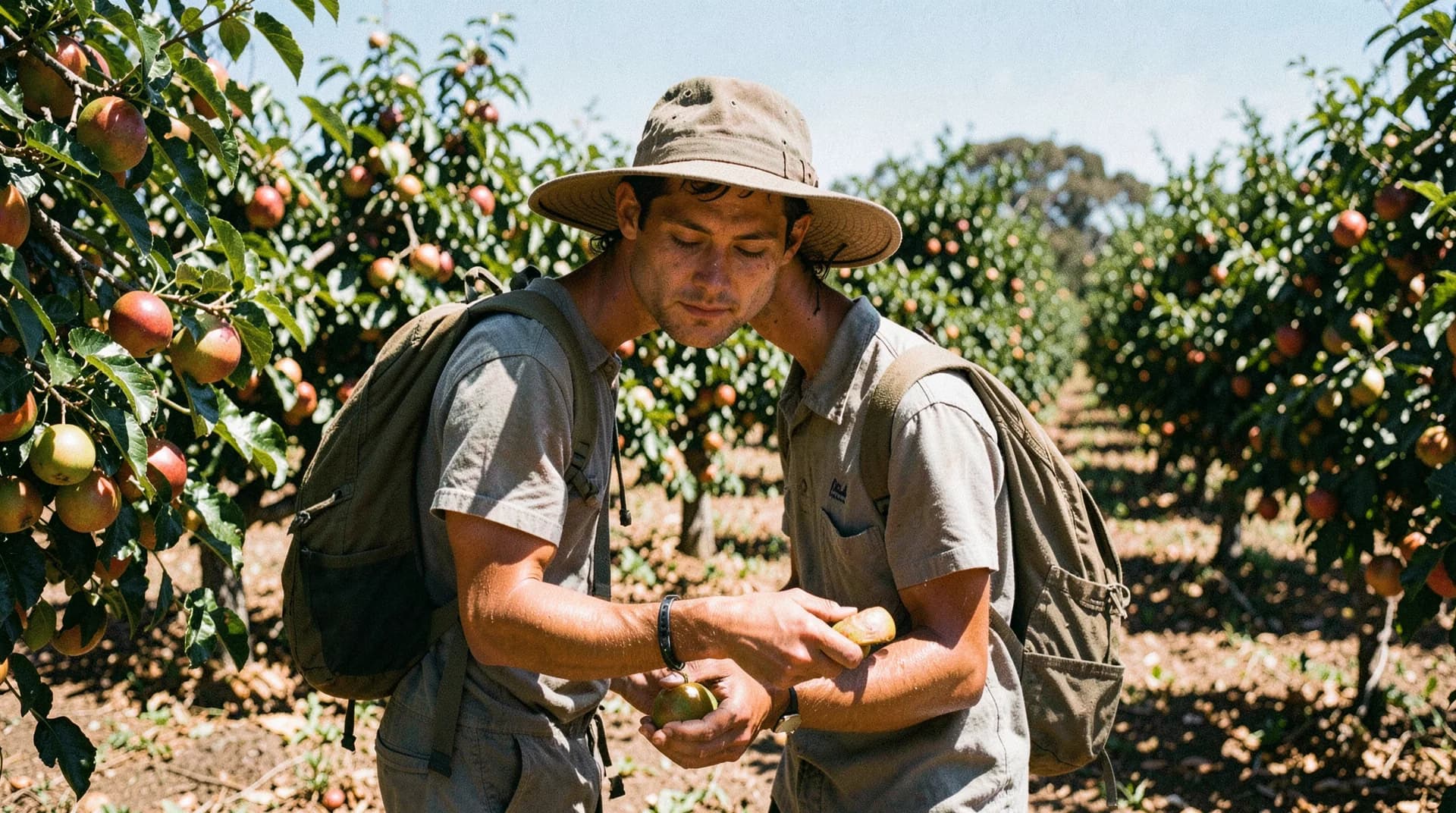
Specified work generally covers eligible industries such as agriculture (plant and animal cultivation), fishing and pearling, tree farming and felling, mining, construction, and certain tourism and hospitality work in northern Australia, all in eligible regional postcodes. The work must be paid at least at the legal minimum, properly documented through payslips and a tax record, and completed in the right postcodes and industries. The Department audits these claims, so keep evidence.
Because the exact qualifying days and the list of eligible postcodes and industries change, confirm the current rules before you plan a harvest season around them. See the work and holiday subclass 462 breakdown and the working holiday age limit guide for current detail.
How to Apply
- Confirm the cap is open. Because South Korea has an annual allocation, check that places are available for the current programme year before you start. If the allocation is full, you may need to wait for the next programme year.
- Check your eligibility against the age, English, and education requirements above. These are where Korean applications most often fall down.
- Gather your documents: valid Korean passport, evidence of funds (recent bank statements), evidence of functional English (test results or qualifying study), and evidence of your educational qualifications.
- Create or sign in to your ImmiAccount and start a new subclass 462 application.
- Lodge from outside Australia. You can be in Korea or travelling elsewhere; you just cannot be in Australia when you apply for your first 462.
- Pay the visa charge. See the current amount on the visa fees schedule rather than relying on figures quoted in older guides.
- Complete health and character steps if requested, then wait for the grant. Typical turnaround is published on the visa processing times guide.
- Enter Australia within the validity window stated in your grant letter. Your twelve months begins on first entry.
What Differs for South Korean Nationals Specifically
If you're moving from a generic "working holiday visa Australia" search to the reality of a Korean application, four things will shape your experience:
- Apply early in the programme year. The cap is the variable that catches Korean applicants out. Unlike British travellers who can lodge any time, you are competing for a finite pool of places. Plan around the programme year, not just your own calendar.
- Don't underestimate the English and education checks. These are documentary requirements with real refusal risk if you skip the evidence. Have your test results and study records ready before you lodge.
- You do not need a letter of government support. Some Korean applicants assume the 462 always requires a support letter because other 462 countries do. South Korea does not, so you don't need to chase one.
- Your route to staying longer is the same as everyone else's. If you want to stay beyond the working holiday, the common transitions are a second-year 462, an employer-sponsored visa, a points-tested skilled visa, a student visa, or a partner visa. Plan any transition well before your visa expires.
Common Pitfalls for Korean Applicants
Reading a 417 guide and assuming it applies. The most common error. UK, Irish, Dutch, and German guides describe an uncapped, no-English, no-degree visa. South Koreans are on the 462, with all three of those extra conditions. Always confirm you're reading 462 content.
Applying after the cap has filled. If the South Korea allocation is exhausted for the programme year, your application can't be granted until the next year opens. Check availability before lodging.
Thin English or education evidence. Functional English and the education requirement are documentary. Vague claims without test results or qualification records invite refusal. Prepare the paperwork in advance.
Trying to apply onshore for the first visa. Your first 462 must be granted while you are outside Australia. Entering on a tourist visa and hoping to switch will not work.
Counting specified work that doesn't qualify. Hospitality in a regional town generally doesn't count toward the extension; the work has to be in a specified industry, in an eligible postcode, paid at least at the minimum, and documented. Cash work doesn't count.
Frequently Asked Questions
Are South Korean citizens on the 417 or the 462 Working Holiday visa?
South Korean citizens apply for subclass 462 (Work and Holiday), not subclass 417. The 462 has a country cap for South Korea, a functional English requirement, and a minimum education requirement. The 417, used by British and Irish citizens, has none of these. See subclass 417 vs 462.
What is the age limit for South Korean Work and Holiday applicants?
You must be aged 18 to 30 at the time you apply. You can be granted the visa and travel after turning 31, but the application itself must be lodged before your 31st birthday. More detail is on the working holiday age limit guide.
Is there an annual cap on South Korean Working Holiday visas?
Yes. South Korea has a limited number of subclass 462 places each programme year. When the allocation fills, applications pause until the next programme year opens. This is a key difference from 417 nationalities, which face no cap. Apply early in the programme year to be safe.
Do South Korean applicants need to prove English and education?
Yes. The 462 requires functional English (usually shown through an accepted English test or recognised study in English) and a minimum educational qualification (post-secondary study or equivalent). Both are documentary requirements, so prepare your evidence before you lodge.
Do South Koreans need a letter of government support for the 462?
No. While some 462 countries require a letter of government support to apply, South Korea is not one of them. You can lodge your subclass 462 application without arranging a support letter.
Can South Korean citizens extend to a second or third year?
Yes. By completing qualifying specified regional work during your first year you can apply for a second-year 462, and a further qualifying period during your second year unlocks a third year. Specified work must be in eligible industries and postcodes, properly paid and documented. See the subclass 462 breakdown.
Related Guides
- Work and Holiday visa (subclass 462) full breakdown
- Working Holiday visa (subclass 417) explained
- Subclass 417 vs 462: the difference
- Every country eligible for a working holiday visa in 2026
- Working Holiday visa age limit
- Australian visa fees: complete schedule 2026
- Visa processing times: complete guide 2026