417 vs 462 Difference: Working Holiday Visa Comparison for Australia
Updated: 16 August 2026
The 417 vs 462 difference comes down to who can apply and what hurdles they face — Australia's working holiday program runs two separate visas (Subclass 417 Working Holiday and Subclass 462 Work and Holiday), and your nationality determines which one you're eligible for. Australia's working holiday program is one of the most popular in the world, drawing hundreds of thousands of young people each year, but many applicants don't realise until they start researching that the requirements are different.
Both cost AUD $840, both give you 12 months in Australia, and both let you work. But the 462 has extra hurdles — English tests, education requirements, and government caps — that the 417 doesn't. Let's sort out which visa applies to you and what you'll need.
417 vs 462 Difference at a Glance
| Feature | Subclass 417 | Subclass 462 |
|---|---|---|
| Eligible nationalities | 19 countries (e.g. UK, Germany, Japan) | 41+ countries (e.g. USA, China, Brazil) |
| Age limit | 18–30 (18–35 for France, Ireland, Italy, UK) | 18–30 |
| English requirement | Not required | Functional English required |
| Funds requirement | Approx. AUD $5,000 of accessible funds | Approx. AUD $5,000 of accessible funds |
| Education requirement | None | Tertiary study or completed secondary education required for many 462 countries |
| 2nd/3rd year extension | Yes — with 88 days (2nd) / 6 months (3rd) specified work | Yes — with 88 days (2nd) / 6 months (3rd) specified work |
Quick Comparison Table
| Feature | Subclass 417 (Working Holiday) | Subclass 462 (Work and Holiday) |
|---|---|---|
| Cost | AUD $840 | AUD $840 |
| Duration | 12 months | 12 months |
| Age limit | 18–30 (18–35 for some countries) | 18–30 |
| Number of countries | 19 countries | 41+ countries |
| Annual cap | Mostly uncapped | Capped for most countries |
| English requirement | Not required | Functional English required |
| Tertiary education | Not required | Required for some countries |
| Government support letter | Not required | Required for some countries |
| 2nd/3rd year extension | Yes (with specified work) | Yes (with specified work) |
| Work limit per employer | 6 months (same employer) | 6 months (same employer) |
| Study limit | 4 months | 4 months |
Eligible Countries: 417 vs 462
Subclass 417 Countries (19 Countries)
| Country | Age Limit |
|---|---|
| Belgium | 18–30 |
| Canada | 18–30 |
| Republic of Cyprus | 18–30 |
| Denmark | 18–30 |
| Estonia | 18–30 |
| Finland | 18–30 |
| France | 18–35 |
| Germany | 18–30 |
| Hong Kong SAR | 18–30 |
| Republic of Ireland | 18–35 |
| Italy | 18–35 |
| Japan | 18–30 |
| Republic of Korea | 18–30 |
| Malta | 18–30 |
| Netherlands | 18–30 |
| Norway | 18–30 |
| Sweden | 18–30 |
| Taiwan | 18–30 |
| United Kingdom | 18–35 |
Note the age exceptions: applicants from France, Ireland, Italy, and the UK can apply up to age 35. This is a significant advantage — an extra 5 years of eligibility.
Subclass 462 Countries (41+ Countries)
| Region | Countries |
|---|---|
| Asia | Bangladesh, Chile, China, India, Indonesia, Israel, Malaysia, Mongolia, Nepal, Philippines, Singapore, Sri Lanka, Thailand, Turkey, Vietnam |
| Americas | Argentina, Brazil, Colombia, Ecuador, Mexico, Peru, Uruguay, USA |
| Europe | Austria, Croatia, Czech Republic, Greece, Hungary, Luxembourg, Poland, Portugal, Romania, San Marino, Slovakia, Slovenia, Spain, Ukraine |
| Pacific | Fiji, Papua New Guinea, Samoa, Solomon Islands, Tonga |
The 462 covers a much broader range of countries but with more restrictions per country. Many 462 countries have annual caps limiting the number of visas issued.
Requirements Breakdown
Subclass 417: Simpler Requirements
The 417 is relatively straightforward:
- Age: 18–30 (or 35 for eligible countries)
- Passport: From an eligible 417 country
- Funds: Sufficient funds for initial stay (approximately AUD $5,000 recommended)
- Return ticket: Or sufficient funds to purchase one
- Health and character: Standard requirements
- No dependent children: Cannot bring dependent children
That's essentially it. No English test, no education requirement, no government letter. If you're from a 417 country, meeting the age and funds requirements is usually enough.
Subclass 462: Additional Hurdles
The 462 adds several requirements:
- Functional English: Must demonstrate at minimum functional English (IELTS 4.5 overall or equivalent)
- Tertiary education: At least 2 years of undergraduate study (required for some countries)
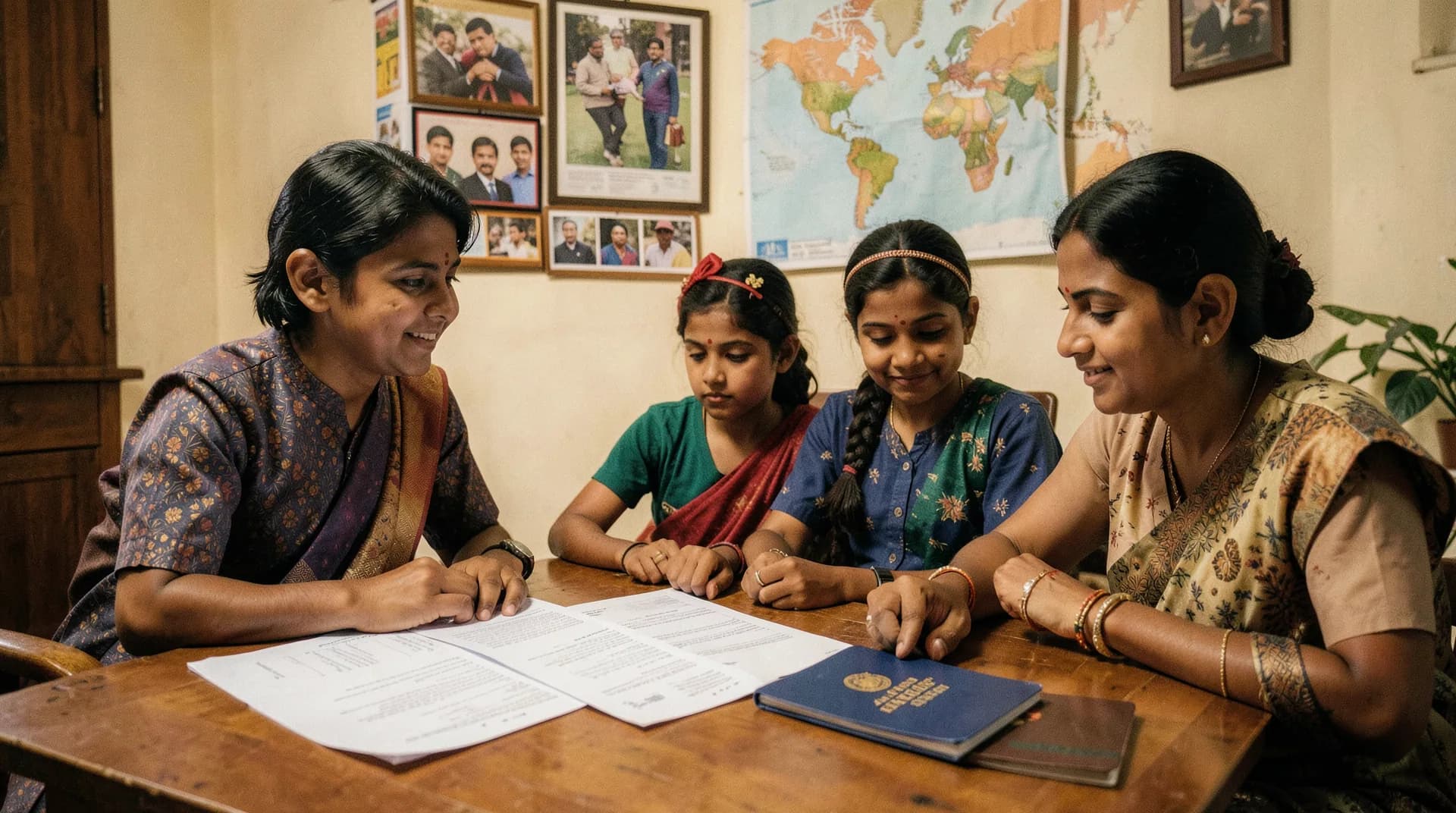
- Government support letter: A letter from your home government supporting your application (required for some countries like China, India, Vietnam)
- Annual caps: Many countries have limits on how many 462 visas are issued per year
- Funds and health: Same as 417
Which Countries Need What for the 462?
Requirements vary by country. Here are some examples:
| Country | English Test | Tertiary Education | Government Letter | Annual Cap |
|---|---|---|---|---|
| USA | Yes | Yes | No | Uncapped |
| China | Yes | Yes | Yes | 5,000 |
| India | Yes | Yes | Yes | Variable |
| Argentina | Yes | No | No | Variable |
| Thailand | Yes | Yes | Yes | Variable |
| Indonesia | Yes | Yes | Yes | Variable |
| Spain | Yes | No | No | Variable |
The government support letter requirement is particularly tricky. Getting a letter from your country's government can take weeks and involves bureaucratic processes that vary wildly. Chinese applicants, for example, need a letter from the China Scholarship Council — a process that requires advance planning.
The English Requirement Difference
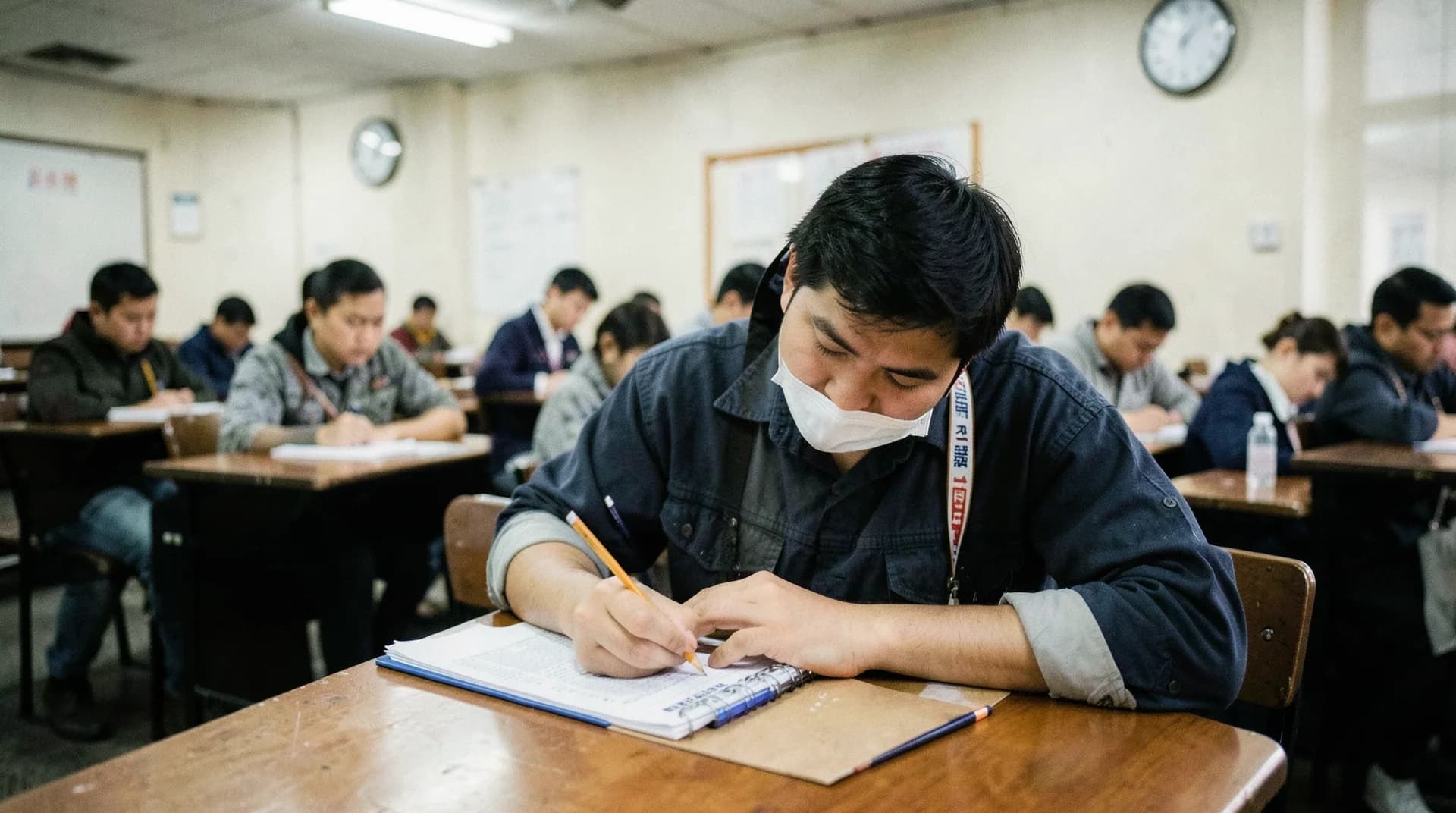
This is one of the biggest practical differences. The 417 has no English language requirement at all. A Japanese citizen with zero English proficiency can technically receive a 417 visa (though practical survival in Australia without English is another matter).
The 462 requires Functional English, which means:
- IELTS: 4.5 overall (any module)
- TOEFL iBT: 32 total
- PTE Academic: 30 overall
- Cambridge: 147 overall
Alternatively, you can demonstrate Functional English through:
- Completing at least 1 year of study in English at an institution in Australia, the UK, USA, Canada, NZ, or Ireland
- Being a passport holder from the UK, USA, Canada, NZ, or Ireland (but those countries are usually 417 eligible anyway)
For most 462 applicants, this means booking and paying for an English test — approximately AUD $395 for IELTS or PTE. At Functional level, the bar isn't high, but it's still an extra step and cost.
Annual Caps: The 462 Bottleneck
Many 462 countries have annual caps that limit how many visas are issued each program year (July to June). When the cap is reached, no more visas are granted until the next program year opens.
This creates a first-come, first-served dynamic for popular countries. Chinese and Indian applicants, in particular, should apply as early as possible when the new program year opens. Waiting even a few weeks can mean missing out for the entire year.
The 417 is mostly uncapped (with a few minor exceptions), so you can apply any time without worrying about quotas.
Second and Third Year Extensions
Both visas offer the possibility of extending your stay through second and third-year visas:
Second Year Visa (Both 417 and 462)
To qualify for a second year, you must complete:
- 88 days (approximately 3 months) of specified work in regional Australia during your first year
Third Year Visa (Both 417 and 462)
To qualify for a third year:
- 179 days (approximately 6 months) of specified work in regional Australia during your second year
What Counts as Specified Work?
Specified work includes activities in industries like:
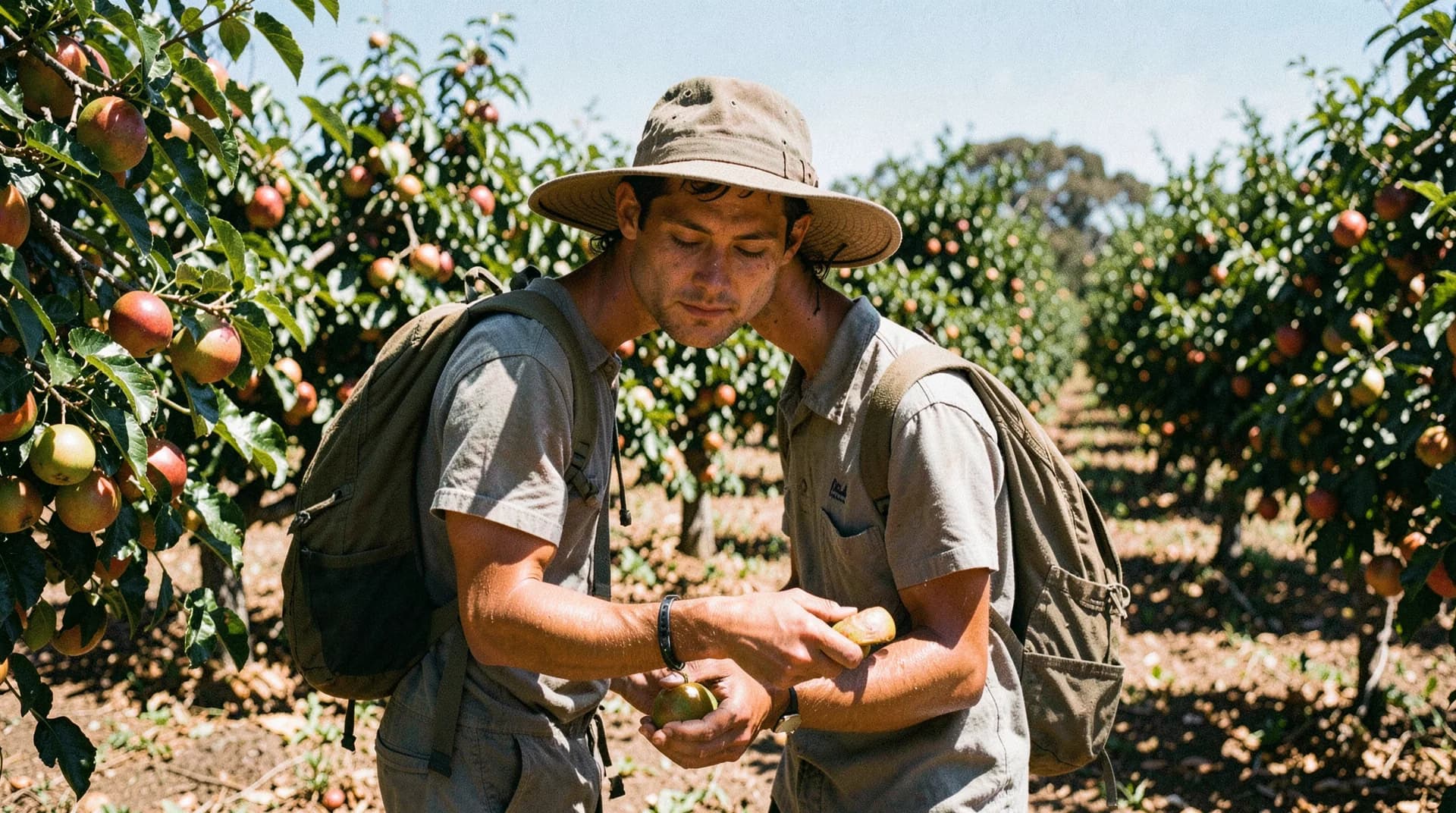
- Agriculture: Fruit picking, farming, livestock work
- Mining: (some types)
- Construction: (in regional areas)
- Tourism and hospitality: (in certain regional areas, for 462 holders)
- Bushfire recovery: Certain qualifying activities
- Critical COVID-19 work: (healthcare, agriculture — varies by current policy)
The work must be in a designated regional area. Sydney, Melbourne, Brisbane, Perth, and the Gold Coast generally don't count as regional. Think rural and remote Australia — farms in Queensland, mines in Western Australia, vineyards in South Australia.
Regional Postcodes and Designated Areas
Regional areas are defined by postcode. The Department of Home Affairs maintains a list of eligible postcodes. Generally, regional means anywhere that isn't a major metropolitan area. Some popular regional work destinations include:
- Bundaberg and surrounding areas (QLD) — fruit and vegetable farming
- Margaret River region (WA) — winery and agriculture work
- Mildura (VIC) — citrus and grape picking
- Tasmania — various agriculture and hospitality
- Outback Queensland and NT — cattle stations and mining support
Work Conditions on Both Visas
Both visas share these work conditions:
- 6-month employer limit: You can work for the same employer for a maximum of 6 months (unless in agriculture in northern Australia or other exemptions apply)
- Full work rights: You can work in any industry, any occupation
- Study: Up to 4 months of study or training
- Tax: You'll be taxed at the working holiday maker rate (15% on the first $45,000, then standard rates)
The 6-month employer limit means you'll likely have multiple jobs during your stay. Many working holidaymakers rotate between hospitality, farm work, and other casual employment as they travel around the country.
Cost Breakdown
| Cost Item | 417 | 462 |
|---|---|---|
| Visa fee | AUD $840 | AUD $840 |
| English test | Not required | ~AUD $395 |
| Health exam | May be required | May be required |
| Government letter | Not required | Cost varies (some free, some AUD $50–$200) |
| Biometrics | May be required | May be required |
| Total visa costs | AUD $840–$1,000 | AUD $840–$1,400 |
| 2nd year visa | AUD $1,000 | AUD $1,000 |
| 3rd year visa | AUD $1,000 | AUD $1,000 |
Pathways Beyond Working Holiday
A working holiday visa is temporary by design, but it can be a stepping stone to longer-term stay:
Employer Sponsorship
If an employer wants to keep you after your working holiday, they can sponsor you for a 482 visa. This is common in hospitality, agriculture, and trades. You'll need to meet the 482 requirements (skills assessment, salary threshold of AUD $76,515+), and your employer needs Standard Business Sponsorship.
Student Visa
Many working holidaymakers transition to a student visa (500) to continue living in Australia while studying. This can lead to a Temporary Graduate visa (485) and eventually skilled migration.
Skilled Migration
If you develop skills and experience during your working holiday, you may eventually qualify for the subclass 189 or 190 through the points test. Australian work experience and study both earn points.
Partner Visa
If you meet an Australian partner during your working holiday, a partner visa (AUD $11,710) is a pathway to permanent residency.
Common Mistakes to Avoid
Applying for the wrong subclass: If you're from a 462 country and apply for a 417 (or vice versa), your application will be refused and you won't get a refund. Double-check which visa applies to your nationality.
Not meeting regional work requirements properly: Keep detailed records of your specified work — payslips, employment references, ABN details, bank statements showing payment. The Department verifies these claims, and incomplete evidence is a common reason for second-year visa refusal.
Exceeding the 6-month employer limit: Working for the same employer beyond 6 months without an exemption can result in visa cancellation. Set calendar reminders.
Forgetting the government letter (462): If your country requires a government support letter, start the process early. Some countries take 4–6 weeks to issue these letters, and applying without one means an invalid application.
Ignoring tax obligations: Working holiday makers have specific tax rules. Register for a Tax File Number (TFN) as soon as you arrive and understand the 15% withholding rate.
FAQ
Can I switch from a 462 to a 417 visa?
No. The visa subclass is determined by your nationality. If your country is on the 462 list, you can only apply for the 462. You cannot choose between the two visas — it's based solely on which arrangement Australia has with your country.
What if I'm 31 and from a 462 country?
Unfortunately, the 462 has a strict 18–30 age limit for all countries. You must be 30 or under at the time of application. The 417's extended age limit (18–35) only applies to citizens of France, Ireland, Italy, and the UK. If you're 31 from a 462 country, this visa is no longer available to you.
Do I really need to do farm work for the second year?
You need 88 days of specified work in a regional area, but it doesn't have to be farm work. Construction, mining, tourism/hospitality (in some cases for 462 holders), and other industries qualify. However, agriculture remains the most accessible option for most working holidaymakers due to the availability of short-term farm jobs.
Can I bring my partner on a working holiday visa?
You cannot include dependents on a 417 or 462 visa. However, your partner can apply for their own working holiday visa (if eligible) or another visa type. Many couples travel to Australia on separate working holiday visas.
What happens if the 462 cap is reached for my country?
You'll need to wait until the next program year (starting July 1) when the cap resets. There's no waitlist — you simply apply again when the new allocation opens. Set a reminder for early July and apply as soon as possible to maximize your chances before the cap fills again.