Australian Working Holiday Visa for Japanese Citizens: 2026 Guide
Updated: 25 June 2026
A working holiday visa Australia for Japanese citizens is granted under subclass 417, not the more restrictive 462. Japanese passport holders face no annual cap, need no tertiary qualification, and sit no English test. The visa gives twelve months in Australia with full work rights, plus second and third-year extensions through specified regional work.
This is an independent guide, not a government service. Always confirm current requirements on the Department of Home Affairs website before you lodge.
Quick Facts: Working Holiday Visa for Japanese Citizens
| Detail | Information |
|---|---|
| Visa subclass | 417 (Working Holiday), not 462 |
| Age limit | 18 to 30 at time of application (confirm the current cut-off before lodging) |
| Annual cap | None for Japanese applicants |
| Tertiary qualification | Not required |
| English test | Not required |
| Visa duration | 12 months from first entry |
| Work limit per employer | 6 months (some exemptions apply) |
| Second-year extension | Specified regional work in year one |
| Third-year extension | Further specified regional work in year two |
| Application channel | ImmiAccount, offshore application |
| Visa charge & timing | See the fee schedule and processing times guide |
Why Japanese Citizens Use Subclass 417, Not 462
Australia runs two parallel working-holiday programmes, and the one your passport qualifies you for is fixed by your nationality. Subclass 417 (Working Holiday) covers countries with long-standing reciprocal arrangements. Subclass 462 (Work and Holiday) covers a different group of countries, often with annual caps, English-language evidence, and tertiary-study prerequisites.
Japan is on subclass 417. That places Japanese travellers in the easier category, alongside countries like the UK, Ireland, Germany, and Canada, rather than in the 462 group with its tighter entry conditions. For a full side-by-side, see subclass 417 vs 462.
The practical differences for Japanese applicants:
- No annual cap. Some 462 nationalities receive a limited number of places each programme year and can miss out when the quota fills. Japanese applicants face no quota on the 417.
- No degree requirement. Several 462 nationalities must hold or be studying toward a tertiary qualification. Japanese applicants don't.
- No English test. Some 462 applicants must submit IELTS or equivalent evidence. Japanese 417 applicants are not required to.
- No letter of government support. A number of 462 streams need a supporting letter from the applicant's home government. The 417 has no such step.
If you hold a Japanese citizen passport, are aged 18 or over, and have not previously held a 417, you are very likely eligible for a first-year visa.
Age Eligibility for Japanese Applicants
The 417 is open to applicants aged 18 to 30 at the time they apply. A handful of 417 partner countries (the UK and several European states) have negotiated a higher upper age limit through bilateral agreements. Japan currently sits at the standard cut-off rather than an extended one, so plan around the standard band and confirm the current figure on the Department's page before assuming eligibility.
Two age points that catch people out:
- The age test is applied at the date you lodge, not the date you enter Australia. If you apply before your birthday, a grant remains valid even if you turn the next age while waiting.
- The age limit applies to a first 417. If you secured your first visa within the eligible band, a second or third-year application can be lodged even after you pass the upper age, provided you meet the work requirements.
Eligibility Checklist
You'll need:
- A Japanese citizen passport (the visa is for citizens, not residents of Japan)
- Age within the eligible band at the time of application
- No dependent children accompanying you on the visa
- Sufficient funds to support yourself on arrival, plus the means to buy an onward or return ticket
- A clean character record (a police clearance certificate may be requested)
- No previous 417 grants, unless you're applying for a second or third year
Your first 417 must be granted while you are outside Australia. There is no onshore pathway for a first working-holiday application, so don't fly to Australia on a tourist visa and try to switch.
What the 417 Lets Japanese Holders Do
| Activity | Allowance under the 417 |
|---|---|
| Work | Any employer, up to 6 months each (some sector exemptions) |
| Study | Up to 4 months over the visa period |
| Travel | Unlimited entries and exits during the 12 months |
| Stay | 12 months from first entry into Australia |
| Extend | Second and third years via specified regional work |
The six-month-per-employer rule is the single most misunderstood condition. It limits time with the same employer, not the same type of job. Some sectors (aged care, healthcare, and agriculture in northern Australia) carry permanent or temporary exemptions. Check the Department's current list before you assume one applies to you.
How to Apply
- Confirm your eligibility against the current age cut-off and your character record.
- Gather the basics: passport, evidence of funds (recent bank statements), an onward or return-ticket plan, and any prior visa history.
- Create or sign in to your ImmiAccount. This is the only official lodgement portal.
- Lodge a new subclass 417 application from outside Australia. You can be in Japan or travelling anywhere else, just not in Australia at the moment of lodgement.
- Pay the visa charge. Check the current amount on the fee schedule before paying, as charges are reviewed periodically.
- Wait for grant. For an estimate of how long a 417 takes, see the processing times guide.
- Enter Australia within 12 months of grant. Your twelve-month stay clock starts on first entry, not on the grant date.
Documents you submit from Japan that aren't in English may need a certified translation by an accredited translator. Bank statements, police certificates, and any supporting letters are the usual candidates.
What Differs for Japanese Nationals Specifically
The core 417 conditions are the same for every nationality on the programme, but a few things are worth flagging for Japanese applicants:
- Standard age band. Unlike UK applicants, Japanese citizens are not (currently) covered by an extended upper age limit, so the 18-to-30 window matters more. Apply before your 31st birthday.
- Certified translations. Japanese-language supporting documents typically need an accredited English translation, which UK or Irish applicants rarely deal with.
- No English-test exemption needed. Because Japan is on the 417, you simply aren't asked for IELTS at all, where a 462 nationality would have to clear that hurdle. Don't waste money on an English test you don't need.
- Reciprocal healthcare. Australia does not have a Reciprocal Health Care Agreement with Japan in the way it does with the UK. That makes private health and travel insurance more important for Japanese holders, not less. Treat adequate insurance as essential rather than optional.
For the full list of nationalities and which subclass each one uses, see every country eligible for the WHV in 2026.
Second and Third-Year Extensions
The 417 can stretch to three years if you do the right work in the right places.
- Second year: Complete the required number of days of specified regional work during your first year, then apply for a second-year visa.
- Third year: Complete a further period of specified work during your second year, then apply for a third-year visa.
Specified work means eligible industries (agriculture, fishing, forestry, mining, construction, and certain tourism and disaster-recovery work) in eligible regional postcodes. The work must be paid at least at the legal minimum and documented through payslips and a tax record. Cash-in-hand arrangements don't count, even if you genuinely did the work. The Department audits second and third-year claims, so keep clean evidence from day one.
Sectors That Hire Japanese Working Holiday Makers
- Hospitality: Cafes, restaurants, and bars across Sydney, Melbourne, the Gold Coast, Cairns, and Byron Bay. Japanese-speaking staff are also in demand at Japanese restaurants and tourism operators.
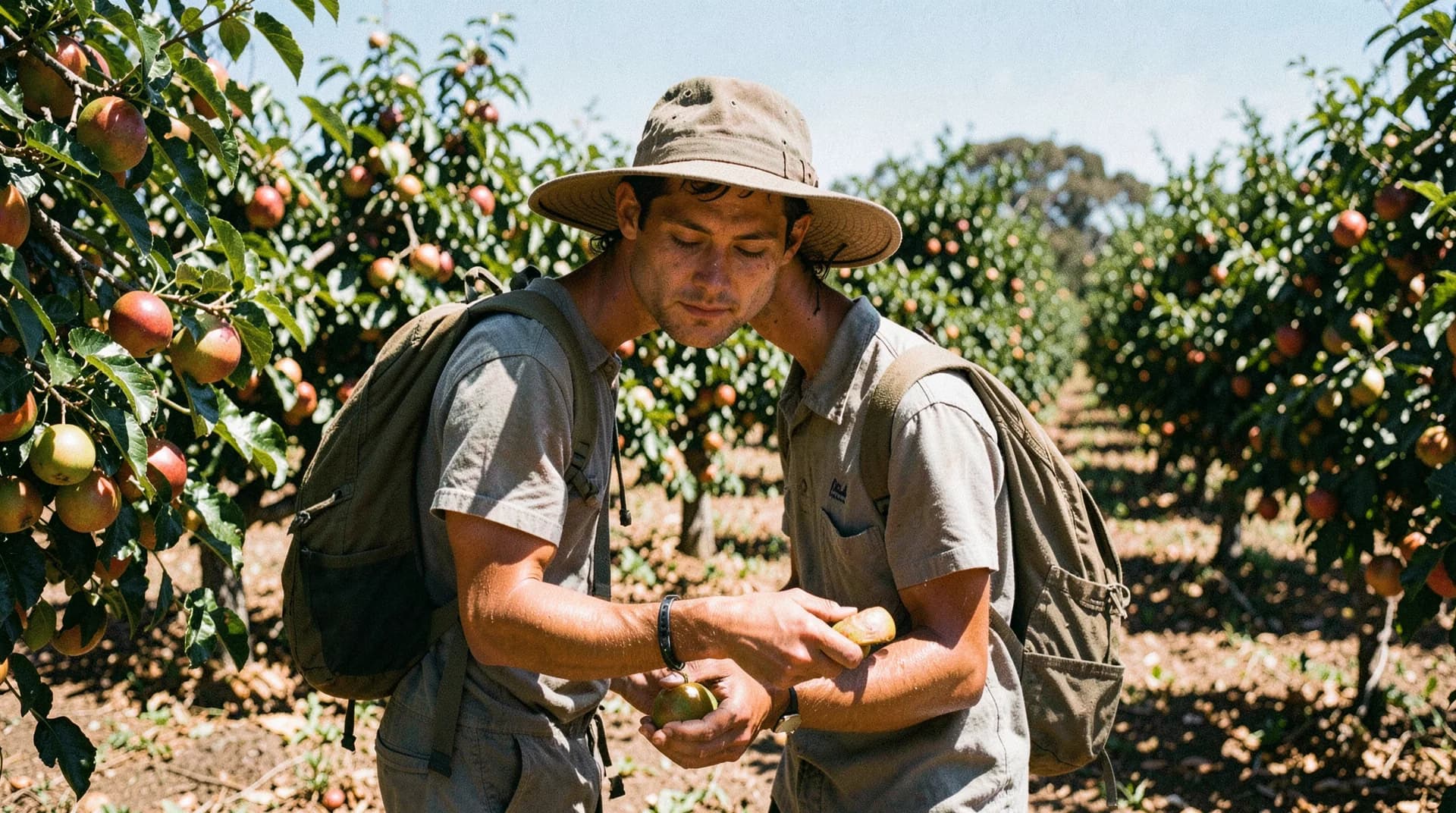
- Agriculture: Fruit picking, packing, and harvest work, often the route to second-year eligibility.
- Hospitality and tourism in ski regions: Thredbo, Perisher, and the Victorian alpine resorts run a winter season with heavy Japanese-speaker demand.
- Retail and customer service: Year-round metropolitan demand, particularly where Japanese language is an asset.
- Aged care and healthcare: Accessible for suitably qualified applicants, with some roles exempt from the six-month employer rule.
A few practical notes:
- You'll need an Australian tax file number (TFN) before you can be paid through PAYG. Apply online once you have an Australian address. The working-holiday tax rate guide explains how earnings are taxed.
- You can open an Australian bank account with several major banks before you arrive, then activate it on landing.
Common Pitfalls for Japanese Applicants
Applying onshore for the first 417. You can't. First applications must be lodged from outside Australia. This is the most common avoidable refusal trigger.
Leaving it until after your 31st birthday. Without an extended age limit, the standard cut-off is firm for Japanese applicants. If you're approaching the upper age, lodge before the deadline rather than after.
Paying for an English test you don't need. Japanese 417 applicants are not asked for IELTS. That requirement belongs to certain 462 nationalities, not you.
Counting work that doesn't qualify for a second year. Hospitality work in a regional town doesn't count toward an extension. It has to be specified work, in a specified postcode, paid at the minimum award rate, and documented.
Skipping insurance because of assumed reciprocal cover. Japan has no reciprocal Medicare arrangement with Australia. Carry proper health and travel insurance for the whole stay.
Frequently Asked Questions
Are Japanese citizens on the 417 or the 462 Working Holiday visa?
Japanese citizens apply for subclass 417, the original Working Holiday programme. It has no annual cap, no tertiary-qualification requirement, and no English-test requirement. Subclass 462 covers a different set of nationalities with stricter conditions.
What is the age limit for Japanese working holiday applicants?
The standard 417 age limit is 18 to 30 at the time of application. Japan is not currently covered by an extended upper age limit, so plan to apply before your 31st birthday and confirm the current cut-off on the Department of Home Affairs page before lodging.
Do Japanese applicants need an English test for the 417?
No. The English-test requirement applies to certain subclass 462 nationalities. Because Japan is on the 417, Japanese applicants are not asked to provide IELTS or equivalent evidence.
Is there an annual cap on the Working Holiday visa for Japanese citizens?
No. Some 462 nationalities face annual quotas, but the 417 has never been capped for Japanese citizens. If you're eligible, you can apply at any point in the programme year.
Can Japanese holders extend to a second or third year?
Yes. Complete the required specified regional work during your first year for a second-year visa, then a further period during year two for a third-year visa. The work must be in eligible industries and regional postcodes and properly documented.
How much does the visa cost and how long does it take?
The visa charge is set by the Department and reviewed periodically; check the current figure on the fee schedule. For an estimate of how long a 417 takes to process, see the processing times guide.