Subclass 417 vs 462: Key Differences Between Working Holiday Visas
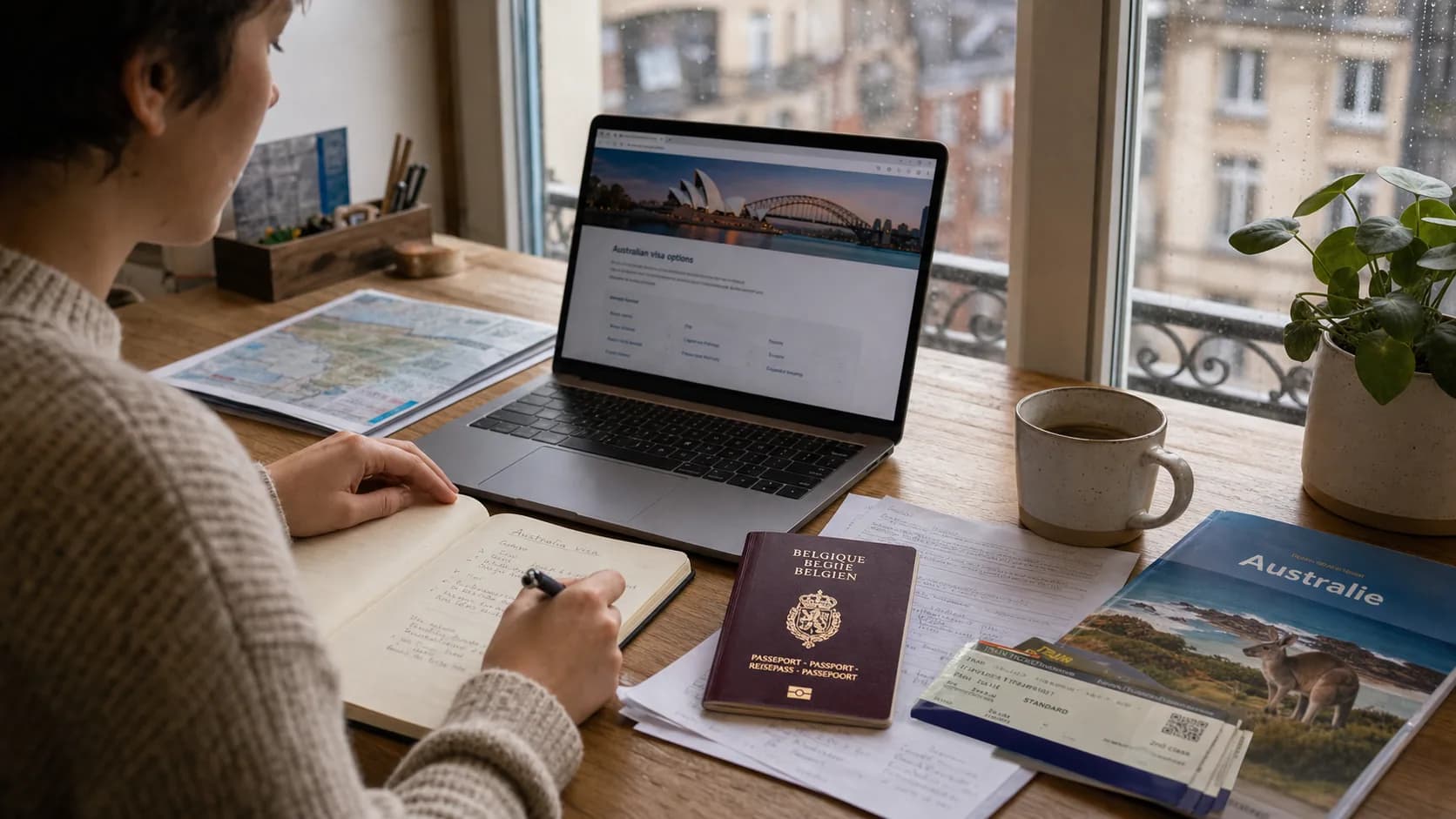
Australia has two working holiday visas — the Subclass 417 (Working Holiday) and the Subclass 462 (Work and Holiday) — and which one you can apply for depends entirely on your passport. Both cost $840 AUD, both allow 12 months in Australia with work rights, and both can be extended to 3 years with regional work. But the 462 has annual caps, may require government support and English testing, and covers a different set of countries than the 417.
Quick Facts — Side by Side
| Feature | Subclass 417 | Subclass 462 |
|---|---|---|
| Full name | Working Holiday Visa | Work and Holiday Visa |
| Cost | $840 | $840 |
| Eligible countries | 19 | 41 |
| Region focus | Europe, East Asia, Canada | Asia, South America, USA, others |
| Age limit | 18–30 (18–35 for 4 countries) | 18–30 (no exceptions) |
| Annual caps | No | Yes (most countries) |
| Government support letter | Not required | Required for some countries |
| English test | Not required | Required for some countries |
| Tertiary education | Not required | Required for some countries |
| Stay duration | 12 months | 12 months |
| 2nd year extension | 88 days specified work | 88 days specified work |
| 3rd year extension | 6 months specified work | 6 months specified work |
| Work rights | Full (6-month employer limit) | Full (6-month employer limit) |
| Study | Up to 4 months | Up to 4 months |
The Countries: Who Gets Which Visa?
This is the fundamental dividing line. You don't choose between the 417 and 462 — your passport decides for you.
Subclass 417 Countries (19)
Belgium, Canada, Cyprus, Denmark, Estonia, Finland, France, Germany, Hong Kong SAR, Ireland, Italy, Japan, Malta, Netherlands, Norway, South Korea, Sweden, Taiwan, United Kingdom.
Pattern: Predominantly Western European countries plus Canada, Japan, South Korea, Hong Kong, and Taiwan.
Subclass 462 Countries (41)
Argentina, Austria, Bangladesh, Brazil, Chile, China, Colombia, Czech Republic, Ecuador, Fiji, Greece, Hungary, India, Indonesia, Israel, Latvia, Lithuania, Luxembourg, Malaysia, Mongolia, Nepal, Papua New Guinea, Peru, Philippines, Poland, Portugal, Samoa, San Marino, Singapore, Slovak Republic, Slovenia, Solomon Islands, Spain, Switzerland, Thailand, Timor-Leste, Tonga, Turkey, Ukraine, United States, Uruguay, Vietnam.
Pattern: Asia-Pacific countries, South American countries, the USA, and several European countries not on the 417 list.
Overlap? None. No country appears on both lists. If you hold dual citizenship with one passport on each list, you can choose which visa to apply for.
Age Limits: The 35-Year-Old Advantage
Both visas share a base age limit of 18–30. But the 417 has a special provision: citizens of Canada, France, Ireland, and the United Kingdom can apply up to age 35.
This extended age limit is a significant advantage. A 32-year-old British citizen can get a 417; a 32-year-old American citizen cannot get a 462. There are no age extensions on the 462 for any nationality.
If you're over 30 and don't hold one of those four passports, the working holiday option is closed to you.
Annual Caps: Limited Spots vs. Open Door
The 417 has no annual caps. Every eligible person who meets the requirements gets a visa, regardless of how many people from their country have already applied.
The 462 has caps for most countries, and they vary dramatically:
| Country | 462 Cap | Country | 462 Cap |
|---|---|---|---|
| China | ~5,000 | USA | ~2,500 |
| Indonesia | ~4,100 | Argentina | ~2,000 |
| Thailand | ~2,000 | Bangladesh | ~100 |
| Vietnam | ~200 | India | Uncapped |
| Brazil | Uncapped |
When a cap fills, no more first-year visas are issued for that nationality until the next program year (starting July 1). Popular countries like China can fill their cap quickly.
This matters for planning. A German citizen (417) can apply whenever they're ready. A Chinese citizen (462) needs to apply as early in the program year as possible to secure a spot.
Additional Requirements: What the 462 Demands
The 462 has up to three additional requirements that don't apply to the 417.
Government Support Letter
Some 462 nationalities must obtain a letter of support from a designated government agency in their home country. This adds time and bureaucracy to the application. Countries requiring this include China, Indonesia, Bangladesh, Thailand, and Vietnam, among others.
The 417 never requires government support for any nationality.
English Language Test
Some 462 applicants must demonstrate functional English (IELTS 4.5 or equivalent). This is a low bar, but it's still a requirement the 417 doesn't have.
Exemptions apply for citizens of English-speaking countries and those with English-medium education.
Tertiary Education
Some 462 nationalities must have completed at least 2 years of tertiary education. Again, this varies by country and doesn't exist in the 417.
These additional requirements make the 462 a slightly more involved application process. The 417 is simpler: correct passport, correct age, apply online, done.
Work Rights and Conditions: Identical
Once you have either visa, the conditions are functionally identical:
- Full work rights in any occupation
- 6-month employer limit (same exceptions apply)
- Tax rate: 15% on the first $45,000
- Superannuation: 11.5% paid by employer
- Study: Up to 4 months
- Multiple entry: Yes, travel freely
There is no difference in what you can do on a 417 vs. a 462 once you're in Australia.
Second and Third Year Extensions: Same Rules
Both visas allow extensions through specified work:
| Extension | Requirement | Applies to |
|---|---|---|
| 2nd year | 88 days specified work in regional area | Both 417 and 462 |
| 3rd year | 6 months specified work on 2nd year visa | Both 417 and 462 |
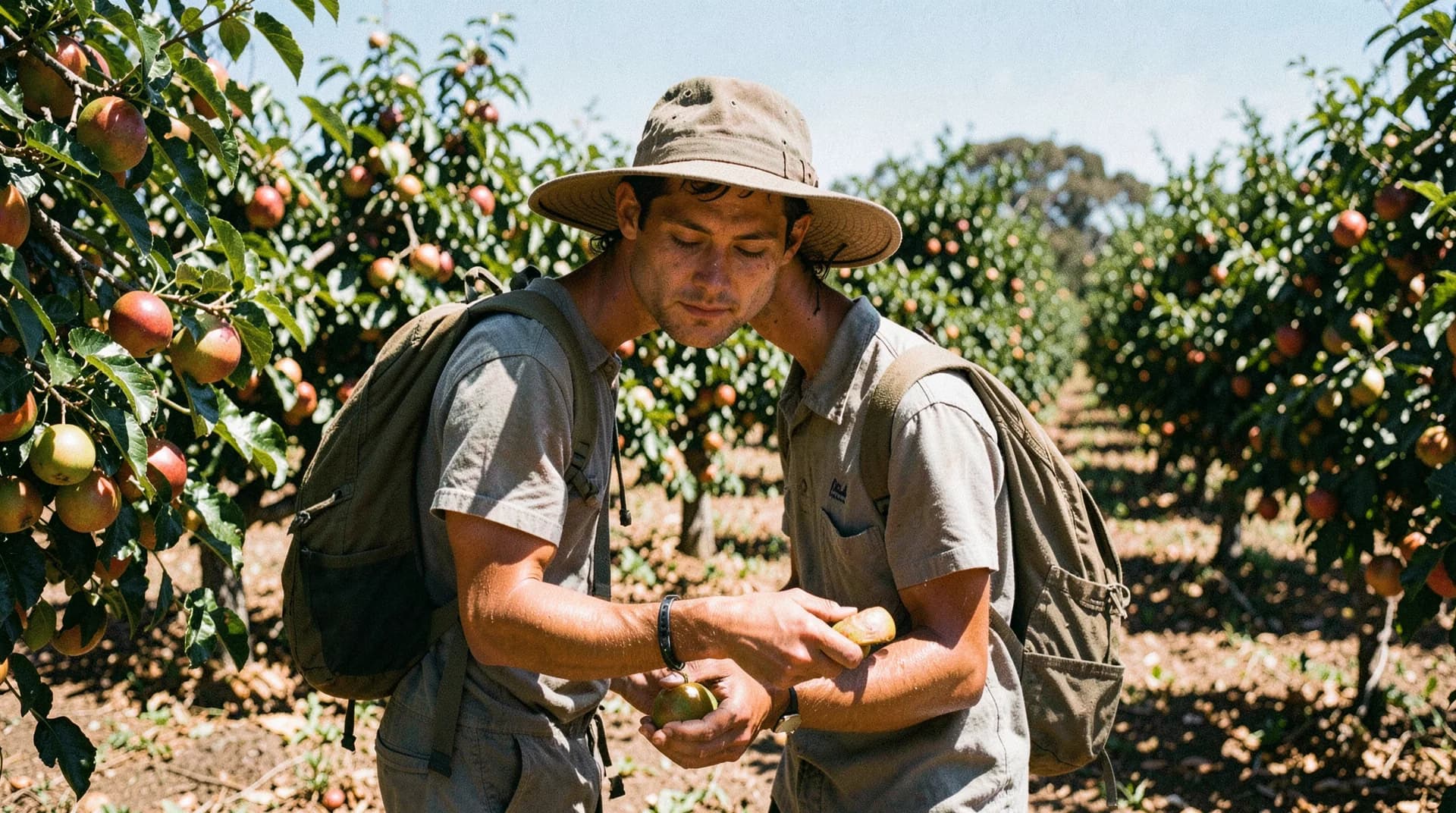
The types of specified work (farming, mining, construction, forestry, fishing, disaster recovery) and the definition of regional areas are the same for both visas.
Key point: Second and third year 462 visas are NOT subject to annual caps. Even if your country's first-year cap is full, you can still apply for a second or third year visa if you've completed the specified work.
Processing Times: 417 Is Generally Faster
| Visa | Typical Processing |
|---|---|
| 417 | 1–14 days |
| 462 | 14–60 days |
The 417 is typically processed faster because it doesn't require verification of government support letters, English test results, or tertiary qualifications. Straightforward 417 applications often come through within a week.
The 462 can take longer, particularly for nationalities requiring government support verification. Budget extra time for the 462 application process.
Which Is "Better"?
Neither is inherently better — they grant the same rights. But if you hold dual citizenship with one passport on each list, there are practical considerations:
Choose the 417 if:
- You want faster processing
- You don't want to deal with caps
- You want to avoid government support letters and English tests
- You're over 30 but under 35 (and eligible for the extended age limit)
Choose the 462 if:
- Your only eligible passport is on the 462 list
- The 417 isn't an option
In reality, most people don't have a choice. Your passport determines your visa.
Frequently Asked Questions
Can I apply for both a 417 and a 462?
No. You can only apply for the visa that corresponds to your passport. Even if you hold dual citizenship with one passport on each list, you apply for one or the other, not both. You can't hold both simultaneously.
If I've had a 417, can I later get a 462 with a different passport?
Potentially, but it's complicated. The Department of Home Affairs may consider your previous 417 participation when assessing a 462 application. The visas are considered part of the same program, and you generally can't participate in the Working Holiday Maker program more than three times total across both visa subclasses.
My country isn't on either list. Are there alternatives?
If your country isn't on the 417 or 462 list, the working holiday program isn't available to you. Alternatives for visiting and working in Australia include the Student Visa (Subclass 500) with limited work rights, or employer-sponsored visas if you have the right skills and a willing employer.
Do the annual caps change from year to year?
Yes. Caps are set through bilateral agreements between Australia and each country. They can increase, decrease, or be removed entirely. India and Brazil, for example, have had their caps removed in recent years. Check the Department of Home Affairs website for the current program year's caps.
Can I transition from a 417 or 462 to permanent residency?
Not directly. Neither working holiday visa provides a direct path to PR. However, you can use your time in Australia to find an employer willing to sponsor you on a 482 visa, which can lead to PR through the 186. You can also transition to a student visa and follow the student-to-PR pathway.