Subclass 462 Visa: The Complete Pillar Guide (2026)
Updated: 13 May 2026
The Subclass 462 (Work and Holiday) visa is a temporary 12-month Australian visa for citizens aged 18 to 30 from around 40 partner countries, mainly in Asia, the Americas and parts of Europe. It grants full work rights and up to 4 months of study. Education, English, funds and (for some nationalities) government-support requirements apply. It is temporary, not permanent.
Quick Facts
| Detail | Information |
|---|---|
| Subclass | 462 — Work and Holiday |
| Visa type | Temporary |
| Duration | 12 months initial stay; extendable to a 2nd and 3rd year |
| Cost | $640 AUD (first Work and Holiday visa) |
| Processing time | Days to a few months, depending on country and documentation |
| Skills assessment | Not required |
| Occupation list | Not applicable — no occupation restriction |
| Age | 18–30 at the date of application (strict; no extended age countries on the 462) |
| Eligible countries | A defined list of around 40 partner countries (e.g., USA, China, India, Indonesia, Brazil, Argentina, Spain, Thailand, Vietnam, Philippines, Türkiye and others) |
| Work limit | Maximum 6 months with any one employer (some regional exceptions) |
| Study limit | Up to 4 months of study |
Who Is the Subclass 462 For?
The 462 is built for:
- Young adults aged 18–30 from one of the eligible Work and Holiday partner countries.
- People who want to work and travel in Australia for a year — typically hospitality, farm work, retail, construction labouring, ski-season jobs and similar roles.
- Applicants whose country is not on the Subclass 417 list (the 417 covers a different set of around 19 reciprocal countries with broader, often uncapped access; see the 417 vs 462 difference).
- Travellers planning to later extend for a 2nd or 3rd year via specified regional work.
The 462 is not designed for long-term migrants. People aiming at permanent residence should treat it as an entry point and read working holiday visa to PR pathways before committing.
Eligibility Requirements
- Age: 18–30 at the date of application. Unlike the Subclass 417, there are no extended-age (35) partner countries on the 462. See working holiday visa age limit.
- Passport: From a country on the 462 partner list — see every country eligible for the Working Holiday programs in 2026.
- No accompanying dependent children during the 462 stay.
- Education: Most nationalities must demonstrate at least 2 years of tertiary study, or completed secondary equivalent where the bilateral arrangement specifies.
- English: Functional English required for many 462 nationalities (e.g., IELTS overall 4.5 or equivalent), with exemptions for English-speaking-country passport holders and applicants who have studied substantially in English.
- Government support letter: Required for several 462 nationalities (such as China, Indonesia, Thailand and Vietnam); not required for others (such as the USA, Argentina, Brazil and most European 462 countries).
- Funds: Evidence of sufficient funds for arrival (commonly framed around AUD 5,000) plus a return airfare or funds to buy one.
- Health and character: Standard requirements; health insurance is strongly recommended and may be required for certain work.
- First Work and Holiday only: The 462 first-year visa cannot be granted to someone who has previously held one or a 417.
The Application Process
- Confirm your country is on the 462 list and check whether a government-support letter and English test are required for your nationality.
- If required, apply for the government-support letter from the designated authority in your home country — this is frequently the slowest step.
- Sit a functional English test if required and your background does not exempt you.
- Create an ImmiAccount to lodge online.
- Lodge the 462 application with passport, education evidence, English results (if required), government support letter (if required), evidence of funds and a return airfare.
- Pay the $640 AUD visa application charge.
- Provide health checks and police clearances if requested.
- First entry within 12 months of grant; once activated, the 12-month stay clock starts on the date of first entry.
The general step-by-step shape of any Australian visa lodgement is covered in how to apply for an Australian visa step by step.
Costs and Processing Times
- The Visa Application Charge for a first 462 is $640 AUD, paid in ImmiAccount at lodgement and not refundable on refusal.
- Processing varies sharply by country and individual documentation. Clean files from low-risk countries can be granted in days; files requiring government-support coordination, health checks or extra evidence can take weeks to months.
- Annual country caps apply for several 462 nationalities; once a country's cap is hit for a program year, no further first-year 462s issue for that country until the new year begins on 1 July.
Second and Third Year 462
The 462 can be extended:
- Second year: Complete 88 days (around 3 months) of specified work in a designated regional area on the first 462. See second year working holiday visa.
- Third year: Complete 6 months of specified regional work while on the second 462. See third year working holiday visa.
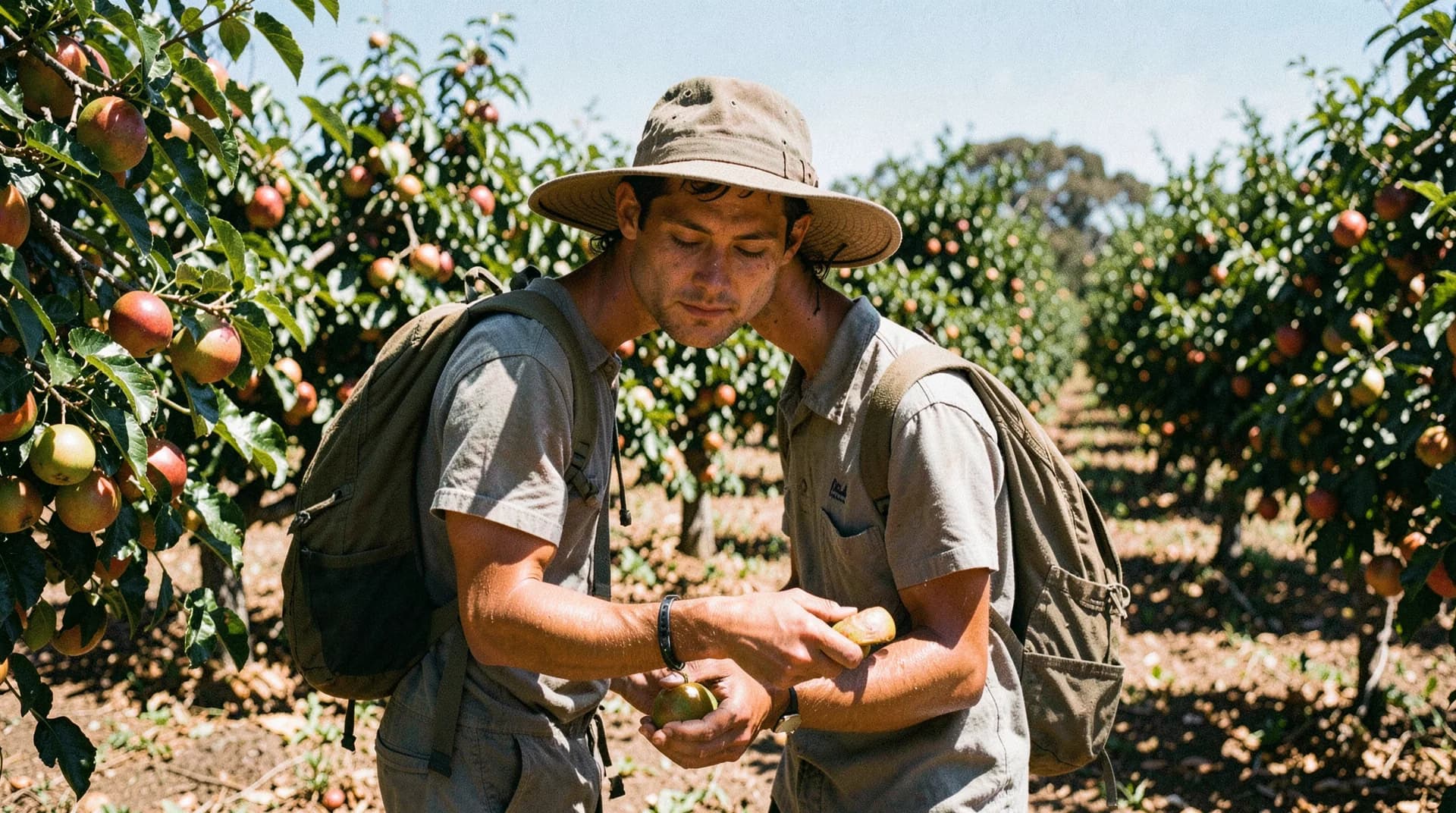
Specified work includes agricultural, harvest, mining, construction, forestry, fishing and disaster-recovery roles in qualifying regional postcodes.
Common Pitfalls
- Applying after the 31st birthday. Age is assessed at the date of application; even 24 hours over the cap is a refusal.
- Wrong subclass for the passport. Several applicants try to lodge a 417 when their country is on the 462 list (or the reverse) — review 417 vs 462.
- Missing the government-support letter for nationalities that require it. It cannot be added after lodgement for those countries.
- Treating 462 work as PR. It is a temporary visa with a 6-month-per-employer rule; long-term career planning needs a separate skilled, employer-sponsored or partner pathway.
- Ignoring tax setup. Working Holiday makers are taxed under a specific schedule; failing to register correctly leads to over-withholding. See working holiday visa tax rate.
Related Pages
- Work and Holiday Visa (Subclass 462) full guide
- Working Holiday Visa (Subclass 417)
- Subclass 417 vs 462 difference
- Every country eligible for WHV 2026
- Working holiday visa age limit
- Second year working holiday visa
- Third year working holiday visa
- Working holiday visa tax rate
- Working holiday visa to PR
- How to apply for an Australian visa step by step
- ImmiAccount guide