Visa Condition 8558: The Non-Resident 90-Day Rule Explained
Updated: 25 June 2026
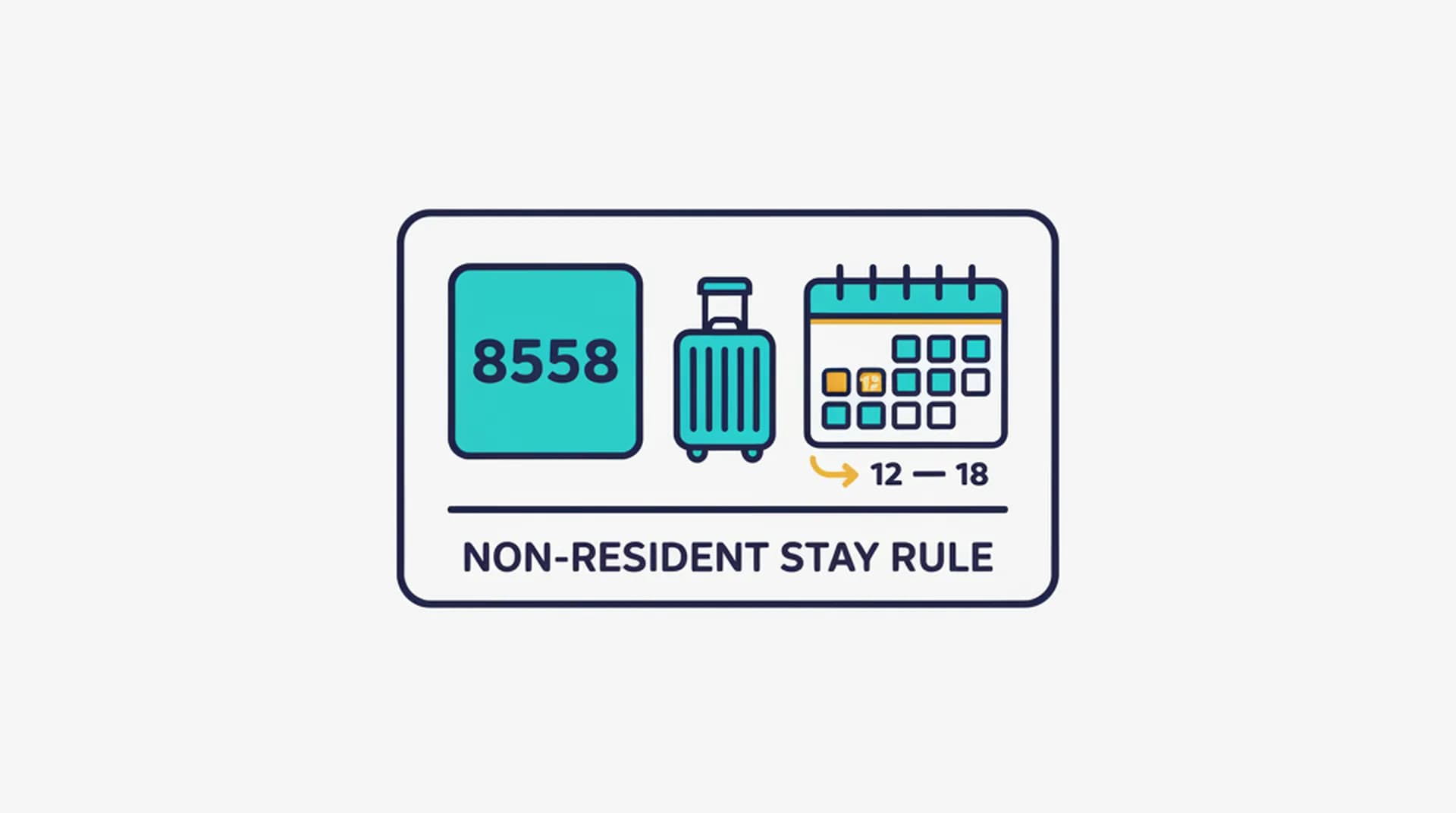
Visa condition 8558 is the "non-resident" rule attached to many Australian visitor visas. In plain terms, it means you cannot stay in Australia for more than 12 months in any 18-month period. The condition exists to stop visitor visas being used for de facto residence. Breaching it is a ground for visa cancellation and can damage future applications.
What Is Visa Condition 8558?
Condition 8558 limits the total amount of time a visa holder can spend inside Australia over a rolling window. The wording the Department of Home Affairs uses is direct: the holder must not stay in Australia for more than 12 months in any period of 18 months.
This is why 8558 is often called the "non-resident" condition. It is designed to keep visitor visas exactly that — for visiting. The condition draws a clear line between someone who comes and goes as a genuine tourist or family visitor and someone who is effectively living in Australia on a temporary visa.
The "90-day rule" nickname comes from how people often experience the limit in practice. Many visitor stays are capped at three months (roughly 90 days) per entry by a separate condition, and travellers frequently confuse that per-visit stay cap with the 18-month aggregate limit imposed by 8558. They are not the same thing, and understanding the difference matters.
How the 12-Months-in-18 Rule Actually Works
The core of condition 8558 is a rolling calculation, not a calendar one. At any moment, the Department can look back over the previous 18 months and add up the days you were physically present in Australia. If that total exceeds 12 months, you are in breach.
A few principles make this clearer:
- It is cumulative, not per-trip. Multiple shorter visits add together. Three separate four-month stays inside an 18-month window can breach 8558 just as easily as one long stay.
- The window rolls. There is no annual reset on a fixed date. The 18-month period moves forward day by day, always measured backward from the current date.
- Time outside Australia does not count against you. Only days physically present in Australia are counted toward the 12-month total.
- 8558 is separate from the stay period on each entry. Your visa grant letter may allow, for example, a three-month stay per arrival. That per-entry limit and the 12-in-18 aggregate limit operate independently — you must satisfy both.
| Scenario | Days in Australia (rolling 18 months) | Status under 8558 |
|---|---|---|
| One 3-month visit | ~90 days | Compliant |
| Two separate 5-month visits | ~300 days | Compliant |
| Four 3-month visits | ~360 days | Compliant (close to limit) |
| Continuous 13-month stay | ~395 days | Breach |
| Three 5-month visits in 18 months | ~450 days | Breach |
If your travel pattern is approaching the 12-month total, you should treat it as a planning issue well before you arrive, not something to work out at the border.
Which Visas Carry Condition 8558?
Condition 8558 is most strongly associated with longer-validity visitor visas, particularly those allowing multiple entries over several years. It commonly appears on certain streams of the Visitor visa (Subclass 600), and it is a defining feature of long-validity visitor products designed for frequent travel rather than residence.
The key point is that 8558 is not automatic on every visitor visa. Some short-stay tourist grants are controlled by the per-entry stay period alone and do not carry 8558. Others — especially three-year or five-year multiple-entry visitor visas, and certain sponsored or parent-related visitor streams — carry 8558 precisely because their long validity would otherwise allow near-continuous residence.
| Visa context | Likely to carry 8558? | Why |
|---|---|---|
| Short single-entry tourist grant | Less likely | Controlled by short per-entry stay period |
| Long-validity multiple-entry visitor visa | Likely | Long validity needs an aggregate cap |
| Frequent-traveller / family visitor streams | Often | Prevents de facto residence |
| Student or work visas | No | Governed by their own conditions |
Because the condition set varies by stream and by individual grant, you should never assume. The only reliable answer for your specific visa comes from checking your grant notice or VEVO (covered below).
What Is and Isn't Allowed Under 8558
Condition 8558 is about time in country, not about activity. It does not, on its own, control your work rights, study rights, or health-insurance obligations — those come from other conditions such as the no-work or limited-study rules common on visitor visas, condition 8501 health insurance, or condition 8503 no further stay.
What 8558 allows:
- Multiple entries and exits within your visa's validity, provided your cumulative in-country time stays under 12 months in any 18-month window.
- Normal visitor activities permitted by your other conditions — tourism, visiting family, short business meetings where allowed.
- Leaving and re-entering freely, as long as the aggregate calculation stays compliant.
What 8558 does not allow:
- Staying continuously for more than 12 months across an 18-month period.
- Using back-to-back visitor stays as a substitute for a residence or long-stay visa.
- Treating the 18-month window as resetting each time you leave — it does not reset on exit; it simply stops accumulating while you are away.
If your genuine intention is to live in Australia long term, a visitor visa carrying 8558 is the wrong vehicle. The condition is specifically built to prevent that outcome.
Consequences of Breaching Condition 8558
Breaching 8558 is treated like breaching any other visa condition. The headline risk is cancellation, but the consequences ripple further:
- Visa cancellation. The Department can cancel a visa for non-compliance with its conditions. Once cancelled, you lose your lawful status and may be required to depart.
- Becoming unlawful. If your visa is cancelled while you are onshore and you have no other valid visa, you become an unlawful non-citizen, which carries its own serious consequences — see visa overstay in Australia.
- Re-entry bans. Cancellation and unlawful status can attach exclusion periods that block future visa grants for a set time.
- Damage to future applications. A recorded breach undermines the genuine-visitor assessment in any later visitor application. The Department keeps your full immigration history.
The Department can detect overstays and condition breaches through arrival and departure records, which are matched automatically against visa conditions. Because every entry and exit is logged, the 12-in-18 calculation is straightforward for the Department to run.
If you are facing a cancellation, the procedural and review pathways matter enormously — read how to appeal a visa refusal at the ART and act within the strict time limits.
How to Check If You Have Condition 8558 (VEVO)
You should never guess which conditions are on your visa. There are two reliable sources:
- Your visa grant notification. The grant letter or email you received lists your visa subclass, validity, stay period, and every condition code attached. Condition 8558 will be listed by number if it applies.
- VEVO (Visa Entitlement Verification Online). VEVO is the Department's free service that shows your current visa status and conditions in real time. It is the authoritative live record — more current than an old grant letter if anything has changed.
To check via VEVO you typically need your passport details plus a visa grant number, transaction reference number (TRN), or visa evidence number. VEVO will display your conditions, including 8558 if present, along with their plain-language descriptions.
Always confirm against VEVO before a trip if you are uncertain. A grant letter from years ago may not reflect your current entitlements, and the conditions — not your assumptions — are what bind you.
Options If You're Affected by Condition 8558
If 8558 limits your plans, you have legitimate paths forward — but they involve choosing the right visa, not breaching the one you hold:
- Plan your travel around the 18-month window. If you simply want to keep visiting, map your entries and exits so your cumulative time stays under 12 months in any rolling 18-month period.
- Apply for a more appropriate visa. If you genuinely need to stay longer or live in Australia, a visitor visa is the wrong category. Family, parent, partner, work, or study pathways may suit your situation. Check the on-site visa fees schedule and visa processing times before you commit to a pathway, as both vary significantly by visa.
- Get advice before you breach, not after. A registered migration agent can assess whether your travel history is approaching the limit and what longer-stay options exist.
- Do not rely on "leaving and coming back" to reset anything. Departing pauses the accumulation of days but does not erase the previous 18 months. This is the single most common misunderstanding that leads to a breach.
Visitor conditions often appear together, so it is worth understanding the wider condition framework — including work-style limits like condition 8105 for students — so you can see how each restriction operates independently of the others.
Independent guide, not a government service. Australian Visa Online is an independent information resource. We are not the Department of Home Affairs and we do not provide immigration assistance. Always confirm your specific conditions via VEVO or your grant notice, and seek advice from a registered migration agent for your individual circumstances.
Frequently Asked Questions
Does condition 8558 mean I can only stay 90 days at a time?
Not directly. Condition 8558 is the 12-months-in-18 aggregate limit, not a per-visit cap. The "90-day" nickname comes from the separate stay period printed on many visitor grants. You must satisfy both your per-entry stay limit and the 8558 cumulative limit, but they are different rules.
Does leaving Australia reset the 18-month period under 8558?
No. Leaving pauses the accumulation of in-country days while you are away, but it does not reset or erase the previous 18 months. The window rolls continuously backward from the current date, so your earlier visits still count until they fall outside the 18-month period.
How do I know if my visa has condition 8558?
Check your visa grant notification, which lists every condition by code, or use VEVO (Visa Entitlement Verification Online) for the live, authoritative record. VEVO shows your current conditions in real time and is more reliable than an old grant letter if anything has changed.
What happens if I breach condition 8558?
Breaching 8558 is a ground for visa cancellation. If your visa is cancelled while you are onshore and you hold no other valid visa, you can become an unlawful non-citizen, which may trigger re-entry bans and damage future visitor applications. Seek advice immediately if you are at risk.
Can I appeal if my visa is cancelled for breaching 8558?
Review rights depend on your circumstances and whether you are onshore or offshore. Where review is available, it is generally through the Administrative Review Tribunal (ART), with strict time limits. See how to appeal a visa refusal at the ART and get professional advice without delay.
I need to stay longer than 12 months — what should I do?
A visitor visa carrying 8558 is not designed for long-term stays. If you genuinely need more time, look at family, partner, parent, work, or study pathways instead. Review the visa fees schedule and processing times guide, and speak to a registered migration agent before your current stay approaches the limit.