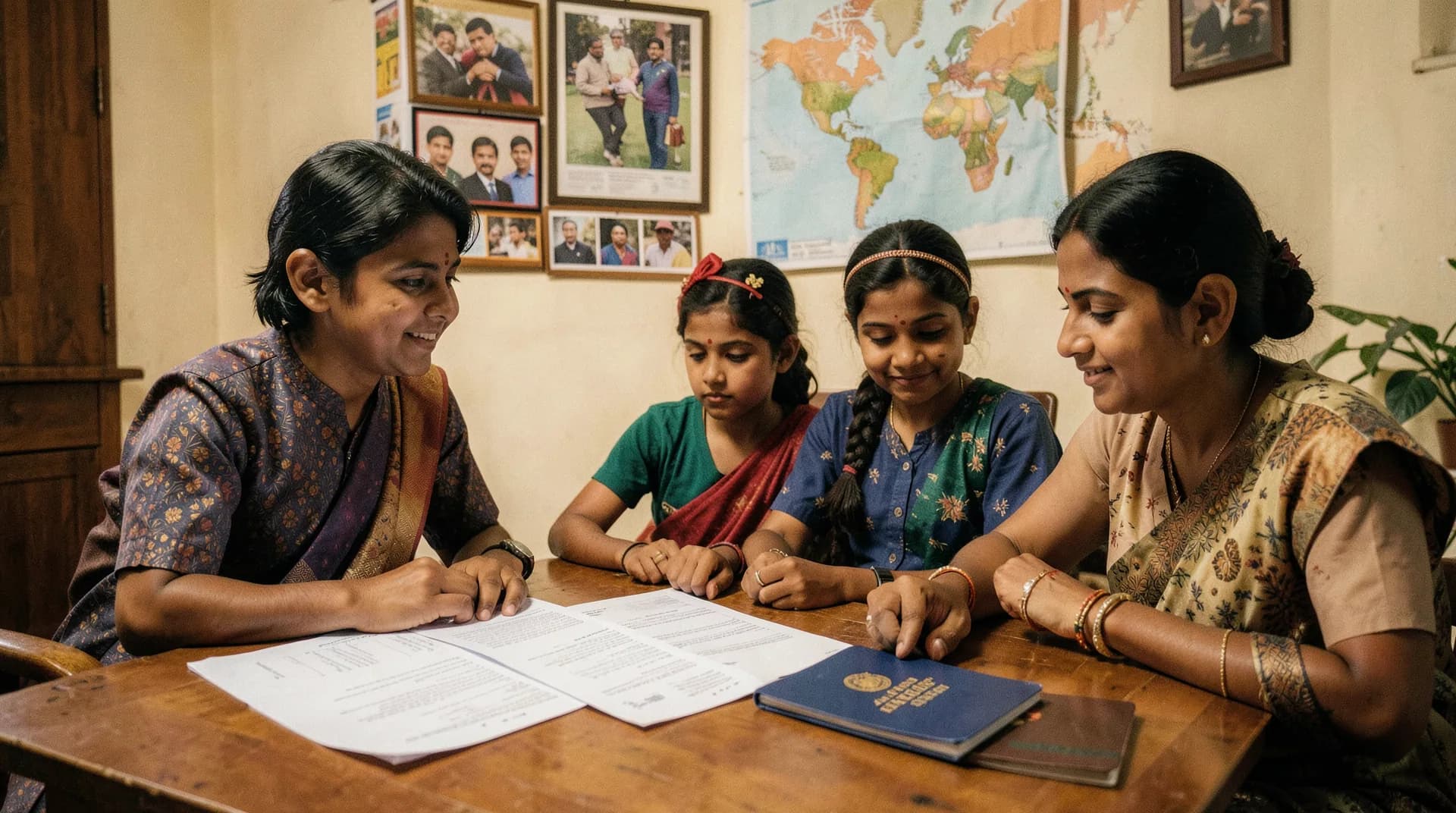
Australian Tourist Visa for Indian Citizens: 2026 Guide
Updated: 13 May 2026
The subclass 600 Visitor visa is the only tourist pathway for Indian passport holders, who are not eligible for the ETA (601) or eVisitor (651). Applications are lodged online through ImmiAccount or via VFS Global centres in eight Indian cities. The base charge is around AUD $430. Indian applicants face higher-than-average refusal rates, usually for weak ties-to-India evidence.
Quick Facts: Tourist Visa for Indian Citizens
| Detail | Information |
|---|---|
| Visa subclass | 600 (Visitor) — Tourist stream most common |
| ETA / eVisitor access | Not available to Indian passport holders |
| Application channel | ImmiAccount online, or VFS Global centre |
| Base charge | AUD $430 (plus VFS service fee if lodged offline) |
| Length of stay | Usually 3 months per visit; 6 or 12 months possible |
| Validity | Single or multiple entry, decided by the case officer |
| Health exam | Generally not required for short stays under 3 months |
| Police clearance | PCC from PSK or RPO if requested |
| Biometrics | Required at VFS Global if asked |
Who Can Apply
The Visitor visa is open to Indian citizens travelling for tourism, visiting family, or short business activities such as meetings and conferences. You'll need a valid Indian passport with at least six months of validity beyond your planned departure from Australia, evidence you can fund the trip, and a credible reason to return to India once it ends.
The Department doesn't publish a fixed minimum bank balance. In practice, showing AUD $5,000 to $10,000 worth of accessible funds (or PHP/INR equivalent) covers most short visits, with more for longer trips. What matters more than the headline number is the pattern: consistent savings over three to six months read very differently from a lump sum that arrived a week before lodgement.
Business visitors can attend conferences, negotiate contracts, or hold meetings with Australian companies. You can't perform productive work for an Australian business or receive an Australian wage on a 600. If that's the plan, you need a 482 or another work-authorised visa.
How to Apply Step by Step
- Create an ImmiAccount and start a new Visitor visa (600) application. The full process is covered in the ImmiAccount setup walkthrough.
- Choose the Tourist stream (or Business Visitor or Sponsored Family stream, if those fit your trip).
- Complete the online form. Indian applicants apply from outside Australia in nearly all cases, so select "outside Australia" when prompted.
- Pay the AUD $430 base charge by international card.
- Upload your supporting documents directly to ImmiAccount.
- If biometrics are requested, you'll receive a letter asking you to attend a VFS Global centre. There are centres in New Delhi, Mumbai, Chennai, Kolkata, Hyderabad, Bangalore, Ahmedabad, and Jalandhar.
- Wait for a decision. Most Indian applicants receive an outcome by email.
You can also lodge the entire application through a VFS Global centre on paper, but online lodgement is faster and cheaper. The general process is the same as for any nationality, covered in the step-by-step application guide.
Documents You'll Be Asked to Provide
The form itself doesn't list every document. The case officer expects you to upload, at minimum:
- A clear scan of your passport bio page
- A recent passport-style photo meeting Department standards
- Indian PAN card and Aadhaar (commonly accepted as identity supplements)
- Bank statements for the last three to six months on bank letterhead, not screenshots
- Salaried applicants: employer letter confirming your role, salary, leave approval, and return-to-work date
- Self-employed applicants: GST registration, ITR for the last two years, business bank statements
- Students: bonafide certificate from your college or university
- Retirees: pension statements or ITR
- Property ownership documents, FDs, or investment statements (helpful but not required)
- Travel insurance covering the period of stay
- A short itinerary or flight booking, plus accommodation details
- If visiting family: an invitation letter, host's visa or citizenship evidence, and host's bank statement
Older documents are fine, but anything financial should be current. A pile of dated paperwork hurts more than it helps.
Cost and Processing Times
The base application charge is AUD $430. If you lodge through a VFS Global centre, expect an additional service fee in INR (typically around ₹1,800-2,400 plus any optional services like courier return).
Processing times move around. For Indian applicants the working range is roughly 18 to 30 days for straightforward cases, with longer outcomes between October and February when application volumes peak before the Australian summer. Complex cases, prior refusals, or requests for additional information will push the timeline out. The processing times guide has current published medians.
If you have a non-refundable booking, lodge as early as the Department's three-month forward window allows. Don't book non-refundable flights before grant.
What Indian Applicants Need to Know
VFS Global is the only operator
Australia outsources Indian visa lodgement to VFS Global. You can't walk into the Australian High Commission in New Delhi for a tourist application. The eight centres are open in most major cities, and you book biometric appointments through the VFS Global India website. Slots in Delhi, Mumbai, and Bangalore can be booked out a week or two ahead during peak travel season.
Ties to India are the deciding factor
This is the single most-cited refusal reason on Indian tourist files. The case officer wants to be satisfied that you'll go home at the end of the visit. They look at things like:
- Stable, well-documented employment with approved leave
- Family staying behind in India (especially spouse and dependent children)
- Property ownership, business interests, or other significant assets
- Prior international travel history showing returns within visa periods
- Realistic, dated itinerary that matches the requested length of stay
A young, unmarried applicant with limited travel history, modest savings, and a vague itinerary is the textbook refusal profile. If that's you, the fix isn't to inflate the bank balance; it's to thicken the documentary evidence of why your life is anchored in India.
Funded trips are fine, but the funder must be documented
Many Indian applicants are travelling on a relative's invitation, with that relative covering costs. This is acceptable, but the host needs to provide their own evidence: visa or citizenship in Australia, employment letter, last three months of bank statements, and a brief statutory declaration confirming what they'll cover. A bare invitation letter without financial backing rarely satisfies the case officer.
Health and police checks
Health examinations are usually waived for visits under three months. For longer stays, applicants over 75, or applicants with a relevant medical history, the case officer can request a Bupa panel exam. Police clearance follows the same logic — usually not asked for short tourist trips, sometimes requested for longer stays or repeat visits. The full process for Indian Police Clearance Certificates is in the police clearance guide.
Common Pitfalls for Indian Applicants
Sudden deposits. A new credit landing in your account three days before lodgement looks like a friend's money, not yours. Case officers see thousands of statements; the pattern is obvious. If you've recently sold property or received a bonus, attach the source document so the deposit reads as your own.
Generic invitation letters. A two-line note from a cousin saying "you are invited" does almost nothing. The strong version names the relationship, dates, the address you'll stay at, what the host will cover, and is signed with the host's full contact details.
Itineraries that don't fit the stay. Asking for six months but planning a two-week Sydney trip raises questions. Ask for the length you actually need, and back it with day-by-day plans for a meaningful chunk of it.
Reusing PCC, photos, or medicals from a previous refusal. A fresh application benefits from fresh documents. Old paperwork sometimes flags the case as a re-attempt without remedying anything new.
Treating the GS or business statement as a formality. The Visitor visa doesn't have a GS, but it does have a character and intent assessment. A short, specific, first-person statement explaining the trip and your return plans helps far more than the boilerplate that VFS agents occasionally hand out.
Frequently Asked Questions
Do Indian citizens get visa on arrival in Australia?
No. Indian passport holders need to be granted a Visitor visa before boarding their flight. There's no visa-on-arrival, no ETA, and no eVisitor option. Arriving without a valid visa results in being refused boarding by the airline.
How much bank balance should I show for an Australian tourist visa from India?
There's no published minimum. AUD $5,000 to $10,000 in accessible funds is a working benchmark for a short tourist visit, with more for longer stays. The consistency of your statements matters more than a single end-of-month number, and the case officer also weighs your employment income and any sponsor support.
Can I apply for an Australian tourist visa from India without a flight booking?
Yes. The Department recommends against booking non-refundable flights until your visa is granted. A draft itinerary or held booking is enough at lodgement, and you can purchase tickets after grant.
How long does the Australian tourist visa take from India in 2026?
Most straightforward applications from India are decided in roughly 18 to 30 days. Decisions can be faster for repeat travellers with a clean history and slower during the October-February peak. Complex cases or requests for further information add time on top.
Can I extend a tourist visa once I'm in Australia?
You can apply for a new Visitor visa from inside Australia before your current one ends, but it's not automatic and you'll need to meet the same evidence requirements again. Repeated short-stay extensions are scrutinised closely. The extension process is covered separately.
Related Guides
- Australian Visa for Indian Citizens (country overview)
- Subclass 600 Visitor Visa: full guide
- How to apply for an Australian visa: step by step
- ImmiAccount: create and manage your application
- Australian Police Clearance Certificates guide
- How long can you stay on an Australian tourist visa?
- Can you work on an Australian tourist visa?
- Visa processing times 2026