Cabinet Maker Visa Pathway to Australia: Complete 2026 Guide
Updated: 16 August 2026
Australia classifies Cabinet Maker under ANZSCO 394112. Trades Recognition Australia conducts the skills assessment, typically through the Migration Skills Assessment or Job Ready Program. The occupation sits on the Core Skills Occupation List, unlocking subclasses 482 and 186. Typical 2026 salaries range AUD $80,000-$90,000. Construction-trade prioritisation by TRA cuts assessment fees through to mid-2026.
Quick Facts: Cabinet Maker Migration Pathway
| Detail | Information |
|---|---|
| ANZSCO Code | 394112 (Cabinet Maker) |
| Skill Level | 3 (AQF Certificate III + 2 years on-the-job training, or Certificate IV) |
| Skills Assessment | TRA (Trades Recognition Australia) |
| Occupation List | CSOL (Core Skills Occupation List) |
| Visa Options | 482, 186 |
| Demand Level | High — sustained construction trade shortage, prioritised by TRA |
| Salary Range | AUD $80,000-$90,000 (SEEK, May 2026) |
| Typical 482 Salary Threshold | Core Skills stream AUD $79,423 minimum |
| Key Challenge | No 189, 190, or 491 access; requires a sponsoring employer |
What a Cabinet Maker Does in Australia
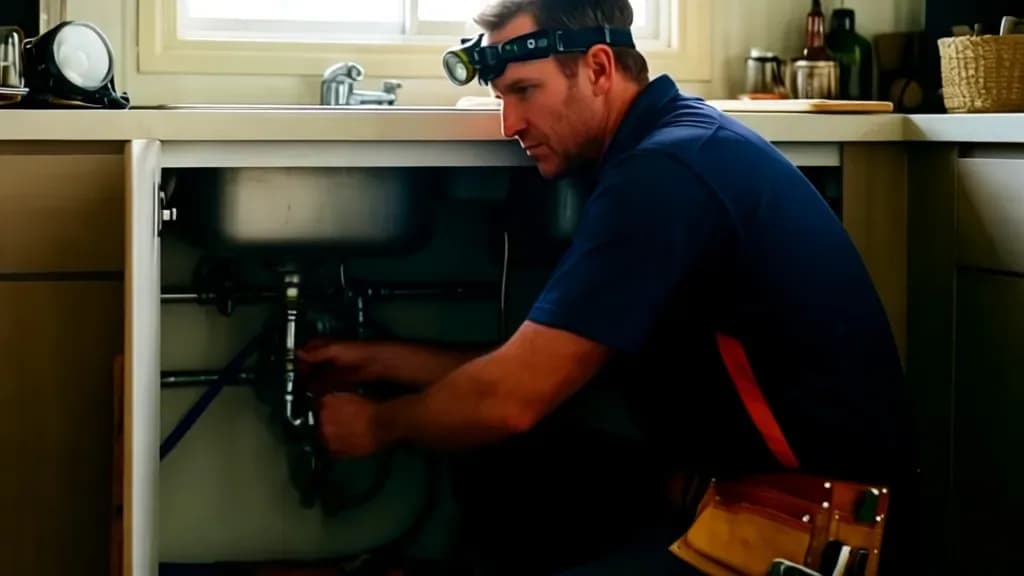
The role covers design, fabrication, and installation of cabinetry — kitchens, bathrooms, wardrobes, commercial fitouts, and bespoke joinery. Day-to-day work involves reading construction drawings, programming CNC machines, cutting and dressing timber and engineered wood products, edging and assembly, hardware fitting, and on-site installation. The work splits between high-volume kitchen and bathroom manufacturers, commercial fitout contractors, bespoke joinery studios, and shopfitting specialists.
Demand sits firmly in the high band. Jobs and Skills Australia continues to record national shortage, and TRA has prioritised cabinet making as one of several targeted construction occupations between July 2024 and June 2026 — with no additional fee for prioritised processing of the identified construction trades during that window. The work concentrates in metropolitan growth corridors (Western Sydney, Melbourne's northern suburbs, southeast Queensland) and in commercial fitout hubs servicing retail, hospitality, and aged-care construction.
ANZSCO Code Mapping
The exact code is 394112 Cabinet Maker (also written as 394111 Cabinetmaker in older ANZSCO 2013 documentation; ANZSCO 2022 retains the 394111 listing as the cabinet-and-furniture-makers unit group). The ABS task list covers examining drawings, work orders, and sample parts to determine specifications; selecting and working with timber, veneers, particle board, synthetic wood, and engineered products; programming and operating CNC machines; making cabinets and furniture from drawings and specifications; and installing cabinetry in kitchens, bathrooms, and commercial fitouts.
The closest adjacent codes are 394113 Furniture Maker (focused on standalone furniture rather than fitted cabinetry) and 394111 in the older taxonomy. Some applicants who do both fitted and freestanding work consider both codes — but if the majority of your duties involve kitchen, bathroom, and built-in cabinetry, 394112 is the correct choice. References must describe duties using the ABS task vocabulary.
Skills Assessment
TRA Migration Skills Assessment (MSA)
Applicants with formal training and documented employment apply through the MSA pathway. The MSA is a documentary assessment covering qualification equivalence and post-qualification work experience.
Requirements:
- A qualification at least comparable to AQF Certificate III in Cabinet Making (or AQF III in Furniture Making with cabinet-making units)
- At least three years of post-qualification employment performing the ANZSCO 394112 task set
- Documentary evidence of training transcripts, employer references on letterhead, payslips, tax records
Assessment cost: Documentary stage from AUD $1,000. TRA's construction-trade prioritisation through to 30 June 2026 means no additional fee for accelerated processing of identified construction occupations.
Processing time: 10-14 weeks for the documentary stage when records are complete.
TRA Job Ready Program (JRP)
Applicants whose overseas training is not directly recognised by the documentary route are directed into the JRP — a four-stage program that adds an Australian workplace placement and practical assessment.
Stage fees (2026):
- Stage 1 — Provisional Skills Assessment: AUD $200
- Stage 2 — Job Ready Employment registration: AUD $450
- Stage 3 — Job Ready Workplace Assessment: AUD $2,540
- Stage 4 — Job Ready Final Assessment: AUD $65
- Total program cost: approximately AUD $3,255
Processing time: 12-18 months from Stage 1 to Final Assessment.
Common rejection reasons: training delivered without supervised practical hours; references that describe shopfitter or carpenter duties without cabinet-specific work; weak documentary evidence of overseas employment (no payslips, no tax records); duty descriptions that align more closely with joiner (394211) or carpenter (331212) than cabinet maker. For wider assessment context, see the skills assessment bodies complete list.
Visa Pathways
Subclass 482 — Skills in Demand Visa
The dominant pathway. Cabinet Maker is on the CSOL, eligible for the Core Skills stream of the 482.
- Visa fee: AUD $4,015 (primary applicant, current schedule)
- Salary threshold: AUD $79,423 (Core Skills Income Threshold)
- Reality check: SEEK's 2026 average sits at AUD $80,000-$90,000, comfortably above the CSIT. Specialist commercial-fitout and bench joiners often clear $95,000.
- Duration: Up to 4 years
- Processing time: Core Skills stream 3-6 months from lodgement; accredited sponsors lodge nominations under the 10-day service standard introduced in March 2026
- Pathway to PR: After 2 years on the 482 with the nominating employer, transition to 186 TRT stream
For more on the visa, see the subclass 482 visa guide.
Subclass 186 — Employer Nomination Scheme
Permanent residency through employer sponsorship. Two streams apply:
- Direct Entry: for applicants with a positive TRA assessment and 3+ years of post-qualification experience. Visa fee AUD $6,140. Processing 12-19 months at the 90th percentile.
- Temporary Residence Transition: for applicants who have held a 482 with the nominating employer for at least 2 years. Faster decisions in practice.
The Direct Entry stream is the only viable offshore PR option because Cabinet Maker is not on the MLTSSL successor lists eligible for the 189 or 190.
State Nomination
Cabinet Maker is not currently nominated for the 190 or 491 by any state or territory in the 2025-26 program year on the standard skilled migration lists. The CSOL-only listing restricts the occupation to employer-sponsored pathways at federal level.
The only nominated entry points are through state-administered Designated Area Migration Agreements (DAMAs) that include cabinet making among regional concessional occupations — in particular several Western Australian DAMAs and selected Northern Territory programs. Verify the current DAMA occupation lists directly with the relevant regional authority before lodging an EOI.
Salary and Employment Outlook
| Role | Typical Salary Range |
|---|---|
| Apprentice / 1st-year tradesperson | AUD $50,000-$60,000 |
| Cabinet Maker (3-7 yrs) | AUD $80,000-$90,000 |
| Senior Cabinet Maker (8+ yrs) | AUD $90,000-$105,000 |
| Bench Joiner / Bespoke Studio | AUD $90,000-$115,000 |
| Site Installer (commercial fitout) | AUD $85,000-$110,000 |
| Workshop Manager | AUD $100,000-$130,000 |
| Owner-Operator (gross billings) | AUD $120,000-$220,000 |
Source: SEEK Career Advice, May 2026; cross-referenced against Indeed, PayScale, and Jora.
Top-paying locations on SEEK include Launceston and North East Tasmania (averages above $97,000) and the Sunshine Coast ($90,000), where heritage and bespoke residential work drives premium rates. By industry, Construction averages around $66,500 and Trades & Services around $62,500 on advertised job posts — these figures reflect entry and mid-grade roles. Senior and specialist positions on enterprise-bargaining-agreement workplaces clear those averages substantially.
Total packages on permanent roles add superannuation at 11.5%. Site allowances, tool allowances, and overtime are standard in the commercial fitout sector. The highest-paying sectors are commercial joinery (hospitality, retail, aged care, healthcare fitouts), bespoke residential studios in Sydney's eastern suburbs and Melbourne's inner south, and shopfitting contractors servicing the major retail chains.
Tips for a Successful Application
1. Use the TRA Construction-Trade Prioritisation Window
Between July 2024 and 30 June 2026 TRA prioritises assessments for identified construction trades, including cabinet making, without additional fee. Lodge before the window closes — even if your sponsor search is still in progress — to lock in the accelerated processing.
2. Verify the Cabinet-Making Units in Your Overseas Qualification
A general "Carpentry and Joinery" certificate without cabinet-specific units of competency often fails MSA equivalence. If your qualification covers framing, formwork, or general timberwork rather than cabinetmaking, expect to be directed into the JRP. Order your full unit-of-competency transcripts, not just the certificate cover.
3. Target Accredited Sponsors in the Commercial Fitout Sector
Commercial fitout contractors employ multiple cabinet makers per project and are among the most active 482 sponsors in the trades. Major players include Buildcorp, ADCO Constructions, FDC, and a long tail of specialist joinery contractors. Accredited sponsors qualify for the 10-day nomination service standard.
4. Document CNC and Software Skills
Modern Australian workshops run CNC routers, edge banders, and CAD/CAM software (AutoCAD, Cabinet Vision, Microvellum). References that describe your CNC programming experience and software proficiency reduce employer onboarding friction and raise your effective salary band. List specific machine brands and software versions where possible.
5. Get Your Tax and Payroll Records in Order Before Lodging
TRA documentary assessments fail more often on weak employment evidence than on qualification gaps. Payslips, tax records, social-security statements, and provident-fund statements all support the duration and intensity of your claimed work. Family-business or sole-trader references must be supported by independent documents — ABN-equivalent registration, customer invoices, statutory filings.
Step-by-Step Migration Roadmap
- Confirm ANZSCO 394112 fits your duties — see the how to find ANZSCO code guide
- Check the CSOL listing on the Core Skills Occupation List hub
- Order sealed training transcripts and unit-of-competency records
- Sit your English test — IELTS 5.0 average minimum for the 482
- Lodge the TRA application — MSA if your training and records are strong, JRP otherwise
- Search for a sponsoring employer — target accredited sponsors in commercial fitout
- Receive nomination from the sponsor — under the 10-day accredited service standard
- Lodge the 482 visa — within the validity window of your nomination
- Work in Australia for 2 years on the 482 — clearing the Core Skills Income Threshold
- Transition to 186 via TRT stream — for permanent residency
- Complete health and character checks
- Receive visa grant and continue working
For broader visa context, see the most in-demand occupations in Australia 2026.
Frequently Asked Questions
Can I get permanent residency directly as a Cabinet Maker?
Yes, through the 186 Direct Entry stream if you hold a positive TRA assessment and a sponsoring employer. Direct Entry processing currently runs 12-19 months at the 90th percentile, so most applicants prefer to enter on a 482 and transition through the TRT stream after 2 years of qualifying service.
Why isn't Cabinet Maker on the state nomination lists for the 190 or 491?
Home Affairs designated the occupation CSOL-only in the late-2024 list reform. State nomination programs administer separate lists drawn from federal eligibility, and most states currently prioritise occupations with broader 189/190 access. Cabinet Maker retains full 482 and 186 access at federal level and may also be eligible under regional DAMAs.
Is the Job Ready Program mandatory for offshore applicants?
No. Applicants with strong qualification and employment evidence can use the Migration Skills Assessment (MSA), which is a documentary route taking 10-14 weeks. The JRP applies when TRA cannot verify equivalence from documents alone — typically where overseas training lacks supervised practical hours or where employment evidence is thin.
What if my qualification is in Carpentry rather than Cabinet Making?
Carpentry maps to 331212 Carpenter, which is a separate code with its own list status. If your duties over the past 3 years have shifted toward cabinetry — kitchen and bathroom fabrication, built-in joinery, commercial fitout — you can apply under 394112 if your references describe those duties. TRA will check the duty descriptions against the ABS task list.
Which Australian employers actively sponsor Cabinet Makers?
Commercial fitout contractors (Buildcorp, ADCO, FDC, SHAPE), specialist joinery shops in Sydney, Melbourne, and Brisbane, kitchen-and-bathroom manufacturers (kitchen renovation chains, premium bespoke studios), and shopfitting contractors serving the major retail chains. Accredited sponsors in this sector lodge multiple 482 nominations per year and qualify for the 10-day nomination service standard.