Fire Protection Plumber Visa Pathway to Australia: Complete 2026 Guide
Updated: 16 August 2026
Australia classifies Fire Protection Plumber under ANZSCO 334117. Trades Recognition Australia (TRA) handles the skills assessment through the Offshore Skills Assessment Program. The occupation sits on the Core Skills Occupation List, opening visa subclasses 482 and 186. Typical 2026 base salaries range AUD $90,000-$120,000, with hydrant and sprinkler installers consistently in short supply nationally.
Quick Facts: Fire Protection Plumber Migration Pathway
| Detail | Information |
|---|---|
| ANZSCO Code | 334117 (Fire Protection Plumber) |
| Skill Level | 3 (AQF Certificate III/IV plus apprenticeship) |
| Skills Assessment | TRA (Trades Recognition Australia) — OSAP pathway |
| Occupation List | CSOL (Core Skills Occupation List) |
| Visa Options | 482 (Skills in Demand), 186 (Employer Nomination Scheme) |
| Demand Level | High — specialist trade with persistent shortages in commercial construction |
| Salary Range | AUD $90,000-$120,000 (SEEK fire technician and plumber data, May 2026) |
| Typical 482 Threshold | Core Skills stream minimum AUD $79,423 — easily cleared |
| Key Challenge | Limited number of employers — most fire protection work is contracted to specialist firms |
Role Context: Fire Protection Work in Australian Construction
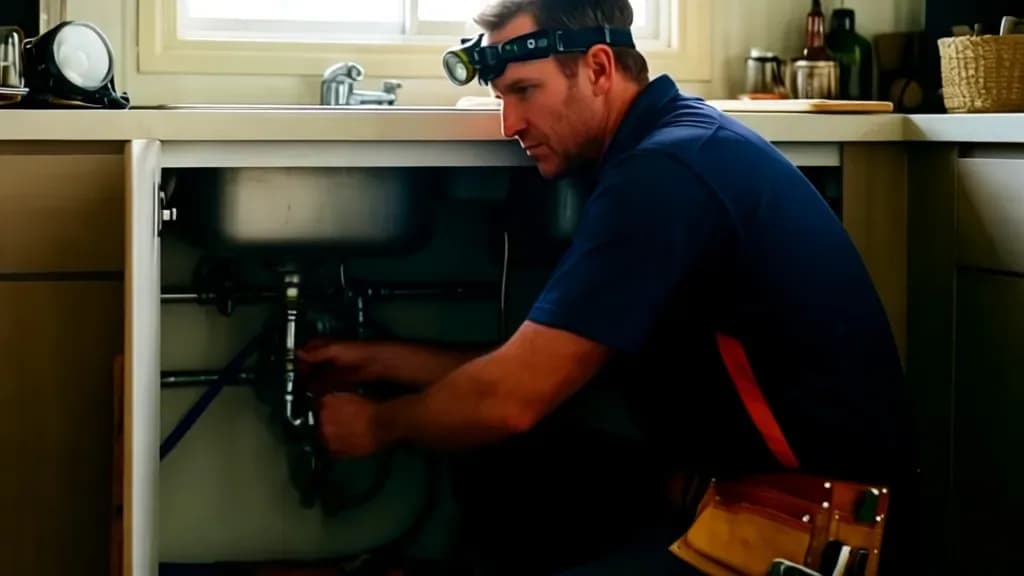
Fire protection plumbers install, test, service, and maintain water-based fire suppression systems — sprinkler networks, fire hydrants, hose reels, and dry/wet riser systems. Every commercial building, hospital, school, multi-storey residential project, and warehouse in Australia is required to carry a certified fire protection system. That regulatory backbone — the National Construction Code, AS 2118 (sprinklers), AS 2419 (hydrants) — drives steady, non-discretionary demand for licensed fire protection plumbers.
The work concentrates in capital cities and regional growth corridors. Melbourne, Sydney, and Brisbane carry the largest project pipelines; the major fire protection contractors (Wormald, Fyrequel, Stowe, Andersson) maintain national teams that cycle through commercial fit-outs, hospital builds, data centre projects, and industrial sites. Service-side work — annual hydrant testing, sprinkler maintenance, AS 1851 inspections — is steady year-round and provides a different career track to new-installation work.
ANZSCO Code 334117: What the Code Covers
ANZSCO 334117 covers tradespeople who install and maintain water-based fire protection equipment, including fire hydrants, hose reels, sprinkler systems, and fire pumps. It sits within unit group 3341 (Plumbers) and sub-major group 33 (Construction Trades Workers) under ANZSCO 2022 rev 1. The official skill level is 3, requiring AQF Certificate III plus structured on-the-job training — typically a four-year Australian apprenticeship or its overseas equivalent.
Fire Protection Plumber is a distinct code from Plumber (General) 334116. The classifications matter for assessment: TRA reads your reference letters against the 334117 task list. Applicants with mixed plumbing experience often nominate 334116 instead — see the Plumber (General) visa pathway page for that route. If 70%+ of your work is on sprinklers, hydrants, fire pumps, and related systems, 334117 is the correct nomination.
Skills Assessment: Trades Recognition Australia (OSAP)
TRA assesses 334117 through the Offshore Skills Assessment Program. The pathway is identical to the general plumber assessment in structure, with the practical component tailored to fire protection competencies.
Three-stage OSAP process:
- Stage 1 — Documentary evidence: qualifications, employment records, licensing history, English test
- Stage 2 — Technical interview with TRA on your fire protection background
- Stage 3 — Practical skills assessment delivered offshore by a TRA-approved Registered Training Organisation, with assessment tasks specific to sprinkler installation, hydrant testing, and pump set commissioning
Fees: Total OSAP cost typically runs AUD $3,000-$3,500 across all three stages once the RTO practical fee is included. Stage 1 administration fees through TRA are published in the OSAP Applicant Guidelines on the TRA portal.
Processing time: Approximately 15 weeks from decision-ready documentary evidence to outcome, plus additional weeks to schedule the practical assessment at an offshore RTO. Priority processing for construction trades remains active into 2026, which may shorten the timeline for fire protection plumbers.
Common rejection reasons:
- Reference letters that fail to demonstrate work specific to fire protection systems (general plumbing duties weaken the 334117 nomination)
- Inability to evidence the four-year minimum structured training equivalent to an Australian apprenticeship
- Qualifications that map to general plumbing rather than the fire-specific specialist stream
Read the skills assessment bodies hub for context on how TRA compares to other assessing authorities.
State Licensing — Separate From the TRA Outcome
A positive TRA assessment confirms your skill level for migration. It does not licence you to work in Australia. Each state regulates fire protection plumbing as a specialist class of licence — typically requiring proof of TRA assessment, evidence of relevant experience, an exam on Australian standards (AS 1851, AS 2118, AS 2419), and ongoing CPD.
The Victorian Building Authority, NSW Fair Trading, the Queensland Building and Construction Commission, and equivalent bodies in WA, SA, ACT, and Tasmania run their own fire protection endorsements. New arrivals often work under a supervisor's licence for 6-12 months while finalising their own state ticket.
Visa Pathways for Fire Protection Plumbers
Subclass 482 — Skills in Demand Visa (Primary Route)
Fire Protection Plumber sits on the Core Skills Occupation List. This makes the 482 visa the dominant pathway, in the Core Skills stream.
- Visa fee: AUD $4,015 (primary applicant)
- Salary floor: Core Skills threshold AUD $79,423 — typical fire protection plumber salaries clear this easily
- Duration: Up to 4 years
- Quirk: Specialist fire protection contractors are familiar with the 482 process. Wormald, Fyrequel, and similar national firms sponsor regularly. Smaller regional fire-services operators may not have prior sponsorship history — target the national contractors first.
Employers also pay a sponsorship fee (AUD $420), a nomination fee (AUD $330), and the Skilling Australians Fund levy (AUD $1,200-$1,800 per year). See the subclass 482 detail page for the full mechanics.
Subclass 186 — Employer Nomination Scheme (PR)
After two years on a 482 with the same sponsor in the same role, applicants can transition to permanent residency through the Temporary Residence Transition stream of the 186 visa. The Direct Entry stream requires a positive skills assessment plus three years of post-qualification experience and is available offshore but used less often for trades.
- Visa fee: AUD $6,140 (primary applicant)
- Streams: Temporary Residence Transition (most common) or Direct Entry
- Reality: Most fire protection plumbers reach PR through TRT after the 482 phase
Why No 189, 190, or 491?
Fire Protection Plumber is on the CSOL but not the MLTSSL. The points-tested 189 visa is therefore not available. State nomination under 190 and 491 is possible only if a state specifically lists 334117 — most states channel trade migration through the federal 482 system rather than state nomination in 2025-26. Always check the current published list of your target state before assuming a points-tested route is open.
Salary and Employment Outlook
Typical Fire Protection Plumber Earnings 2026
| Role | Typical Salary Range |
|---|---|
| Apprentice Fire Protection Plumber (Year 3-4) | AUD $58,000-$72,000 |
| Qualified Fire Protection Plumber (PAYG) | AUD $90,000-$120,000 |
| Senior/Leading Hand | AUD $110,000-$140,000 |
| Fire Services Supervisor | AUD $130,000-$160,000 |
| Commissioning Specialist | AUD $120,000-$155,000 |
| Service Technician (AS 1851 inspections) | AUD $85,000-$110,000 |
SEEK's May 2026 data on plumber and fire technician roles places the qualified fire protection plumber average between AUD $90,000 and AUD $120,000 base. Commissioning and inspection specialists — those who sign off complete sprinkler systems on commercial projects — sit at the upper end due to the certification responsibility they carry under AS 1851 and AS 2118.
Highest-Paying Sectors
- National fire services contractors — Wormald, Fyrequel, Stowe, Andersson
- Tier 1/Tier 2 commercial construction — fire protection sub-contracts on high-rise and infrastructure
- Hospital and aged care projects — strict compliance regimes, higher-paid specialist work
- Data centre construction — booming sector with above-market rates for fire-suppression specialists
- Marine and oil/gas — offshore platforms and ports pay premium rates for fire-safety licensed plumbers
Total packages typically include superannuation at 11.5%, vehicle access for service technicians, on-call allowances, and overtime under the Plumbing and Fire Sprinklers Award.
Tips for a Successful Application
1. Lock In Reference Letters That Cite Fire-Specific Systems
TRA reads reference letters against the 334117 task list. Generic plumbing language ("performed plumbing duties") weakens the file. Make sure your references explicitly mention sprinkler installation, fire hydrant servicing, pump set commissioning, AS 1851 inspections, and related fire-protection tasks. Draft the language for your employers based on the ANZSCO description.
2. Document Your AS 2118 / AS 1851 Experience
Australia regulates fire protection through specific standards. If you have worked under equivalent overseas standards (NFPA 13 sprinklers, NFPA 25 inspections in North America; EN 12845 in Europe), document those experiences and explain the equivalence in your application. TRA assessors are familiar with mainstream international standards.
3. Target National Fire Services Contractors for Sponsorship
The 482 visa requires an employer willing to sponsor. National fire services contractors — Wormald, Fyrequel, Stowe, Andersson, Tyco, Johnson Controls — sponsor offshore plumbers regularly and have HR teams familiar with the process. Smaller residential operators rarely sponsor. Focus your job search on the national specialists.
4. Plan for the State Licensing Endorsement
A general state plumbing licence is not enough — you also need the fire protection endorsement. In Victoria the VBA issues a specialist class; in NSW the licence is endorsed through Fair Trading; QBCC has a fire protection nominee category. Start researching the endorsement requirements for your target state during the OSAP process, not after arrival.
5. Time Your Application With the Construction Pipeline
Commercial construction in Australia runs in cycles. The 2026 pipeline is heavy with data centres, hospital expansions, and apartment towers in Melbourne and Sydney. Major contractors plan workforce 12-18 months ahead. Reach out to talent acquisition teams well before lodging the visa application — many will hold a role open for a sponsored candidate.
Step-by-Step Migration Roadmap
- Confirm 334117 is the right code — fire protection work must dominate your CV (70%+ of duties)
- Verify CSOL status — Fire Protection Plumber is on the Core Skills Occupation List
- Compile evidence — qualifications, four years of fire-specific employment references, training records
- Sit IELTS or PTE — meet the 482 functional English threshold (IELTS 5.0 each band)
- Lodge TRA OSAP Stage 1 — documentary evidence through the TRA portal
- Complete the technical interview — Stage 2
- Sit the practical assessment — Stage 3 at an approved offshore RTO
- Approach national fire services contractors — Wormald, Fyrequel, Stowe, Andersson, Tyco
- Employer lodges sponsorship and nomination — they pay the SAF levy
- Lodge subclass 482 visa application — Core Skills stream
- Apply for state licensing endorsement — VBA, NSW Fair Trading, QBCC equivalent
- Transition to 186 TRT after 2 years — for permanent residency
For context on the assessment landscape, see how to find your ANZSCO code and the 2026 most-in-demand occupations list.
Frequently Asked Questions
How is Fire Protection Plumber different from Plumber (General) for migration?
ANZSCO 334117 covers specialist fire protection work — sprinklers, hydrants, fire pumps. ANZSCO 334116 covers general plumbing. TRA assesses both through the Offshore Skills Assessment Program, but the practical components differ. If 70%+ of your duties are fire-specific, nominate 334117. If your work is mixed, 334116 is usually the safer nomination. Mismatched references are the most common rejection reason.
Can I migrate as a fire protection plumber under the 189 points-tested visa?
No. ANZSCO 334117 is on the Core Skills Occupation List but not on the MLTSSL in 2026, which closes the 189 pathway. The dominant route is the employer-sponsored subclass 482 visa, followed by the 186 visa for permanent residency after two years.
Do my overseas NFPA 13 or EN 12845 qualifications count?
NFPA 13 (US sprinkler installation), NFPA 25 (US inspection and testing), and EN 12845 (European sprinklers) are mainstream international standards that TRA assessors are familiar with. They do not replace Australian standards but they are recognised as equivalent experience. Document the standards you have worked under and provide training certificates where you hold them.
Which employers in Australia sponsor fire protection plumbers?
The national fire services contractors — Wormald, Fyrequel, Stowe, Andersson, Tyco, and Johnson Controls — sponsor offshore plumbers regularly through the 482 system. Tier 1 and Tier 2 commercial construction firms also occasionally sponsor for specific projects. Smaller regional operators rarely sponsor, so focus your search on the national specialists.
What state will license me fastest after I arrive?
Licensing timelines vary by state. Victoria's VBA, NSW Fair Trading, and Queensland's QBCC each run their own fire protection endorsement processes. Plan for 3-6 months from arrival to full state endorsement; in the interim, you can typically work under a licensed supervisor's nominee. Confirm requirements with your target state regulator before lodging the visa application.