Plumber (General) Visa Pathway to Australia: Complete 2026 Guide
Updated: 16 August 2026
Australia classifies Plumber (General) under ANZSCO 334116. Trades Recognition Australia (TRA) conducts the skills assessment under the Offshore Skills Assessment Program. The occupation sits on the Core Skills Occupation List, unlocking subclasses 482 and 186. Typical 2026 salaries range AUD $85,000-$105,000, with trade shortages driving employer-sponsored demand nationally.
Quick Facts: Plumber (General) Migration Pathway
| Detail | Information |
|---|---|
| ANZSCO Code | 334116 (Plumber (General)) |
| Skill Level | 3 (AQF Certificate III/IV with apprenticeship) |
| Skills Assessment | TRA (Trades Recognition Australia) — OSAP pathway |
| Occupation List | CSOL (Core Skills Occupation List) |
| Visa Options | 482 (Skills in Demand), 186 (Employer Nomination Scheme) |
| Demand Level | High — trades sit at a 54% national fill rate, well below the 70% average |
| Salary Range | AUD $85,000-$105,000 (SEEK, May 2026) |
| Typical 482 Threshold | Core Skills stream minimum AUD $79,423 — most plumbers exceed it |
| Key Challenge | OSAP requires a practical assessment overseas, not document-only review |
Role Context: Plumbing Work in Australia 2026
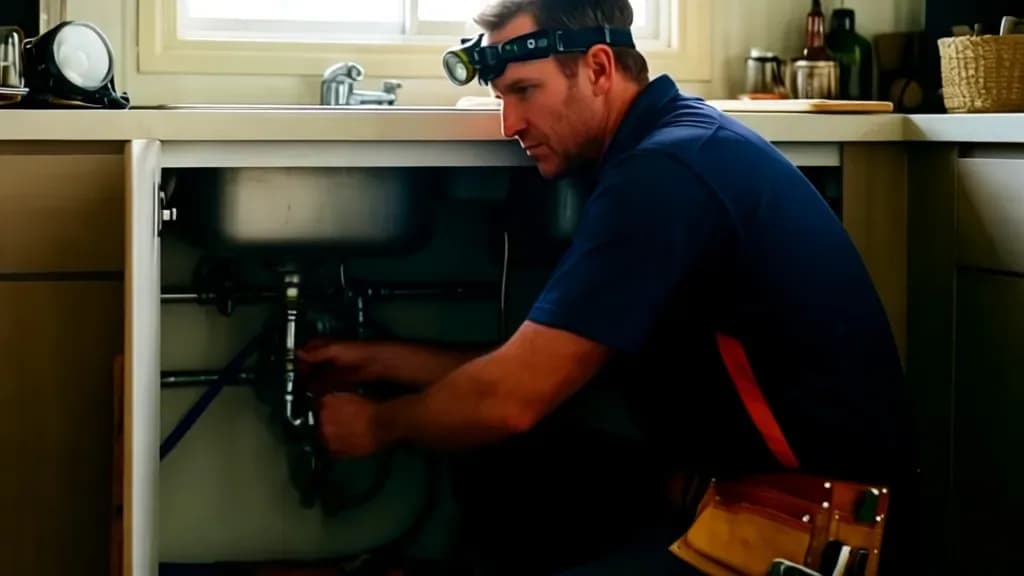
Plumbers install, alter, repair, and maintain water supply, sanitation, drainage, gas, and stormwater systems across residential, commercial, and industrial sites. The work is licensed at state level — every plumbing fixture is regulated, every gas connection is signed off, every backflow device is tested by someone holding a current licence. This is the reason Australia controls plumber migration so carefully: the role carries public health and safety risk that the government tracks down to the individual.
Demand is strongest in construction-heavy corridors. South-east Queensland's housing pipeline, Western Sydney's infrastructure rebuild, Melbourne's apartment market, and Perth's mining services sector all run short of qualified plumbers most months of the year. Jobs and Skills Australia lists Plumber (General) as a persistent national shortage, with trades at Skill Level 3 currently the hardest category in the country to fill. Employers in regional NSW, the Hunter, and northern Victoria report waiting four to six months to fill apprenticeship-trained roles.
ANZSCO Code 334116: What the Code Covers
ANZSCO 334116 covers tradespeople who install and maintain plumbing systems including water supply, drainage, sanitation, gas-fitting, stormwater, and roof plumbing. The unit group 3341 sits within sub-major group 33 (Construction Trades Workers). The official skill level is 3, meaning AQF Certificate III or IV plus a minimum of three years on-the-job training — typically a four-year Australian apprenticeship or its overseas equivalent.
Related specialist codes carry separate ANZSCO numbers and may suit applicants whose work is narrower:
- 334112 Airconditioning and Mechanical Services Plumber
- 334113 Drainer
- 334114 Gasfitter
- 334115 Roof Plumber
- 334117 Fire Protection Plumber — see the dedicated fire protection plumber pathway guide
If your everyday work is split across two specialties, Plumber (General) is usually the correct nomination. If 70%+ of your hours fall under one specialist code, nominate the specialist code — TRA reads your reference letters against the ANZSCO description, and a mismatch leads to rejection.
Skills Assessment: Trades Recognition Australia (OSAP)
TRA assesses ANZSCO 334116 through the Offshore Skills Assessment Program (OSAP), not the document-only Migration Skills Assessment (MSA) pathway used for some other trades. OSAP exists because plumbing competency cannot be confirmed from paperwork alone — TRA needs to see the candidate work.
Pathway:
- Stage 1: Documentary evidence — qualifications, employment records, licensing history
- Stage 2: Technical interview
- Stage 3: Practical skills assessment delivered in an approved overseas testing centre by a TRA-licensed Registered Training Organisation (RTO)
Fees: OSAP fees are broken into stages and depend on the RTO delivering the practical component. Budget AUD $3,000-$3,500 across the full assessment when offshore travel and RTO charges are included. The TRA portion alone (Stages 1 and 2 administration) is published in the OSAP Applicant Guidelines on the TRA website.
Processing time: TRA published guidance is approximately 15 weeks from decision-ready documentary evidence to outcome, plus additional weeks to schedule the practical at an offshore RTO. Priority processing for selected construction trades remains active into 2026.
Common rejection reasons:
- Employment references that describe handyman or maintenance work rather than the licensed plumbing tasks listed in the ANZSCO description
- Qualifications below AQF Certificate III equivalent — some overseas plumbing diplomas do not map cleanly to Australian Certificate III standards
- Inability to demonstrate the four-year minimum apprenticeship-equivalent training
Read the full skills assessment bodies list before lodging — TRA is one of the strictest assessing authorities in the system.
State Plumbing Licensing — A Separate Step
A positive TRA assessment is not a licence to work as a plumber in Australia. Each state and territory operates a separate licensing regime through bodies such as the Victorian Building Authority, NSW Fair Trading, the Queensland Building and Construction Commission, and similar regulators elsewhere. New arrivals typically work under supervision while finalising their state licence, which can require additional testing, a knowledge exam on Australian codes, and proof of insurance.
Plan for licensing as a parallel workstream to the visa process. Do not assume the TRA outcome alone clears you for unsupervised work.
Visa Pathways for Plumbers
Subclass 482 — Skills in Demand Visa (Primary Route)
Plumber (General) sits on the Core Skills Occupation List, which makes it eligible for the Core Skills stream of the 482 visa. This is the dominant pathway for offshore plumbers entering Australia.
- Visa fee: AUD $4,015 (primary applicant)
- Salary floor: Core Skills threshold AUD $79,423 per year — well below typical plumber market rates
- Duration: Up to 4 years
- Quirk: Employers must lodge a nomination application (AUD $330) plus pay the Skilling Australians Fund levy (AUD $1,200-$1,800 per year) on top of the visa fee. Many plumbing contractors and mechanical services firms are familiar with sponsorship; smaller residential plumbing businesses often are not. Target larger employers when job hunting.
Subclass 186 — Employer Nomination Scheme (Permanent)
After two years on a 482 in the same role with the same sponsor, plumbers can transition to permanent residency through the Temporary Residence Transition (TRT) stream of the 186 visa. The Direct Entry stream is also possible but requires a positive skills assessment plus three years of post-qualification experience.
- Visa fee: AUD $6,140 (primary applicant)
- Streams: Direct Entry or Temporary Residence Transition
- Reality: Most plumbers reach PR through the TRT stream after two years on a 482, not via Direct Entry
See the subclass 482 pathway page for the full mechanics of sponsorship.
What About 189, 190, 491?
Plumber (General) is not currently on the MLTSSL, which means the points-based subclass 189 is not available. State nomination under 190 and 491 is possible only where a state explicitly lists 334116 on its current skills list — and most do not include general plumbers in 2025-26 because the federal CSOL/482 route handles trade migration directly. Check each state's current published list before assuming nomination is on the table.
For broader context on which lists matter, see our CSOL hub page and the 2026 SOL guide.
Salary and Employment Outlook
Typical Plumber Earnings 2026
| Role | Typical Salary Range |
|---|---|
| Apprentice Plumber (Year 3-4) | AUD $55,000-$70,000 |
| Qualified Plumber (PAYG) | AUD $85,000-$105,000 |
| Senior/Leading Hand Plumber | AUD $100,000-$125,000 |
| Plumbing Supervisor / Foreman | AUD $115,000-$145,000 |
| Self-employed/Contractor (gross) | AUD $140,000-$220,000+ |
| Site Plumber (mining/FIFO, WA/QLD) | AUD $140,000-$180,000 |
SEEK's May 2026 data places the qualified plumber average at AUD $85,000-$105,000 base. Mining-services plumbers on fly-in fly-out rosters in Western Australia and Queensland consistently top this range due to remote-site allowances. Self-employed plumbers earn the highest gross figures, but margins absorb vehicle, materials, insurance, and tax obligations.
Highest-Paying Sectors
- Mining services — Pilbara, Bowen Basin, Goldfields; FIFO rosters with remote allowance
- Major construction — apartment towers and infrastructure in Sydney, Melbourne, Brisbane
- Hydraulic services contractors — commercial fit-out specialists in capital cities
- Government and utilities — Sydney Water, Melbourne Water, SA Water, and equivalents
- Mechanical services firms — combined plumbing and HVAC work, often higher rates than residential
Total packages typically include superannuation at 11.5%, tool allowances, vehicle access for contractors, and overtime loadings on award rates set by the Plumbing and Fire Sprinklers Award.
Tips for a Successful Application
1. Start the OSAP Practical Booking Early
OSAP practicals are scheduled by approved RTOs in fixed offshore locations. Capacity is limited and assessment windows fill months ahead. Lodge Stage 1 documentary evidence as soon as your records are complete — waiting until everything is "perfect" can add six months to the timeline.
2. Get Employment References That Mirror ANZSCO Wording
Reference letters from previous employers must describe duties using language consistent with the official ANZSCO 334116 task list — water supply installation, drainage, gasfitting, sanitation systems, roof plumbing. Generic "general plumbing work" descriptions weaken the file. Provide your employers with a draft based on the ANZSCO tasks and ask them to confirm what applies to your actual work.
3. Document Your Apprenticeship in Full
TRA needs evidence of structured training equivalent to a four-year Australian apprenticeship. Trade certificates alone are often not enough. Include apprenticeship indentures, training logbooks, internal employer training records, and any certificates of competency you hold.
4. Plan Licensing and Visa as Parallel Tracks
The TRA assessment confirms skill level; it does not licence you to work. Research your target state's licensing pathway (VBA in Victoria, NSW Fair Trading, QBCC in Queensland) at the same time you start the OSAP. Some states require additional theory exams on the Plumbing Code of Australia.
5. Target Sponsoring Employers Directly
The 482 visa requires an employer sponsor. Use SEEK, Indeed, and LinkedIn to filter for plumbing roles offered by larger contractors with prior sponsorship history. Hydraulic services consultancies, mechanical services contractors, and Tier 1/Tier 2 construction firms are far more likely to sponsor than small residential operators.
Step-by-Step Migration Roadmap
- Confirm ANZSCO 334116 fits your work — review specialist codes (334112-334117) and select the closest match
- Verify CSOL status — Plumber (General) is on the Core Skills Occupation List
- Compile qualification and employment evidence — Cert III/IV equivalent, apprenticeship indentures, four years' references
- Sit IELTS or PTE — most assessments and visas require evidence of functional or competent English
- Lodge TRA OSAP Stage 1 — documentary evidence and application via the TRA portal
- Complete the technical interview — Stage 2 of OSAP
- Sit the practical assessment — Stage 3, at an approved offshore RTO
- Secure an Australian employer willing to sponsor — target larger contractors with sponsorship history
- Employer lodges sponsorship and nomination — they pay the SAF levy
- Lodge subclass 482 visa application — Core Skills stream
- Begin state plumbing licensing in parallel — VBA, NSW Fair Trading, QBCC, etc.
- Transition to 186 TRT after 2 years — for permanent residency
Need the broader process detail? See the how to find your ANZSCO code guide and the most in-demand occupations list for 2026.
Frequently Asked Questions
Is Plumber (General) on the MLTSSL or only the CSOL?
ANZSCO 334116 currently sits on the Core Skills Occupation List but is not on the MLTSSL. This means the points-tested subclass 189 is not available. The dominant pathway is the employer-sponsored subclass 482 visa under the Core Skills stream, transitioning to permanent residency through the 186 visa after two years.
Why does TRA require a practical assessment instead of just documents?
TRA uses the Offshore Skills Assessment Program for plumbers because plumbing competency cannot be reliably confirmed from paperwork. The practical assessment, delivered by an approved Registered Training Organisation overseas, verifies that the applicant can actually perform the licensed tasks listed in the ANZSCO description. This is the same standard applied to most Australian licensed trades.
Do I need a state plumbing licence as well as a TRA assessment?
Yes. A positive TRA outcome confirms your skills for migration purposes only. To work as a plumber in Australia you must hold a current plumbing licence issued by the regulator in your state — the Victorian Building Authority, NSW Fair Trading, Queensland Building and Construction Commission, or equivalent. State licensing is a separate process, often involving additional theory exams on the Plumbing Code of Australia.
How long does it realistically take from start to PR for a plumber?
Plan for 9-15 months from OSAP lodgement to 482 grant, then a further two years of sponsored work before the 186 TRT stream is open. Total time from initial assessment to permanent residency is typically 3-4 years if everything proceeds without rework. Delays in scheduling the OSAP practical or in finding a sponsoring employer extend this.
Can I migrate as a plumber without speaking high-level English?
The minimum English requirement for the 482 visa is IELTS 5.0 across each band (or equivalent). This is functional English, not the higher proficiency tier required for points-tested visas. Most plumbers from English-speaking countries clear the threshold without preparation; applicants from non-English-speaking backgrounds typically prepare for 2-3 months.