Stonemason Visa Pathway to Australia: Complete 2026 Guide
Updated: 16 August 2026
Australia classifies Stonemason under ANZSCO 331112. Trades Recognition Australia (TRA) conducts the skills assessment, normally through the Job Ready Program. The occupation appears on both the MLTSSL and the Core Skills Occupation List, opening subclasses 189, 190, 491, 482 and 186. Typical 2026 SEEK salaries range AUD $75,000-$100,000 with senior masons reaching higher. National workforce is only 4,800 — a niche but steady trade.
Quick Facts: Stonemason Migration Pathway
| Detail | Information |
|---|---|
| ANZSCO Code | 331112 (Stonemason) |
| Skill Level | 3 (AQF Certificate III in Stonemasonry, or Cert IV with at least two years of on-the-job training) |
| Skills Assessment | TRA (Trades Recognition Australia) — Job Ready Program for offshore-trained applicants |
| Occupation List | MLTSSL and CSOL |
| Visa Options | 189, 190, 491, 482, 186 |
| Demand Level | High and structural — small workforce (4,800 nationally), median age 38, growing retirement turnover, plus heritage restoration backlog |
| Salary Range | AUD $75,000-$100,000 (SEEK, April 2026); senior masons up to AUD $115,000 |
| Typical 189 Score | 65-75 (low applicant volume per ANZSCO unit group makes invitation thresholds modest) |
| Key Challenge | Genuine experience in natural and pre-cut stone (not block or brick) is mandatory — references must distinguish the work clearly from bricklaying |
What Stonemasons Actually Do in Australia
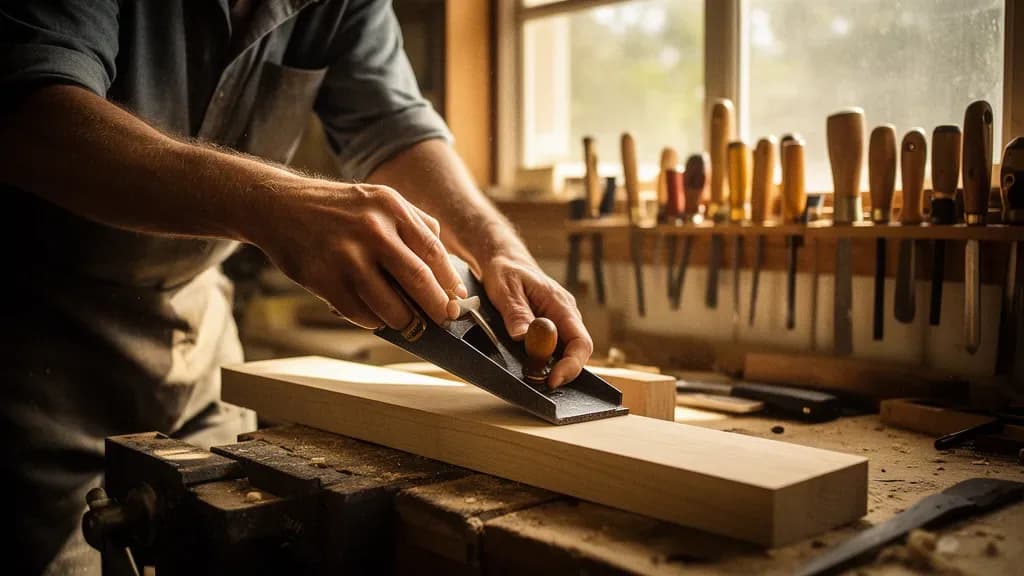
Stonemasons cut, shape and fix natural stone, marble, granite and pre-cut stone units for buildings, monuments and decorative features. Work splits into three broad streams. Heritage restoration covers nineteenth-century sandstone facades, churches, cathedrals, civic buildings and bridges — concentrated in Sydney's CBD and inner suburbs, Hobart, Melbourne and Adelaide. Commercial and residential cladding covers high-end housing, hotels, and luxury commercial fit-outs. Memorial and monumental masonry covers headstones, plaques and cemetery work, which remains a steady employer in every Australian capital.
The trade is geographically concentrated in New South Wales, Victoria and Queensland, with Sydney holding the largest single market because of its dense stock of sandstone heritage buildings. Major employers include heritage restoration specialists such as RJC Group, dedicated stone fabricators serving the high-end residential market, and councils with in-house masonry crews. The 2024 engineered stone ban — Australia's response to silicosis outbreaks among kitchen-bench fabricators — has reshaped the workforce significantly, redirecting demand toward natural stone work where exposure controls are more manageable.
The ANZSCO 331112 Code: What It Covers
ANZSCO 331112 sits inside Unit Group 3311 Bricklayers and Stonemasons alongside 331111 Bricklayer. The two codes are deliberately separated because the skill sets diverge significantly once you move past the basic mortar joint. Stonemasons set out work to designs, cut and shape stone by hand and machine, fix stone units in mortar or with mechanical fixings, repoint and restore weathered stonework, and carve decorative features.
If your day-to-day work is predominantly with brick or concrete block in mortar, you should map to 331111 Bricklayer. If it is predominantly natural stone, pre-cut stone, marble or granite, 331112 is the correct code. The assessing body, list status and visa eligibility are identical between the two codes, but TRA will reject a reference letter that describes bricklaying duties under a Stonemason nomination.
Skills Assessment Through Trades Recognition Australia
The Job Ready Program (Offshore Applicants)
TRA assesses offshore stonemasons through the four-stage Job Ready Program. The structure is identical to the bricklayer pathway, but the workplace assessment is observed against the stonemasonry competency standard rather than bricklaying.
Stage 1 — Provisional Skills Assessment (PSA): TRA reviews your overseas qualification and at least three years of post-qualification stonemasonry experience. A positive PSA unlocks a 485 or 407 visa to enter Australia.
Stage 2 — Job Ready Employment (JRE): 1,725 hours (approximately 12 months full-time) of paid stonemasonry work with a TRA-approved Australian employer, with evidence submitted every three months.
Stage 3 — Job Ready Workplace Assessment (JRWA): An independent TRA-approved assessor observes you cutting, shaping and fixing stone against the relevant Australian competency standard.
Stage 4 — Job Ready Final Assessment (JRFA): The complete file is finalised and TRA issues the skills assessment letter for visa lodgement.
Total program cost: Approximately AUD $3,250 across all four stages, paid in instalments.
Total program duration: 14-20 months from PSA through JRFA. The JRE work-hours stage drives the timeline.
Common rejection reasons: References that conflate stonework with general bricklaying or masonry; thin documentary evidence of natural-stone work (machine specifications, photos of completed work, payslips referencing stone projects help significantly); attempting to count engineered-stone fabrication as stonemasonry — TRA assesses that under different codes after the engineered stone ban.
The MSA Pathway for Australian-Trained Stonemasons
If you hold the Australian Certificate III in Stonemasonry (CPC32314 or current equivalent) and at least one year of Australian post-qualification experience, you can apply for a direct Migration Skills Assessment without the JRP. The fee is approximately AUD $1,250 and processing runs around 120 days.
Visa Pathways for Stonemasons
Subclass 482 — Skills in Demand Visa
For offshore stonemasons, 482 employer sponsorship is the fastest route into Australia. Heritage restoration specialists, monumental masonry firms and the larger stone-fabrication businesses are familiar with sponsoring overseas tradespeople.
- Visa fee: AUD $3,210 (primary applicant, Core Skills stream)
- Salary threshold: Core Skills AUD $76,515 (rising to AUD $79,499 from 1 July 2026)
- Processing time: Median 2-3 months for the Core Skills stream
- Quirk that matters: The 482 needs a standard business sponsor, which excludes many small stone shops — target larger heritage contractors and the major fabricators
Subclass 186 — Employer Nomination Scheme
The TRT stream becomes available after two years on a 482 with the same employer. Direct Entry is theoretically possible but rarely used for stonemasons because most candidates use the 482 first.
- Visa fee: AUD $6,140 (primary applicant)
- Processing time: Currently extending to 19 months for metro applicants under Ministerial Direction 105
- Quirk that matters: Regional employer sponsorships process meaningfully faster than metro lodgements under current priority queueing
Subclass 491 — Skilled Work Regional Visa
Stonemason regional demand is dispersed — sandstone restoration in regional NSW heritage towns, granite quarries in Victoria and Queensland, and country-town memorial masons all qualify.
- Visa fee: AUD $6,140 (primary applicant)
- Processing time: 6-12 months following invitation
- Quirk that matters: Regional residency and work obligations apply for the full five years before transition to 191 permanent residency
Subclass 190 — State Nominated Visa
State nomination adds 5 points and delivers immediate PR. Less powerful than the 491 for points, more powerful for lifestyle flexibility.
- Visa fee: AUD $6,140 (primary applicant)
- Processing time: 6-9 months
- Quirk that matters: Two-year live-and-work obligation in the nominating state — straightforward to meet given heritage masonry demand in NSW and VIC
Subclass 189 — Skilled Independent Visa
The 189 is available because Stonemason is on the MLTSSL. Applicant volume is low compared to ICT or accounting, so invitation thresholds clear at 65-75 points rather than the 90+ ICT applicants face.
- Visa fee: AUD $6,135 (primary applicant)
- Processing time: 6-12 months following invitation
- Quirk that matters: Stonemason applicants commonly secure 189 invitations at points levels that ICT applicants would consider hopeless
Points Test Strategy for Stonemasons
| Points Factor | Points | Notes |
|---|---|---|
| Age (25-32) | 30 | Maximum bracket |
| Age (33-39) | 25 | Strong score |
| English (Superior — IELTS 8/PTE 79) | 20 | Worth targeting; opens all states |
| English (Proficient — IELTS 7/PTE 65) | 10 | The realistic target for most trade applicants |
| Qualification (AQF Certificate III/IV) | 10 | Trade qualification points |
| Overseas Experience (5-7 years) | 10 | After any TRA-recommended deduction |
| Australian Experience (3+ years) | 10 | Standard for JRP graduates |
| State Nomination (190) | 5 | NSW historically the strongest nominator for stonemasons |
| Regional Nomination (491) | 15 | The biggest single boost available |
| Partner Skills | 5-10 | If partner holds skilled occupation |
Realistic Score Scenarios
Scenario 1: 30-year-old Italian stonemason, Diploma in Restoration, IELTS 7.0, 8 years experience Age 30 + English 10 + Qualification 10 + Experience 15 = 65 points With NSW 190 nomination (+5) = 70 points — strongly competitive in current invitation rounds
Scenario 2: 38-year-old Indian stonemason, JRP-completed, IELTS 6.0, 3 years Australian experience Age 15 + English 0 + Qualification 10 + Australian Experience 10 = 35 points With 491 regional (+15) and partner skills (+5) = 55 points — likely needs 482-to-186 employer route
State Nomination for Stonemasons
New South Wales
Sydney holds the largest concentration of nineteenth-century sandstone heritage buildings in Australia — the Town Hall, the QVB, Central Station, the Mint, dozens of churches and the entire harbour foreshore. NSW publishes its skills lists at the 4-digit ANZSCO unit group level, which means Unit Group 3311 includes both bricklayers and stonemasons. NSW received 2,100 places for 190 and 1,500 for 491 in 2025-26.
Victoria
Melbourne's bluestone heritage and the Goldfields-era buildings across Bendigo and Ballarat sustain a steady stonemasonry workforce. Victoria received 3,400 nomination places for 2025-26. The state's nomination program closed for 2025-26 new ROIs but reopens annually around July.
South Australia
Adelaide's stone heritage — particularly the city centre's distinctive sandstone churches and civic buildings — creates ongoing restoration demand. South Australia made all skilled occupations eligible for its 2025-26 program from 30 September 2025, with offshore eligibility flagged per occupation. The state has historically been more flexible on English thresholds than NSW or Victoria.
Tasmania
Hobart's heritage sandstone, Port Arthur restoration and the Salamanca precinct create disproportionate stonemason demand for the state's population. Tasmania received 1,200 places for 190 and 650 for 491 in 2025-26. The state's 190 program prioritises occupations on the federal lists, which includes Stonemason.
Salary and Employment Outlook
What Stonemasons Earn in 2026
| Role | Typical Salary Range |
|---|---|
| Apprentice / Trade Assistant | AUD $42,000-$63,000 |
| Qualified Stonemason (PAYG) | AUD $75,000-$95,000 |
| Heritage Restoration Specialist | AUD $90,000-$115,000 |
| Senior / Foreman Stonemason (8+ years) | AUD $95,000-$115,000 |
| Self-employed monumental mason | AUD $90,000-$140,000+ depending on workshop size |
Source: SEEK Career Advice salary data (April 2026), Indeed Australia ($78,327 annual average, April 2026), and PayScale 2026 hourly rates. Heritage and restoration specialists command the highest band.
Total package generally includes 11.5% superannuation. Bonuses are rare in this trade. Self-employed monumental masons running a small workshop with two employees commonly clear AUD $130,000+ pre-tax in metropolitan markets where memorial demand is steady.
Highest-Demand Sectors
- Heritage restoration contractors — RJC Group, City Stonemasons, Andreasens Green Wholesale Nurseries (heritage stone landscaping), Heritage Stoneworks
- Monumental masonry firms — every capital city supports several established workshops
- Major civic restoration projects — Sydney Town Hall, NSW Parliament, the Mint, ongoing state heritage works
- Luxury residential cladding — high-end Sydney, Melbourne and Gold Coast residential builders
Skills Australia Outlook
Jobs and Skills Australia records 4,800 stonemasons employed nationally with a median age of 38, female share of 1% and part-time share of 21%. Government data classifies the parent unit group (Bricklayers and Stonemasons) as in shortage with steady future demand. The combination of a small workforce, an ageing demographic and a growing heritage restoration backlog has kept the trade structurally undersupplied for over a decade. Recent industry recruitment reports describe time-to-fill for experienced stonemasons as significantly extended through 2026.
Tips for a Successful Application
1. Document your stonework specifically — not "masonry" generically
The single most common cause of TRA rejection for stonemason applications is reference letters that describe "masonry work" without specifying natural stone, pre-cut stone, marble or granite. Your referees should describe the actual material, the project type (heritage restoration, monumental, cladding) and the techniques used (hand cutting, machine cutting, fixing methods, pointing).
2. Photograph your completed work
TRA assessors weight photographic evidence heavily for stonemason applications because the visual difference between bricklaying and stonemasonry is unambiguous. A portfolio of 15-25 photos of your completed work, with dates and location captions, substantially strengthens the PSA submission.
3. Decide early between Stonemason and Bricklayer codes
If your career mixes brick and stone, you must choose one code at PSA. Splitting your work history across both codes will weaken both applications. Choose the code that represents the majority of your actual paid work in the last three years, and tilt your reference letters toward that code.
4. Target NSW or Tasmania for nomination
NSW has by far the largest concentration of heritage stone buildings and the largest absolute demand. Tasmania has disproportionate stonemason demand relative to its small population and is often more flexible on age and English. Both states have included Unit Group 3311 in their current nomination programs.
5. Consider the 491 regional pathway if your points are tight
The 15-point regional boost is often the difference between an invitation and a long EOI wait. Regional NSW heritage towns (Bathurst, Goulburn, Maitland), regional Victoria (Bendigo, Ballarat) and the Tasmanian regions all have stone-restoration demand.
Step-by-Step Migration Roadmap
- Confirm 331112 is the right code — review the ANZSCO code finder and compare against 331111 Bricklayer
- Gather qualification evidence and three years of post-qualification stonemasonry experience — payslips, contracts, photographic portfolio
- Submit the TRA Provisional Skills Assessment — through TRA online services
- Sit your English test — aim for Proficient or higher to unlock state nomination
- Apply for a 485 graduate visa or 407 training visa — to enter Australia and start the JRE stage
- Complete 1,725 hours of paid Australian stonemasonry work — with a TRA-approved employer
- Complete the Job Ready Workplace Assessment — observed competency assessment on-site
- Receive your Job Ready Final Assessment letter — the document you lodge with the visa
- Submit an Expression of Interest in SkillSelect — for 189, 190 or 491
- Apply for state nomination — if pursuing 190 or 491
- Alternatively, secure 482 employer sponsorship — to bypass the JRP timeline if you have a sponsoring offer
- Receive invitation and lodge your visa within 60 days — complete health and character checks
Frequently Asked Questions
Why are stonemasons separated from bricklayers in ANZSCO?
The two trades share a unit group (3311) but have distinct skill sets, qualifications and pay rates. Stonemasonry involves working with natural and pre-cut stone using techniques (hand carving, restoration pointing, complex fixing systems) that bricklaying does not require. The Certificate III in Stonemasonry and the Certificate III in Bricklaying are separate qualifications. TRA assesses each occupation against its own competency standard.
Can I apply for migration as a stonemason if my experience is mostly in engineered stone benchtops?
Generally no, and the situation has tightened sharply since the July 2024 engineered stone ban. Engineered stone fabrication is not assessed as stonemasonry under ANZSCO 331112 — it falls under different classifications and may not be visa-eligible at all under the current rules. If your work is predominantly natural or pre-cut natural stone, you qualify; if it is engineered/composite stone, you do not.
How does the engineered stone ban affect stonemason migration?
The ban has redirected demand toward natural stone work, which is positive for stonemason migrants. Established natural-stone businesses are hiring to absorb the demand previously served by engineered stone benchtop fabricators. However, anyone whose career has been built on engineered stone fabrication will struggle to satisfy TRA that they have natural-stone competency.
Which Australian city has the strongest stonemason demand?
Sydney by absolute volume because of the city's heritage sandstone stock. Hobart by intensity relative to population because of Port Arthur, the Salamanca precinct and the wider Tasmanian heritage portfolio. Adelaide and inner Melbourne both have meaningful demand sustained by civic and religious heritage portfolios.
Is stonemasonry a viable long-term career in Australia?
Yes. The small national workforce (4,800), the ageing demographic (median age 38), the ongoing heritage restoration backlog, and the growing high-end residential cladding market all support sustained demand through the next decade. Review the broader most in-demand occupations for context on how stonemasonry compares to other skilled trades. The skills assessment process and the 2026 SOL remain the gating steps for migration.