Hairdresser Visa Pathway to Australia: Complete 2026 Guide
Updated: 16 August 2026
Australia classifies Hairdresser under ANZSCO 391111. Trades Recognition Australia conducts the skills assessment, typically through the Job Ready Program for offshore applicants. The occupation is on the Core Skills and Short-Term Skilled Occupation Lists, unlocking subclasses 190, 491, 482, and 186. Typical 2026 salaries range AUD $70,000-$80,000. Tasmania and South Australia remain the most accessible state nomination routes.
Quick Facts: Hairdresser Migration Pathway
| Detail | Information |
|---|---|
| ANZSCO Code | 391111 (Hairdresser) |
| Skill Level | 3 (AQF Certificate III + 2 years on-the-job training, or Certificate IV) |
| Skills Assessment | TRA (Trades Recognition Australia) via Job Ready Program |
| Occupation List | CSOL + STSOL |
| Visa Options | 190, 491, 482, 186 |
| Demand Level | High — sustained shortage across metro and regional salons |
| Salary Range | AUD $70,000-$80,000 (SEEK, March 2026) |
| Typical 491 Score | 65-75 points with regional nomination |
| Key Challenge | Job Ready Program adds 12+ months and around AUD $3,300 in fees |
What a Hairdresser Does in Australia
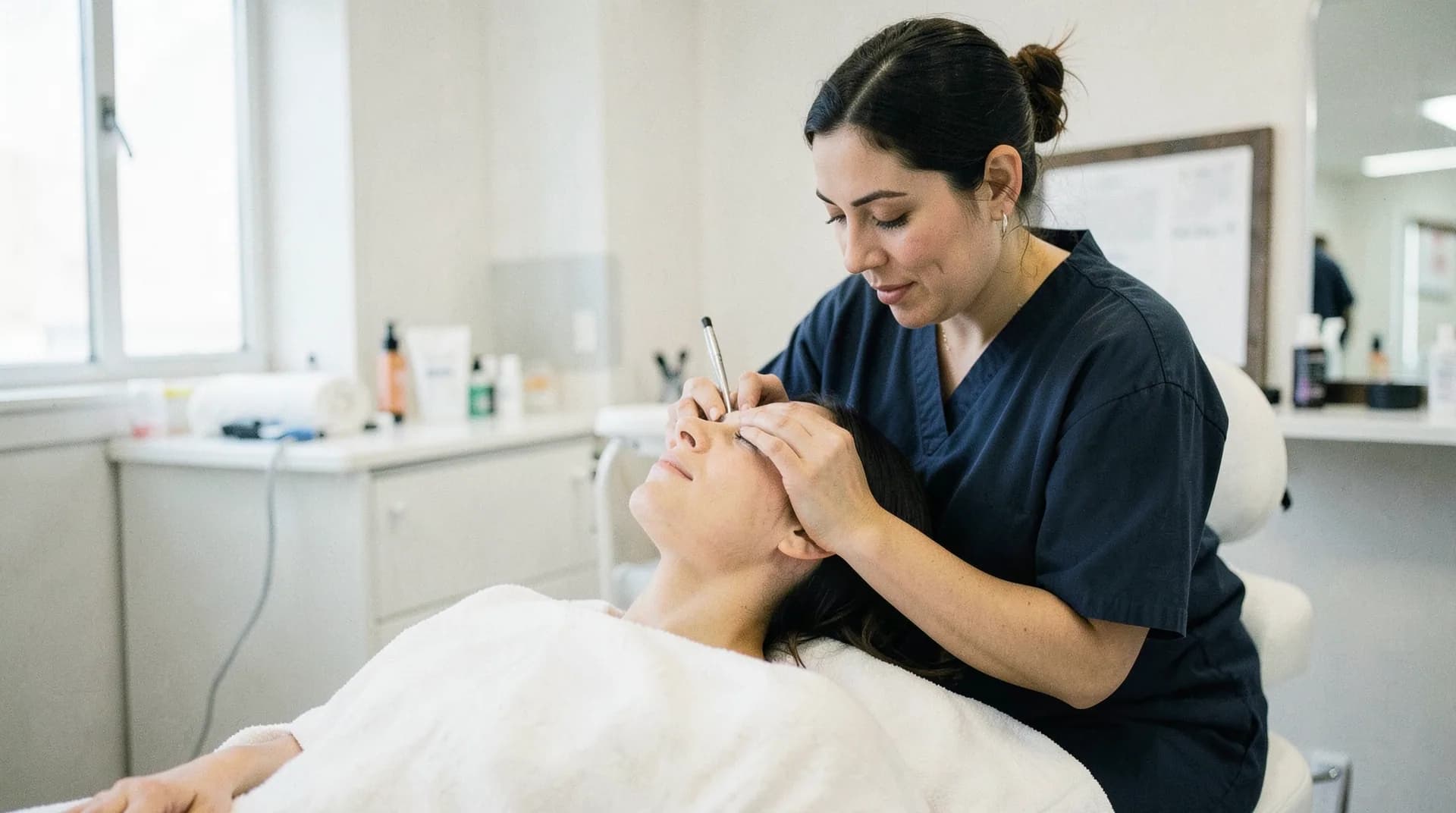
The role spans cutting, colouring, chemical treatments, scalp and hair care, and client consultation. Australian salons typically expect a hairdresser to bring full chemical competency on day one — colour correction, balayage, foiling, perming, and keratin treatments are core skills, not optional add-ons. The work is split between high-volume suburban salons, premium CBD studios, hotel and resort salons, and the growing freelance and mobile market.
Demand remains high. Jobs and Skills Australia continues to record a national shortage, driven by post-pandemic salon openings, retirement of senior stylists, and the difficulty of training new apprentices fast enough. Regional centres in Tasmania, South Australia, and Queensland advertise unfilled positions year-round, which is why state nomination programs in those jurisdictions favour this occupation.
ANZSCO Code Mapping
The exact code is 391111 Hairdresser, within Unit Group 3911 Hairdressers. The ABS task list covers cutting, styling, colouring, straightening, and permanent waving of hair; scalp and hair condition treatments; advising clients on hair care and product selection; and managing salon appointments.
There is no separate code for "Hairstylist" or "Colourist" — both map to 391111. Barbers operating in male-grooming-only premises sometimes consider 391112 Barber (where listed in jurisdictional taxonomies), but for migration purposes 391111 covers the full unisex hairdressing scope and is the only Hairdresser-family code on the skilled occupation lists.
Skills Assessment
TRA Job Ready Program (JRP) — Offshore Applicants
Offshore hairdressers typically enter through the Job Ready Program. JRP is a four-stage pathway designed to confirm both the qualification equivalence and the applicant's ability to work at AQF Certificate III standard in an Australian salon.
Requirements:
- A qualification at least comparable to AQF Certificate III in Hairdressing
- At least 360 hours of paid employment in Australia under a Job Ready Employer
- Workplace and final assessments completed in Australia
- Evidence of training, transcripts, and overseas employment
Stage fees (2026):
- Stage 1 — Provisional Skills Assessment: AUD $200
- Stage 2 — Job Ready Employment registration: AUD $450
- Stage 3 — Job Ready Workplace Assessment: AUD $2,540
- Stage 4 — Job Ready Final Assessment: AUD $65
- Total program cost: approximately AUD $3,255
Processing time: 12-18 months from Stage 1 to a Job Ready Final Assessment, longer if the workplace placement is interrupted.
TRA Migration Skills Assessment (MSA) — Trained-in-Australia Applicants
Applicants who completed their hairdressing qualification through an Australian Registered Training Organisation can apply for the MSA directly without JRP. Fees start from AUD $1,000 for the documentary stage. Processing 10-14 weeks.
Common rejection reasons: insufficient supervised practical hours, training delivered in a country where unit-of-competency standards differ from the AQF, references that describe receptionist or assistant duties rather than chemical and cutting work. For a wider view, see the skills assessment bodies complete list.
Visa Pathways
Subclass 491 — Skilled Work Regional Visa
The most accessible route for Hairdressers because regional state nomination opens this occupation in multiple states. Adds 15 points to the EOI.
- Visa fee: AUD $6,140 (primary applicant)
- Duration: 5 years provisional, with pathway to 191 permanent residency after 3 years of qualifying regional residence and income
- Processing time: 6-12 months after invitation
- Strongest states: Tasmania, South Australia, regional Queensland
Subclass 190 — Skilled Nominated Visa
Permanent residency through state nomination. Adds 5 points.
- Visa fee: AUD $6,140
- Processing time: 5-9 months after invitation
- Best states: Tasmania (lowest threshold), South Australia for offshore offshore-stream candidates
Subclass 482 — Skills in Demand Visa
Employer-sponsored temporary visa. Hairdresser is on the CSOL, eligible for the Core Skills stream.
- Visa fee: AUD $4,015
- Salary threshold: AUD $79,423 (Core Skills Income Threshold)
- Reality check: Average hairdresser salaries sit at the threshold or slightly below it, so sponsoring employers must offer salon-manager level pay or top up to meet the CSIT. This narrows the field to senior stylists.
- Processing time: 3-6 months
Subclass 186 — Employer Nomination Scheme
PR through employer sponsorship.
- Visa fee: AUD $6,140
- Streams: Direct Entry or TRT (after 2 years on a 482)
- Processing time: 12-19 months at the 90th percentile
Points Test Strategy
Hairdresser candidates typically pursue 491 because the regional nomination boost is decisive at the 65-75 points band where most applicants land.
| Points Factor | Points | Notes |
|---|---|---|
| Age (25-32) | 30 | Maximum bracket |
| Age (33-39) | 25 | Common for experienced stylists |
| English (Competent — IELTS 6) | 0 | Minimum for visa |
| English (Proficient — IELTS 7) | 10 | Realistic target |
| English (Superior — IELTS 8) | 20 | Adds decisive points |
| Qualification (Diploma / Trade Cert) | 10 | AQF Certificate III qualifies |
| Overseas Experience (5-7 yrs) | 10 | After TRA confirms equivalence |
| State Nomination (190) | 5 | |
| Regional Nomination (491) | 15 | The decisive boost |
| Partner Skills | 5-10 | If partner holds a skilled occupation |
| Job Ready Program completion | — | Does not award points but qualifies for skills assessment |
Realistic Score Scenarios
Scenario 1: Regional 491 candidate (Tasmania)
Age 30 + Competent English 0 + AQF III 10 + 5 years experience 10 + Regional nomination 15 = 65 points. Tasmania has invited 491 candidates at 40 base points in recent rounds, making this a viable invitation profile.
Scenario 2: 190 candidate (South Australia)
Age 32 + Proficient English 10 + AQF III 10 + 5 years experience 10 + State nomination 5 = 60 points. Marginal — applicants typically need 65+ on the 190 in 2026. Switching to 491 lifts the total to 70.
State Nomination
Tasmania
Tasmania has consistently been the most accessible state for hairdressers. The Tasmanian Onshore Skilled Occupation List includes 391111, and onshore applicants employed for 3 months in the state typically meet the streamlined nomination criteria. The state invited 491 candidates at base scores as low as 40 in recent program rounds, the lowest threshold of any jurisdiction.
South Australia
South Australia operates a substantial 2025-26 program with 2,250 places (1,350 for 190, 900 for 491). Hairdresser appears on both the onshore (464 occupations) and offshore (427 occupations) eligible lists. South Australia is one of the only jurisdictions that nominates the occupation for offshore applicants without prior Australian work experience.
Queensland (regional)
Queensland's Skilled Migration Queensland program prioritises regional centres outside Brisbane. Hairdresser is eligible in regional Queensland streams for applicants with a job offer or recent regional residence. Cairns, Townsville, and the Sunshine Coast carry advertised demand.
Western Australia
Western Australia operates a Designated Area Migration Agreement (DAMA) covering Goldfields, South West, and Pilbara regions. Hairdresser appears under several DAMAs as a concessional occupation, with English and salary concessions available for regional employers.
Salary and Employment Outlook
| Role | Typical Salary Range |
|---|---|
| Junior Stylist (1-2 yrs post-cert) | AUD $55,000-$65,000 |
| Senior Stylist (3-5 yrs) | AUD $70,000-$80,000 |
| Colour Specialist | AUD $75,000-$95,000 |
| Salon Manager | AUD $85,000-$110,000 |
| Premium / Celebrity Stylist | AUD $100,000-$140,000+ |
| Mobile / Freelance (commission) | AUD $65,000-$120,000 (variable) |
Source: SEEK Career Advice, March 2026; cross-checked against Indeed and PayScale.
Total packages on permanent roles add superannuation at 11.5%. Tips are not customary in Australian salons, but commission structures on retail product sales and service upselling are common in premium and chain salons. The highest-paying sectors are CBD premium studios (Sydney's Paddington and Surry Hills, Melbourne's Collins Street), wedding and event specialists, and resort salons in Cairns and the Whitsundays.
Tips for a Successful Application
1. Plan for the Job Ready Program Timeline
If you trained outside Australia, the JRP adds 12-18 months to your migration timeline before you can lodge an EOI. Build this into your plan. Many applicants use the Stage 2 Job Ready Employment period to settle the family, sit the English test, and stabilise their salon placement.
2. Lock in English Before Stage 3
The 491 and 190 reward Proficient English with 10 points and Superior with 20. The Stage 3 Workplace Assessment is conducted in English. Reaching IELTS 7 before Stage 3 doubles as preparation for the EOI and reduces the risk of communication breakdowns during the workplace assessment.
3. Target Tasmania and South Australia First
Tasmania consistently nominates Hairdressers at the lowest entry threshold. South Australia accepts offshore applicants. NSW and Victoria rarely nominate this code in 2026. Concentrate your job search and Job Ready Employer search in those two jurisdictions.
4. Build a Chemical Portfolio
Australian salons interview on chemical skill. A portfolio of before-and-after colour corrections, balayage, foiling, and perming work — with consent from clients to use the images — is more persuasive in interviews than years of certificates. Bring a digital portfolio on a tablet to every interview.
5. Hold All Trade Documents Sealed
TRA wants original training transcripts in sealed envelopes from the issuing institution. Many applicants are surprised that scanned copies fail the document standard. Order sealed copies before you leave your home country.
Step-by-Step Migration Roadmap
- Confirm ANZSCO 391111 fits your duties — review the how to find ANZSCO code guide
- Order sealed training transcripts from your issuing institution
- Sit your English test — aim for Proficient (IELTS 7) for points
- Lodge Stage 1 Provisional Skills Assessment with TRA
- Apply to a Job Ready Employer in Tasmania or SA if offshore
- Complete Stage 2 Job Ready Employment — 360+ hours
- Complete Stage 3 Workplace Assessment and Stage 4 Final Assessment
- Submit an EOI in SkillSelect — for 491 or 190
- Apply for state nomination — Tasmania or South Australia first
- Receive invitation and lodge visa — within 60 days
- Complete health and character checks
- Receive visa grant and relocate (or remain, if onshore)
For the broader visa context, see the most in-demand occupations in Australia 2026.
Frequently Asked Questions
Why does Hairdresser require the Job Ready Program when other trades use MSA?
TRA classifies Hairdressing as a trade where workplace practice varies enough between countries that a documentary-only assessment cannot confirm Australian-standard competency. The JRP adds an Australian salon placement and a practical workplace assessment to verify that overseas-trained applicants meet the AQF Certificate III performance criteria.
Can I skip the Job Ready Program if I trained in the UK or Ireland?
No. The JRP applies regardless of training country for offshore applicants. The only exemption is for applicants who hold an Australian AQF Certificate III in Hairdressing from a Registered Training Organisation, who use the Migration Skills Assessment instead.
Is employer sponsorship realistic at a hairdresser's average salary?
It is realistic for senior stylists and salon managers whose pay clears the Core Skills Income Threshold of AUD $79,423. For junior or mid-level stylists earning at the SEEK median, employers must top up to meet the threshold, which limits sponsorship to premium salons or chains willing to absorb the cost.
How long does the whole pathway take from offshore?
Plan for 18-30 months from Stage 1 TRA registration to visa grant on the 491. Job Ready Program 12-18 months, plus 3-6 months for state nomination and visa processing. Onshore applicants who already hold an Australian qualification can compress this to 6-10 months.
Which states actively nominate Hairdressers in 2026?
Tasmania and South Australia run the most active programs. Queensland regional, NSW regional (occasionally), and several Western Australian DAMA regions also issue nominations. NSW and Victoria metropolitan lists do not currently nominate this occupation.