Beauty Therapist Visa Pathway to Australia: Complete 2026 Guide
Updated: 16 August 2026
Australia classifies Beauty Therapist under ANZSCO 451111. VETASSESS conducts the skills assessment as a Group D occupation. The role is on the Core Skills Occupation List, which unlocks employer-sponsored subclasses 482 and 186. Typical 2026 salaries range AUD $55,000-$85,000. VETASSESS accepts a Certificate IV or higher, which is unusually accessible for a skilled visa.
Quick Facts: Beauty Therapist Migration Pathway
| Detail | Information |
|---|---|
| ANZSCO Code | 451111 (Beauty Therapist) |
| Skill Level | 3 (AQF Certificate III with two years on-the-job training, or Certificate IV, or three years relevant experience) |
| Skills Assessment | VETASSESS (Group D) |
| Occupation List | CSOL (Core Skills Occupation List) |
| Visa Options | 482 (Skills in Demand), 186 (Employer Nomination Scheme) |
| Demand Level | Moderate — steady demand in salons, day spas, and the cosmetic sector |
| Salary Range | AUD $55,000-$85,000 (SEEK, 2026) |
| Typical 189 Score | Not applicable — no points-tested pathway (employer sponsorship only) |
| Key Challenge | Meeting the 482 salary threshold, as many salon roles pay below it |
What a Beauty Therapist Does in Australia
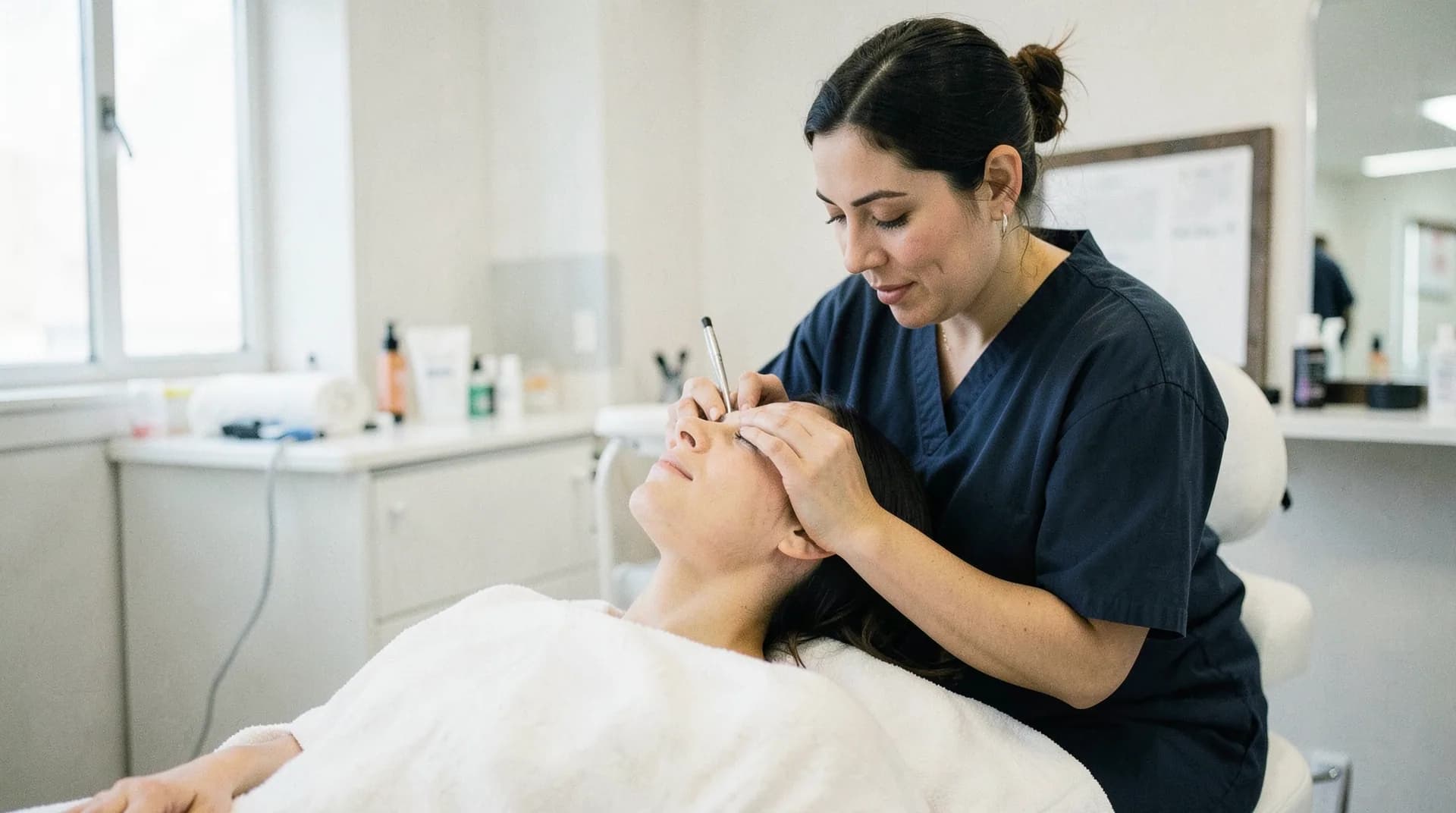
A Beauty Therapist provides skin analyses, facial and skin-care treatments, and body treatments such as massage, along with services like waxing, lash and brow work, and makeup application. The work happens in salons, day spas, resort and hotel spas, and increasingly in cosmetic and dermal clinics that sit alongside medical practices. The clinic end of the market has grown fastest, as demand for skin treatments, laser, and advanced facials has pushed therapists toward more technical, higher-paid roles.
Demand is steady rather than acute. Australia's beauty and personal care sector is large and resilient, concentrated in metropolitan retail precincts and tourist destinations. The work follows population and disposable income, so Sydney, Melbourne, Brisbane, the Gold Coast, and Perth carry the most opportunity, with resort regions adding seasonal spa demand. The occupation earned its place on the Core Skills Occupation List because salons and clinics report difficulty filling qualified therapist roles, especially those needing advanced or dermal skills.
Pay spans a wide band. Junior salon therapists sit at the lower end, while dermal therapists, spa managers, and clinic-based specialists command considerably more. For a 482 visa, the sponsoring employer must pay at least the Core Skills Income Threshold of AUD $76,515 or the market rate, whichever is higher. Entry-level salon pay often falls short of that, so the threshold tends to steer migrants toward clinic and senior roles.
ANZSCO Code 451111 Explained
ANZSCO 451111 covers therapists who provide skin and body treatments to enhance a client's appearance. The official tasks include analysing skin condition, performing facials and skin treatments, applying makeup, providing waxing and other hair-removal services, and advising clients on skin care and products. VETASSESS recognises a set of related titles under the same code, including Electrologist (hair remover), Manicurist, and Nail Technician, so applicants working primarily in those specialisations can still assess under 451111 where the duties align.
If your work is split between beauty therapy and hairdressing, choose the code that matches most of your duties. A role centred on cutting and colouring hair maps to Hairdresser, while skin, facial, and body treatments map to Beauty Therapist. The ANZSCO code finder carries the full definitions, and getting the match right is what makes the VETASSESS assessment succeed.
Skills Assessment with VETASSESS
VETASSESS assesses Beauty Therapist as a Group D occupation, which sets a lower qualification bar than the professional groups. The assessment checks both your qualification and your employment history against Australian standards.
VETASSESS (Vocational Education and Training Assessment Services)
- Canonical site: vetassess.com.au
- Qualification requirement: a qualification assessed as comparable to an AQF Certificate III or higher in a field highly relevant to beauty therapy. Recognised fields include Beauty Therapy, Salon Management, and Nail Technology.
- Experience requirement: the duration depends on qualification level and field relevance. Pathways generally require between one and four years of post-qualification employment within the last five years, working at least 20 hours a week in a highly relevant role.
- Assessment cost: AUD $1,096 for a full skills assessment (effective 22 October 2025). Priority processing adds AUD $825.
- Processing time: standard processing averages around 7 weeks; priority processing returns an outcome in about 10 business days.
- Common rejection reasons: qualifications in an unrelated field; employment that cannot be verified with payslips and references; duties that describe reception or retail work rather than hands-on treatment.
Document your treatment work precisely. VETASSESS wants evidence that you personally perform skin analyses and treatments, not that you simply work in a salon environment.
Visa Pathways for Beauty Therapists
Beauty Therapist is on the Core Skills Occupation List but not on the points-tested lists, so subclasses 189, 190, and 491 are unavailable. Both routes are employer-sponsored.
Subclass 482 — Skills in Demand Visa
The main pathway. An approved salon, spa, or clinic sponsors you into a nominated role.
- Visa fee: from AUD $3,210 (primary applicant, Core Skills stream).
- Salary constraint: the role must pay at least the Core Skills Income Threshold of AUD $76,515 or the market rate, whichever is higher.
- Experience: at least one year of relevant full-time equivalent work in the last five years.
- Quirk: because the salary threshold is fixed, clinic-based and dermal therapist roles are easier to sponsor than junior salon positions. Higher-skill treatments command higher pay, which is what gets you over the threshold.
Subclass 186 — Employer Nomination Scheme
The permanent residency route, usually reached after time on a 482.
- Visa fee: from AUD $6,140 (primary applicant).
- Streams: Temporary Residence Transition (after qualifying time with the sponsoring employer) or Direct Entry.
- Quirk: the Direct Entry stream needs three years of relevant experience, so most therapists transition through a 482 first.
State and Regional Nomination
Beauty Therapist is not on the points-tested lists, so the standard subclass 190 and 491 state nomination programs do not apply. Where regions help is through Designated Area Migration Agreements. Several regional and tourism-focused DAMAs include beauty and personal care roles, sometimes with salary or experience concessions reflecting local shortages in resort and regional towns. If your sponsoring employer is in a DAMA region, check the current occupation list and any concession with the designated area representative before relying on it.
Salary and Employment Outlook
| Role | Typical Salary Range |
|---|---|
| Junior Beauty Therapist | AUD $52,000-$62,000 |
| Beauty Therapist | AUD $58,000-$75,000 |
| Dermal / Advanced Therapist | AUD $75,000-$95,000 |
| Spa or Salon Manager | AUD $80,000-$110,000 |
Source: SEEK, 2026. Beauty therapist salaries vary widely, from around AUD $50,000 at entry to well over AUD $100,000 for clinic-based dermal specialists and managers. Superannuation of 11.5 per cent applies on top of base pay, and many salon roles add commission or product-sales incentives. Sydney, Melbourne, and the Gold Coast pay at the higher end, and cosmetic clinics generally pay more than traditional salons.
The outlook is stable. The cosmetic and dermal segment is the growth engine, so therapists who hold advanced qualifications in laser, skin, or dermal treatments have both the strongest earning potential and the clearest path over the 482 salary threshold.
Tips for a Successful Application
-
Match your qualification to a recognised field. VETASSESS accepts qualifications in Beauty Therapy, Salon Management, and Nail Technology. If your training is in an unrelated field, the assessment will likely fail regardless of experience.
-
Document hands-on treatment work. Reference letters and payslips must show you personally perform skin analyses, facials, and body treatments. Descriptions that read like reception or retail duties weaken the assessment.
-
Target clinic and dermal roles for the salary threshold. The 482 requires AUD $76,515 or market rate, whichever is higher. Advanced and dermal therapist positions pay more and are far easier to sponsor than junior salon roles.
-
Consider priority processing if timing matters. VETASSESS standard processing runs around 7 weeks. The AUD $825 priority option returns an outcome in about 10 business days if a sponsorship offer is on the table.
-
Plan the 482 to 186 sequence. Direct Entry to the 186 needs three years of experience. Most therapists build that on a 482, then transition to permanent residency.
Step-by-Step Migration Roadmap
- Confirm your role maps to ANZSCO 451111 rather than to a related code like Hairdresser.
- Check the occupation remains on the Core Skills Occupation List.
- Confirm your qualification is in a VETASSESS-recognised field.
- Gather payslips and reference letters describing hands-on treatment duties.
- Lodge the VETASSESS skills assessment (AUD $1,096), with priority processing if needed.
- Sit an English test that meets the 482 requirement.
- Find a sponsoring salon, spa, or clinic that can pay at or above the threshold.
- Have the employer lodge the nomination for the role.
- Lodge the subclass 482 visa application.
- Work in the sponsored role and build toward the three-year experience mark.
- Apply for subclass 186 through the Temporary Residence Transition or Direct Entry stream.
- Complete health and character checks and receive the grant.
For the full assessing-authority list, see the skills assessment bodies list, and for how sponsorship sits alongside the points system, see the SkillSelect EOI overview.
Frequently Asked Questions
Can a nail technician or manicurist assess under Beauty Therapist?
Yes, in many cases. VETASSESS recognises Electrologist (hair remover), Manicurist, and Nail Technician as suitable titles under ANZSCO 451111, provided the duties align with the beauty therapy description. Your qualification still needs to be in a recognised field and your employment needs to match the role, so document the specialisation clearly.
Can I get permanent residency as a beauty therapist?
Yes, through subclass 186. Beauty Therapist is not on the points-tested lists, so subclasses 189 and 190 are unavailable, but the Employer Nomination Scheme leads to permanent residency. Most therapists work on a 482 first and transition once they meet the experience requirement.
Why do clinic roles make the visa easier than salon roles?
The 482 salary threshold is fixed at AUD $76,515 or the market rate, whichever is higher. Junior salon positions often pay below that, while dermal and clinic-based roles pay more because they require advanced skills. Higher pay clears the threshold, so cosmetic clinics are the most reliable sponsors.
How long does the VETASSESS assessment take?
Standard processing averages around 7 weeks. If you have a sponsorship offer and need the assessment faster, VETASSESS offers priority processing for an additional AUD $825, which returns an outcome in about 10 business days.
Will my overseas beauty therapy qualification be recognised?
VETASSESS assesses whether your qualification is comparable to an Australian Certificate III or higher in a relevant field. Many overseas beauty diplomas meet this, but the field of study and the verifiable hours of hands-on training matter. If your qualification is borderline, the strength of your documented work experience can make the difference.