Visa Processing Time Reforms: Legally Binding Targets in 2026
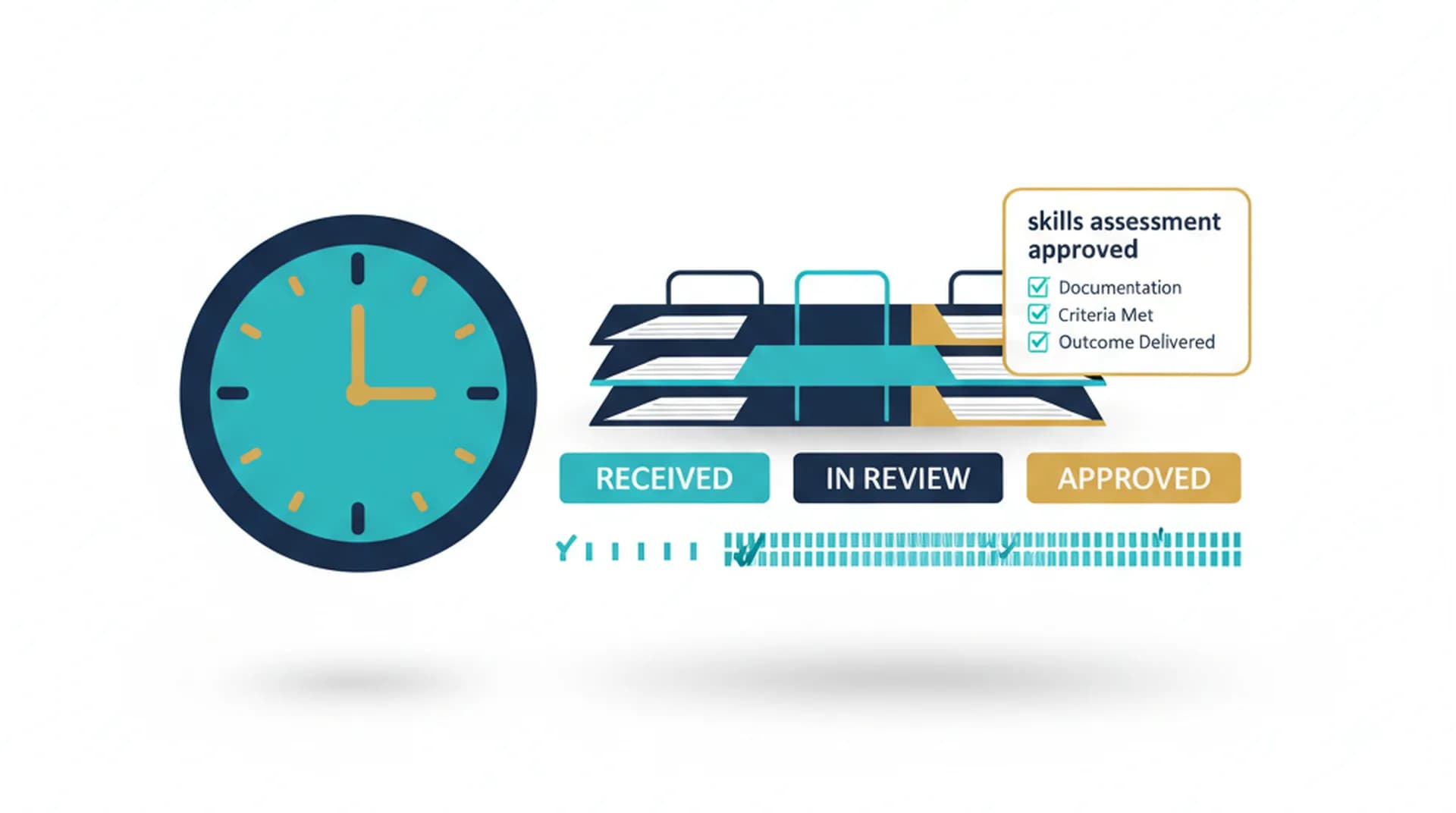
In early 2026, the Australian government introduced legally binding processing time targets for certain visa subclasses, marking a fundamental shift from aspirational standards to enforceable commitments. The first tranche covers visitor visas, student visas, and temporary work visas. This means the Department of Home Affairs is now legally required to process these applications within specified timeframes, and applicants whose applications exceed these targets may have access to legal remedies.
What Changed
Previously, the Department of Home Affairs published processing times as informational benchmarks. These were reported as percentile data (e.g., "75% of applications processed in X days"), and while they provided useful guidance, they carried no legal weight. If your application took twice as long as the published timeframe, you had no recourse beyond complaining.
The 2026 reforms changed this by establishing legislated processing periods for specific visa subclasses. The Department must now finalise applications within these periods or face potential legal consequences, including mandamus orders from the courts requiring them to make a decision.
This reform was driven by years of frustration from applicants, migration agents, and the business community about unpredictable and often excessive processing times, particularly during the post-pandemic backlog period when some applications sat untouched for years.
Which Visas Are Covered
The first tranche of legally binding targets covers:
Visitor Visas (Subclass 600, 601, 651)
- ETA (601): Target of 48 hours for straightforward applications
- eVisitor (651): Target of 5 business days
- Visitor (600) tourist stream: Target of 20 business days
- Visitor (600) business stream: Target of 20 business days
Student Visas (Subclass 500)
- Standard applications: Target of 30 business days from receipt of a complete application
- Complex applications (those requiring additional assessment): Extended target with notification to the applicant
Temporary Work Visas
- Skills in Demand (482): Target of 30 business days for the nomination and a further 30 business days for the visa application
- Temporary Activity (408): Target of 20 business days
Not Yet Covered
The following visa categories are flagged for future inclusion but were not part of the first tranche:
- Skilled migration visas (189, 190, 491)
- Partner and family visas (820, 309, 143)
- Temporary Graduate visas (485)
- Humanitarian and protection visas (866)
These categories have more complex assessment requirements, and the government indicated it would introduce targets for them in subsequent tranches after the initial implementation was evaluated.
What "Legally Binding" Actually Means
The term "legally binding" has generated significant discussion. Here's what it means in practice:
For the Department: The processing time targets create a legislated obligation. If the Department consistently fails to meet targets, it faces parliamentary scrutiny, reporting requirements, and potential judicial review.
For applicants: If your application exceeds the target processing time, you may be able to:
- Lodge a formal complaint through the Department's complaints mechanism
- Escalate to the Commonwealth Ombudsman
- In some circumstances, seek a mandamus order from the Federal Court compelling the Department to make a decision
What it doesn't mean: The targets don't guarantee approval. An application processed within the target period can still be refused. The obligation is to make a decision (grant or refuse), not to make a particular decision.
Exclusions and pauses: The processing clock may be paused in certain circumstances:
- While the Department is waiting for a response to a request for additional information
- During health or character check delays caused by third parties
- Where national security assessments are being conducted by external agencies
- Where the applicant has requested a delay
This means incomplete applications don't benefit from the targets. If you receive a request for information and take 3 months to respond, those 3 months don't count toward the Department's processing obligation.
How the Department Is Meeting the Targets
The government committed significant resources to support the processing time reforms:
Technology investment:
- Enhanced automation of straightforward visa assessments, particularly for low-risk tourist and student applications
- Improved digital systems for document verification and identity checking
- AI-assisted triage to identify applications that can be fast-tracked versus those requiring manual assessment
Staffing:
- Recruitment of additional visa processing officers
- Reallocation of resources from lower-priority functions
- Expanded use of offshore processing centres in partner countries
Process streamlining:
- Reduced the number of assessment touchpoints for straightforward applications
- Introduced concurrent processing (health, character, and eligibility checks running simultaneously rather than sequentially)
- Better integration between nomination and visa processing for employer-sponsored visas
What This Means for Applicants
Positive Impacts
Greater certainty: For the first time, you can have reasonable confidence about when your visa will be decided. This helps with planning travel, starting employment, and managing uncertainty.
Reduced waiting stress: The knowledge that the Department has a legal obligation to process your application within a timeframe reduces the anxiety of indefinite waiting.
Better accountability: If your application is genuinely taking too long, you now have a formal mechanism to escalate, rather than simply waiting and hoping.
Practical Considerations
Complete applications matter more than ever. The processing clock typically starts when the Department receives a complete application. Submitting an incomplete application and supplementing it later could mean your clock doesn't start until all requested information is received.
Health and character checks should be done proactively. Since delays caused by third-party checks (like police clearances from foreign governments) may pause the clock, getting these done before or immediately after lodging gives the Department less reason to pause.
The targets apply to the decision, not the grant. Processing time targets measure the time to a decision. If your visa is refused, the target was still met. Focus on the quality of your application, not just the speed of processing.
Impact on Migration Agents and Employers
For migration agents: The reforms have changed how agents manage client expectations. Agents can now provide more concrete timelines, but they also face pressure to lodge complete, well-prepared applications that don't trigger delays.
For employers: Employer-sponsored visa processing has become more predictable, which helps with workforce planning. The 30-day targets for 482 nominations and visa applications mean employers can plan for new workers to arrive within a more defined window.
For education providers: Student visa processing predictability helps providers with enrolment planning and orientation scheduling. The 30-day target for complete applications means fewer students arriving after semester has already started.
Comparison: Before and After
| Visa | Before Reform (typical) | After Reform (target) |
|---|---|---|
| ETA (601) | Minutes-24 hours | 48 hours |
| eVisitor (651) | 1-5 days | 5 business days |
| Visitor (600) | 1-8 weeks | 20 business days |
| Student (500) | 4-12 weeks | 30 business days |
| SID/482 nomination | 1-3 months | 30 business days |
| SID/482 visa | 1-4 months | 30 business days |
What's Next
The government has indicated that subsequent tranches of binding targets will cover:
- Tranche 2: Skilled migration visas (189, 190, 491) and temporary graduate visas (485)
- Tranche 3: Partner and family visas
- Future consideration: Humanitarian and protection visas (which have constitutional and international law complexities)
The timeline for these future tranches hasn't been confirmed, but the government has committed to expanding the system progressively as the Department demonstrates it can meet the initial targets.
FAQ
What if my visa application was lodged before the reforms took effect? The binding targets apply to applications lodged after the implementation date. Applications already in the pipeline are processed under the previous (non-binding) standards, though the Department's improved resourcing benefits all applications.
Can I sue the government if my visa takes too long? You can seek a mandamus order from the Federal Court compelling the Department to make a decision. This is a legal process that requires legal representation. It's worth noting that mandamus was already available before the reforms, but the new binding targets strengthen the applicant's case.
Do the targets apply if I apply through a migration agent? Yes. The processing targets apply regardless of whether you apply directly or through an agent. The application is assessed the same way.
What counts as a "complete" application for the clock to start? A complete application includes the application form, all mandatory supporting documents, required health and character information (or at least proof that these are in progress), and full payment of the visa application charge.