Mining Engineer Visa Pathway to Australia: Complete 2026 Guide
If there's one engineering discipline that's uniquely tied to Australia, it's mining engineering. Australia is one of the world's largest miners of iron ore, coal, lithium, gold, copper, and rare earth minerals — and the industry is the backbone of the national economy. Mining engineers are consistently in demand, salaries are among the highest of any engineering discipline, and the visa pathway is about as strong as it gets. Here's everything you need to know about migrating to Australia as a mining engineer.
Quick Facts: Mining Engineer Migration Pathway
| Detail | Information |
|---|---|
| ANZSCO Code | 233611 (Mining Engineer) |
| Skill Level | 1 (Bachelor degree or higher) |
| Skills Assessment | Engineers Australia (EA) |
| Occupation List | MLTSSL — full visa access |
| Visa Options | 189, 190, 491, 482, 186, 494 |
| Demand Level | High — concentrated in WA, QLD, NT |
| CDR Required | Yes (for non-Washington Accord degrees) |
| Typical Salary | AUD $130,000-$250,000+ (FIFO premiums) |
Why Mining Engineers Thrive in Australia
Mining Is Australia's Economic Engine
Mining accounts for approximately 14% of Australia's GDP and over 60% of its export revenue. Iron ore alone generates over $130 billion in annual exports. When people say mining is a pillar of the Australian economy, they're not exaggerating — it's the foundation.
This economic importance translates directly into demand for mining engineers. Every operating mine needs them. Every new mine development needs them. Every mine expansion, every processing plant upgrade, every safety review — mining engineers are involved at every stage.
The Resource Boom Isn't Slowing Down
Several factors are keeping mining demand strong:
- Lithium and critical minerals — the global energy transition requires massive quantities of lithium, cobalt, nickel, and rare earths. Australia holds some of the world's largest reserves.
- Iron ore — demand from steelmaking continues, with Australia as the world's largest exporter
- Gold — high gold prices are driving new exploration and mine development
- Copper — essential for electrification and renewable energy infrastructure
- LNG — liquefied natural gas projects in WA and QLD continue to operate at scale
Where Are the Jobs?
Mining engineering roles are heavily concentrated in three states:
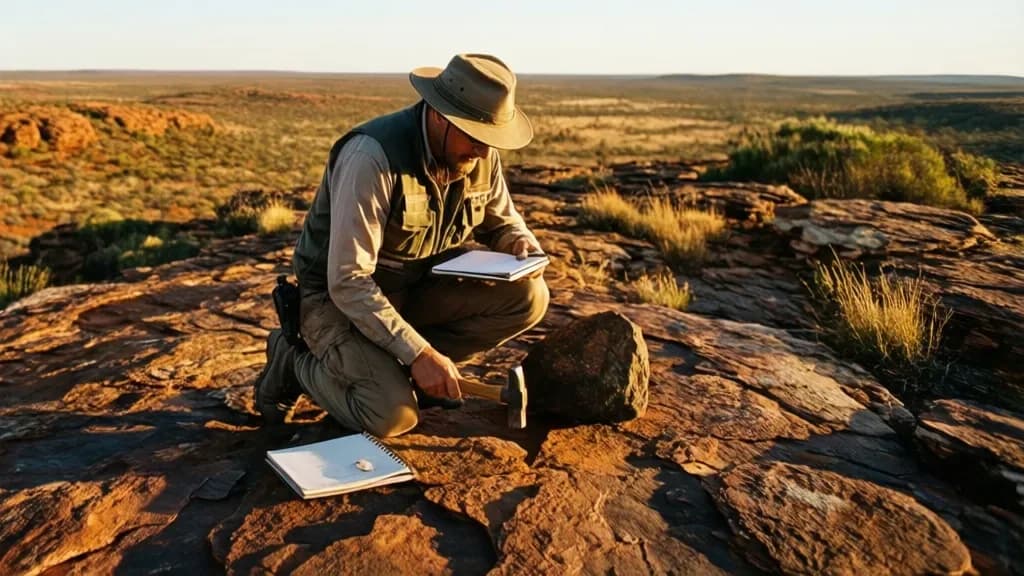
- Western Australia — the Pilbara (iron ore), Goldfields-Esperance (gold, nickel), and lithium regions around Greenbushes and Kalgoorlie
- Queensland — Bowen Basin and Surat Basin (coal, gas), Mount Isa (copper, zinc), and emerging critical minerals projects
- Northern Territory — uranium, manganese, gold, and a growing pipeline of rare earth projects
There are also mining operations in NSW (coal, gold), SA (copper, uranium at Olympic Dam), and Tasmania (zinc, tin), but WA and QLD dominate.
Skills Assessment: Engineers Australia
The CDR (Competency Demonstration Report)
Engineers Australia assesses mining engineers through the Competency Demonstration Report process. This is required for engineers who graduated from institutions that aren't signatories to the Washington Accord.
What Is the Washington Accord?
The Washington Accord is an international agreement that recognises the substantial equivalency of engineering degree programs accredited by signatory bodies. If your degree is from a Washington Accord-accredited program, you may qualify for a streamlined assessment.
Washington Accord signatories include: Australia, UK, USA, Canada, New Zealand, Ireland, Hong Kong, Japan, Korea, Malaysia, Singapore, South Africa, Taiwan, and others.
CDR Requirements
If your degree is NOT from a Washington Accord institution, you'll need to prepare a CDR containing:
-
Three Career Episodes — detailed narratives (1,000-2,500 words each) describing engineering projects you've worked on. Each must demonstrate specific competencies from the Engineers Australia competency standard.
-
Summary Statement — a matrix mapping paragraphs from your career episodes to specific competency elements. This shows the assessor exactly where you've demonstrated each required competency.
-
Continuing Professional Development (CPD) List — a record of your professional development activities (conferences, courses, certifications, workshops).
-
Curriculum Vitae — your detailed professional CV.
Tips for a Successful CDR
- Write your career episodes in the first person ("I designed...", "I analysed...")
- Focus on YOUR personal contribution, not your team's collective work
- Include technical detail — calculations, methodologies, design decisions
- Cover a range of competencies across your three episodes
- Have your CDR reviewed by a professional before submission — many fail on their first attempt due to insufficient technical depth or misaligned competency mapping
Assessment Cost: AUD $500-$1,200 depending on the pathway (CDR, Washington Accord, or other).
Processing Time: 8-16 weeks for standard processing.
English Language Requirements
Engineers Australia requires at least Competent English:
- IELTS: 6.0 in each band
- PTE Academic: 50 in each component
- TOEFL iBT: L12, R13, W21, S18
For the points test, higher English scores earn more points. Aim for Proficient (IELTS 7.0) or Superior (IELTS 8.0) to maximise your score.
Visa Pathways for Mining Engineers
Subclass 189 — Skilled Independent Visa
Permanent residency through the points-based system. Mining Engineer is on the MLTSSL, so the 189 is fully accessible.
Key Details:
- Visa fee: AUD $6,135
- Minimum points: 65 (realistically 80+ in 2026)
- Processing: 6-12 months
- Benefit: Live and work anywhere — though mining jobs are predominantly in WA and QLD
Subclass 190 — State Nominated Visa
State nomination adds 5 points and grants permanent residency.
Key Details:
- Visa fee: AUD $6,140
- Points boost: +5 from state nomination
- Obligation: Live in the nominating state for 2 years
- Strongest states: WA, QLD
Subclass 491 — Skilled Work Regional Visa
Regional nomination adds 15 points. This aligns naturally with mining — most mining operations are in regional areas.
Key Details:
- Visa fee: AUD $6,140
- Points boost: +15 from regional nomination
- Pathway: 191 permanent visa after 3 years
- Perfect fit: Mining towns are regional by definition, so the 491 and mining go hand in hand
Subclass 482 — Temporary Skill Shortage Visa
Employer-sponsored temporary visa. Mining companies frequently sponsor overseas engineers.
Key Details:
- Visa fee: AUD $3,210 (SID stream)
- Salary threshold: Core stream AUD $76,515 / Specialist stream AUD $141,210
- Duration: Up to 4 years
- Reality: Mining engineer salaries comfortably exceed both thresholds
Subclass 186 — Employer Nomination Scheme
Permanent residency through employer sponsorship.
Key Details:
- Visa fee: AUD $6,140
- Streams: Direct Entry or TRT (after 2+ years on 482)
- Common sponsors: BHP, Rio Tinto, FMG, Newmont, South32, and dozens of mid-tier miners
Points Test Strategy
Mining engineers typically score well on the points test due to their degree-level qualification and often substantial experience.
| Points Factor | Points | Notes |
|---|---|---|
| Age (25-32) | 30 | Maximum bracket |
| Qualification (PhD) | 20 | Some mining engineers hold PhDs |
| Qualification (Bachelor's) | 15 | Standard for mining engineering degree |
| English (Superior — 8.0+) | 20 | If achievable |
| English (Proficient — 7.0) | 10 | More common target |
| Overseas Experience (8+ years) | 15 | After qualification date |
| Australian Experience | 5-20 | If you've worked in Australia |
| State Nomination (190) | 5 | WA and QLD nominate mining engineers |
| Regional (491) | 15 | Natural fit for mining locations |
| Partner Skills | 5-10 | If applicable |
| Professional Year | 5 | Engineers Australia Professional Year (if completed) |
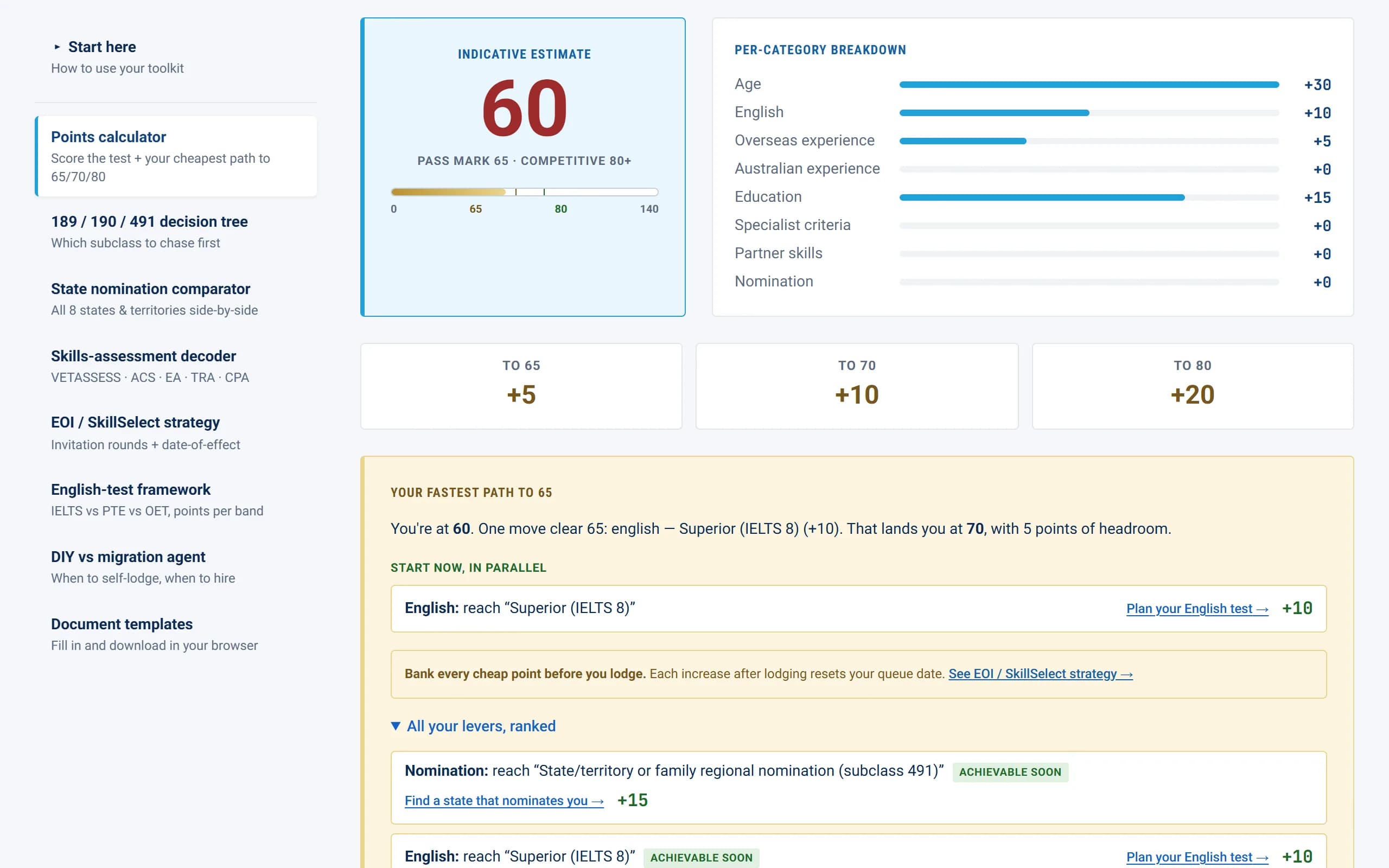
Typical Competitive Score: 80-85 points for a 189 invitation. With a bachelor's degree (15), age 25-32 (30), Proficient English (10), and 5+ years experience (10-15), you're already at 65-70. Add state nomination or higher English and you're competitive.
State Nomination: WA and QLD Lead the Way
Western Australia
WA is the undisputed centre of Australian mining. The state government actively nominates mining engineers, and the demand is persistent. Key employers include BHP, Rio Tinto, Fortescue Metals Group, Mineral Resources, Northern Star, and hundreds of contractors and consultancies.
WA's state nomination program for mining engineers often has:
- Lower points thresholds than other occupations
- Faster processing times
- High allocation numbers
If you're a mining engineer, WA should be your first consideration for state nomination.
Queensland
QLD has a diverse mining sector covering coal, base metals, gold, and gas. The state actively nominates mining engineers, particularly for regional areas like the Bowen Basin, Surat Basin, and Mount Isa. QLD offers good state nomination prospects and a slightly lower cost of living than Perth (depending on where you live).
Other States
- South Australia — Olympic Dam (BHP's copper-uranium-gold operation) and emerging copper projects create some demand
- Northern Territory — smaller market but growing, with opportunities in gold, manganese, and rare earths
- New South Wales — Hunter Valley coal and various gold operations
- Tasmania — limited mining engineering opportunities but some tin, zinc, and gold operations
Check the most in-demand occupations list for the latest state-by-state demand data.
Salary and Employment Outlook
What Can You Expect to Earn?
Mining engineers in Australia are among the highest-paid engineers in the country. The numbers are genuinely impressive:
| Role | Typical Salary Range |
|---|---|
| Graduate Mining Engineer | AUD $90,000-$110,000 |
| Mining Engineer (3-5 years) | AUD $130,000-$170,000 |
| Senior Mining Engineer | AUD $170,000-$220,000 |
| Principal Mining Engineer | AUD $200,000-$260,000+ |
| Mining Manager / Technical Manager | AUD $250,000-$350,000+ |
| Superintendent / General Manager | AUD $300,000-$500,000+ |
These figures typically include base salary, superannuation (11.5%), and may include FIFO allowances. They don't always include bonuses, which can add 10-30% at senior levels.
The FIFO Premium
Many mining engineering roles are FIFO (fly-in-fly-out), where you fly to the mine site for a roster period (commonly 2 weeks on, 1 week off; or 8 days on, 6 days off) and then fly home. FIFO roles typically pay 20-40% more than residential roles to compensate for the lifestyle.
The FIFO lifestyle isn't for everyone — you'll spend significant time away from home, living in mine site accommodation (which ranges from basic dongas to modern village-style facilities). But the financial rewards are substantial, and many mining professionals find the regular blocks of time off appealing.
Residential vs FIFO
Some mining engineers work residentially in mining towns like Kalgoorlie (WA), Mount Isa (QLD), or Karratha (WA). Residential roles typically pay less than FIFO but offer a more conventional lifestyle. Housing in mining towns can be expensive due to high demand, but many employers offer housing assistance or subsidised accommodation.
Career Progression
Mining engineering in Australia offers clear career progression:
- Graduate Engineer — mine planning, production engineering, ventilation design
- Mining Engineer — project management, technical studies, operational improvements
- Senior Mining Engineer — team leadership, strategic planning, feasibility studies
- Principal/Chief Mining Engineer — department leadership, technical governance
- Mine Manager — operational leadership (requires a Mine Manager's Certificate of Competency)
- General Manager / VP Mining — executive leadership
Obtaining a Mine Manager's Certificate of Competency (also called a First Class Mine Manager's ticket) is a significant career milestone in Australia. Requirements vary by state but typically include experience, examination, and competency assessment.
Understanding FIFO Life
Since many mining engineering roles involve FIFO work, here's what to expect:
Typical Rosters
- 2/1 — 2 weeks on site, 1 week off (most common)
- 8/6 — 8 days on, 6 days off (common for WA iron ore)
- 4/3 — 4 days on, 3 days off (some sites closer to Perth)
- Even time — 2 weeks on, 2 weeks off (premium rosters)
Site Conditions
- Accommodation in mine-site villages (single rooms with shared or private bathroom)
- Meals provided (cafeteria-style, breakfast/lunch/dinner)
- Gym, recreation facilities, and sometimes swimming pools
- Wi-Fi and phone coverage (varies by remoteness)
- Dry sites — no alcohol on most mine sites during roster
Family Considerations
FIFO can be challenging for families. Extended absences test relationships, and partners bear a disproportionate share of household responsibilities. Many mining companies now offer family support programs, mental health resources, and roster flexibility to help manage the impact. It's worth discussing the lifestyle honestly with your family before committing.
Step-by-Step Migration Roadmap
- Confirm your ANZSCO code — Mining Engineer (Excluding Petroleum) 233611, using the ANZSCO code finder
- Check Washington Accord status — determine if your degree requires a CDR or qualifies for streamlined assessment
- Prepare your CDR (if needed) — write three career episodes, summary statement, and CPD list
- Sit your English test — aim for Proficient (IELTS 7.0) or higher
- Submit Engineers Australia assessment — AUD $500-$1,200, processing 8-16 weeks
- Calculate your points — determine your competitiveness for 189, 190, or 491
- Submit EOI in SkillSelect — select your preferred visa subclass(es)
- Apply for state nomination — WA and QLD are strongest for mining engineers
- Alternatively, apply to mining companies directly — many sponsor 482 visas for engineers
- Receive invitation and lodge visa — within 60 days
- Complete health and character checks
- Receive visa grant and start your mining career in Australia
Frequently Asked Questions
Do I need a specific mining engineering degree, or can I migrate with a general engineering degree?
The ANZSCO code 233611 is for Mining Engineer (Excluding Petroleum). While a mining engineering degree is the most straightforward path, engineers with degrees in related disciplines (geological engineering, geotechnical engineering) may also be assessed positively if their career episodes demonstrate mining engineering competencies. Engineers Australia assesses your qualifications and experience together — strong CDR career episodes focused on mining work can compensate for a non-mining degree title.
How important is the CDR for Engineers Australia assessment?
If your degree isn't from a Washington Accord institution, the CDR is everything. It's your primary evidence of engineering competency. Many applicants underestimate the CDR and submit career episodes that are too vague, too team-focused, or don't demonstrate the required competencies. Invest time in writing detailed, first-person narratives with technical depth. Many successful applicants report spending 40-80 hours on their CDR.
What's the difference between FIFO and residential mining roles?
FIFO (fly-in-fly-out) means you fly to the mine site for your roster (usually 2 weeks) and then fly home for your break. Your employer pays for flights and provides accommodation and meals on site. Residential means you live in or near the mining town permanently. FIFO pays more but means time away from home. Residential offers a more conventional lifestyle but in a remote town. Both options are available for overseas mining engineers, and many start with FIFO before deciding whether to relocate residentially.
Are mining engineering salaries really as high as advertised?
Yes — and sometimes higher. Base salaries for experienced mining engineers genuinely range from AUD $130,000 to $250,000+, and total packages (including superannuation, FIFO allowances, bonuses, and overtime) can push earnings well above $300,000 for senior roles. The skilled occupation list reflects the premium Australia places on this occupation.
What about the environmental concerns with mining — is the industry sustainable long-term?
Australia's mining industry is transitioning. While thermal coal faces long-term decline, critical minerals (lithium, cobalt, nickel, rare earths) are booming because they're essential for renewable energy technology. Iron ore demand remains strong. Gold is perennial. Mining in Australia isn't going away — it's evolving. Mining engineers with expertise in sustainable mining practices, mine rehabilitation, and critical minerals extraction are particularly well-positioned for the future.