Visa Condition 8547: The Working Holiday 6-Month Work Rule
Updated: 25 June 2026
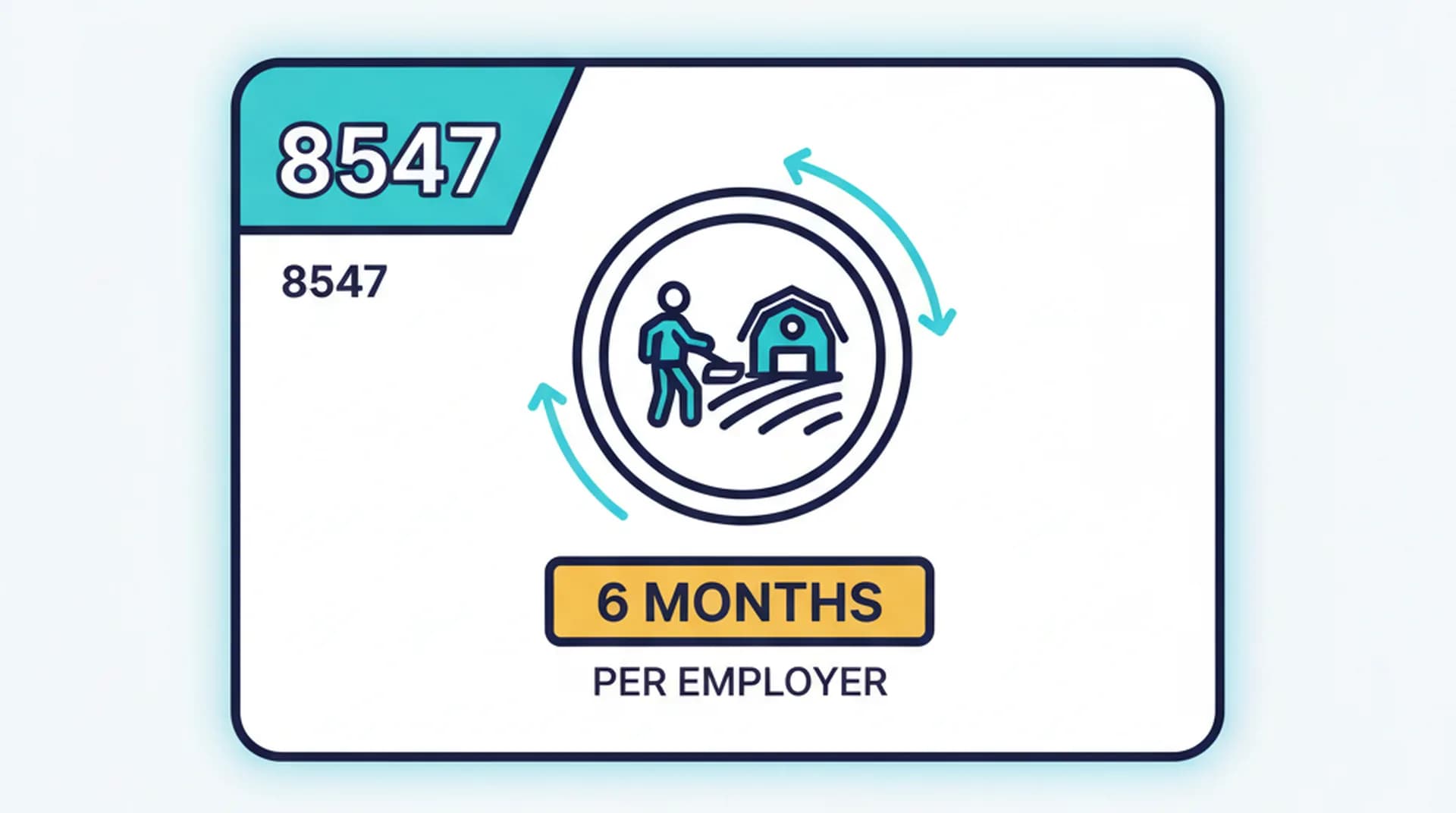
Visa condition 8547 (the WHV 6-month work rule) limits Working Holiday visa holders to no more than six months of work with any single employer. It applies to the Working Holiday (Subclass 417) and Work and Holiday (Subclass 462) visas. This guide explains what the condition means, which visas carry it, what counts, and the consequences of breaching it.
Independent guide — not a government service. Australian Visa Online is an independent information resource. We are not affiliated with, endorsed by, or acting on behalf of the Department of Home Affairs or the Australian Government. Always confirm your specific conditions through your own VEVO record and grant notification.
What Is Visa Condition 8547?
Condition 8547 is a work-limitation condition attached to Working Holiday Maker (WHM) visas. In plain English, it says: you cannot work for any one employer for more than six months without permission. The condition exists because the Working Holiday program is designed primarily as a cultural and travel experience — work is meant to fund the holiday, not become full-time, long-term employment with a single business.
Crucially, 8547 is not a cap on total work. There is no limit on how many hours you work in a week or fortnight, and no limit on how many different employers you work for across your stay. The restriction is specifically about time with one employer: once you hit six months with that employer, you must stop working for them unless you have been granted an exception.
This is a different kind of condition from the student-visa hours cap. If you've read about condition 8105 and the 48-hour fortnight rule for students, note that 8547 works on a completely different logic — duration with one employer, not total hours.
Which Visas Carry Condition 8547?
Condition 8547 is standard on the two Working Holiday Maker visa streams:
| Visa | Common Name | Carries 8547? |
|---|---|---|
| Subclass 417 | Working Holiday visa | Yes |
| Subclass 462 | Work and Holiday visa | Yes |
| Subclass 500 | Student visa | No (carries 8105 instead) |
| Subclass 482 | Skills in Demand / employer-sponsored | No |
| Subclass 485 | Temporary Graduate visa | No |
Both the Subclass 417 and Subclass 462 are intended for young travellers (generally aged 18–30, or up to 35 for some passport countries) who want to holiday and work in Australia for up to a year per grant, with the option of second and third-year extensions if specified work is completed. The six-month-per-employer rule attaches to each of these visas by default.
Eligibility, age limits, and which passports qualify for the 417 versus the 462 differ by country. The conditions on your visa, however, are listed in your grant notification — and you should never assume. Always verify against your own record, which we cover below.
What the Six-Month Limit Does and Doesn't Allow
The six months is measured per employer, not per job title or per location. Here's how it breaks down in practice:
| Scenario | Allowed Under 8547? |
|---|---|
| Working 6 months for Employer A, then moving to Employer B | Yes |
| Working full-time hours (40+ per week) for one employer for 5 months | Yes — no hours cap |
| Working for Employer A for 8 months straight without an exception | No — breach after month 6 |
| Two short stints (3 months, then 3 months) with the same employer | Counts toward the same 6-month total |
| Working for a labour-hire agency placed across several host businesses | Generally counts as one employer (the agency) — get advice |
| Different roles/branches under the same legal employer | Usually the same employer — 6 months total |
Two points trap people most often. First, breaks don't necessarily reset the clock — if you work three months, leave for a while, then return to the same employer, those periods can be added together. Second, labour-hire and group structures can be ambiguous: who your legal employer actually is matters, and it isn't always the business where you physically turn up.
When You CAN Work Longer Than Six Months
There are recognised situations where longer work with one employer is permitted. These can include certain types of work in specified industries and regions (for example, some agriculture, certain plant and animal cultivation, or work in northern Australia), and cases where the Department grants permission on application. Because the eligible industries, regions, and application requirements change over time and depend on your specific circumstances, do not rely on a number or a rumour from another backpacker — confirm the current rules before you exceed six months. A registered migration agent can tell you whether your work qualifies for an exception.
How to Check If You Have Condition 8547 (VEVO)
Never guess your conditions. Two reliable sources confirm exactly what's attached to your visa:
- Your visa grant notification. When your visa was granted, the notification letter or email listed every condition by number. Search it for "8547."
- VEVO (Visa Entitlement Verification Online). VEVO is the free online system that shows your current visa status and conditions. Log in with your passport details and visa grant number or a reference number, and it will display your conditions and work entitlements.
Checking VEVO is also how an employer can confirm your right to work. If you're unsure whether a condition is genuinely attached, VEVO is the authoritative real-time source — more reliable than memory, a recruiter's assurance, or another traveller's experience.
If you find conditions you don't understand, or your VEVO record doesn't match what you expected, that's a signal to get professional advice before you start or continue working.
Consequences of Breaching Condition 8547
Working beyond six months with one employer without an exception is a breach of your visa conditions. The possible consequences are serious:
- Visa cancellation. The Department can cancel a Working Holiday visa where a condition has been breached. Cancellation can leave you unlawful in Australia.
- Re-entry bans / exclusion periods. A cancellation can trigger an exclusion period during which you may be barred from being granted further Australian visas. Combined with the broader consequences of becoming unlawful, this can affect travel plans for years.
- Refusal of future applications. A recorded breach sits in your compliance history. It can undermine a second-year or third-year Working Holiday extension, or any later visa application, because the Department weighs your past compliance.
- Loss of your extension pathway. Many WHM holders are working toward a second or third year. A breach can put that entire goal at risk.
The cleaner your compliance record, the smoother your future applications. If you become unlawful through cancellation, you may need to understand the consequences of overstaying a visa in Australia and how that interacts with no-further-stay rules — see our explainer on condition 8503 and seeking a waiver.
How Breaches Get Detected
Working Holiday makers sometimes assume nobody is counting their months with one employer. That's a risky assumption. The same data sources that catch other work-condition breaches apply here:
- Tax and payroll records. Income, employer details, and payment dates are visible through tax data. A continuous payroll record with one employer running past six months is easy to spot.
- Superannuation contributions. Employer super payments create a dated trail tied to a specific employer.
- Single Touch Payroll. Employer reporting submits pay and employer information regularly.
- Workplace compliance activity. Industries that rely heavily on WHM labour — hospitality, agriculture, cleaning — see targeted compliance attention.
You are responsible for the condition, not your employer. Even an employer who is happy to keep you on past six months cannot waive a condition attached to your visa.
What to Do If Condition 8547 Affects You
If you're approaching or have passed the six-month mark with one employer, act methodically:
- Confirm your exact conditions in VEVO and your grant letter. Make sure 8547 actually applies before you make decisions.
- Count carefully from your start date with that specific employer, including any earlier stints that may add to the total.
- Check whether an exception applies. Some specified work, regions, or approved arrangements allow longer employment. Confirm current rules rather than relying on hearsay.
- Move to a new employer if no exception applies and you're nearing six months. There's no limit on the number of employers — switching is the normal, compliant solution.
- Get registered advice if you may have already breached. A registered migration agent or immigration lawyer can advise on your position. Don't provide false information to anyone — that's a separate and serious problem.
If a cancellation has already happened, you may have review rights. Our guide on how to appeal a visa refusal or cancellation at the ART explains the process and the strict time limits involved.
Condition 8547 vs Other Common Visa Conditions
Condition 8547 rarely travels alone. Working Holiday visas and related temporary visas often carry several conditions at once. Knowing the difference prevents you from applying the wrong rule to the wrong situation:
- Condition 8547 — no more than six months' work with one employer (Working Holiday makers).
- Condition 8105 — a cap on work hours per fortnight (student visas), a fundamentally different mechanism.
- Condition 8501 — maintain adequate health insurance for your stay.
- Condition 8503 — "no further stay," which can block onshore applications for further visas unless waived.
If you're planning your finances around your work, remember that visa application charges for extensions and future visas change periodically. Rather than rely on a figure you read somewhere, check the current schedule on our complete Australian visa fees guide, and use the visa processing times guide when timing a second-year application around your current visa.
Frequently Asked Questions
Does condition 8547 limit how many hours I can work each week?
No. Condition 8547 places no cap on weekly or fortnightly hours, and no cap on total work across your stay. You can work full-time hours. The only restriction is duration with a single employer — a maximum of six months with any one employer unless an exception applies. This is different from the student-visa hours cap under condition 8105.
Can I work for more than one employer at the same time on a Working Holiday visa?
Yes. There is no limit on the number of employers you can work for, and you can work for several at once or one after another. Each employer is subject to its own six-month limit. Many Working Holiday makers stay compliant simply by moving between employers, which 8547 fully permits.
If I leave an employer and come back later, does the six-month clock reset?
Not necessarily. Periods of work with the same employer can be added together, so a break may not reset the count. If you've had earlier work with a business you're returning to, total the time carefully and get advice if you're close to six months — the clock is measured against the employer, not against a single unbroken stretch.
How do I check whether condition 8547 is on my visa?
Check two sources: your visa grant notification, which lists every condition by number, and VEVO (Visa Entitlement Verification Online), the free system that displays your current visa status and conditions. VEVO is the authoritative real-time record and is also what employers use to confirm your work rights — never rely on memory or assumptions.
What happens if I breach the six-month rule?
Breaching 8547 can lead to cancellation of your Working Holiday visa, which may make you unlawful and trigger an exclusion period barring further visa grants for a time. A recorded breach also sits in your compliance history and can undermine second or third-year extensions and future applications. If you may have breached, seek registered migration advice promptly.
Can I appeal if my Working Holiday visa is cancelled for breaching condition 8547?
You may have review rights, but time limits are strict and depend on your circumstances at the time of cancellation. Acting immediately is essential. Our guide on appealing a visa refusal or cancellation at the ART explains the steps and deadlines, and getting professional legal help straight away is strongly recommended.