Working Holiday Visa Australia for Taiwanese Citizens: 2026 Guide
Updated: 25 June 2026
The working holiday visa Australia for Taiwanese citizens runs through subclass 462, the Work and Holiday programme, not subclass 417. Taiwan passport holders aged 18 to 30 can apply, subject to an annual cap and education and English requirements. The visa grants twelve months with full work rights, plus second and third-year extensions through specified regional work.
Independent guide, not a government service. Australian Visa Online is an independent information resource. We are not affiliated with, endorsed by, or acting on behalf of the Australian Government or the Department of Home Affairs. Always confirm current requirements through official channels before you lodge.
Quick Facts: Work and Holiday Visa for Taiwanese Citizens
| Detail | Information |
|---|---|
| Visa subclass | 462 (Work and Holiday), not 417 |
| Age limit | 18 to 30 inclusive at time of application |
| Annual cap | Yes — a limited number of places per programme year |
| Education requirement | Tertiary qualification or equivalent study toward one |
| English requirement | Functional English, evidence usually required |
| Government support letter | Not required for Taiwan passport holders |
| Visa duration | 12 months from first entry |
| Second-year extension | Specified regional work in year one |
| Third-year extension | Further specified regional work in year two |
| Application channel | ImmiAccount, lodged from outside Australia for the first visa |
For the current visa application charge, see the Australian visa fees complete schedule. For turnaround expectations, see the visa processing times guide.
Subclass 462, Not 417: Why It Matters for Taiwan
Australia runs two parallel working holiday programmes. They give almost identical travel and work rights once granted, but the eligibility rules and the application process differ, and Taiwan sits on the 462 side.
Subclass 417, the Working Holiday visa, covers countries with long-standing reciprocal arrangements such as the UK, Ireland, and Canada. It has no annual cap, no education requirement, and no English test.
Subclass 462, the Work and Holiday visa, covers a separate list of partner countries and territories, Taiwan among them. The 462 typically adds an annual cap, an education requirement, and a functional English requirement. Some 462 nationalities also need a letter of support from their own government, but Taiwan passport holders do not.
If you are a Taiwanese citizen, the 462 is the only working holiday pathway open to you. You cannot apply for a 417. Getting this distinction right at the start saves you from lodging the wrong application. For a side-by-side breakdown, see subclass 417 vs 462: the difference.
Eligibility for Taiwanese Applicants
To qualify for the subclass 462 as a Taiwan passport holder, you generally need:
- A valid Taiwan passport (the visa is tied to nationality, not residence)
- To be aged 18 to 30 inclusive at the time you apply
- No dependent children accompanying you on the visa
- A tertiary qualification, or to have successfully completed at least two years of undergraduate university study
- Functional English, typically evidenced by a recognised English test result unless you are exempt
- Sufficient funds to support yourself on arrival, plus the means to buy an onward or return ticket
- A clean character and health record
- No previous Work and Holiday visa in the same subclass (unless applying for a second or third year)
The age band and the education and English requirements are the three places Taiwanese applicants most often trip up, because they do not apply to 417 nationalities at all. Confirm where the upper age cut-off currently sits before you assume you have aged out — see the working holiday visa age limit guide.
How the 462 and 417 Compare
| Feature | Subclass 462 (Taiwan) | Subclass 417 |
|---|---|---|
| Who it covers | Taiwan and other partner countries | UK, Ireland, Canada and similar |
| Annual cap | Yes | No |
| Age range | 18 to 30 | 18 to 30 (extended for some) |
| Education requirement | Yes | No |
| English requirement | Functional English | None |
| Second/third-year extension | Yes, via specified work | Yes, via specified work |
| Work rights once granted | Full | Full |
| First application location | Outside Australia | Outside Australia |
The practical takeaway: once the visa is in hand, a Taiwanese 462 holder and a British 417 holder live, work, and travel under effectively the same conditions. The difference is entirely in qualifying and applying.
Key Conditions Once You Hold the Visa
The 462 carries the same core working holiday conditions as the 417:
- Work for any Australian employer, with a six-month limit per employer. This is the single most misread condition. It applies to the same employer, not the same role, and certain regional or high-demand sectors carry exemptions. Check the current exemption list before you assume one applies.
- Study or train for up to four months over the life of the visa.
- Travel in and out of Australia freely during the twelve months.
- Apply for a second-year 462 from inside Australia if you complete the required period of specified regional work during year one.
- Apply for a third-year 462 after completing a further period of specified work during year two.
The twelve-month clock starts on your first entry, not on the grant date. You generally have up to twelve months from grant to make that first entry.
Specified Work for Second and Third Years
Second and third-year extensions are the reason many Taiwanese travellers choose the working holiday route in the first place. The rules are strict and the Department audits them.
Qualifying specified work must be:
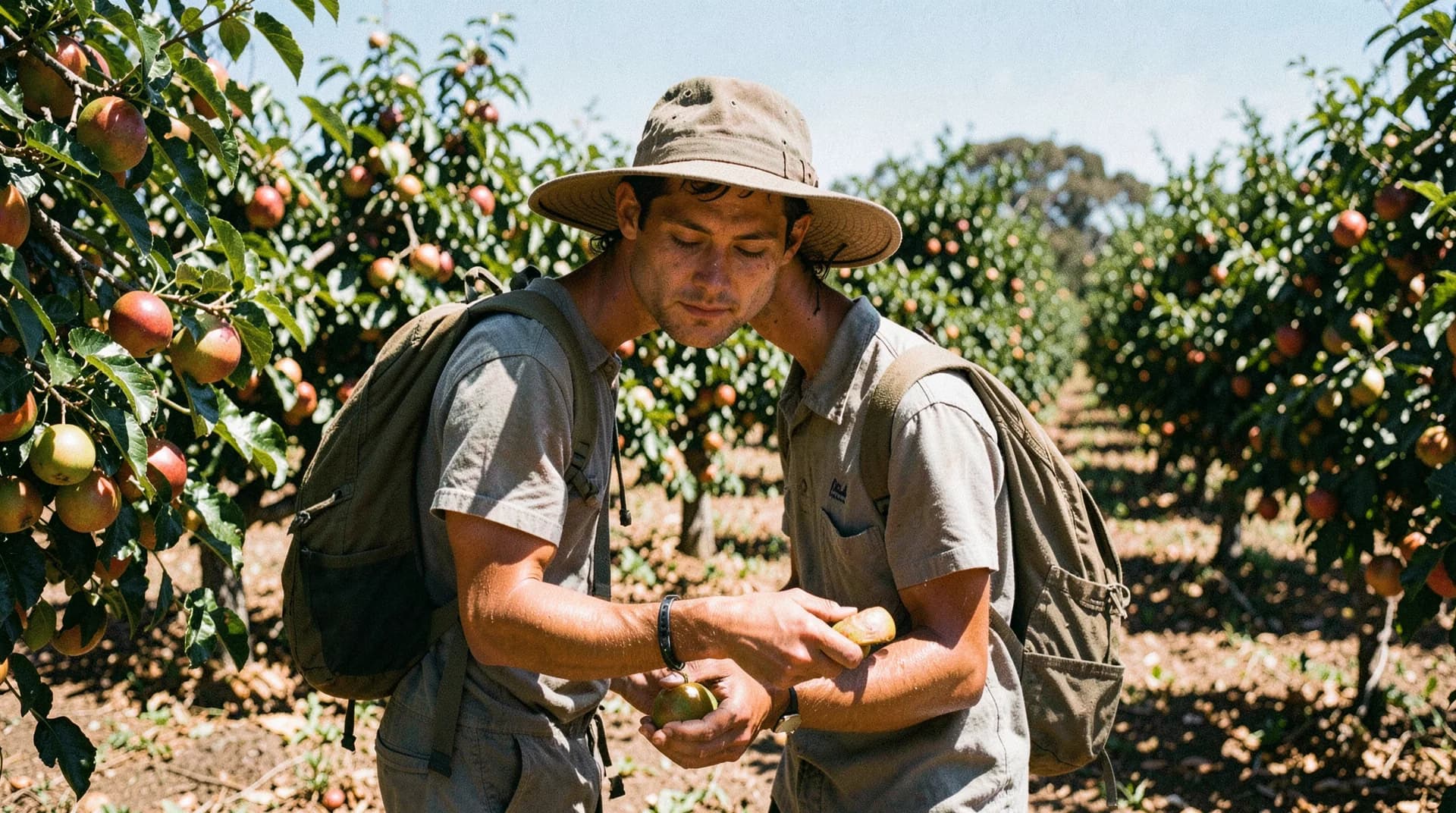
- In an eligible industry — agriculture, plant and animal cultivation, fishing and pearling, tree farming and felling, mining, construction, and certain tourism and hospitality work in northern Australia or designated disaster-recovery work
- In an eligible regional postcode
- Paid at least the legal minimum for the role, with proper payslips
- Properly documented through a tax record and an Australian tax file number
Cash-in-hand arrangements do not count toward your specified-work days even if you genuinely worked them, because they cannot be verified. The best farm jobs guide covers regions and pay, and the second-year visa requirements page sets out exactly what counts.
The Annual Cap: Plan Around It
Unlike the 417, the 462 has an annual cap on places for each partner country. When Taiwan's allocation for a programme year fills, no further first-year 462 grants are made until the cap resets for the next programme year.
What this means in practice:
- Apply early in the programme year if you can. Allocations can fill, and waiting risks missing a year entirely.
- Have your evidence ready before places open — passport, English evidence, education evidence, and proof of funds — so you can lodge without delay.
- The cap applies to first-year applications. Second and third-year extensions are not drawn from the same pool, so once you are in the system the cap is no longer your concern.
How to Apply, Step by Step
- Confirm eligibility against the current age cut-off, the education requirement, and the English requirement.
- Gather your evidence: Taiwan passport, English test result (or proof of exemption), education evidence, recent bank statements showing sufficient funds, and any prior visa history.
- Create or sign in to your ImmiAccount.
- Lodge a new subclass 462 application from outside Australia. Your first 462 cannot be lodged onshore.
- Pay the visa application charge — see the current figure on the visa fees schedule.
- Complete health and character requirements if requested, which may include a police clearance certificate.
- Wait for the decision. For expected turnaround, see the processing times guide.
- Enter Australia within the validity window stated on your grant. Your twelve-month stay begins on first entry.
What Differs for Taiwanese Nationals Specifically
A few points apply to Taiwan passport holders that 417 nationalities never encounter:
- The cap is real and binding. A British applicant can apply any day of the year. A Taiwanese applicant should treat timing as part of the strategy.
- You must prove your education. Keep your degree certificate, transcript, or evidence of two completed years of university study ready and, where needed, translated.
- You must prove functional English. Many Taiwanese applicants satisfy this with a recognised English test result. Confirm which tests and scores are currently accepted before booking one.
- No government support letter is needed. Some 462 countries require one; Taiwan is not among them, which removes a step that catches out applicants from other nationalities.
- Settling-in logistics still apply. You will need an Australian tax file number before you can be paid through payroll, and most major banks let you open an Australian bank account before you arrive.
Planning Beyond the Working Holiday
The 462 is a starting point for many longer stays. Common transitions for Taiwanese holders include moving to an employer-sponsored work visa, a points-tested skilled visa, a student visa, or a partner visa where an eligible relationship has formed. Each has its own evidence and timing, so plan any transition well before your 462 expires rather than in its final weeks. The full programme detail lives on the Work and Holiday visa (subclass 462) page.
Frequently Asked Questions
Do Taiwanese citizens apply for subclass 417 or 462?
Taiwanese citizens apply for subclass 462, the Work and Holiday visa. Subclass 417 is reserved for a different list of countries such as the UK, Ireland, and Canada. Taiwan passport holders cannot apply for a 417, so the 462 is your only working holiday pathway. See subclass 417 vs 462 for the full comparison.
What is the age limit for the working holiday visa for Taiwan?
The subclass 462 age range is 18 to 30 inclusive at the time of application. Unlike some 417 nationalities, Taiwanese applicants do not currently benefit from an extended upper age limit, so confirm the cut-off on the age limit guide before you assume you still qualify.
Is there a cap on Work and Holiday visas for Taiwanese applicants?
Yes. The 462 has an annual cap per partner country, and Taiwan's allocation can fill within a programme year. Applying early in the year reduces the risk of missing out. The cap applies to first-year applications only, not to second or third-year extensions.
Do Taiwanese applicants need a degree and an English test?
Generally yes. Most Taiwanese 462 applicants need a tertiary qualification, or evidence of at least two completed years of university study, plus evidence of functional English such as a recognised test result. These requirements do not apply to 417 nationalities, which is a key difference. See the subclass 462 guide for accepted evidence.
Can Taiwanese citizens extend to a second or third year?
Yes. Complete the required period of specified regional work during your first year to qualify for a second-year 462, then a further period during year two for a third-year visa. The work must be in an eligible industry and postcode, paid at minimum rates, and documented through payslips and a tax record.
Can I apply for the 462 from inside Australia?
Your first 462 must be lodged from outside Australia — you cannot apply onshore for a first-year Work and Holiday visa. Second and third-year applications can be lodged from inside Australia once you have completed the qualifying specified work.