Furniture Finisher Visa Pathway to Australia: Complete 2026 Guide
Updated: 16 August 2026
Australia classifies Furniture Finisher under ANZSCO 394211. Trades Recognition Australia (TRA) conducts the skills assessment. The occupation sits on the Core Skills Occupation List (CSOL) and the Short-Term Skilled Occupation List (STSOL), unlocking subclasses 190, 491, 482, 186 and 494. Typical 2026 salaries range AUD $55,000-$80,000. Employer sponsorship via 482 is the dominant route for offshore tradespeople.
Quick Facts: Furniture Finisher Migration Pathway
| Detail | Information |
|---|---|
| ANZSCO Code | 394211 (Furniture Finisher) |
| Skill Level | 3 (AQF Certificate III with 2 years on-the-job training, or Certificate IV) |
| Skills Assessment | TRA (Trades Recognition Australia) |
| Occupation List | CSOL and STSOL |
| Visa Options | 190, 491, 482, 186, 494 |
| Demand Level | Moderate — niche craft trade, demand concentrated in custom and heritage furniture |
| Salary Range | AUD $55,000-$80,000 (SEEK / Jora 2026) |
| Typical 189 Score | Not applicable — occupation not on MLTSSL |
| Key Challenge | Securing an employer willing to sponsor through 482 |
What a Furniture Finisher Actually Does in Australia
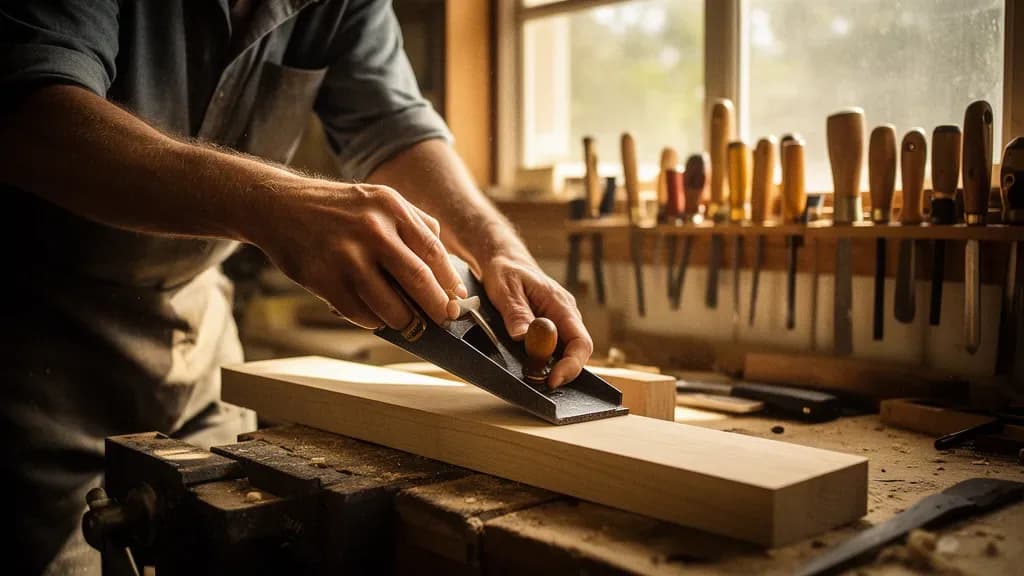
Furniture finishers apply finishing materials to furniture pieces, repair and restore damaged or aged furniture, match stains and lacquers, and work with veneers, French polish, and modern catalysed coatings. The work splits roughly into three streams: custom commercial finishing for high-end joinery and cabinet makers, restoration and conservation of antique and heritage pieces, and production-line finishing in mid-volume furniture factories.
Australia's furniture manufacturing sector contracted heavily over the past two decades as cheaper imports captured the mass market. What survived sits at the premium end: bespoke joinery in Melbourne and Sydney, heritage restoration tied to historic homes, and small-batch designer brands. That means the work that remains is generally skilled, hands-on, and rewards craft over speed. Most opportunities concentrate in Victoria and New South Wales, with smaller clusters around Brisbane, Adelaide and Hobart serving regional heritage markets.
The trade is not on any national shortage list at the level seen for carpenters or electricians, but persistent vacancies appear in heritage conservation and high-end joinery. Employers who do sponsor tend to value craftspeople with traditional skills — French polishing, hand-cut veneer work, gilding — that are hard to find locally.
ANZSCO 394211: The Code
ANZSCO 394211 covers workers who apply paint, stains, varnishes, lacquers and other finishing materials to furniture and similar wooden articles. Typical duties include preparing surfaces by sanding, filling and staining; mixing and matching finishes; applying lacquers, polyurethanes or French polish; rubbing down between coats; repairing dents and scratches; and restoring antique and reproduction pieces.
The code sits within ANZSCO Unit Group 3942 (Wood Machinists and Other Wood Trades Workers). Related codes include 394212 (Picture Framer), 394213 (Wood Machinist) and 394299 (Wood Machinists and Other Wood Trades Workers nec). If your day-to-day work is more about operating wood-shaping machinery than applying finishes, 394213 or 394299 may fit better. Match your duties to the description, not the other way around — TRA rejects assessments where the evidence describes a different occupation.
Skills Assessment: Trades Recognition Australia
TRA is the assessing authority for all wood trades. The body offers several assessment programs; the right one depends on where you trained and which visa you are targeting.
Migration Skills Assessment (MSA)
The MSA is for tradespeople trained and qualified outside Australia who are applying for permanent skilled visas (189, 190, 491). TRA reviews your qualifications, employment evidence and references against the ANZSCO description.
- Requirements: Qualification equivalent to AQF Certificate III, at least 3 years of post-qualification employment in the nominated occupation in the past 5 years
- Cost: From AUD $300 (documentary assessment); full fee schedule in the TRA MSA Applicant Guidelines
- Processing time: 12-16 weeks
- Common rejection reasons: Employment evidence that does not describe finishing duties; qualifications that cover general carpentry without finishing-specific units; gaps in the past 5 years of employment
Offshore Skills Assessment Program (OSAP)
OSAP is the offshore practical assessment route. It includes a technical interview and, for some trades, a practical test. Used heavily by applicants from India, Vietnam, the Philippines and Egypt who lack a directly mapped Australian qualification.
- Requirements: Relevant qualification plus at least 3 years of post-qualification experience, conducted in approved offshore countries
- Processing time: 12-16 weeks after the practical assessment is completed
- Common rejection reasons: Practical performance below the AQF Certificate III benchmark; inability to demonstrate finishing techniques on the day
Job Ready Program (JRP)
JRP is the four-stage pathway for international graduates of Australian VET qualifications. Total cost roughly AUD $3,540 across four stages (JRPRE, JRE, JRWA, JRFA). Processing runs 12+ months because of the post-study work requirement.
Visa Pathways for Furniture Finishers
Furniture Finisher is on the CSOL and STSOL but not on the MLTSSL. That excludes the 189 entirely and makes employer sponsorship the strongest route.
Subclass 482 — Skills in Demand Visa (Dominant Pathway)
The 482 is by far the most realistic visa for offshore furniture finishers. An Australian employer nominates you for a specific role; you do not need to score points or compete in EOI rounds.
- Visa fee: AUD $4,015 (Core Skills stream, primary applicant)
- Salary threshold: Core Skills Income Threshold (CSIT) AUD $79,423; many furniture finisher salaries sit at or slightly below this floor, so negotiate carefully
- Duration: Up to 4 years
- Quirk that matters: Heritage joinery employers in Melbourne and Sydney are the most active sponsors. Make sure the nominated salary clears the CSIT — under-quoting kills the application
Subclass 190 — Skilled Nominated Visa
State nomination is theoretically available because 394211 sits on the CSOL, but few states actively invite furniture finishers in 2026. State demand is concentrated in healthcare, construction and ICT, with niche trades like furniture finishing rarely making the priority lists.
- Visa fee: AUD $6,140 (primary applicant)
- Reality: Expect to wait or pivot to 482
Subclass 491 — Skilled Work Regional (Provisional)
Regional nomination through a state or family-sponsored route. The 491 grants 5 years of provisional residence with a pathway to permanent residency via the subclass 191 visa after 3 years of regional residence and income above the threshold.
- Visa fee: AUD $6,140 (primary applicant)
- Points boost: +15 for regional nomination
Subclass 186 — Employer Nomination Scheme (PR)
The 186 is the permanent counterpart to the 482. After 2 years on a 482 with the same sponsoring employer, you can transition to the 186 Temporary Residence Transition (TRT) stream.
- Visa fee: AUD $6,140 (primary applicant)
- Streams: Direct Entry or TRT (after 2+ years on 482)
Subclass 494 — Skilled Employer Sponsored Regional (Provisional)
Regional employer sponsorship. Useful for furniture finishers placed with regional heritage workshops or country joinery firms.
- Visa fee: AUD $4,770 (primary applicant)
- Duration: 5 years with PR pathway via subclass 191
State Nomination Reality
Furniture Finisher is rarely an active nomination priority in 2026. NSW, Victoria and Queensland focus their 190 and 491 allocations on healthcare, construction trades (carpenters, electricians, plumbers), engineering and ICT. Niche craft trades sit well below those priorities.
That does not mean nomination is impossible. South Australia and Tasmania run smaller programs that occasionally pick up CSOL trades where a regional employer demonstrates need. Tasmania's furniture and timber sector — particularly around heritage furniture and specialty wood like Huon pine — is the most likely regional opening. Apply through the state portal only if you have either a job offer or family ties; speculative applications get parked.
Salary and Employment Outlook
What Furniture Finishers Earn in 2026
| Role | Typical Salary Range |
|---|---|
| Entry-level Finisher (1-3 years) | AUD $45,000-$55,000 |
| Mid-level Finisher (3-7 years) | AUD $55,000-$70,000 |
| Senior / Heritage Specialist | AUD $70,000-$85,000 |
| Furniture Restoration Master | AUD $80,000-$100,000+ |
| Production Finisher (factory) | AUD $55,000-$65,000 |
Sources: SEEK furniture finisher listings 2026; Jora salary index; PayScale Australia hourly rates.
Total packages include compulsory superannuation at 12% (effective 1 July 2025). Self-employed finishers running their own workshops can earn substantially more, particularly those specialising in antique restoration or high-end commercial fit-outs.
Where the Work Is
- Melbourne and inner suburbs — bespoke joinery for designer kitchens, heritage furniture restoration, theatre and film prop work
- Sydney North Shore and inner west — high-end residential cabinet making, antique restoration galleries
- Adelaide and Hobart — heritage conservation tied to colonial-era housing stock
- Regional NSW and Victoria — small workshops servicing country homes and heritage hotels
Tips for a Successful Application
1. Match Your References to the ANZSCO Description Exactly
TRA assessments fail when employment references describe general carpentry duties without explicit finishing work. Ask your employers to list the specific techniques you use — staining, lacquering, French polishing, veneer repair, colour matching. Generic "worked with wood" references will not pass.
2. Target Employers Who Already Sponsor
A small group of Australian joinery and heritage furniture employers sponsor regularly. Search LinkedIn for "furniture finisher" plus "visa sponsorship" filtered to Australia, and read company news for sponsorship case studies. Cold-pitching factories that have never sponsored is a dead end — they will not start the process for a trade hire.
3. Build a Portfolio Before You Apply
Photograph every piece you finish or restore. TRA assessors and prospective sponsors both want to see the work. A 20-page PDF portfolio with before/after shots, technique descriptions and project briefs converts far better than a CV alone.
4. Plan for the CSIT Floor
The 482 Core Skills Income Threshold is AUD $79,423. Many furniture finisher roles offer $60,000-$70,000. The employer must lift the nominated salary above CSIT for the visa to be granted, which means they need to be sponsoring a senior or specialist role. Junior factory roles do not work for the 482 pathway.
5. Consider Tasmania or Regional Victoria for 491
Tasmania's specialty timber sector and regional Victoria's heritage restoration market are the two strongest 491 plays. Both have lower competition than Melbourne or Sydney and a track record of nominating niche trades when a regional employer pushes the application.
Step-by-Step Migration Roadmap
- Confirm ANZSCO 394211 fits your duties using the ANZSCO code finder
- Verify list status — check the 2026 Skilled Occupation List and CSOL hub
- Sit your English test — IELTS 6.0 or PTE equivalent for the 482 (5.0 each band minimum)
- Gather employment references — ensure each role describes finishing duties in detail
- Apply to TRA — MSA, OSAP or JRP depending on your circumstances via the skills assessment hub
- While waiting, target sponsoring employers — heritage joinery and high-end cabinet makers
- Receive the positive assessment
- Sponsor lodges nomination and you lodge 482 application (if going employer-sponsored)
- Or submit EOI for 190/491 (if going state-nominated)
- Complete health, character and biometrics
- Receive visa grant
- Plan transition to 186 PR after 2+ years on the 482
Frequently Asked Questions
Is Furniture Finisher on the MLTSSL or just the CSOL?
Furniture Finisher (ANZSCO 394211) is on the Core Skills Occupation List (CSOL) and the Short-Term Skilled Occupation List (STSOL) but not the Medium- and Long-term Strategic Skills List (MLTSSL). That excludes the 189 Skilled Independent visa. Eligible subclasses are 190, 491, 482, 186 and 494.
Which visa is most realistic for an offshore furniture finisher?
The 482 employer-sponsored visa is the dominant pathway. State nomination for 190 and 491 is technically possible but rarely happens for this occupation in 2026. Almost every furniture finisher who migrates does so with a sponsoring Australian joinery, cabinet making or heritage furniture employer.
Why does TRA reject so many furniture finisher assessments?
The most common rejection reason is employment evidence that describes general carpentry, joinery or assembly work rather than finishing. TRA wants explicit evidence of staining, lacquering, polishing, veneer work, colour matching and surface preparation. References that say "made furniture" without describing finishing tasks routinely fail.
Can I work in restoration without a furniture trade qualification?
Not for skilled migration purposes. TRA requires at least an AQF Certificate III equivalent qualification or, in some pathways, three years of post-qualification experience that demonstrates Certificate III-level skills. Self-taught restorers without formal credentials need to consider the OSAP practical assessment route.
What is the demand outlook for Furniture Finishers in Australia in 2026?
Demand is moderate and concentrated. Mass-market furniture manufacturing has largely moved offshore. The remaining Australian sector — bespoke joinery, heritage restoration, designer furniture — has steady demand for skilled finishers but limited volume. Employers who do sponsor tend to value traditional craft skills like French polishing, gilding and hand-cut veneer work.
How long does the full migration process take?
Plan for 18-24 months from starting the TRA assessment to receiving a visa grant. TRA MSA processing runs 12-16 weeks. The 482 visa adds another 2-6 months. Securing the sponsoring employer is often the longest single step — budget 6-12 months for that search if you do not already have an offer.
For more on the broader migration landscape, see Australia's most in-demand occupations for 2026.