Wood Machinists and Other Wood Trades Workers nec Visa Pathway to Australia: Complete 2026 Guide
Updated: 16 August 2026
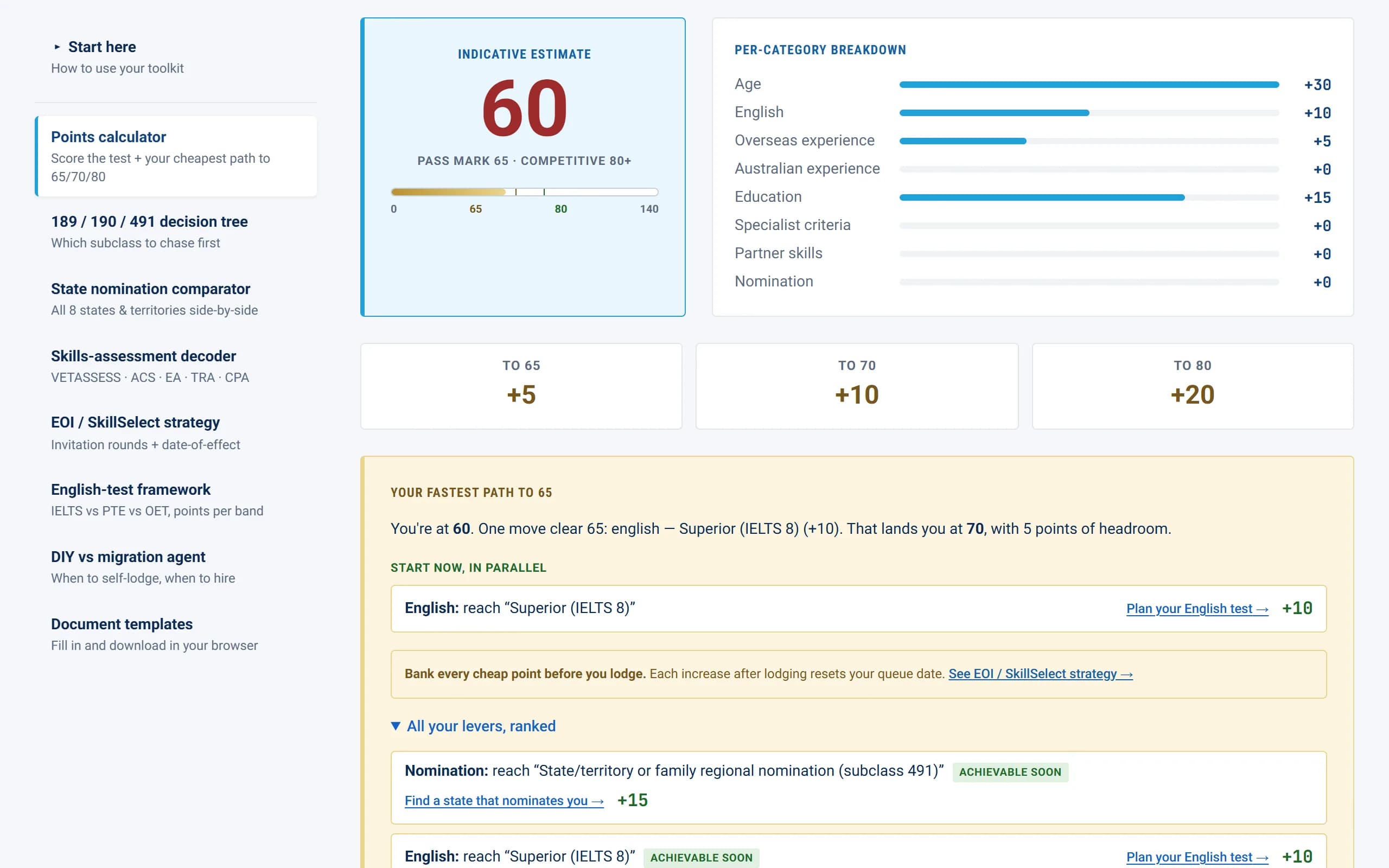
Australia classifies Wood Machinists and Other Wood Trades Workers not elsewhere classified under ANZSCO 394299. Trades Recognition Australia (TRA) conducts the skills assessment. The occupation sits on the Core Skills Occupation List (CSOL) and the Short-Term Skilled Occupation List (STSOL), unlocking subclasses 190, 491, 482, 186 and 494. Typical 2026 salaries range AUD $60,000-$90,000. Demand concentrates in Tasmania, regional Victoria and Queensland's timber belt.
Quick Facts: Wood Machinist nec Migration Pathway
| Detail | Information |
|---|---|
| ANZSCO Code | 394299 (Wood Machinists and Other Wood Trades Workers nec) |
| Skill Level | 3 (AQF Certificate III with 2 years on-the-job training, or Certificate IV) |
| Skills Assessment | TRA (Trades Recognition Australia) |
| Occupation List | CSOL and STSOL |
| Visa Options | 190, 491, 482, 186, 494 |
| Demand Level | Moderate to high — regional timber industries, prefab construction, specialty timber |
| Salary Range | AUD $60,000-$90,000 (SEEK / Jora 2026) |
| Typical 189 Score | Not applicable — occupation not on MLTSSL |
| Key Challenge | Choosing between 394299 (nec) and the more specific 394213 (Wood Machinist) |
The "nec" Question: Which Code Fits Your Work?
The "nec" suffix means "not elsewhere classified". ANZSCO 394299 is the catch-all for wood tradespeople whose duties do not fit cleanly into Furniture Finisher (394211), Picture Framer (394212) or the dedicated Wood Machinist code (394213). If your work spans multiple wood trades — operating CNC routers, building staircases, fitting out shopfronts, working with engineered timber products — 394299 is often the better fit than the narrower 394213.
Both 394299 and 394213 are TRA-assessed. Both sit on the CSOL. The pathway and visa options are effectively identical. The difference is which code best describes your actual work, and TRA will reject assessments where the chosen code does not match the employment evidence. If you operate dedicated wood-shaping machinery (moulders, saws, planers) all day, 394213 fits. If you do a wider mix — staircase construction, shopfitting carpentry, joinery assembly, engineered wood work — 394299 fits.
What Wood Trades Workers Do in Australia
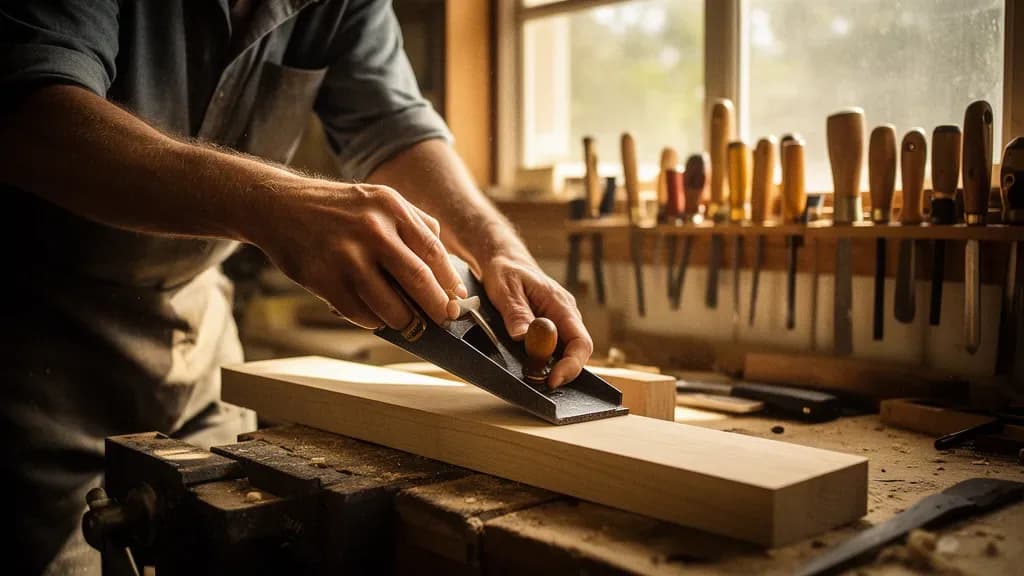
Wood machinists and other wood trades workers set up and operate woodworking machines, build staircases and joinery components, fabricate shop fittings and partitions, work with engineered timber (LVL, CLT, glulam), and assemble pre-manufactured housing components. The work spans three distinct sectors.
Production timber milling — concentrated in Tasmania, the Green Triangle (SA/Vic border), northern NSW and Queensland's south-east. Hardwood and softwood mills employ machinists to run breakdown saws, planers, moulders and finger jointers. Tasmania's specialty timber sector (Huon pine, blackwood, sassafras) employs a small but consistent base of skilled workers.
Prefabricated and engineered construction — the fastest-growing segment. Modular home builders, prefab classroom suppliers and high-rise timber construction firms (XLam in Albury, Timberlink in Tarpeena) are hiring machinists with CNC and engineered timber experience.
Joinery and shopfitting — capital-city work in commercial fit-outs, retail joinery, exhibition stands and high-end residential cabinetry. Sydney, Melbourne and Brisbane have the deepest joinery markets.
Jobs and Skills Australia identifies trade occupations as the largest contributor to persistent skill shortages nationally — 51% of Technicians and Trades Workers categories show persistent shortages. While 394299 is not always individually called out on the shortage list, the underlying timber and construction trades demand is strong and rising as Australia's modular construction sector scales.
ANZSCO 394299: The Code
ANZSCO 394299 covers wood trades workers not classified under 394211, 394212 or 394213. The unit group as a whole (3942) covers workers who set up and operate woodworking machines, finish and polish furniture, make picture frames, and perform specialised wood trade tasks. Typical 394299 duties include reading shop drawings; setting up and operating wood-shaping machinery including CNC routers; producing staircases, doors, windows and built-in furniture; working with engineered timber components; and assembling prefabricated wood structures.
Skill level is 3, which means AQF Certificate III including at least two years of on-the-job training, or AQF Certificate IV. Three years of relevant experience may substitute for the formal qualification.
Skills Assessment: Trades Recognition Australia
TRA is the assessing authority. Several pathways exist depending on training origin and visa target.
Migration Skills Assessment (MSA)
For applicants targeting permanent skilled visas (190, 491, 186) who trained outside Australia.
- Requirements: AQF Certificate III equivalent or higher, plus 3 years of post-qualification employment in the past 5 years
- Cost: From AUD $300 documentary; full schedule in the TRA MSA Applicant Guidelines
- Processing time: 12-16 weeks
- Common rejection reasons: References that describe generic carpentry rather than specific wood machinery operation; gaps in the 5-year employment window
Offshore Skills Assessment Program (OSAP)
Used for offshore applicants from approved countries where TRA conducts a practical and technical assessment.
- Requirements: Relevant qualification plus 3 years of experience in wood trades
- Processing time: 12-16 weeks after practical assessment
- Common rejection reasons: Practical performance below AQF Cert III benchmark; technical interview reveals knowledge gaps in machinery setup or shop drawing interpretation
Job Ready Program (JRP)
For graduates of Australian VET qualifications. Four stages totalling approximately AUD $3,540 (JRPRE $200, JRE $450, JRWA $2,540, JRFA $65). Processing 12+ months.
Provisional Skills Assessment (PSA)
The PSA is the entry point to the JRP — graduates use it to confirm qualification adequacy before commencing post-study employment.
Visa Pathways for Wood Machinists
Subclass 482 — Skills in Demand Visa
The dominant entry route for offshore wood machinists. An Australian employer — typically a prefab construction firm, joinery, or specialty timber mill — nominates you for a role above the Core Skills Income Threshold.
- Visa fee: AUD $4,015 (Core Skills stream)
- Salary threshold: Core Skills Income Threshold AUD $79,423
- Duration: Up to 4 years
- Quirk that matters: Senior CNC operators and engineered timber specialists clear the CSIT easily. General sawmill operators sometimes do not — confirm the nominated salary before lodging
Subclass 190 — Skilled Nominated Visa (PR)
State nomination provides +5 points and permanent residency. Tasmania and regional Victoria are the most realistic states for wood trades nomination because of their timber industry concentration.
- Visa fee: AUD $6,140 (primary applicant)
- Obligation: Live and work in the nominating state for 2 years
Subclass 491 — Skilled Work Regional (Provisional)
Regional nomination provides +15 points and a 5-year provisional visa with a PR pathway via the subclass 191. The strongest pathway for wood trades because the work is genuinely regional — timber mills, prefab plants and engineered timber producers cluster outside the major capitals.
- Visa fee: AUD $6,140 (primary applicant)
- Points boost: +15 for regional nomination
- Quirk that matters: Tasmania's specialty timber sector and the Green Triangle regions are the most realistic 491 plays
Subclass 186 — Employer Nomination Scheme (PR)
Permanent counterpart to the 482. Most wood machinists transition via the TRT stream after 2+ years on a 482.
- Visa fee: AUD $6,140 (primary applicant)
- Streams: Direct Entry or Temporary Residence Transition
Subclass 494 — Skilled Employer Sponsored Regional (Provisional)
Regional employer sponsorship for 5 years with a PR pathway via subclass 191. Increasingly used by regional sawmills and engineered timber plants struggling to fill positions locally.
- Visa fee: AUD $4,770 (primary applicant)
State Nomination
Tasmania
Tasmania's specialty timber sector — Huon pine, blackwood, sassafras — and its modular construction industry around Hobart and Launceston make it the strongest state for wood trades nomination. Tasmania's program prioritises applicants who can demonstrate genuine commitment to the state, ideally with a job offer or family connection.
Victoria
Regional Victoria — particularly the Green Triangle around Mount Gambier (which spans into SA) — has strong demand for sawmill operators and engineered timber specialists. Metropolitan Melbourne occasionally nominates joinery-focused wood machinists for high-end commercial work.
South Australia
The Green Triangle softwood plantation sector, including operations like Timberlink at Tarpeena, drives demand for production machinists. South Australia's regional nomination program is one of the more accessible 491 routes.
Queensland
Queensland's south-east timber belt and the engineered timber sector (especially around the Sunshine Coast and Toowoomba) generate ongoing demand. Queensland's program focuses on regional applicants and prioritises occupations facing shortages outside Brisbane.
New South Wales
NSW nomination is harder to secure for wood trades — the state focuses on healthcare, construction trades, ICT and engineering — but regional NSW programs and rural employer sponsorship via 491 can work for specialty timber and joinery roles.
Salary and Employment Outlook
What Wood Machinists Earn in 2026
| Role | Typical Salary Range |
|---|---|
| Entry-level Machinist (1-3 years) | AUD $55,000-$65,000 |
| CNC Operator (mid-level) | AUD $65,000-$80,000 |
| Senior Machinist / Setter | AUD $80,000-$95,000 |
| Joinery Trade Qualified (Level 5) | AUD $80,000-$100,000 |
| Engineered Timber Specialist | AUD $85,000-$110,000 |
| Saw Doctor | AUD $75,000-$95,000 |
Sources: SEEK 2026 wood machinist data; Jora salary index (national average $77,287); Glassdoor; PayScale Australia ($45.85/hr senior median).
Total packages include compulsory superannuation at 12%. Regional roles often include accommodation allowances, isolation loadings and FIFO arrangements for remote timber operations. CNC and engineered timber specialists earn above general production machinists because the skill base is scarcer.
Sectors Hiring Wood Trades Workers
- Modular and prefab construction — fastest-growing segment, hiring CNC and assembly specialists
- Engineered timber (CLT, glulam, LVL) — high-skill end, sites like XLam (Albury) and Timberlink (Tarpeena)
- Hardwood and softwood milling — Tasmania, the Green Triangle, northern NSW, south-east Queensland
- Commercial joinery and shopfitting — Sydney, Melbourne, Brisbane fit-out market
- Stair manufacturing — specialist staircase builders nationally
Tips for a Successful Application
1. Choose Between 394299 and 394213 Honestly
If your day-to-day is operating dedicated wood machinery (saws, moulders, planers, lathes), use 394213. If your work spans multiple wood trades — CNC, staircase construction, engineered timber, shopfitting — 394299 fits better. TRA reads the references against the code. Mismatch fails.
2. Document CNC and Engineered Timber Experience
Employers and state nominators value modern timber technology skills above traditional saw-running. List every CNC machine you have operated (brand, model, software), every engineered timber product you have worked with (CLT, glulam, LVL, finger-jointed, MDF-core), and every shop drawing software you can read (CAD/CAM, NestFab, ALPHACAM).
3. Target Tasmania and Regional Victoria for 491
The strongest 491 routes for wood trades are Tasmania's specialty timber sector and regional Victoria's Green Triangle. Both have ongoing labour shortage and a track record of nominating wood trades when a regional employer pushes the application.
4. Negotiate Above the CSIT Floor
The 482 Core Skills Income Threshold is AUD $79,423. Entry-level production roles can fall below this; senior CNC, joinery and engineered timber roles clear it. Negotiate the nominated salary above CSIT before lodging — under-quoting kills the application.
5. Build Documentation Through Your Career
Photograph completed work. Keep copies of shop drawings you have worked from. Save records of machinery operated, software used and qualifications earned. TRA assessors and prospective sponsors both reward verifiable evidence over generic descriptions.
Step-by-Step Migration Roadmap
- Confirm your ANZSCO code choice between 394299 and 394213 using the ANZSCO code finder
- Verify list status on the 2026 SOL guide and CSOL hub
- Sit your English test — IELTS 6.0 or PTE equivalent for permanent visas; 5.0 each band for 482
- Gather employment references that describe duties matching 394299
- Apply to TRA via the skills assessment hub
- While waiting, identify target employers — focus on Tasmania, Green Triangle, prefab/CLT firms
- Submit EOI in SkillSelect for 190 or 491 once skills assessment is positive
- Apply to relevant state programs — Tasmania, Victoria, SA, Queensland
- Or pursue 482 employer sponsorship if a job offer comes first
- Lodge visa application within 60 days of invitation
- Complete health, character and biometrics
- Receive visa grant and relocate
Frequently Asked Questions
What is the difference between ANZSCO 394299 and 394213?
394213 (Wood Machinist) is the specific code for workers who set up and operate dedicated wood-shaping machinery. 394299 (Wood Machinists and Other Wood Trades Workers nec) is the broader catch-all for wood trades workers whose duties span multiple specialisations — CNC operation, staircase construction, engineered timber, shopfitting. Both are TRA-assessed and both sit on the CSOL. Choose the code that genuinely matches your work.
Which states nominate Wood Machinists in 2026?
Tasmania, regional Victoria, South Australia and Queensland are the most realistic states for 190 and 491 nomination. Tasmania's specialty timber sector and the Green Triangle softwood region drive most of the demand. NSW occasionally nominates joinery-focused wood trades workers but is more competitive.
Is employer sponsorship easier than the points test?
For most offshore applicants, yes. The 482 does not require points-based competition; it requires a qualifying employer and a nominated role at or above the CSIT. For wood machinists with CNC or engineered timber experience, sponsorship is realistic. State nomination (190/491) is achievable but requires patience because allocations are limited.
Can I migrate as a Wood Machinist with experience but no formal qualification?
Possibly. TRA accepts three years of relevant post-qualification experience as a substitute for AQF Certificate III in some pathways. The OSAP route, which includes a practical assessment, is the most realistic option for experience-only candidates. Document your work history thoroughly.
How is demand for wood trades changing in Australia?
Demand is shifting from traditional sawmilling toward prefabricated construction and engineered timber. The mass timber sector — CLT, glulam, LVL — is expanding alongside Australia's modular housing push. Workers with CNC, engineered timber and assembly experience are in stronger demand than traditional production machinists.
Will I qualify for the 189 visa?
No. ANZSCO 394299 is not on the Medium- and Long-term Strategic Skills List (MLTSSL), which is the only list that opens the 189 Skilled Independent visa. Available subclasses are 190, 491, 482, 186 and 494.
For broader context on Australia's skilled migration program, see the most in-demand occupations for 2026 guide.