Traditional Chinese Medicine Practitioner Visa Pathway to Australia: Complete 2026 Guide
Updated: 16 August 2026
Australia classifies Traditional Chinese Medicine Practitioner under ANZSCO 252214. The Chinese Medicine Board of Australia (CMBA), part of AHPRA, conducts both the migration skills assessment and the mandatory practice registration. The occupation sits on the Core Skills Occupation List (CSOL) and STSOL, unlocking subclasses 190, 491, 482 and 186. Typical 2026 salaries range AUD $61,000-$110,000.
Quick Facts: TCM Practitioner Migration Pathway
| Detail | Information |
|---|---|
| ANZSCO Code | 252214 (Traditional Chinese Medicine Practitioner) |
| Skill Level | 1 (Bachelor degree or higher in Chinese medicine) |
| Skills Assessment | CMBA (Chinese Medicine Board of Australia, via AHPRA) |
| Occupation List | CSOL and STSOL — no 189 access |
| Visa Options | 190, 491, 482, 186 |
| Demand Level | Moderate — driven by private practice growth and rising patient demand |
| Salary Range | AUD $61,000-$110,000 (PayScale, Endeavour College 2026) |
| Typical 190 Score | 70-85 points after state nomination |
| Key Challenge | CMBA registration is the bottleneck — usually 6-12 months parallel to the visa |
Role Context: TCM Practitioners in Australia
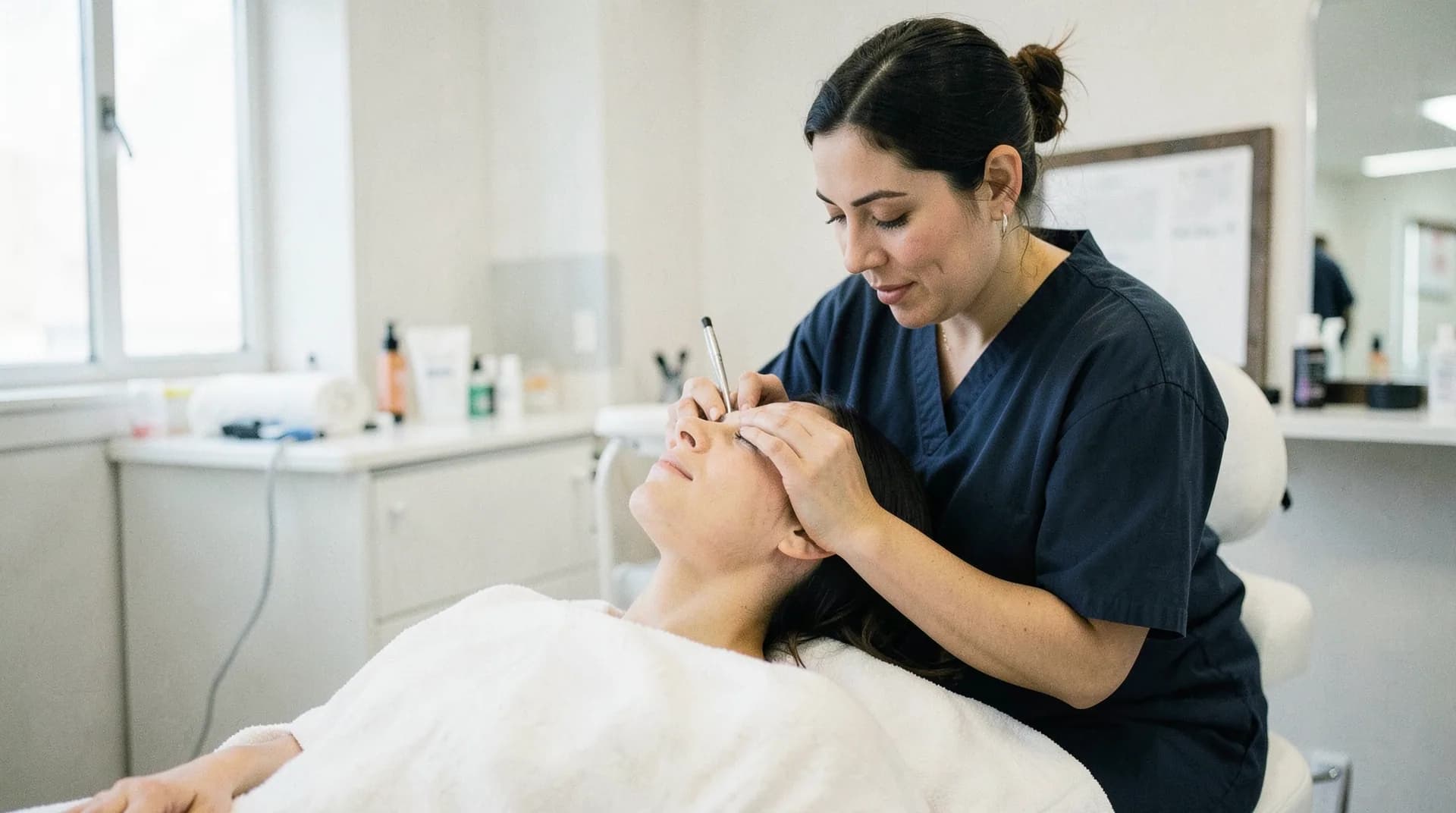
Traditional Chinese Medicine practitioners diagnose and treat patients using acupuncture, Chinese herbal medicine, cupping, moxibustion, gua sha, tui na massage and dietary therapy. Since 1 July 2012, all TCM practitioners working in Australia must be registered with the Chinese Medicine Board of Australia under the National Registration and Accreditation Scheme. Australia is one of the first Western jurisdictions to formally regulate Chinese medicine alongside conventional medicine.
The profession is concentrated in private practice. Around 4,800-5,200 registered Chinese medicine practitioners work across Australia in 2026, with most patient encounters occurring in metropolitan Sydney, Melbourne, Brisbane and Perth. Demand has grown steadily — public surveys suggest roughly one in ten Australians has received acupuncture treatment in the past year, and over 80% of GPs refer patients to acupuncturists at least once annually. Private health insurers continue to cover acupuncture under extras policies, which supports practitioner income.
The work is overwhelmingly self-employed or contract-based. Few large employers exist; multi-disciplinary integrative health clinics, day spas, sports rehabilitation centres and university student health services are the most common employer types. The federal government's recognition of Chinese medicine as a regulated profession has lifted the credibility floor, but the migration pathway remains tightly bounded by CMBA registration.
ANZSCO 252214 — Code Mapping and Tasks
ANZSCO 252214 covers practitioners who treat imbalances of energy flows through the body by assessing the whole person and applying acupuncture, Chinese herbal medicine, massage, dietary advice, exercise and breathing therapies. The code sits inside Unit Group 2522 Complementary Health Therapists, alongside 252211 Acupuncturist, 252212 Homoeopath, 252213 Naturopath, 252299 Complementary Health Therapists nec.
Australia has consolidated acupuncture and Chinese herbal medicine under a single CMBA registration since 2012. ANZSCO 252211 Acupuncturist is now considered functionally overlapping with 252214 for migration purposes. The Department of Home Affairs accepts either code where the practitioner is registered with the CMBA as either an acupuncturist, a Chinese herbal medicine practitioner, or both.
Typical tasks under 252214 include:
- Taking patient history, observing tongue and pulse diagnosis
- Inserting fine needles at acupuncture points
- Prescribing Chinese herbal formulae (Schedule 4 herbs require additional endorsement)
- Applying cupping, moxibustion and gua sha
- Recommending dietary, lifestyle and qigong interventions
- Maintaining clinical records compliant with CMBA Code of Conduct
Skills Assessment and Registration
The Chinese Medicine Board of Australia is both the AHPRA-designated skills assessing authority for migration and the practice regulator. Unlike most other occupations, the skills assessment and registration are interlinked — to receive a positive migration skills assessment, you must hold or be eligible for CMBA registration.
CMBA Skills Assessment
Requirements:
- Qualification in Chinese medicine assessed against the CMBA approved programs of study or the Chinese Medicine Accreditation Committee (CMAC) standards
- Evidence of English language proficiency: IELTS 7.0 overall with minimum 7.0 in each band, or equivalent on OET/PTE/TOEFL
- Recency of practice: continuing professional development and recent clinical practice (typically within five years)
- Police checks (AFP and overseas)
Assessment fee: AUD $1,500-$2,500 depending on whether the application is for skills assessment only, registration only, or combined. Verify directly with AHPRA at the time of application — fees adjust annually each 1 July.
Processing time: 8-16 weeks for the initial skills assessment, longer where additional evidence is required.
CMBA Registration (separate, mandatory before practice)
For internationally qualified Chinese medicine practitioners, CMBA registration is a multi-step process:
- Qualification assessment against AQF Bachelor of Chinese Medicine or equivalent
- English language evidence (same standard as skills assessment)
- Successful completion of the CMBA regulatory examination, where required
- Identity, criminal history, and professional indemnity insurance evidence
- Recency of practice declaration
Registration fees: The CMBA froze 2025-26 registration fees at the 2024-25 level. The annual general registration fee was AUD $621 in 2024-25 and remains at that level for the registration year running 1 December 2025 to 30 November 2026. A pro-rata fee review takes effect from 1 July 2026.
Processing time: 6-12 months from initial application to registration grant, depending on examination scheduling and evidence completeness.
Common rejection reasons: Failure to meet CMBA-approved program of study standards (most common for graduates of Chinese mainland universities whose curricula differ from Australian accredited programs), insufficient English, lack of recent clinical practice, and incomplete supervised practice records for graduates of programs that did not include clinical placements.
Visa Pathways for TCM Practitioners
Subclass 482 — Skills in Demand Visa
Employer sponsorship is the dominant pathway for TCM practitioners, particularly through multi-disciplinary clinics and integrative medicine centres.
- Visa fee: AUD $3,210 (Core Skills stream, primary applicant)
- Salary threshold: AUD $76,515 minimum (Core Skills, FY2025-26)
- Processing time: Median ~4 months, 90% within 7 months
- Quirk: TCM clinic owners often sponsor practitioners they have known professionally for years; sponsorship by family-owned clinics is permitted but the labour market test and genuine need requirements are scrutinised
Subclass 190 — Skilled Nominated Visa
Permanent residency via state nomination plus 5 points.
- Visa fee: AUD $6,140 (primary applicant)
- Nominating states in 2026: Limited — South Australia and Victoria have historically nominated occupations within ANZSCO Unit Group 2522 on a case-by-case basis; verify current rolling lists at the time of EOI
- Processing time: 6-12 months after nomination
- Obligation: Reside in the nominating state for two years
Subclass 491 — Skilled Work Regional Visa
Five-year provisional regional visa with PR pathway via subclass 191.
- Visa fee: AUD $6,140 (primary applicant)
- Nominating states: South Australia and selected regional Designated Area Migration Agreement (DAMA) zones
- Quirk: Some regional areas list complementary health practitioners under DAMA agreements where rural communities are underserved; the Far North Queensland and Pilbara DAMAs have been used historically
Subclass 186 — Employer Nomination Scheme
Permanent residency via employer sponsorship.
- Visa fee: AUD $6,140 (primary applicant)
- Processing time: Direct Entry stream median 12-13 months; TRT stream typically faster after two years on 482
- Quirk: Direct Entry 186 requires three years of relevant work experience; TRT is the more common 186 route for TCM practitioners moving from 482
State Nomination for TCM Practitioners
South Australia
South Australia has been the most accessible state for complementary health practitioners over recent program years. Adelaide hosts a sizeable Chinese-Australian community and several integrative health practices. The state's 2025-26 program allocates 2,250 nomination places, with approximately 30% still available as of March 2026.
Victoria
Victoria nominates from its priority occupations under healthcare, though TCM-specific invitations are uncommon. Melbourne's Box Hill, Glen Waverley and Doncaster areas have the highest concentration of Chinese medicine clinics in Australia. Victoria typically asks for evidence of employer commitment or strong settlement intent.
States that do not currently nominate ANZSCO 252214 (NSW, QLD, WA, TAS, ACT, NT) should be confirmed against published rolling lists before lodging an EOI.
Salary and Employment Outlook
What TCM Practitioners Earn in 2026
| Role | Typical Salary Range (AUD) |
|---|---|
| Entry-level practitioner (1-3 yrs) | $53,000-$72,000 |
| Established practitioner (employee) | $65,000-$90,000 |
| Senior practitioner (8+ yrs) | $80,000-$110,000 |
| Clinic owner / principal | $90,000-$160,000+ (revenue-dependent) |
| Hourly rate (private practice) | $85-$130 per hour |
Source: PayScale 2026, Endeavour College of Natural Health career data, and SalaryExpert Australian acupuncturist averages. The average Chinese Medicine practitioner in Australia earns AUD $71,216 (PayScale 2026), with senior practitioners reaching AUD $88,568+ (SalaryExpert).
Many practitioners work part-time across two or three clinics, supplementing income with herbal dispensary sales. Self-employed practitioners typically retain 50-65% of clinic revenue after room rental, with the balance going to the clinic owner for premises and administration.
Sectors and Employers
- Private multi-disciplinary clinics — the dominant employer type; combine acupuncture with osteopathy, physiotherapy and naturopathy
- Day spas and wellness centres — particularly in tourist regions and inner-city Melbourne and Sydney
- University student health centres — limited but growing; Melbourne, Monash and UNSW have included acupuncture in student health services
- Sports rehabilitation — AFL, NRL and Olympic Park sports medicine centres employ TCM practitioners alongside physiotherapists
- Aged care and palliative care — slow growth area with consistent demand for pain management
Tips for a Successful Application
1. Start CMBA registration before the visa application
The CMBA registration timeline (6-12 months) typically exceeds the visa processing timeline. Lodge your registration application as early as possible, and prepare for the CMBA regulatory examination in parallel. AHPRA does not accept conditional applications dependent on visa grant.
2. Document English to 7.0 minimum across all four bands
Unlike some occupations where overall scores suffice, CMBA requires a minimum 7.0 in each of listening, reading, writing and speaking on IELTS (or equivalent). Many applicants meet the overall but fall short on writing or speaking subscores. Schedule retests early.
3. Verify your overseas qualification against CMBA approved programs
CMBA publishes a list of approved Australian programs. For overseas qualifications, AHPRA assesses against the Chinese Medicine Accreditation Committee standards. Graduates of mainland Chinese universities should expect detailed scrutiny of curriculum hours, clinical practice exposure, and Western biomedical science components.
4. Maintain recent clinical practice evidence
CMBA requires evidence of recent practice — typically 450 hours within the past three years. Practitioners who paused practice during COVID-19 or maternity leave should plan to top up clinical hours before applying.
5. Target employer sponsorship at established clinics
Self-sponsorship and family-clinic sponsorship are scrutinised heavily by Home Affairs. Established multi-location clinics with multiple existing employees are stronger sponsors. Roles paying above the AUD $76,515 Core Skills threshold qualify for the 482, and many senior TCM practitioner positions clear this floor in 2026.
Step-by-Step Migration Roadmap
- Confirm your role maps to ANZSCO 252214 — review the ANZSCO code finder
- Verify CSOL status — confirm Traditional Chinese Medicine Practitioner remains on the Core Skills Occupation List
- Sit your English test — IELTS 7.0 minimum each band, or equivalent
- Apply to CMBA for skills assessment and registration — combined application via AHPRA
- Schedule and pass the CMBA regulatory examination where required
- Receive positive skills assessment and registration approval
- Submit EOI in SkillSelect for 190/491, or secure a sponsoring clinic for 482/186
- Apply for state nomination — South Australia or Victoria where eligible
- Receive invitation and lodge visa within 60 days
- Complete health and character checks including AFP clearance
- Receive visa grant and relocate — register your CMBA practising location with AHPRA upon arrival
Frequently Asked Questions
Is CMBA registration mandatory for migration as a TCM practitioner?
Yes. Since 2012, all Chinese medicine practitioners working in Australia must be registered with the Chinese Medicine Board of Australia. The CMBA is also the designated skills assessing authority for ANZSCO 252214, which means the skills assessment and the practice registration are interlinked. You cannot obtain a positive skills assessment without being eligible for CMBA registration.
Can I migrate as an Acupuncturist (252211) instead?
Yes. ANZSCO 252211 Acupuncturist sits on the same CSOL/STSOL framework and is assessed by the CMBA. The choice between 252211 and 252214 depends on your scope of practice — if you primarily use acupuncture without herbal medicine, nominate 252211. If you combine both modalities, 252214 is the better fit and is more commonly recognised by AHPRA.
Do I need to repeat my training in Australia?
Usually no, provided your overseas qualification is assessed by AHPRA as comparable to an AQF-accredited Bachelor of Chinese Medicine. Graduates from major Chinese, Korean and Taiwanese TCM universities typically meet the standard with supplementary evidence of clinical hours and Western biomedical science components. Bridging programs are available through RMIT and Endeavour College where gaps exist.
Is there a 189 pathway for TCM Practitioners?
No. ANZSCO 252214 is on the CSOL and STSOL but not the MLTSSL, which is the eligibility list for the subclass 189 independent skilled visa. Migration is via 190, 491, 482 or 186 only.
Can I work as a self-employed practitioner on a 190 or 491 visa?
Yes. Permanent visas (190) and provisional regional visas (491) do not restrict employment to a specific employer once granted. Self-employment as a registered TCM practitioner is permitted from grant date, subject to CMBA registration and Australian Business Number requirements. Employer-sponsored visas (482, 186) tie you to the sponsor.
Which qualifications are recognised by CMBA for overseas applicants?
CMBA assesses each qualification individually against the Chinese Medicine Accreditation Committee standards. Recognised foundations include the Bachelor of Chinese Medicine from major Chinese universities (Beijing University of Chinese Medicine, Shanghai University of Traditional Chinese Medicine, Nanjing University of Chinese Medicine, China Academy of Chinese Medical Sciences), Korean Oriental Medicine degrees from Kyung Hee or Wonkwang, and Taiwanese Chinese Medicine degrees from China Medical University.