Dental Prosthetist Visa Pathway to Australia: Complete 2026 Guide
Updated: 16 August 2026
Australia classifies Dental Prosthetists under ANZSCO 411212. Trades Recognition Australia conducts the skills assessment, and the Dental Board of Australia (AHPRA) handles mandatory professional registration. The role sits on the Core Skills Occupation List (CSOL), unlocking subclasses 482 and 186. Typical 2026 salaries range AUD $95,000-$150,000. Dual approval — TRA plus AHPRA — is the defining feature of this pathway.
Quick Facts: Dental Prosthetist Migration Pathway
| Detail | Information |
|---|---|
| ANZSCO Code | 411212 (Dental Prosthetist) |
| Skill Level | 1 (Bachelor degree or equivalent, plus five-year experience substitution allowed) |
| Skills Assessment | TRA (Trades Recognition Australia) plus Dental Board registration via AHPRA |
| Occupation List | CSOL — not on MLTSSL or STSOL |
| Visa Options | 482 (Skills in Demand), 186 (Employer Nomination) |
| Demand Level | High — ageing population drives sustained denture demand; 1,273 prosthetists nationally |
| Salary Range | AUD $116,000-$120,000 average; range AUD $95,000-$150,000 (SEEK, Glassdoor 2026) |
| Typical 189 Score | N/A — occupation not on MLTSSL |
| Key Challenge | Two parallel approval processes — TRA skills assessment AND Dental Board registration |
What Dental Prosthetists Actually Do in Australia
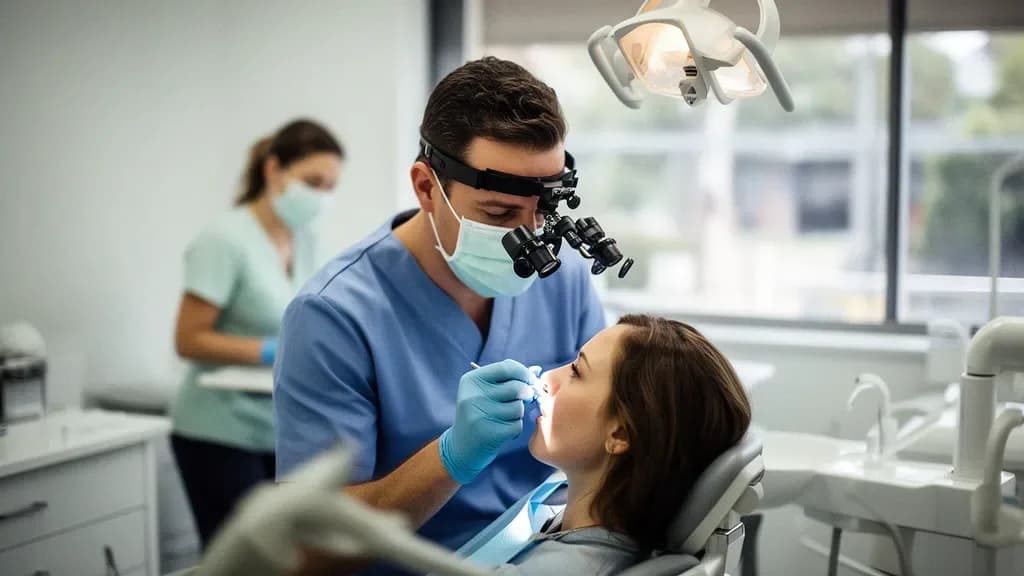
A Dental Prosthetist is the only non-dentist allied dental practitioner allowed to design, construct, fit and supply complete and partial removable dentures directly to patients — without supervision by a dentist. This is what separates them from Dental Technicians (411213), who work behind the scenes in laboratories and cannot deal with patients directly.
The Australian market is small but specialised. The Dental Board's national register lists 1,273 dental prosthetists. Most operate from private clinics — some independently, some as employees of dental practices, and a growing number through chain providers like Pacific Smiles, Bupa Dental and Maven Dental. Public sector roles exist in state oral health services, particularly Victoria and Queensland.
Demand is steady. An ageing Australian population means complete denture work has not collapsed in the way it has in some other markets, and mobile prosthetics services to aged care facilities are a sustained growth area. Regional Australia is structurally undersupplied — towns of 20,000-40,000 often have no resident prosthetist, and locum opportunities pay well.
ANZSCO 411212 — What the Code Covers
The code falls under Unit Group 4112 (Dental Hygienists, Technicians and Therapists). It is Skill Level 1, despite the diploma-level qualifications historically associated with the trade — because the role carries clinical autonomy with patients.
Core tasks recognised by ANZSCO:
- Examining patients and taking impressions for dentures
- Designing and constructing full and partial removable dentures
- Repairing and relining existing dentures
- Fitting and adjusting dentures in the mouth
- Advising patients on care and oral hygiene
- Working with dentists on cases requiring tooth extraction or implants
The code is distinct from Dental Technician (411213) — prosthetists work chairside with patients, technicians do not. It is also distinct from Dental Hygienist (411211) and Dental Therapist (411214), both of which focus on prevention and treatment of natural teeth rather than prosthetic appliances.
Skills Assessment
This occupation has two non-negotiable approval steps. Both must be cleared before the visa can be granted.
Step 1 — Trades Recognition Australia (TRA)
TRA assesses the technical qualification and experience. The relevant pathway is the Migration Skills Assessment (MSA) for non-trade roles where TRA is the listed body. Dental Prosthetist sits on the TRA Assessment Standards Policy list.
Qualification requirement: A qualification comparable to an Australian Bachelor's degree in dental prosthetics, or substantial post-qualification experience. At least five years of relevant experience may substitute for the formal qualification, per ANZSCO Skill Level 1 substitution rules.
Experience requirement: Detailed employment evidence showing duties consistent with independent denture work — impressions, design, fitting, patient consultation.
Assessment cost: Dental assessments through TRA fall into the complex category. Total cost typically exceeds AUD $3,500 depending on pathway, and is paid in stages (application, advisory letter, employment verification).
Processing time: 4-6 months. Complex dental assessments routinely run longer than the headline 12-week TRA estimate.
Common rejection reasons: Applicants whose home country combines the technician and prosthetist roles into a single qualification often submit evidence of laboratory work without patient-facing fitting — TRA rejects on grounds that the duties match 411213 (Dental Technician) instead.
Step 2 — Dental Board of Australia (AHPRA)
The Dental Board of Australia, under the Australian Health Practitioner Regulation Agency, regulates dental prosthetists nationally. General registration is a legal precondition to practising — no registration, no work, regardless of visa status.
Qualification benchmark: Advanced Diploma of Dental Prosthetics (Australian) or equivalent overseas qualification assessed by the Australian Dental Council. Recognised Australian programmes include RMIT, Southbank Institute of Technology (Queensland), TAFE NSW Sydney Institute, and TAFE SA Adelaide North, plus the Master of Dental Technology in Prosthetics from Griffith University.
English language standard: Per AHPRA's English standard — IELTS Academic 7.0 each band or OET equivalent in most cases.
Other requirements: Criminal history check, proof of identity, recency of practice (within the last 5 years).
Registration fee: AUD $850-$950 application; annual renewal AUD $700-$800.
Processing time: 3-4 months once the ADC assessment is complete. The ADC assessment itself can take 6-12 months for fully overseas-qualified applicants.
Trans-Tasman applicants registered in New Zealand can apply for general registration under the Trans-Tasman Mutual Recognition Act, bypassing the ADC route.
Visa Pathways
Because 411212 is on the CSOL only, employer-sponsored visas are the realistic routes.
Subclass 482 — Skills in Demand Visa
The standard temporary entry point. Most accredited sponsors in this space are large dental chains and public sector oral health services.
- Visa fee: AUD $4,015 (primary applicant)
- Salary threshold: Core Skills Income Threshold AUD $76,515 until 30 June 2026, then AUD $79,423. Most prosthetists earn well above this, often above the Specialist Skills threshold of AUD $146,576
- Duration: Up to 4 years
- Processing time: 3-6 months
- Quirk: Dental Board registration must be granted before the 482 nomination is finalised. Sponsors typically delay the formal nomination until AHPRA has issued the registration letter.
Subclass 186 — Employer Nomination Scheme
Permanent residency through an employer.
- Visa fee: AUD $6,140 (primary applicant)
- Streams: Direct Entry (3+ years experience, full TRA + AHPRA, age under 45) or Temporary Residence Transition (after 2 years on 482 with the same employer)
- Processing time: 6-12 months
- Quirk: The Direct Entry stream demands the full TRA assessment plus AHPRA registration upfront — a 9-15 month sequence before the visa can even be lodged. TRT via 482 is the more common path because it lets the applicant work while the PR application is being processed.
State Nomination
Dental Prosthetist sits on the CSOL but not the MLTSSL or STSOL, so 190 and 491 are not available in 2026. Some states do offer 494 (Skilled Employer Sponsored Regional) for CSOL roles where the employer is in a designated regional area. Regional Queensland, regional New South Wales, Tasmania and the Northern Territory occasionally support dental prosthetist nominations through 494, particularly for mobile aged care prosthetics services.
Salary and Employment Outlook
| Role / Experience | Typical Annual Salary (AUD) |
|---|---|
| Entry-level employed prosthetist | $95,000-$110,000 |
| Mid-career employed prosthetist | $115,000-$135,000 |
| Senior employed prosthetist | $130,000-$150,000 |
| Practice principal / independent | $150,000-$250,000+ |
| National average (SEEK 2026) | $116,801-$119,662 |
Sources: SEEK Career Advice Dental Prosthetist salary 2026; Glassdoor Australia 2026.
Total packages typically include 11.5% superannuation and, in private practice, performance-linked bonuses. Independent prosthetists with established practices in suburban or regional areas earn significantly above the employed band — the upper quartile of practice principals sits well above AUD $200,000.
Highest-paying contexts:
- Independent practice ownership in suburban or regional locations
- Mobile prosthetics services to aged care facilities
- Tertiary public oral health services in Victoria and Queensland (band 7+ classifications)
- Specialist chains with denture-focused service lines
Tips for a Successful Application
1. Map TRA and AHPRA on Parallel Tracks From Day One
The two processes do not depend on each other and can run simultaneously. Applicants who sequence them — finish TRA, then start AHPRA — add 6-9 months to the timeline. Start the ADC qualification verification at the same time as the TRA application.
2. Don't Confuse Prosthetist with Technician
If your home qualification trained you to make dentures in a lab but not to fit them to patients, the correct code is 411213 (Dental Technician), not 411212. Submitting under the wrong code triggers rejection at TRA and wastes the AUD $3,500+ assessment fee. Read both ANZSCO descriptions and match honestly.
3. Use OET if Your IELTS Score Sits at the Borderline
The Dental Board accepts OET as an alternative to IELTS, and many overseas-trained dental professionals find OET easier to clear because the content is clinical rather than general academic. AHPRA's standard requires a B grade in each of the four OET components — equivalent to IELTS 7.0.
4. Plan for Recency of Practice
The Dental Board's recency of practice requirement (typically 1 year of practice within the last 5 years) catches applicants who have spent extended time away from clinical work — for example, applicants who completed a master's degree in a non-prosthetics area. Maintain documented clinical hours in your home jurisdiction during the migration process.
5. Target Regional Sponsors for Faster PR
Regional sponsors using 494 (with eligible CSOL occupations under specific arrangements) and follow-on 191 give a clearer PR path than urban 482-then-186. Mobile prosthetics services to regional aged care facilities are an underutilised entry point.
Step-by-Step Migration Roadmap
- Confirm the correct code — review your duties against the ANZSCO code finder; rule out 411213
- Check the CSOL — verify 411212 on the Core Skills Occupation List
- Lodge ADC qualification verification — Australian Dental Council; parallel with TRA
- Lodge TRA Migration Skills Assessment — full dental assessment pathway
- Sit OET or IELTS — minimum B grade OET / 7.0 IELTS each band for AHPRA
- Apply for Dental Board registration via AHPRA — once ADC has cleared
- Secure an Australian employer sponsor — accredited 482 sponsor preferred
- Sponsor lodges nomination — Skills in Demand stream, after AHPRA registration is in hand
- Lodge the 482 visa — AUD $4,015 within 12 months of TRA outcome
- Complete health and character checks
- Work in Australia for 2 years on the 482
- Transition to 186 via TRT — permanent residency
Frequently Asked Questions
Do I need both TRA and AHPRA?
Yes. TRA assesses whether your qualification and experience match the ANZSCO description — this satisfies the visa skills requirement. AHPRA registration through the Dental Board is a separate legal requirement to practise dentistry in Australia. Without AHPRA you cannot work in the role, regardless of how strong your TRA outcome is.
Can I work as a Dental Prosthetist without seeing patients?
No — that is what differentiates 411212 from 411213. If your work is entirely lab-based with no patient consultations, fittings or impressions, you are working as a Dental Technician and should apply under 411213, which has its own pathway and does not require AHPRA registration.
How long does the full pathway take?
Realistically 18-24 months from start to 482 grant. The bottleneck is usually ADC qualification verification (6-12 months), followed by AHPRA registration (3-4 months). TRA runs in parallel. Some applicants complete it in 14 months, but compressing it requires running every step in parallel and faultless documentation.
Is Dental Prosthetist on the 189 or 190 list in 2026?
No. The occupation is CSOL-only in 2026. Points-tested pathways (189, 190) are not available. Only employer-sponsored routes (482, 186, and 494 in regional areas) apply.
Can my dental prosthetics qualification from India, the Philippines or the UK be recognised?
UK-trained dental prosthetists (registered with the GDC) often clear ADC quickly because curriculum overlap is high. Indian and Filipino qualifications typically require additional examinations or bridging study through ADC's competency assessment route. Applicants from countries without a separate dental prosthetics qualification (where dentures are made by dentists or by technicians under supervision) face the steepest path and may need formal Australian study.
What does the ADC competency examination involve?
The Australian Dental Council competency examination for overseas-qualified dental prosthetists has two main components — a written examination covering theoretical knowledge of dental prosthetics, oral anatomy, materials and clinical practice, and a practical examination covering complete dentures, partial dentures, denture repairs, immediate dentures and patient management. Each sitting costs several thousand dollars and is held in limited Australian centres. Applicants typically need 6-12 months of preparation between qualification verification and the examination. Bridging programs offered at TAFE NSW and TAFE SA help applicants close gaps in scope or technique before sitting.
Are there demand differences between metropolitan and regional Australia?
Yes — and the gap is meaningful. Metropolitan dental prosthetist markets in Sydney, Melbourne and Brisbane are well-supplied with established practitioners and inherited practice networks. Regional and outer-suburban demand is structurally unmet. Towns with 20,000-40,000 residents often have one or no resident prosthetist, and patients drive 1-2 hours for denture work. The economic opportunity for regional practice — particularly mobile services to aged care facilities — outstrips metropolitan opportunities. State and regional sponsorship is also easier to secure outside the capital cities, and the 494 regional visa offers a faster PR pathway.