How to Move to Australia Permanently: The Ultimate Guide
Moving to Australia permanently involves five major stages: researching your visa pathway, preparing your application (skills assessment, English test, documents), applying for and obtaining your visa, relocating and settling in, and eventually applying for citizenship. The entire journey from initial research to Australian citizenship typically takes 5 to 8 years. This guide walks you through every step, with realistic timelines, costs, and practical advice for each stage of the process.
Stage 1: Research and Planning (1-3 Months)
Before spending a dollar on applications or assessments, invest time in understanding whether Australia is the right move and which pathway is available to you.
Determine Your Eligibility
Start with the fundamentals:
Do you have a skilled occupation? Check whether your profession appears on Australia's skilled occupation lists. This determines your access to skilled migration pathways.
How old are you? Most skilled visa pathways have an age limit of 45. The sweet spot for points is 25-32 (maximum 30 age points). If you're over 40, your options narrow significantly.
What's your English level? You'll need at least IELTS 6.0 (or equivalent) for most skilled visas. Higher scores dramatically improve your points.
Do you have connections to Australia? An employer willing to sponsor you, a state that might nominate you, or a partner who's Australian all open specific pathways.
Identify Your Pathway
The main pathways to permanent residency are:
- Skilled Independent (subclass 189): No sponsor needed, based entirely on your points score
- Skilled Nominated (subclass 190): State nomination adds 5 points
- Skilled Regional (subclass 491→191): Regional living adds 15 points
- Employer Sponsored (subclass 482→186): Requires an Australian employer
- Partner visa (subclass 820/801): Requires an Australian partner
- Business/Investor visas: Requires significant capital
For detailed comparison: Every pathway to Australian PR
Calculate Your Budget
Moving to Australia is expensive. Budget for:
| Cost Component | Estimated Range (AUD) |
|---|---|
| Skills assessment | $500-$3,500 |
| English language test | $300-$400 |
| Visa application fee | $6,135-$11,710 |
| Police clearances (all countries) | $100-$500 |
| Medical examinations | $300-$500 per person |
| Migration agent (optional) | $3,000-$8,000 |
| Flights | $500-$3,000 |
| Initial accommodation (4 weeks) | $2,000-$5,000 |
| Bond and advance rent | $3,000-$6,000 |
| Initial living costs (1 month) | $3,000-$5,000 |
| Total (single applicant) | $16,500-$35,000+ |
For a family, multiply most costs by the number of family members and add the additional applicant visa charges.
Stage 2: Preparation (3-6 Months)
This is the most time-intensive stage and where most of your upfront costs are incurred.
Skills Assessment
Your occupation must be formally assessed by the designated assessing authority for your ANZSCO code.
What you'll need:
- Certified copies of all qualifications (degrees, diplomas, certificates)
- Official academic transcripts
- Employment references on company letterhead detailing your duties, dates, and hours
- CV/resume
- Any professional registrations or licenses
Timeline: 2-4 months depending on the assessing authority.
English Language Test
Take your test as early as possible. Results are valid for 3 years (for some visas) or 12 months (for some assessment bodies).
Test options:
- IELTS Academic: The traditional choice. Well-known globally.
- PTE Academic: Computer-based, often faster results. Many find it easier to score higher.
- TOEFL iBT: Less commonly used in Australia but accepted.
- OET: For healthcare professionals only.
Target scores for maximum points:
- Superior English (20 points): IELTS 8.0+ each band / PTE 79+ each
- Proficient English (10 points): IELTS 7.0+ each band / PTE 65+ each
Police Clearances
You need police clearances from every country where you've lived for 12+ months in the past 10 years. Start these early because some countries take months.
Health Examinations
Complete your medical examination with a panel physician approved by the Department of Home Affairs. These include a general physical examination, chest X-ray, and blood and urine tests.
Stage 3: Visa Application (6-24 Months)
For Points-Based Visas (189/190/491)
- Submit your Expression of Interest (EOI) through SkillSelect
- Wait for an invitation. This can take 1-12 months depending on your points score and occupation demand.
- Lodge your visa application within 60 days of invitation via ImmiAccount.
- Provide all supporting documents. Upload everything: skills assessment, English test results, employment evidence, qualifications, police clearances, medical results.
- Wait for processing. 6-12 months for most skilled visas.
- Visa grant. You'll receive an email notification. Your visa is entirely electronic.
For Employer-Sponsored Visas (482→186)
- Find an Australian employer willing to sponsor you.
- Employer applies for nomination (or Standard Business Sponsorship if not already approved).
- Lodge your visa application for the 482 (Skills in Demand) visa.
- Work for 2 years with your sponsoring employer.
- Apply for subclass 186 (Employer Nomination Scheme) permanent residency.
For Partner Visas (820/801)
- Gather relationship evidence (12+ months of de facto or marriage evidence).
- Lodge the combined temporary/permanent application.
- Wait for the temporary visa (820) grant: 15-28 months.
- Wait for the permanent visa (801) assessment: after the 2-year relationship qualifying period.
Stage 4: Relocation and Settlement (1-3 Months)
Once your visa is granted, it's time to move. Your visa will specify a "first entry date" by which you must arrive in Australia (this doesn't apply to all visa types).
Before You Leave
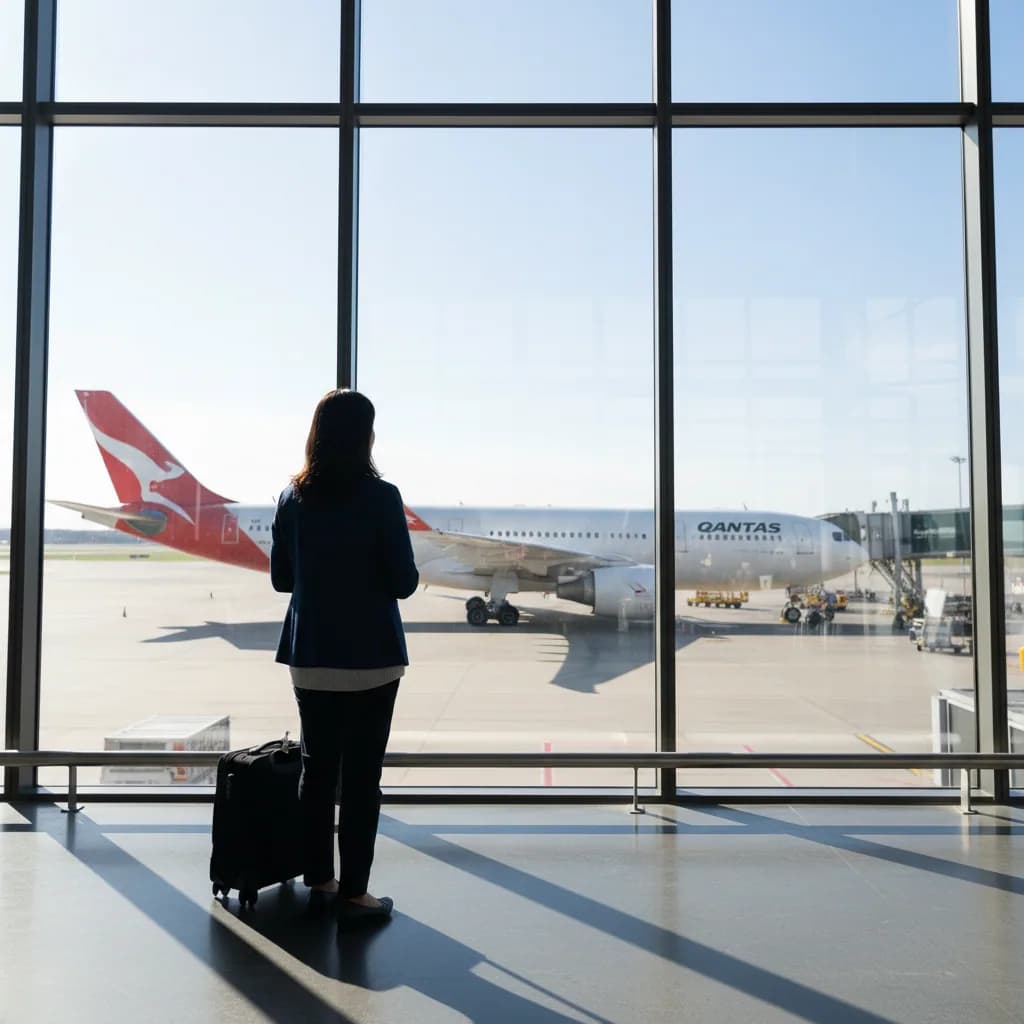
- Book flights. One-way tickets are usually cheaper than returns.
- Arrange initial accommodation. Airbnb or serviced apartments for the first 2-4 weeks while you find permanent housing.
- Transfer money. Open an Australian bank account (some banks like CommBank allow this before arrival) and transfer initial funds.
- Research your city. Read our guides for Sydney, Melbourne, or other Australian cities.
- Ship belongings or decide what to sell and what to buy in Australia.
First Week in Australia
- Activate your bank account (visit the branch with your passport)
- Apply for a Tax File Number (TFN) online through the ATO
- Enrol in Medicare (visit a Services Australia centre with passport and visa evidence)
- Get a mobile phone (Telstra, Optus, or Vodafone)
- Open a superannuation account (your employer will need this)
- Start apartment hunting (Domain, realestate.com.au)
First Month
- Find permanent accommodation and sign a lease
- Set up utilities (electricity, gas, internet)
- Register for myGov and link Medicare, ATO, and other government services
- Get an Australian driver's licence (you can drive on your foreign licence for 3-6 months depending on the state, then must convert)
- Build your network through community groups, professional associations, and social events
Stage 5: Citizenship (After 4+ Years)
Australian citizenship is the final step and removes all restrictions on your travel facility and residency status.
Eligibility
- Permanent resident for at least 1 year
- Lived in Australia for at least 4 years (including at least 1 year as a PR)
- Present in Australia for at least 2 of the 4 years before applying
- Of good character
- Intention to live in Australia or maintain a close connection
The Process
- Apply online through ImmiAccount
- Pass the citizenship test (20 multiple-choice questions, 75% to pass)
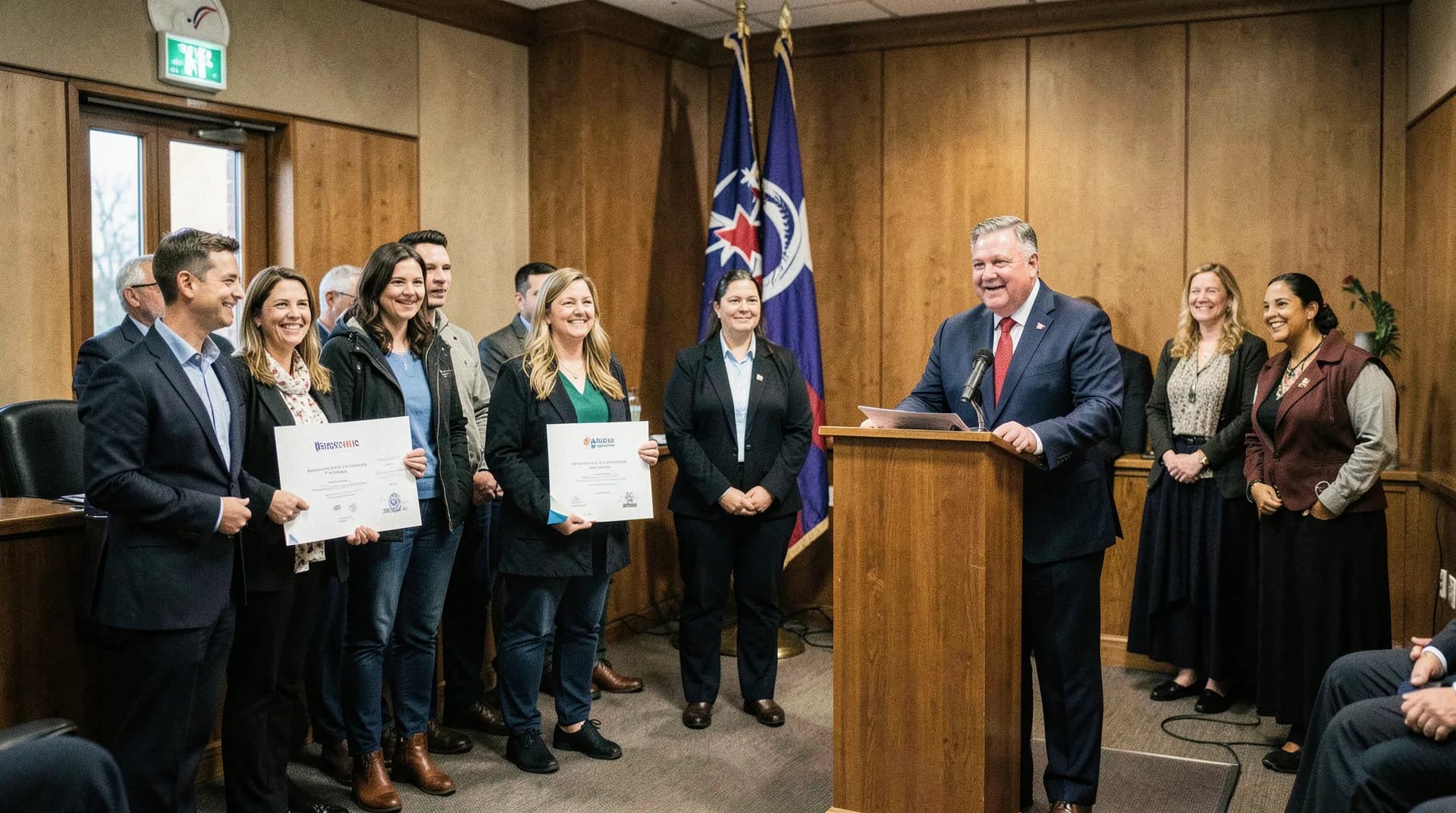
- Attend a citizenship ceremony (usually 1-6 months after approval)
- Receive your citizenship certificate
- Apply for an Australian passport
The citizenship test covers Australian values, democratic beliefs, rights and liberties, and Australia's history, culture, and national symbols. The source material is the booklet "Australian Citizenship: Our Common Bond." Study it thoroughly.
For detailed preparation: Citizenship test guide
Realistic Timeline: Start to Citizenship
| Stage | Timeline |
|---|---|
| Research and planning | 1-3 months |
| Skills assessment + English test | 2-4 months |
| SkillSelect wait (189/190) | 1-12 months |
| Visa processing | 6-12 months |
| First entry and settlement | 1-3 months |
| Living in Australia (PR residency requirement) | 3-4 years |
| Citizenship application and processing | 3-12 months |
| Total: research to citizenship | 5-8 years |
FAQ
What's the easiest way to move to Australia permanently? If you have an Australian partner, the partner visa is the most straightforward (no skills test, no points). For skilled workers, having an employer sponsor you for a 186 Direct Entry is the fastest. For independent applicants, the 189 is the gold standard but requires high points.
Can I move to Australia without a job? Yes, if you qualify for the 189 or 190 visa. These don't require a job offer. However, having sufficient savings to support yourself while job hunting is essential. Budget for at least 3 months of living costs.
Is Australia still accepting immigrants? Yes. Australia's permanent migration program targets approximately 185,000 places per year. Skilled migration makes up roughly 70% of this. While some settings have tightened (student caps, higher fees), Australia continues to actively recruit skilled migrants.
What age is too old to move to Australia? For skilled migration, the hard cutoff is 45 (you must be under 45 at the time of invitation). Age points start declining at 33 and drop to zero at 45. For partner and parent visas, there's no age limit. For working holiday visas, the limit is 35 (or 45 for some countries).