Meat Inspector Visa Pathway to Australia: Complete 2026 Guide
Updated: 16 August 2026
Australia classifies Meat Inspector under ANZSCO 311312. VETASSESS conducts the skills assessment. The occupation sits on both the Core Skills Occupation List (CSOL) and the Short-Term Skilled Occupation List (STSOL), unlocking subclasses 190, 491, 482 and 186. Typical 2026 salaries range AUD $70,000-$95,000. Regional Queensland, NSW and Victoria abattoirs drive most demand, supported by Department of Agriculture export programs.
Quick Facts: Meat Inspector Migration Pathway
| Detail | Information |
|---|---|
| ANZSCO Code | 311312 (Meat Inspector) |
| Skill Level | 2 (Diploma or higher, plus relevant experience) |
| Skills Assessment | VETASSESS (Vocational Education and Training Assessment Services) |
| Occupation List | CSOL and STSOL — open to 190, 491, 482 and 186 |
| Visa Options | 190, 491, 482 (Core Skills), 186 (Direct Entry / TRT) |
| Demand Level | High — regional abattoirs report ongoing vacancies; federal Department of Agriculture runs trainee intake rounds |
| Salary Range | AUD $70,000-$95,000 (SEEK 2026; average AUD $77,500); shift loadings can push effective pay higher |
| Typical 189 Score | Not applicable — 311312 is not on MLTSSL, no 189 access |
| Key Challenge | Roles are based at regional abattoir towns; shift work and a strong stomach for the production line are non-negotiable |
What Meat Inspectors Do in Australia
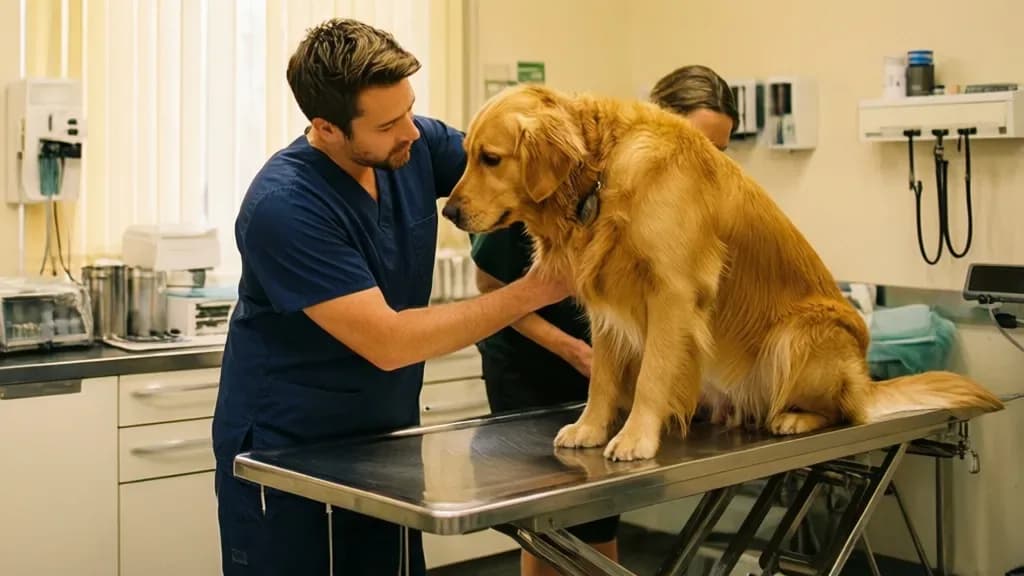
Meat inspectors examine carcasses, organs and meat processing operations to certify compliance with Australian food safety regulations and the import requirements of export markets such as the European Union, United States, Japan, China and the Middle East. Inspections cover disease, contamination, dressing standards, condition assessment and labelling. The work is on-line in abattoirs and boning rooms, often in cool temperatures, on rotating shifts.
There are two employer types. The Australian Government Department of Agriculture, Fisheries and Forestry (DAFF) employs On-Plant Veterinarians (OPVs) and Meat Inspectors (MIs) for export-registered establishments, mostly through its Meat Inspector Trainee program. Private sector inspectors work directly for processors — JBS Australia, Teys, NH Foods, Kilcoy Pastoral, Australian Country Choice — and through third-party providers. The work is geographically tied to abattoir locations: Dinmore and Beef City in Queensland, Bordertown and Murray Bridge in SA, Wagga Wagga, Yanco and Tamworth in NSW, Brooklyn and Cobram in Victoria, and Bunbury and Harvey in WA.
ANZSCO Code 311312
The official ANZSCO description for 311312 covers inspectors who examine animal carcasses, internal organs and meat-processing facilities to ensure compliance with health and quality standards. Typical tasks include ante-mortem and post-mortem inspection, condemnation decisions, supervision of dressing procedures, and documentation for export certification.
Adjacent codes that occasionally apply:
- 234711 Veterinarian — for qualified vets performing on-plant veterinary work, which is a higher skill level and a different VETASSESS pathway. See the veterinarian visa pathway.
- 312912 Occupational Health and Safety Adviser — for those who have moved into broader OHS roles within the meat industry
- 311311 Anaesthetic Technician — unrelated despite the similar number
Meat Inspector is a clearly defined occupation in the ANZSCO framework, so coding rarely poses ambiguity for those with direct meat-inspection employment.
Skills Assessment
VETASSESS Assessment
VETASSESS classifies Meat Inspector as a Group C occupation, which has somewhat broader qualification criteria than Group A professions.
Requirements:
- Qualification assessed as comparable to an Australian Qualifications Framework (AQF) Diploma or higher, in a highly relevant field — meat inspection, food science, veterinary science, animal health, food technology
- Or AQF Diploma plus an AQF Certificate IV in a highly relevant field
- Or AQF Diploma without a highly relevant field of study, in which case at least two years post-qualification highly relevant employment in the last five years is required
- At least one year of highly relevant post-qualification employment at an appropriate skill level in the last five years (one-year minimum where the qualification is in a relevant field)
Assessment Cost: AUD $1,096 offshore (excl. GST) / AUD $1,205.60 onshore (incl. GST), effective from 22 October 2025 Priority Processing Fee: AUD $825 offshore / AUD $907.50 onshore (additional) Processing Time: Typically 12-20 weeks given the Group C documentation requirements; Priority Processing brings this to 10 business days where the file is decision-ready
Common rejection reasons: Field-of-study mismatch where the qualification was in general veterinary nursing or food handling rather than meat inspection or food safety. The other issue is employment evidence that describes general slaughterhouse work or boning rather than the regulatory inspection responsibility that defines the occupation. References must clearly demonstrate the inspector role — ante-mortem, post-mortem, condemnation authority, hygiene audits.
Refer to the VETASSESS professional occupations fees page for current pricing. The skills assessment bodies list details related food-safety and animal-health occupations.
Visa Pathways
Meat Inspector is on the CSOL and STSOL but not the MLTSSL, which closes 189. The 190 and 491 are open via state nomination; 482 and 186 are open via employer sponsorship.
Subclass 482 — Skills in Demand (Core Skills Stream)
The dominant pathway. Major processors and the Department of Agriculture both sponsor.
- Visa fee: AUD $4,015 (primary applicant)
- Salary threshold: Core Skills Income Threshold AUD $79,423 for nominations lodged from 1 July 2026 (previously AUD $76,515)
- Processing time: Median 4-7 months for Core Skills
- Duration: Up to 4 years, with pathway to 186 PR after 2 years on the same employer
- Occupation quirk: Meat inspector base salaries hover close to the CSIT. Confirm the offer letter shows base salary at or above the threshold before shift loadings, overtime or allowances are added. Many private-sector positions only clear the threshold once overtime is counted, which Home Affairs does not allow toward the CSIT calculation.
The Specialist Skills stream (AUD $146,576 threshold from 1 July 2026, previously AUD $141,210) is not typically relevant for this occupation.
Subclass 190 — Skilled Nominated Visa
Permanent residency through state nomination.
- Visa fee: AUD $6,140 (primary applicant)
- Points boost: +5 from state nomination
- Processing time: Median 6-8 months; 90% within 11-14 months
- Obligation: Live and work in the nominating state for 2 years
- State picture: State inclusion of 311312 changes by program year. Queensland, NSW, Victoria, SA, WA and Tasmania have all historically nominated meat inspector, usually within regional priority streams. Verify against the live list before lodging.
Subclass 491 — Skilled Work Regional Visa
Provisional regional visa, valid 5 years, pathway to 191 PR after 3 years.
- Visa fee: AUD $6,140 (primary applicant)
- Points boost: +15 from regional nomination
- Processing time: Median 6-20 months; 90% within 15-28 months (April 2026)
- Geography: Most Australian abattoirs are in regional zones eligible for 491. Dinmore (QLD), Wagga Wagga (NSW), Bordertown (SA) and Bunbury (WA) all sit inside the regional definition.
Subclass 186 — Employer Nomination Scheme
Permanent residency through employer sponsorship.
- Visa fee: AUD $6,140 (primary applicant)
- Streams: Direct Entry or Temporary Residence Transition (TRT, after 2+ years on a 482)
- Processing time: 90% of Direct Entry applications finalised within 15-19 months in early 2026; TRT around 13 months median
- Occupation quirk: JBS, Teys and the Department of Agriculture are the dominant 186 sponsors for this occupation, typically via TRT after the qualifying period on 482.
See the subclass 482 hub for the broader employer-sponsored framework.
Points Test Strategy
Meat Inspector is not on the MLTSSL, so subclass 189 is not available. The points-tested routes are 190 and 491.
Realistic Score Scenarios
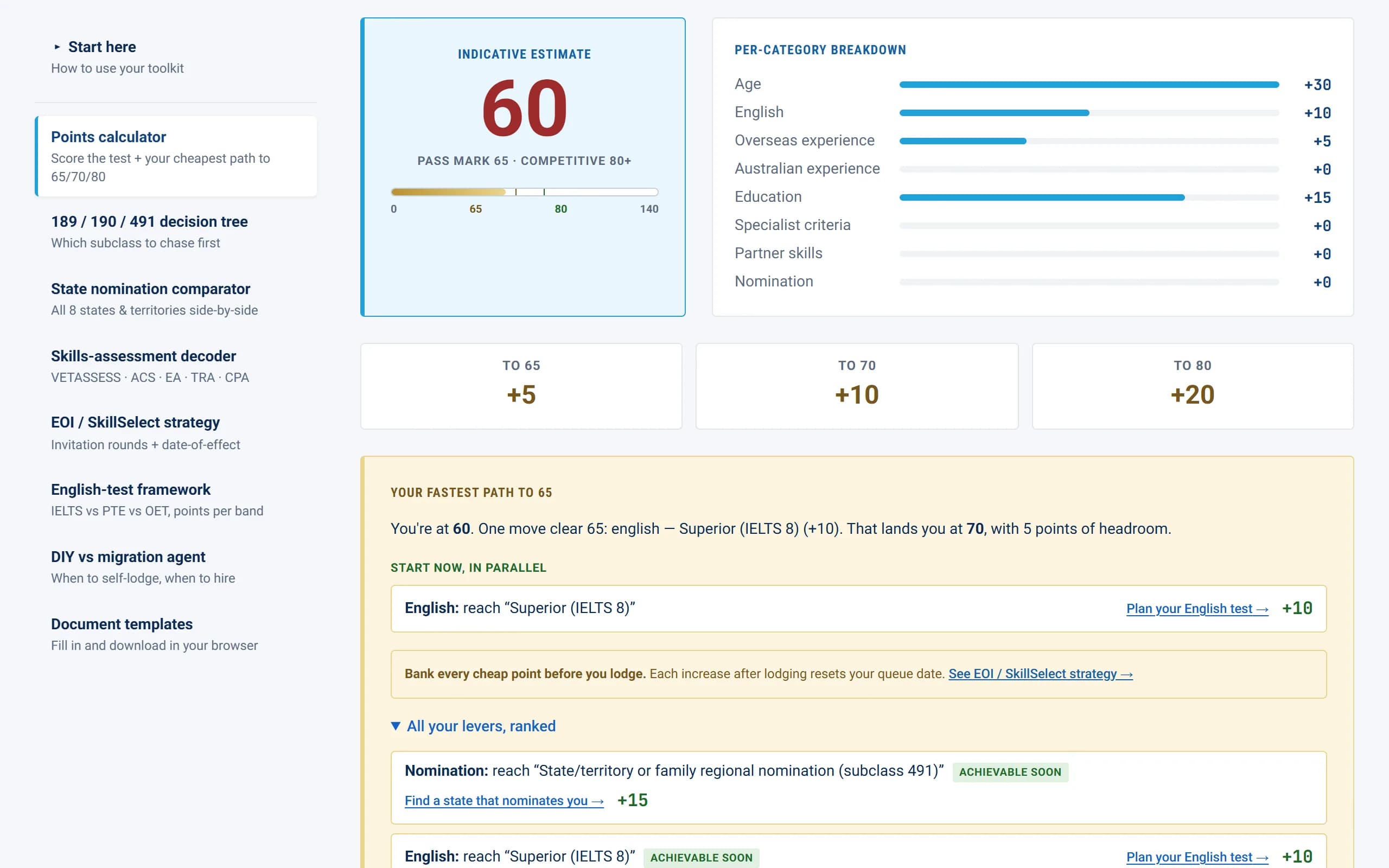
Scenario 1: Mid-career meat inspector seeking 491 regional QLD Age 36 (25 points) + Diploma (10) + Competent English (0) + 5+ years skilled experience (10) + 491 nomination (15) + partner skills (5) = 65 points. Workable for regional 491 invitation rounds, especially with a confirmed regional employer.
Scenario 2: Experienced inspector seeking 190 NSW or VIC Age 32 (30 points) + Diploma (10) + Proficient English (10) + 8+ years skilled experience (15) + 190 nomination (5) = 70 points. Competitive when an offer from a sponsored processor accompanies the EOI.
For most meat inspectors, the 482 employer-sponsored route is faster and lower-risk than the points-tested visas. Reserve 190 and 491 for cases where employer sponsorship is not yet secured.
State Nomination
State inclusion of 311312 changes each program year. Common patterns:
Queensland
Queensland's abattoir capacity is the largest in Australia. Dinmore (Ipswich), Beef City (Toowoomba), Kilcoy and the Rockhampton corridor employ hundreds of inspectors. Queensland's state nomination program typically includes meat inspector for regional 491 streams targeting these communities.
New South Wales
NSW processing capacity is concentrated in the southern Riverina, the Tamworth district and the Central West. State nomination for meat inspector tends to favour applicants with existing employment commitment to a regional plant.
Victoria, South Australia, Western Australia, Tasmania
VIC, SA, WA and TAS have all included meat inspector in nomination streams in recent program years, generally for regional employment. SA's frequent invitation rounds and the WA south-west sheep and beef plants are notable. Always verify against the live state lists before lodging.
See the 2026 SOL hub and the CSOL hub.
Salary and Employment Outlook
What Meat Inspectors Earn in Australia
| Role | Typical Salary Range (2026) |
|---|---|
| Trainee / Junior Meat Inspector | AUD $60,000-$72,000 base |
| Meat Inspector (qualified) | AUD $72,000-$88,000 base |
| Senior Meat Inspector / Lead | AUD $88,000-$105,000 base |
| On-Plant Senior Veterinarian | AUD $110,000-$140,000+ (vet qualification required) |
| DAFF Meat Inspector (APS 3-5) | AUD $65,000-$85,000 plus penalty rates |
Sources: SEEK April 2026 data showing AUD $77,500 average for meat inspector roles; Australian Public Service classification rates; Salary Expert and Indeed cross-checks at the lower end (around AUD $69,000).
Total package context
Shift loadings, overtime and weekend rates frequently push effective annual earnings 20-40% above base. Many abattoirs run early starts (4-5 am) with shift premiums. Federal Department of Agriculture roles attract APS conditions: 15.4% superannuation, leave loading, and remote-location allowances at some sites.
Highest-paying employers
- JBS Australia — largest red meat processor in the country (multiple sites)
- Teys Australia — Cargill joint venture with sites in QLD, VIC and SA
- NH Foods Australia — Japanese-owned processor (Thomas Borthwick & Sons in QLD)
- Kilcoy Pastoral Company — Queensland beef export
- Australian Country Choice — vertically integrated cattle producer and processor
- Department of Agriculture, Fisheries and Forestry (DAFF) — On-plant Meat Inspector roles, federal pay scales
Tips for a Successful Application
1. Frame employment as regulatory inspection, not slaughterhouse production
VETASSESS will read references closely. The employment statement must describe the inspection authority, condemnation decisions, hygiene audits and certification responsibilities — not just line work. References should distinguish "Meat Inspector" duties from boning, slaughtering or quality assurance tasks performed by other personnel.
2. Confirm base salary clears the CSIT before shift loadings
The Core Skills Income Threshold (AUD $79,423 from 1 July 2026) applies to guaranteed base salary, not total earnings including overtime, weekend rates or allowances. Many private-sector meat inspector roles only reach the threshold once overtime is added, which is not counted. Negotiate base salary into the threshold band before signing.
3. Consider the DAFF Meat Inspector Trainee program
The federal Department of Agriculture, Fisheries and Forestry runs intake rounds for its Meat Inspector Trainee program, including sponsored pathways for overseas-trained candidates. The pay scale is structured (APS 3-5), the work is regulated, and the path to permanent residency through 186 TRT is well-trodden.
4. Be prepared for regional relocation
Meat inspector positions are overwhelmingly in regional towns — Dinmore, Wagga Wagga, Bordertown, Bunbury, Tamworth, Cobram. Sydney, Melbourne and Brisbane employers exist but are a small minority. Build your settlement plan around the abattoir location, not the major city.
5. Use Priority Processing if an employer is waiting
VETASSESS Standard processing for Group C occupations runs 12-20 weeks, which can stall an employer's nomination timeline. The AUD $825-$907 Priority Processing fee brings the assessment to 10 business days where the application is decision-ready.
Step-by-Step Migration Roadmap
- Confirm ANZSCO 311312 fits your duties — review against 234711 Veterinarian and other animal-health codes via the ANZSCO code finder
- Confirm CSOL and STSOL status — meat inspector is on both the Core Skills Occupation List and the STSOL/2026 SOL
- Compile qualifications — Diploma or higher in meat inspection, food science or veterinary science; Cert IV if relevant
- Prepare employment evidence — statements describing inspection duties, authority to condemn, ante-mortem and post-mortem work
- Sit an English test — IELTS, PTE or OET; minimum Vocational English (IELTS 5.0 each band) for 482 eligibility, higher for points-tested visas
- Lodge VETASSESS assessment — Standard or Priority depending on timeline
- Decide visa strategy — 482 sponsorship usually faster than 190/491 points-tested routes
- For 482: secure sponsoring employer — major processor (JBS, Teys, NH Foods) or DAFF Trainee program
- For 190/491: submit EOI in SkillSelect — apply for state nomination via the relevant state portal
- Lodge visa application — within 60 days of invitation (190/491) or nomination (482)
- Complete health and character checks
- Receive visa grant and relocate — to the abattoir town
Frequently Asked Questions
Why is meat inspector not on the MLTSSL?
The MLTSSL targets occupations with sustained long-term national shortages where points-tested independent migration is appropriate. Meat inspector demand is real but concentrated at a small number of regional abattoirs with defined employer types — major processors and the federal Department of Agriculture. The CSOL and STSOL routes match this demand pattern better, channelling applicants through employer sponsorship and state nomination where the demand actually sits.
Can I qualify as a meat inspector without a veterinary degree?
Yes. Meat inspector and on-plant veterinarian are different occupations. Meat inspector requires a Diploma or equivalent in meat inspection, food science or animal health (skill level 2). On-plant veterinarian work falls under 234711 Veterinarian and requires a full vet degree (skill level 1) — see the veterinarian pathway. Both work in abattoirs but the regulatory authority and pay differ.
What's the demand outlook for meat inspector in 2026?
Steady to strong. Australia's red meat export sector is at multi-year highs in volume and value, supported by demand from Japan, the US, Korea and China. The Department of Agriculture continues to recruit Meat Inspector Trainees through scheduled intake rounds. Private processors report consistent vacancies at regional sites where the local labour pool is thin.
Will my overseas meat inspection qualification be recognised?
Qualifications from the UK (Food Standards Agency or equivalent), Ireland, New Zealand, South Africa, Argentina and Uruguay are routinely assessed as equivalent to AQF Diploma or higher by VETASSESS, provided the field of study is highly relevant. Provide the full curriculum or syllabus alongside the certificate — VETASSESS reviews content, not just title.
How does the DAFF Meat Inspector Trainee program work?
DAFF runs structured intake rounds advertised through APSJobs. Successful candidates complete a paid training program at APS 3 or 4 level, after which they are deployed to export-registered abattoirs around the country. The program includes formal accreditation and a defined pay scale. International candidates eligible for an Australian work visa can apply; sponsorship under 482 is offered case by case.