Agronomist Visa Pathway to Australia: Complete 2026 Guide
Updated: 16 August 2026
Australia classifies Agronomist under ANZSCO 234115. VETASSESS conducts the skills assessment. The occupation sits on the Core Skills Occupation List (CSOL) only, unlocking employer-sponsored subclasses 482 and 186. Typical 2026 salaries range AUD $80,000-$120,000, with experienced grain-belt agronomists clearing AUD $130,000 plus vehicle. Demand is concentrated in regional WA, southern NSW, the Mallee and Wimmera.
Quick Facts: Agronomist Migration Pathway
| Detail | Information |
|---|---|
| ANZSCO Code | 234115 (Agronomist) |
| Skill Level | 1 (Bachelor degree or higher) |
| Skills Assessment | VETASSESS (Vocational Education and Training Assessment Services) |
| Occupation List | CSOL only — not on MLTSSL or STSOL |
| Visa Options | 482 (Core Skills stream), 186 (Direct Entry / TRT) |
| Demand Level | High — regional shortage occupation; rural recruiters consistently report unfilled vacancies |
| Salary Range | AUD $80,000-$120,000 base (SEEK, April 2026); senior roles AUD $130,000+ plus vehicle |
| Typical 189 Score | Not applicable — no 189/190/491 access |
| Key Challenge | Most roles are in regional towns; major-city based applicants must accept relocation |
What an Agronomist Does in Australia
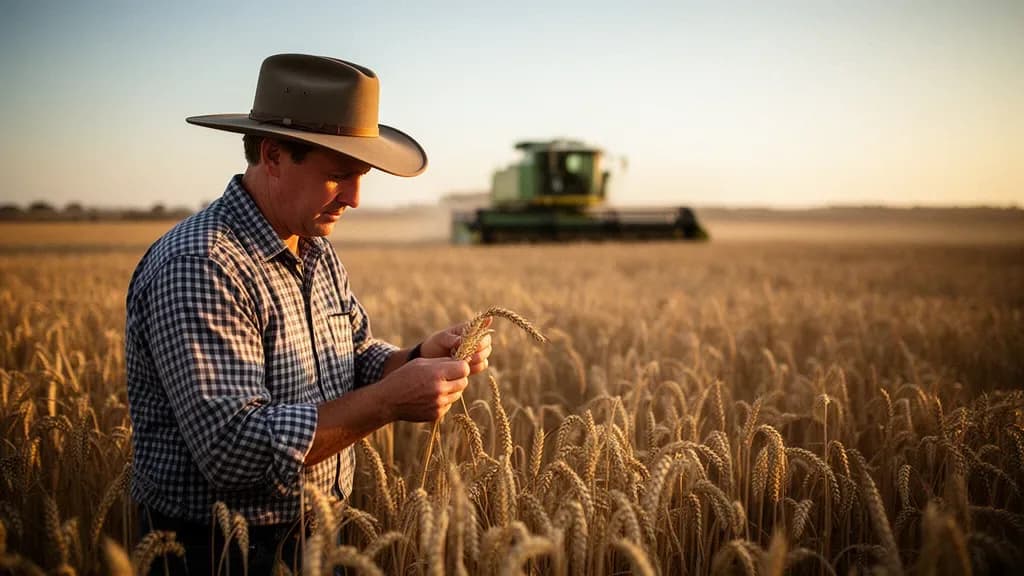
Agronomists advise growers on crop selection, soil preparation, nutrition, irrigation, pest and disease management, and harvest timing. The Australian agronomy market is split between two employer types. Reseller agronomists work for rural merchandisers — Elders, Nutrien Ag Solutions, Landmark and the regional independents — combining advice with chemical, seed and fertiliser sales. Independent and consulting agronomists work fee-for-service for grower clients, typically in dryland broadacre cropping or irrigated horticulture.
Geographic concentration follows the crops. Wheat, barley and canola country pulls agronomists to the WA wheatbelt (Geraldton, Northam, Esperance), the Mallee and Wimmera in Victoria, the Riverina in NSW, the Eyre and Yorke peninsulas in SA, and the Liverpool Plains and Darling Downs further north. Horticulture roles concentrate in the Sunraysia, the Riverland, Bundaberg and Gatton. Sydney and Melbourne carry head-office, policy and procurement agronomy — a small share of the total market.
ANZSCO Code 234115
The official ANZSCO description for 234115 covers professionals who provide advice on the quality, production and management of crops and livestock by assessing growing conditions and environmental factors. Typical tasks include soil and tissue testing interpretation, paddock walks during the growing season, agronomic program design, recommendation of pesticides and fertilisers (often requiring AgVet chemical accreditation), and yield analysis.
Adjacent codes that sometimes fit better:
- 234111 Agricultural Consultant — broader business and farm management advice. See the agricultural consultant pathway.
- 234112 Agricultural Scientist — generalist field scientist. See the agricultural scientist pathway.
- 234114 Agricultural Research Scientist — formal research-focused role. See the agricultural research scientist pathway.
If your work is hypothesis-driven research rather than client advisory, choose 234114. If your work is whole-of-business farm consulting rather than crop-specific advice, choose 234111. The VETASSESS assessor will weigh the employment statements against the ANZSCO description.
Skills Assessment
VETASSESS Assessment
VETASSESS classifies Agronomist as a Group A occupation: the qualification field must be highly relevant.
Requirements:
- Qualification assessed as comparable to an Australian Qualifications Framework (AQF) Bachelor degree or higher
- Field of study highly relevant — agronomy, agricultural science, crop science, plant science, soil science, horticulture
- At least one year of highly relevant post-qualification employment at an appropriate skill level in the last five years
- Employment evidence must demonstrate field-based agronomic advice or crop management responsibility, not pure laboratory or research work
Assessment Cost: AUD $1,096 offshore (excl. GST) / AUD $1,205.60 onshore (incl. GST), effective from 22 October 2025 Priority Processing Fee: AUD $825 offshore / AUD $907.50 onshore (additional) Processing Time: 7 weeks standard; 10 business days under Priority Processing
Common rejection reasons: A generalist science degree without an agriculture or plant science major often fails the relevance test. The other frequent issue is employment statements that read like sales roles — describing chemical, seed or fertiliser revenue targets — without enough emphasis on the technical agronomic advice that justifies skill level 1.
VETASSESS reviews fees against the Consumer Price Index, so confirm against the official fees page before paying. The skills assessment bodies list covers related occupations.
Visa Pathways
Agronomist is on the CSOL but not the MLTSSL or STSOL, so 189, 190 and 491 are closed. The pathway is employer sponsorship.
Subclass 482 — Skills in Demand (Core Skills Stream)
The dominant route. Rural merchandisers and independent consultancies routinely sponsor.
- Visa fee: AUD $3,210 (primary applicant)
- Salary threshold: Core Skills Income Threshold AUD $76,515; rising to AUD $79,499 for nominations lodged from 1 July 2026
- Processing time: Median 4-7 months for Core Skills
- Duration: Up to 4 years, with pathway to 186 PR after 2 years on the same employer
- Occupation quirk: Most experienced agronomist roles clear the CSIT, but graduate or junior agronomist positions can sit close to the threshold. Confirm base salary excludes vehicle, fuel card and accommodation allowances before assuming compliance.
The Specialist Skills stream is rarely relevant for agronomists — the AUD $141,210 threshold (rising to AUD $146,717 from 1 July 2026) exceeds typical agronomist pay.
Subclass 186 — Employer Nomination Scheme
Permanent residency through employer sponsorship.
- Visa fee: AUD $6,140 (primary applicant)
- Streams: Direct Entry or Temporary Residence Transition (TRT, after 2+ years on a 482)
- Processing time: 90% of Direct Entry applications finalised within 15-19 months in early 2026; TRT around 13 months median
- Occupation quirk: The TRT stream remains the more common route for agronomists because most build their PR application around two years of consistent regional employment with one sponsor.
See the subclass 482 hub for the broader employer-sponsored framework.
State Nomination
Agronomist is on the CSOL but not the STSOL, which closes the standard 190 and 491 channels. State demand is real but channels through:
- Designated Area Migration Agreements (DAMAs) — Orana (NSW), Goulburn Valley (VIC), South West (WA), Far North Queensland and SA Regional DAMAs all list agriculture-aligned occupations on their endorsed lists. DAMA pathways operate through 482 with concessions on salary, age or English.
- Direct employer sponsorship — Elders, Nutrien Ag Solutions, the larger independent agronomy consultancies, and state agriculture departments sponsor directly.
Verify against current state lists, which are revised quarterly. See the 2026 SOL hub and the CSOL hub.
Salary and Employment Outlook
What Agronomists Earn in Australia
| Role | Typical Salary Range (2026) |
|---|---|
| Graduate / Junior Agronomist | AUD $70,000-$85,000 plus vehicle |
| Agronomist (2-5 years) | AUD $85,000-$110,000 plus vehicle |
| Senior Agronomist | AUD $110,000-$140,000 plus vehicle |
| Lead / Regional Agronomist | AUD $140,000-$180,000 plus vehicle and bonus |
| Independent / Consulting Agronomist | AUD $150,000-$250,000+ (fee-based) |
Sources: SEEK Agronomist salary data (April 2026) showing $80k-$100k average; PayScale and Glassdoor ranges across grades; Hays rural recruitment commentary on the WA wheatbelt and southern NSW where premium packages are common.
Total package context
Vehicles (utility plus fuel card) add AUD $15,000-$25,000 of effective value. Reseller agronomists typically receive a sales-linked bonus of 5-15% of base. Independent consultants charge AUD $1,000-$1,500 per day. Regional and remote postings often include subsidised housing.
Highest-paying employers
- Nutrien Ag Solutions, Elders, AGnVET, Delta Agribusiness — the large reseller networks
- Independent consultancies — IMAG Consulting, Agripath, Rural Management Strategies and dozens of regional firms
- State agriculture departments — NSW DPI, Agriculture Victoria, DPIRD WA, SA PIRSA, Queensland DAF
- Grower-funded RDCs — GRDC, CRDC, Hort Innovation
- Large family-farming enterprises — corporate broadacre operations in NSW, VIC and WA hire in-house senior agronomists
Tips for a Successful Application
1. Frame employment around advisory, not retail
VETASSESS distinguishes agronomy from sales. Reference letters should foreground client advice, agronomic program design, paddock visits, soil and tissue interpretation and crop monitoring — not sales targets or revenue figures. A senior agronomist who manages a chemical sales team but does not write programs will struggle with the skill-level test.
2. Get AgVet chemical accreditation lined up
Australian agronomists who recommend pesticides need a ChemCert AQF 3 or 4 qualification (state-specific). This is not part of the visa process but most employers require it within 6 months of starting. Begin the equivalency check before relocating.
3. Target regional sponsors who already hold the SBS endorsement
Most large rural merchandiser branches are part of a corporate standard business sponsorship. Local independent consultancies sometimes are not, which adds 4-8 weeks to the sponsorship + nomination + visa timeline. Filter target employers accordingly.
4. Highlight broadacre or horticulture specialisation
The Australian market is sharply divided between broadacre grain-belt agronomy and irrigated horticulture. CVs that signal the specific commodity, soil type and rotation experience get filtered faster by recruiters such as Agricultural Appointments and Rimfire Resources.
5. Use VETASSESS Points Test Advice only if helpful
Because 189/190/491 are not accessible for 234115, the Points Test Advice service does not apply. Stick with the full skills assessment.
Step-by-Step Migration Roadmap
- Confirm ANZSCO 234115 fits your duties — distinguish from 234111, 234112, 234114 via the ANZSCO code finder
- Confirm CSOL status — agronomist is currently on the Core Skills Occupation List
- Compile qualifications — degree transcripts, AgVet accreditation if held overseas
- Prepare employment evidence — statements from each employer covering advisory duties, hectares managed, commodities, dates, hours, salary
- Sit an English test — IELTS, PTE or OET; aim for at least Competent for 482 eligibility
- Lodge VETASSESS assessment — Standard or Priority
- Apply for agronomist roles — target rural merchandisers, large consultancies, state departments
- Employer lodges nomination — Core Skills stream
- Lodge 482 visa application — within 60 days of nomination
- Complete health and character checks
- Receive 482 grant and relocate — usually to a regional town
- Apply for 186 TRT after 2 years — same employer, same occupation
Frequently Asked Questions
Why is agronomist only on the CSOL, not the MLTSSL?
The MLTSSL is reserved for occupations facing the most acute long-term national shortages where points-tested independent migration is justified. Agronomy is in shortage but heavily regional, with concentrated employer types — rural merchandisers, consultancies, state departments — that match the employer-sponsored model. The CSOL keeps the pathway open through 482 and 186 without flooding the points pool.
Can I work as an agronomist on a 417 working holiday visa first?
Yes, and many overseas agronomists do exactly this. A 417 or 462 working holiday visa allows a season or two with an Australian employer, building local references and AgVet familiarity before transitioning to a 482 sponsorship. Note the 6-month per employer limit on the 417 — speak to a migration agent about the agriculture exemptions before relying on a longer stretch.
Will my UK or South African agronomy qualification be recognised?
UK BSc Agriculture from a recognised university and South African BSc Agric (Pretoria, Stellenbosch, KZN) qualifications are usually assessed as equivalent to an AQF Bachelor by VETASSESS, provided the field of study is highly relevant. Send the full transcript and module list — not just the degree certificate — because VETASSESS reviews subject content.
What's the demand outlook for agronomists in 2026?
Strong. Rural recruiters report consistent unfilled vacancies, particularly in the WA wheatbelt and Riverina. Drivers include retirement of long-serving agronomists, expansion of corporate farming, increasing pesticide-resistance complexity, and growing demand for precision agriculture and digital agronomy advice. The shortage signal is structural, not cyclical.
Is reseller agronomy or independent consulting a better visa play?
Reseller agronomy at one of the large national firms is the cleaner sponsorship path — established 482 processes, in-house migration support, and a known TRT pipeline to 186. Independent consultancies pay better at senior levels but rarely sponsor first-time arrivals because the standard business sponsorship application is an overhead they avoid. Most international agronomists enter via a reseller, then move to consulting once permanent residency is secure.