Shoemaker Visa Pathway to Australia: Complete 2026 Guide
Updated: 16 August 2026
Australia classifies Shoemaker under ANZSCO 393114. Trades Recognition Australia (TRA) conducts the skills assessment via the Migration Skills Assessment or Job Ready Program. The occupation sits on the Core Skills Occupation List (CSOL) only, restricting visa options to employer-sponsored subclasses 482 and 186. Demand is small but specialised — bespoke shoemakers, orthopaedic footwear technicians and high-end repair specialists are the main sponsorship targets.
Quick Facts: Shoemaker Migration Pathway
| Detail | Information |
|---|---|
| ANZSCO Code | 393114 (Shoemaker) |
| Skill Level | 3 (Certificate III/IV with relevant experience) |
| Skills Assessment | TRA (Trades Recognition Australia) |
| Occupation List | CSOL only |
| Visa Options | 482, 186 |
| Demand Level | Low overall, niche pockets — bespoke, orthopaedic, performance footwear, specialty repair |
| Salary Range | Typically AUD $55,000-$80,000 depending on specialisation (SEEK trade-role data 2026) |
| Typical 189 Score | Not applicable — occupation is not on MLTSSL |
| Key Challenge | Tiny employer pool; sponsorship realistically limited to bespoke ateliers, orthopaedic labs and specialty repair operations |
What Shoemakers Do in Australia
Australian shoemaking is a small, specialised trade. Volume footwear production left Australia decades ago, so the surviving roles cluster in three pockets. Bespoke and made-to-measure — a small number of ateliers in Sydney, Melbourne and a few regional towns make hand-lasted leather shoes for private clients (Wootten in Melbourne, Hewitt Sole Maker, and others). Orthopaedic and medical footwear — labs producing custom orthotic shoes and modified footwear for podiatrists and rehabilitation specialists (Foot Solutions, Athletes Foot Custom Fit, hospital orthotic departments). Specialty repair and resoling — high-end repair shops servicing dress, riding and performance footwear, often attached to brand boutiques in Sydney and Melbourne CBDs.
There is also a small performance and theatrical segment — pointe-shoe makers for ballet companies and specialty footwear for stage productions. Volume sneaker and athletic shoe production happens almost entirely offshore; Australian operations in this space are design and distribution, not manufacturing.
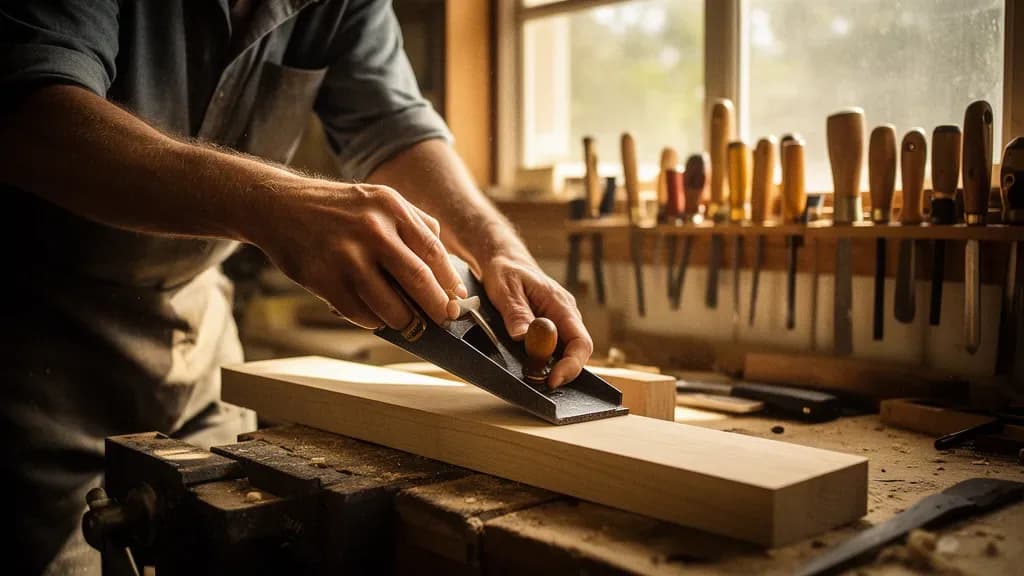
The trade rewards hand-skill in lasting, stitching, sole-attachment and leather-craft, plus pattern-cutting and last-making for the bespoke end. Orthopaedic work blends shoemaking with anatomical knowledge and prescription-reading. Migration sponsorship typically happens for senior craftspeople with bespoke or orthopaedic specialisation — not for general footwear workers.
ANZSCO 393114: The Official Description
ANZSCO 393114 covers workers who make, repair and modify footwear. Tasks include cutting and shaping leather and other materials, lasting uppers, attaching soles and heels, stitching, finishing and repairing footwear. The code sits in ANZSCO Sub-major Group 39 (Other Technicians and Trades Workers) at Skill Level 3.
There is no "nec" fallback for shoemaking. Workers who design footwear without making it belong under 232312 Fashion Designer. Workers in saddlery and other leather goods belong under 393113 Saddler. The 393114 code covers footwear production and modification specifically.
Skills Assessment with TRA
Pathway 1: Migration Skills Assessment (MSA) — Offshore Applicants
The standard offshore pathway for shoemakers trained overseas.
Requirements:
- Trade qualification at AQF Certificate III equivalent in shoemaking, footwear production or a related trade
- At least 3 years of post-qualification, paid full-time shoemaking employment
- Detailed evidence: contracts, payslips, reference letters describing techniques (hand-lasting, Goodyear welting, cement construction, Blake stitching), materials and product types
Assessment fee: From AUD $300 for the documentary stage. Confirm the current fee schedule in the TRA MSA Applicant Guidelines. Processing time: 12-16 weeks for documentary MSA. Common rejection reasons: Generic references that don't specify construction methods, work that was retail or sales rather than production, and qualifications that don't reach AQF Certificate III equivalence — historically a common issue for traditionally-trained craftspeople from countries with less formal apprenticeship paperwork.
Pathway 2: Job Ready Program (JRP) — Australia-Trained Applicants
The on-shore pathway for graduates of Australian footwear or leather trade qualifications. Shoemaking is a small-volume trade in Australia, so JRP applicants are usually graduates of TAFE or private RTO leather-trade courses combined with apprentice-style placements.
JRP fees:
- JRPRE: AUD $200
- JRE: AUD $450 (12 months of paid Australian shoemaking employment)
- JRWA: AUD $2,540
- JRFA: AUD $65
Total: AUD $3,255 Processing time: 12-15 months end to end.
Visa Pathways for Shoemakers
Because Shoemaker is on the CSOL only, the visa options are limited to employer-sponsored streams.
Subclass 482 — Skills in Demand Visa (Core Skills Stream)
The dominant pathway.
Visa fee: AUD $4,015 (primary applicant) Core Skills Income Threshold: AUD $76,515 to 30 June 2026; AUD $79,423 from 1 July 2026 Duration: Up to 4 years Processing time: Median 1-3 months for Core Skills stream Quirk: The salary threshold is the binding constraint for most shoemaker roles. Bespoke ateliers and orthopaedic labs paying senior craftspeople above threshold are the realistic sponsors. General footwear repair roles typically pay below the threshold.
Subclass 186 — Employer Nomination Scheme
Permanent residency through employer sponsorship.
Visa fee: AUD $6,140 (primary applicant) Direct Entry: 3 years of post-qualification shoemaking work plus a positive TRA assessment TRT stream: 2 years on a 482 with the same employer Processing time: Currently 13-20 months for Direct Entry Quirk: Direct Entry suits internationally-trained master shoemakers approached directly by Australian bespoke or orthopaedic employers.
State Nomination
ANZSCO 393114 is not on the MLTSSL or STSOL in 2026, so the 190 Skilled Nominated and 491 Skilled Work Regional visas are not available for this occupation. State and territory governments cannot nominate occupations that are not on a state-eligible list. Employer sponsorship is the only viable route.
Salary and Employment Outlook
What Shoemakers Earn in 2026
| Role | Typical Salary Range |
|---|---|
| Footwear repair specialist | AUD $52,000-$65,000 |
| Orthopaedic / custom footwear technician | AUD $60,000-$78,000 |
| Bespoke / hand-lasted shoemaker | AUD $65,000-$85,000 |
| Master shoemaker / atelier lead | AUD $80,000-$110,000 |
| Pointe-shoe maker / theatrical specialty | AUD $55,000-$72,000 |
Source: SEEK trades role data 2026; Jobs and Skills Australia occupation profile 393114. Published data on shoemaking salaries is thin because the occupation is small; ranges are informed by adjacent trade roles and bespoke atelier postings.
Total packages include the 11.5% statutory superannuation contribution. Bespoke atelier roles sometimes include profit-share or commission-on-orders arrangements.
Highest-Paying Segments
- Bespoke leather shoemaking — a small number of ateliers in Sydney and Melbourne
- Orthopaedic footwear labs — attached to podiatry practices, hospitals and rehabilitation centres
- High-end repair and restoration — boutique repair attached to luxury brands and dress-shoe specialists
- Performance footwear — pointe-shoe production for ballet companies, equestrian footwear specialists
Tips for a Successful Application
1. Target Bespoke or Orthopaedic Employers Specifically
The Australian shoemaking market is too small to absorb generalist footwear workers. The realistic sponsorship targets are bespoke ateliers (Wootten, Hewitt, smaller regional operations) and orthopaedic labs attached to podiatry practices and hospitals. Apply directly to these employers — there is no online job-board pipeline for this trade.
2. Document Construction Methods, Not Just "Shoemaking"
Reference letters that list specific construction methods (Goodyear welt, hand-lasting, Blake stitch, Norwegian welt, cement construction) score much higher than generic descriptions. TRA assessors and Australian employers want to see the techniques you've actually executed.
3. The Salary Threshold Is the Real Constraint
The Core Skills Income Threshold sits above what general footwear roles pay in Australia. Negotiate the position and salary before the employer lodges nomination — a sponsorship offer at AUD $65,000 will fail at the threshold check regardless of trade quality.
4. The Orthopaedic Pathway Is Easier to Sponsor
Orthopaedic and custom medical footwear is a healthcare-adjacent sector with higher salaries and steadier funding than bespoke fashion shoemaking. If your background includes any orthopaedic or custom-fit work, lead with that in your applications.
5. Consider the Job Ready Program If You're Already in Australia
The JRP suits working holiday visa (417/462) holders and student-graduates (485) already in Australia who can secure 12 months of paid shoemaking employment. Given the tiny employer pool, the JRP is realistic only if you've already identified a willing employer in advance.
Step-by-Step Migration Roadmap
- Confirm your duties match ANZSCO 393114 using the ANZSCO code finder
- Collect qualifications, payslips and detailed reference letters specifying construction methods
- Decide between offshore MSA and the on-shore Job Ready Program
- Sit IELTS, PTE, OET, TOEFL or Cambridge
- Lodge the TRA assessment
- Approach bespoke ateliers and orthopaedic footwear labs directly — no job-board pipeline exists for this trade
- Negotiate a job offer at or above the Core Skills Income Threshold
- Employer lodges sponsorship and nomination with Home Affairs
- Lodge the 482 visa application
- Complete health (Form 26) and character (AFP clearance) checks
- After 2 years on the 482, apply for 186 TRT for permanent residency
- Or, with 3+ years of pre-existing post-qualification experience, apply for 186 Direct Entry
Frequently Asked Questions
Is there genuine demand for shoemakers in Australia?
Demand is small and specialised, not broad. The volume footwear industry left Australia decades ago. What remains is bespoke shoemaking, orthopaedic and custom-fit footwear, and high-end repair. Employers in these segments occasionally sponsor international craftspeople when they can't find local trade-qualified shoemakers — which is why the occupation is on the CSOL despite the small headcount.
Can I work as a shoemaker on a working holiday visa first?
Yes. Working holiday visas (subclass 417 or 462) allow paid work for up to 12 months. Many international shoemakers use this period to identify a sponsoring employer in Australia and complete the Job Ready Program in parallel. This is often the cleanest path into the trade given the lack of a public job-board pipeline.
Why isn't Shoemaker on the MLTSSL or STSOL?
Both lists are aimed at occupations with broader skilled-migration demand. Shoemaker has narrow, specialty demand — enough to justify CSOL inclusion (employer sponsorship pathway) but not enough volume to justify points-tested migration access. The CSOL is the right list for this employment profile.
Can my European master shoemaker qualification be recognised in Australia?
Yes, where documentation is complete. European apprenticeship qualifications (German Schuhmacher, Italian calzolaio certifications, French CAP Cordonnier) generally meet the AQF Certificate III equivalence standard. The challenge is often paperwork — traditionally-trained craftspeople sometimes lack the formal records TRA requires. Detailed reference letters from masters or guilds can supplement formal certificates.
What's the most realistic visa pathway for an experienced bespoke shoemaker?
A direct approach to a small number of Australian bespoke ateliers or orthopaedic labs, leading to a 482 Core Skills sponsorship. After 2 years on the 482, transition to permanent residency via the 186 TRT stream. From offer letter to PR, plan for 4-5 years. Direct Entry to 186 is theoretically faster but requires an employer prepared to sponsor a permanent visa upfront — uncommon in this small trade.