Vehicle Trimmer Visa Pathway to Australia: Complete 2026 Guide
Updated: 16 August 2026
Australia classifies Vehicle Trimmer (also known as Motor Trimmer) under ANZSCO 324212. Trades Recognition Australia (TRA) is the assessing authority. The occupation sits on the Core Skills Occupation List (CSOL) and STSOL, unlocking subclasses 190, 491, 482 and 186. Typical 2026 salaries range AUD $60,000-$85,000. The trade is a small but persistent shortage occupation in Australia's recreational vehicle and heavy vehicle sectors.
Quick Facts: Vehicle Trimmer Migration Pathway
| Detail | Information |
|---|---|
| ANZSCO Code | 324212 (Vehicle Trimmer / Motor Trimmer) |
| Skill Level | 3 (AQF Certificate III in Automotive and Marine Trimming Technology or equivalent) |
| Skills Assessment | TRA (Trades Recognition Australia) |
| Occupation List | CSOL and STSOL |
| Visa Options | 190, 491, 482, 186 |
| Demand Level | High — small workforce with persistent shortage; demand concentrated in recreational vehicle, bus, and heritage vehicle restoration sectors |
| Salary Range | AUD $60,000-$85,000 (SEEK Talent and Indeed, 2026) |
| Typical 189 Score | Not applicable — 324212 is not on the MLTSSL |
| Key Challenge | Niche trade with limited large-scale employers; sponsorship typically comes from RV manufacturers, bus body builders or specialist upholstery shops |
What a Vehicle Trimmer Does in Australia
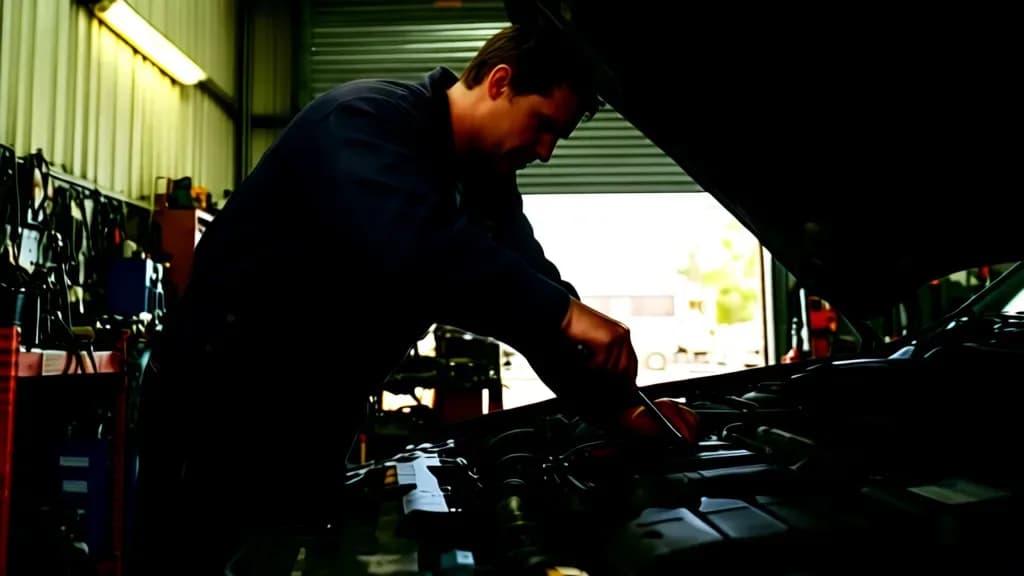
Vehicle trimmers install, repair, modify and replace interior fittings of vehicles — seats, upholstery, headliners, door trims, floor coverings, dashboards, carpet, vinyl and leather work, plus convertible tops and tonneau covers. The trade spans cars, trucks, buses, caravans, motorhomes, boats and increasingly aircraft interiors. The work blends pattern-making, sewing on heavy industrial machines, glue and adhesive techniques, foam fabrication, and final fitment to factory or custom specification.
Australian demand sits in five identifiable pockets. Recreational vehicle manufacturers run the largest volume of trimming work — Jayco, Avida, Apollo Motorhome Holidays and the Gold Coast caravan cluster employ trimmers full-time on production lines. Bus body builders (Volgren, Custom Denning, Bustech) require trimmers for seat covers, headliner installation and floor covering across electric and diesel bus fleets. Heritage and luxury vehicle restoration is a smaller but well-paid niche concentrated around Melbourne, Sydney and the Gold Coast — workshops servicing classic Holden, Ford, Jaguar, Mercedes and Porsche owners pay premium rates for skilled trimmers. Marine trimming covers boat interiors, canopies and seating. A fifth pocket sits in armoured vehicle and emergency vehicle outfitting where customised interiors are core to the build.
ANZSCO 324212 Code Mapping
ANZSCO 324212 sits inside Sub-Major Group 32 (Automotive and Engineering Trades Workers), Minor Group 3242 (Vehicle Body Builders and Trimmers). The official task profile covers measuring and cutting trim materials, sewing seat covers and panels, installing interior fittings, repairing damaged trim, and modifying interiors to specification.
The code is distinct from 324211 Vehicle Body Builder (which handles structural body work, not trim), 393213 Sewing Machinist (apparel rather than vehicle trim), and 393311 Upholsterer (which covers furniture upholstery rather than vehicle interiors). Marine trimming work, despite often being done in the same workshops, also maps to 324212 because the trade qualification (Certificate III in Automotive and Marine Trimming Technology) is shared.
Skills Assessment with TRA
Trades Recognition Australia is the only assessing body for ANZSCO 324212.
Offshore Skills Assessment (OSA)
For applicants outside Australia from eligible countries, the OSA is the standard pathway.
- Requirements: Recognised AQF Certificate III equivalent in vehicle trimming, motor trimming, automotive and marine trimming, or related upholstery trade with documented vehicle work; at least three years of post-qualification employment in vehicle trimming specifically; employment evidence matched to ANZSCO task descriptions
- Assessment cost: Approximately AUD $1,070 for the standard OSA (verify against the current TRA fee schedule)
- Processing time: 12-16 weeks under standard conditions
- Common rejection reasons: Evidence dominated by furniture or general upholstery work without vehicle specificity, qualifications below AQF Certificate III equivalent, and references that don't distinguish vehicle trim from broader sewing or fabric work
Job Ready Program (JRP) — Onshore
The standard route for onshore applicants (typically Subclass 485 holders) and those from countries not eligible for OSA.
- Provisional Skills Assessment (PSA)
- Job Ready Employment (JRE) — minimum 12 months of paid skilled employment monitored by TRA
- Job Ready Workplace Assessment (JRWA) — practical assessment on site
- Job Ready Final Assessment (JRFA)
- JRE fee: AUD $490
- Total programme cost: AUD $2,800-$3,500 across the four stages
- Processing time: 12-18 months end-to-end
Refer to the complete list of skills assessment bodies for context on how TRA fits alongside other authorities.
Visa Pathways for Vehicle Trimmers
Vehicle Trimmer is not on the MLTSSL, which rules out Subclass 189. CSOL + STSOL listing opens 190, 491, 482 and 186.
Subclass 482 — Skills in Demand Visa (Core Skills Stream)
The most common entry route for offshore vehicle trimmers and those needing to build Australian employment history.
- Visa fee: AUD $4,015 primary applicant
- Salary requirement: Core Skills Income Threshold of AUD $76,515 per year for applications lodged before 1 July 2026, lifting to AUD $79,423 from that date; employer must also pay the Annual Market Salary Rate
- Processing time: Core Skills stream applications run 2-8 months; the new fast-track system targets 14 days for half of medium-term applications
- Eligibility constraint: Employer must be an approved Standard Business Sponsor or accredited sponsor; the role must match ANZSCO 324212
- Quirk that matters: Vehicle trimmer median pay sits below the new CSIT of $79,423 from 1 July 2026 in many cases. Senior trimmers, RV production specialists and heritage restoration trimmers clear the threshold, but smaller upholstery shops may need to lift the offered salary to meet the test
Subclass 190 — Skilled Nominated Visa
Permanent residency with state nomination adding 5 points.
- Visa fee: AUD $6,140 primary applicant
- Processing time: 9-19 months for visa stage; state nomination decisions add 1-6 months
- Eligibility constraint: Must be nominated by a state that includes 324212 on its current 190 list
- Quirk that matters: Queensland (recreational vehicle cluster) and Victoria (bus body and luxury vehicle restoration) have the most consistent appetite for vehicle trimmer nominations in 2026. NSW carries a smaller and more dispersed employer base
Subclass 491 — Skilled Work Regional (Provisional)
Five-year provisional visa with a pathway to permanent residency via Subclass 191.
- Visa fee: AUD $6,140 primary applicant
- Processing time: 15-28 months for 90% of cases as of April 2026; median 6-20 months
- Eligibility constraint: Must live and work in a designated regional area; nominating state must include 324212 on its 491 list
- Quirk that matters: The Gold Coast and Sunshine Coast recreational vehicle manufacturing belt qualifies as regional under the 491 definition. This is the strongest single 491 pathway for vehicle trimmers — Jayco, Apollo and the broader caravan cluster employ trimmers in volume
Subclass 186 — Employer Nomination Scheme
Permanent residency through employer sponsorship via Direct Entry or Temporary Residence Transition.
- Visa fee: AUD $6,140 primary applicant
- Processing time: Direct Entry currently 12-20+ months; TRT comparable median
- Eligibility constraint: Direct Entry requires positive TRA assessment plus three years of skilled experience; TRT requires the prerequisite 482 hold period
- Quirk that matters: Major RV and bus manufacturers are repeat sponsors; smaller heritage and luxury restoration shops typically aren't. Plan the sponsor's SBS status into the timeline early
State Nomination
Queensland
Queensland nominates vehicle trimmers where employment evidence supports the demand case. The Gold Coast caravan and motorhome manufacturing belt creates the largest single Australian employer base for the trade. Queensland's nomination programme tends to weight regional employment, which suits applicants placed with Gold Coast or Sunshine Coast manufacturers.
Victoria
Victoria's 2025-26 programme accepts all occupations on the federal CSOL with priority weighted to health, social services and education. Victoria hosts the bus body builder cluster (Volgren, Bustech), Melbourne's luxury and heritage vehicle restoration market, plus Jayco's Dandenong operations — creating sustained trimmer demand. ROI selection means a confirmed Victorian job offer or documented Victorian work history materially improves ranking.
New South Wales
NSW's 2025-26 programme allocates 2,100 Subclass 190 places and 1,500 Subclass 491 places. Vehicle Trimmer is on the NSW skills list; selection is by ROI ranking. Sydney's bus body work (Custom Denning) and commercial vehicle outfitting create steady but smaller-volume demand than Queensland or Victoria.
South Australia
South Australia's 2025-26 programme weights trades. The state hosts a smaller specialist trimming sector tied to heritage automotive restoration and emergency vehicle outfitting. SA generally requires three years of skilled employment in the nominated or related occupation within the last five years.
Salary and Employment Outlook
| Role | Typical Salary Range |
|---|---|
| Apprentice / 1st-year Trimmer | AUD $42,000-$52,000 |
| Vehicle Trimmer (3-7 years) | AUD $60,000-$75,000 |
| Senior Trimmer | AUD $75,000-$90,000 |
| Heritage / Luxury Restoration Specialist | AUD $85,000-$110,000 |
| Trim Shop Foreman / Production Supervisor | AUD $90,000-$115,000 |
Figures draw on SEEK Talent 2026, Indeed Australia and SalaryExpert data; the SEEK How-to-Become-a-Motor-Trimmer profile and Jora data anchor the band. Total packages typically include 11.5% superannuation. Recreational vehicle production trimmers often earn piecework or output-linked bonuses that lift effective earnings by 10-20% over base. Heritage and luxury vehicle restoration sits at the top of the salary band — specialist trimmers working on classic Porsche, Jaguar, Mercedes and concours restoration projects command premium hourly rates either as employees or as self-employed contractors after permanent residency.
The highest-earning niches sit in heritage and luxury vehicle restoration, custom hot-rod and resto-mod trimming, and aircraft and superyacht interior work for the small specialist shops in Sydney and the Gold Coast.
Tips for a Successful Application
1. Differentiate Vehicle Trimming from Furniture Upholstery
The single most common rejection reason is employment evidence that reads as general upholstery rather than vehicle-specific trimming. References must explicitly describe vehicle interior work — seat covers fitted to specification, headliner installation, door trim fabrication, marine canopy work where relevant. Furniture upholstery experience does not satisfy ANZSCO 324212.
2. Document Industrial Machine Proficiency
Vehicle trimming uses heavy industrial sewing machines, hot-melt adhesive systems, foam cutting equipment, and increasingly digital pattern-cutting tables. References should list the specific machine types operated — Juki, Pfaff, Adler, Mitsubishi industrial heads, plus any CAD pattern work. Generic "sewing experience" is insufficient.
3. Target the Recreational Vehicle Manufacturing Belt
The Gold Coast and Sunshine Coast caravan and motorhome cluster is the largest single employer base for vehicle trimmers in Australia. Apollo, Suncamper, Avida-related operators and the broader RV supply chain employ trimmers in production volume. This is the strongest 491 pathway and a productive 482 sponsorship target.
4. Check Salary Against the New CSIT
The CSIT lifts to AUD $79,423 from 1 July 2026. Median vehicle trimmer pay sits below this in junior and mid-tier roles. Confirm any 482 sponsorship offer clears the new threshold, or look at senior roles, supervisory positions, or specialist heritage workshops where the salary profile is higher.
5. Build Heritage and Luxury Portfolio Where Possible
Heritage and luxury vehicle restoration is the highest-paying niche and the most receptive to skilled migrant sponsorship at smaller workshops. Document any concours, classic vehicle, or premium-brand restoration work prominently in references — Mercedes Benz Australia, Porsche specialists, and the JEC (Jaguar Enthusiasts Club) network in Australia drive consistent demand.
Step-by-Step Migration Roadmap
- Confirm ANZSCO 324212 is the correct code — review the ANZSCO code finder and confirm your duties match vehicle trimming rather than furniture upholstery or general sewing
- Verify CSOL and STSOL status — confirm 324212 on the CSOL for the visa stream you are targeting
- Compile qualifications and employment evidence — Certificate III equivalent plus three years of documented vehicle trimming work
- Sit IELTS or PTE Academic — Competent English minimum; higher band scores improve state nomination ranking
- Lodge TRA application — OSA if eligible offshore, JRP starting with PSA if onshore
- Receive positive skills assessment
- Submit Expression of Interest in SkillSelect — for 190 or 491 pathways
- Apply for state nomination — Queensland (RV cluster), Victoria (bus and luxury), NSW and South Australia are the most active states
- Alternatively, secure a 482 sponsor — RV manufacturers, bus body builders, and specialist heritage workshops are the most active sponsors
- Lodge visa application — within 60 days of invitation for 190 or 491; on receipt of nomination for 482 or 186
- Complete health and character checks
- Receive visa grant and relocate
Frequently Asked Questions
Is Motor Trimmer the same as Vehicle Trimmer?
Yes. ANZSCO 324212 covers both terms interchangeably. "Motor Trimmer" is the older Australian industry term; "Vehicle Trimmer" is the current ANZSCO classification. Employment references can use either term provided the duties described match the 324212 task list.
Can furniture upholsterers migrate under this code?
No. Furniture upholstery maps to ANZSCO 393311 Upholsterer, which is a separate classification. Vehicle trimmer references must describe vehicle, boat, aircraft or recreational vehicle interior work specifically. If your experience spans both, foreground the vehicle-specific work and document the proportion of your career spent on vehicle interiors.
Does marine trimming experience count?
Yes. ANZSCO 324212 explicitly covers boat interiors, canopies and marine upholstery, and the foundational qualification (Certificate III in Automotive and Marine Trimming Technology) covers both vehicle and marine work. Document marine trimming work alongside any vehicle work in your references.
What's the smallest realistic salary for sponsorship?
The Core Skills Income Threshold rises to AUD $79,423 from 1 July 2026 for new applications. Below that, 482 sponsorship is not viable under the Core Skills stream. The Annual Market Salary Rate may be higher in some metropolitan markets. Senior trimmers, supervisors and specialist heritage trimmers typically sit comfortably above the threshold; junior and mid-tier production trimmers often don't.
What are the most common reasons vehicle trimmer applications fail?
Three recurring failure modes: employment references that read as general upholstery or sewing rather than vehicle trimming specifically; qualifications that don't reach AQF Certificate III equivalent on TRA assessment; and sponsorship offers below the Core Skills Income Threshold. Pre-empt all three before lodging.