Vehicle Body Builder Visa Pathway to Australia: Complete 2026 Guide
Updated: 16 August 2026
Australia classifies Vehicle Body Builder under ANZSCO 324211. Trades Recognition Australia (TRA) is the assessing authority. The occupation sits on the Core Skills Occupation List (CSOL) and STSOL, unlocking subclasses 190, 491, 482 and 186. Typical 2026 salaries range AUD $75,000-$85,000 on SEEK Talent. Jobs and Skills Australia lists vehicle body builders as in national shortage.
Quick Facts: Vehicle Body Builder Migration Pathway
| Detail | Information |
|---|---|
| ANZSCO Code | 324211 (Vehicle Body Builder) |
| Skill Level | 3 (AQF Certificate III or IV with relevant trade experience) |
| Skills Assessment | TRA (Trades Recognition Australia) |
| Occupation List | CSOL and STSOL |
| Visa Options | 190, 491, 482, 186 |
| Demand Level | High — Jobs and Skills Australia lists vehicle body builders in national shortage; the Heavy Vehicle Industry Australia reports an irrefutable labour shortage |
| Salary Range | AUD $75,000-$85,000 (SEEK Talent, 2026) |
| Typical 189 Score | Not applicable — 324211 is not on the MLTSSL |
| Key Challenge | Onshore applicants must complete the Job Ready Program (12-18 months); demand is concentrated in heavy vehicle and bus body shops, not passenger vehicles |
What a Vehicle Body Builder Does in Australia
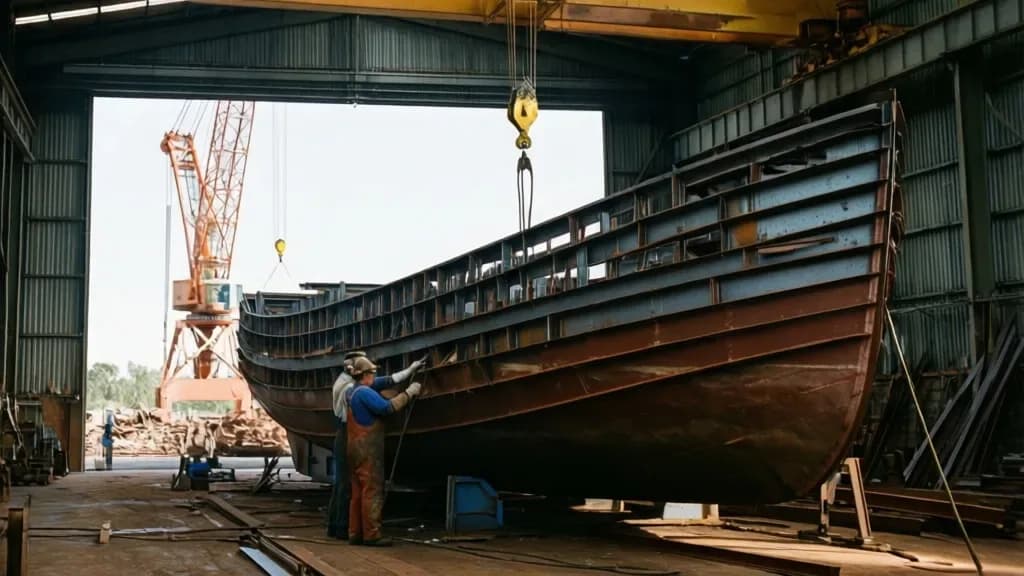
Vehicle body builders fabricate, assemble and modify the bodies of trucks, buses, fire engines, ambulances, caravans, motorhomes and purpose-built vehicles. The trade combines sheet metal work, structural fabrication, welding (MIG, TIG, stick), composite panel assembly, and increasingly aluminium and stainless-steel framing for lightweight body construction. The work is distinct from panel beating, which repairs damaged passenger vehicle bodies — body builders produce new bodies and major structural modifications.
Australian demand sits in five sectors. Heavy vehicle and truck body building serves the freight, mining and construction sectors — major employers include Volvo Australia (Brisbane), Kenworth (Bayswater, Victoria), Iveco Trucks Australia (Dandenong), MaxiTRANS and Byrne Trailers. Bus body building feeds metropolitan and regional transit operators — Custom Denning (Sydney), Volgren (Dandenong), Bustech (Burleigh Heads) and Marcopolo Australia. The recreational vehicle sector covers caravan and motorhome manufacturing concentrated in Melbourne's southeast and Queensland's Gold Coast — Jayco, Avida, Apollo and Suncamper run substantial operations. Emergency vehicle building serves fire and ambulance fleets across all states. A fifth pocket sits in specialist body builders producing armoured vehicles, mining service trucks, and custom commercial bodies.
ANZSCO 324211 Code Mapping
ANZSCO 324211 sits inside Sub-Major Group 32 (Automotive and Engineering Trades Workers), Minor Group 3242 (Vehicle Body Builders and Trimmers). The official task profile covers fabricating frame components, fitting body panels, assembling completed bodies, fitting interior components, and modifying existing bodies for specialised purposes.
The code is distinct from 324111 Panelbeater (which repairs damaged vehicle bodies), 324212 Vehicle Trimmer (which fits interior trim, upholstery and linings), and 322312 Sheetmetal Trades Worker (which produces sheet metal components but not complete vehicle bodies). Truck and bus body building is the dominant work covered by 324211 — applicants working primarily on car bodywork repair should look at panel beater classification.
Skills Assessment with TRA
Trades Recognition Australia is the only assessing body for ANZSCO 324211.
Offshore Skills Assessment (OSA)
For applicants outside Australia from eligible countries, the OSA is the standard pathway.
- Requirements: Recognised AQF Certificate III equivalent in vehicle body building, panel beating, sheet metal fabrication or related automotive trade; at least three years of post-qualification employment in body building specifically; employment evidence matched to ANZSCO task descriptions
- Assessment cost: Approximately AUD $1,070 for the standard OSA (verify against the current TRA fee schedule)
- Processing time: 12-16 weeks under standard conditions
- Common rejection reasons: Employment evidence dominated by repair work rather than new body construction, qualifications below AQF Certificate III equivalent, and references that describe general fabrication or welding without vehicle body specificity
Job Ready Program (JRP) — Onshore
The standard route for onshore applicants and those from countries not eligible for OSA.
- Provisional Skills Assessment (PSA)
- Job Ready Employment (JRE) — minimum 12 months of paid skilled employment monitored by TRA
- Job Ready Workplace Assessment (JRWA) — practical assessment on site
- Job Ready Final Assessment (JRFA)
- JRE fee: AUD $490
- Total programme cost: AUD $2,800-$3,500 across the four stages
- Processing time: 12-18 months end-to-end
Refer to the complete list of skills assessment bodies for context on how TRA fits alongside other assessing authorities.
Visa Pathways for Vehicle Body Builders
Vehicle body builder is not on the MLTSSL, which rules out Subclass 189. The CSOL + STSOL listing opens 190, 491, 482 and 186.
Subclass 482 — Skills in Demand Visa (Core Skills Stream)
The dominant entry route for offshore body builders.
- Visa fee: AUD $4,015 primary applicant
- Salary requirement: Core Skills Income Threshold of AUD $76,515 per year for applications lodged before 1 July 2026, lifting to AUD $79,423 from that date; employer must also pay the Annual Market Salary Rate
- Processing time: Core Skills stream applications run 2-8 months; the new fast-track system targets 14 days for half of medium-term applications
- Eligibility constraint: Employer must be an approved Standard Business Sponsor or accredited sponsor; the role must match ANZSCO 324211
- Quirk that matters: SEEK salary data shows vehicle body builders averaging $75,000-$85,000, which sits below the new CSIT of $79,423 from 1 July 2026 in some cases. Confirm any sponsorship offer clears the new threshold or budget for a wage uplift before lodgement
Subclass 190 — Skilled Nominated Visa
Permanent residency with state nomination adding 5 points.
- Visa fee: AUD $6,140 primary applicant
- Processing time: 9-19 months for visa stage; state nomination decisions add 1-6 months
- Eligibility constraint: Must be nominated by a state that includes 324211 on its current 190 list
- Quirk that matters: Victoria and Queensland have the strongest body-building employer base and the most consistent nomination appetite. NSW carries a smaller body-building sector outside Sydney's commercial truck workshops
Subclass 491 — Skilled Work Regional (Provisional)
Five-year provisional visa with a pathway to permanent residency via Subclass 191.
- Visa fee: AUD $6,140 primary applicant
- Processing time: 15-28 months for 90% of cases as of April 2026; median 6-20 months
- Eligibility constraint: Must live and work in a designated regional area; nominating state must include 324211 on its 491 list
- Quirk that matters: The recreational vehicle manufacturing belt on the Gold Coast and Sunshine Coast qualifies as regional under the 491 definition — opening a strong pathway for caravan and motorhome body builders
Subclass 186 — Employer Nomination Scheme
Permanent residency through employer sponsorship via Direct Entry or Temporary Residence Transition.
- Visa fee: AUD $6,140 primary applicant
- Processing time: Direct Entry currently 12-20+ months; TRT comparable median
- Eligibility constraint: Direct Entry requires positive TRA assessment plus three years of skilled experience; TRT requires the prerequisite 482 hold period
- Quirk that matters: Major bus and truck body builders (Volgren, Custom Denning, Kenworth, Volvo) are repeat sponsors with internal HR teams familiar with the 186 process — easing the runway versus smaller specialist body shops
State Nomination
Victoria
Victoria's 2025-26 programme accepts all occupations on the federal CSOL, with priority weighted to health, social services and education. Trades nominations remain active where employment evidence supports them. Victoria hosts Australia's largest body-building cluster — Volgren, Iveco, Kenworth, Jayco and Custom Denning all run significant operations across Dandenong and the southeast.
Queensland
Queensland nominates body builders where employment evidence supports the demand case. The state's recreational vehicle manufacturing on the Gold Coast (Apollo Motorhome Holidays, Suncamper, Avida-related operators) and heavy vehicle service workshops in Brisbane's industrial belt create a sustainable employer base. Queensland's nomination programme tends to weight regional employment outside Brisbane.
New South Wales
NSW's 2025-26 programme allocates 2,100 Subclass 190 places and 1,500 Subclass 491 places. Vehicle Body Builder is on the NSW skills list; selection is by ROI ranking. Sydney's commercial truck and bus body cluster (Custom Denning, plus a chain of mining-vehicle outfitters) anchors NSW demand.
South Australia
South Australia's 2025-26 programme weights trades and the state hosts a smaller but established heavy vehicle body cluster. Adelaide's logistics and mining-service supply chain creates steady demand. SA generally requires three years of skilled employment in the nominated or related occupation within the last five years.
Salary and Employment Outlook
| Role | Typical Salary Range |
|---|---|
| Apprentice / 1st-year Body Builder | AUD $45,000-$55,000 |
| Vehicle Body Builder (3-7 years) | AUD $75,000-$85,000 |
| Senior Body Builder | AUD $85,000-$98,000 |
| Bus / Truck Body Building Specialist | AUD $90,000-$105,000 |
| Body Shop Foreman / Supervisor | AUD $100,000-$120,000 |
Figures draw on SEEK Talent 2026 ($75,000-$85,000 average band) and Jora ($80,000 average). Total packages typically include 11.5% superannuation and overtime loadings. Heavy vehicle body builders generally earn more than light commercial body builders, and bus body specialists with composite panel and electric-vehicle experience attract a premium in 2026 as transit operators electrify their fleets.
The highest-earning niches sit in electric bus body building (Custom Denning and Volgren are scaling EV production), specialised emergency vehicle manufacturing, and armoured or mining service vehicle fabrication.
Tips for a Successful Application
1. Distinguish Body Building from Panel Beating in Every Reference
The most common rejection trigger for 324211 is employment evidence dominated by repair work. References must explicitly describe new body construction, body fitment, structural fabrication and assembly to specification. If your work is primarily damage repair, panel beater (324111) is the more accurate code — apply under that classification instead.
2. Highlight Heavy Vehicle and Bus Experience
Australia's body-building shortage is concentrated in the heavy vehicle and bus sectors, not passenger cars. Employment references should foreground truck, bus, recreational vehicle or emergency vehicle work where applicable. Light commercial body experience is acceptable but doesn't carry the same weight in nomination ranking.
3. Document Welding Tickets and Composite Panel Experience
Modern Australian body shops require MIG, TIG and stick welding tickets plus increasing composite panel and aluminium fabrication experience. Electric bus production specifically requires aluminium framing skills. List specific welding certifications and the metal types worked on — generic "welding experience" is too thin for TRA assessment.
4. Target Repeat Sponsor Employers
Volgren, Custom Denning, Bustech, Kenworth, Iveco, Volvo Australia and Jayco have sponsored skilled migrants previously and have internal HR teams familiar with the 482 process. Smaller specialist body shops often haven't — confirming SBS status early avoids late-stage delays.
5. Consider the Recreational Vehicle Belt for Regional 491
Queensland's Gold Coast and Sunshine Coast caravan and motorhome manufacturing belt qualifies as regional under the 491 definition. For applicants without a metropolitan employer connection, this opens a faster route to permanent residency via the regional pathway than waiting for 190 selection.
Step-by-Step Migration Roadmap
- Confirm ANZSCO 324211 is the correct code — review the ANZSCO code finder and confirm your duties match body building rather than panel beating or sheet metal fabrication
- Verify CSOL and STSOL status — confirm 324211 on the CSOL for the visa stream you are targeting
- Compile qualifications and employment evidence — Certificate III equivalent plus three years of documented vehicle body building work, with welding tickets attached
- Sit IELTS or PTE Academic — Competent English minimum; higher band scores improve state nomination ranking
- Lodge TRA application — OSA if eligible offshore, JRP starting with PSA if onshore
- Receive positive skills assessment
- Submit Expression of Interest in SkillSelect — for 190 or 491 pathways
- Apply for state nomination — Victoria, Queensland, NSW and South Australia are the most active states for body builders
- Alternatively, secure a 482 sponsor — major bus, truck and recreational vehicle manufacturers are the most established sponsors
- Lodge visa application — within 60 days of invitation for 190 or 491; on receipt of nomination for 482 or 186
- Complete health and character checks
- Receive visa grant and relocate
Frequently Asked Questions
Why isn't Vehicle Body Builder on the MLTSSL despite the shortage?
The MLTSSL reflects medium-to-long-term demand projections rather than current shortages alone. Jobs and Skills Australia consistently flags body builders as in shortage, but the workforce size and projected demand patterns place the occupation on CSOL and STSOL rather than MLTSSL. The practical result is that Subclass 189 is unavailable; all other skilled pathways remain open.
Can I migrate as a panel beater under 324211?
No. Panel beating is a separate classification (324111) covering damage repair on existing vehicle bodies. ANZSCO 324211 specifically covers new body construction and major structural modifications. If your work is dominantly repair, apply under 324111 panel beater. Misclassification is a common assessment failure.
Does electric bus body building experience help?
Yes, materially. Volgren and Custom Denning are scaling electric bus production, and the trade requires aluminium framing, composite panel work, and high-voltage system integration awareness. Documented EV body experience strengthens both skills assessment and employer sponsorship attractiveness in 2026.
Are recreational vehicle (RV) builders eligible under this code?
Yes. ANZSCO 324211 covers caravan, motorhome and recreational vehicle body building. The Queensland Gold Coast and Sunshine Coast cluster, plus Victoria's southeast RV manufacturers, all build under the 324211 classification. Reference evidence should describe the relevant body construction work, not just trim or interior fitment (which falls under 324212).
What's the demand outlook for vehicle body builders in 2026 and beyond?
Strong through the late 2020s. Drivers include the freight sector's truck fleet renewal, public transit operators' bus body replacement and electrification programmes, recreational vehicle sector growth as domestic tourism remains strong, and the ageing trades workforce. Jobs and Skills Australia continues to flag vehicle body builders in national shortage, and industry bodies report sustained labour gaps.