Australian Tourist Visa for Vietnamese Citizens: 2026 Guide
Updated: 13 May 2026
The Subclass 600 Visitor visa is the only Australian tourist option for Vietnamese passport holders, since the ETA and eVisitor schemes are closed to Vietnam. Applications lodge online through ImmiAccount or in person at VFS Global centres in Hanoi and Ho Chi Minh City. Refusal rates are above the global average, driven by weak ties-to-Vietnam evidence and inconsistent financial documents.
Quick Facts: Tourist Visa for Vietnamese Citizens
| Detail | Information |
|---|---|
| Visa subclass | 600 (Visitor), Tourist or Family-Sponsored stream |
| ETA/eVisitor eligibility | Not available to Vietnamese passport holders |
| Base application fee | AUD $430 (Tourist stream) |
| Stay length | Usually 3 months; up to 12 months at the Department's discretion |
| Lodgement | ImmiAccount online, or VFS Global Hanoi / Ho Chi Minh City |
| Biometrics | Required at VFS Global AVAC |
| Health exam | Triggered by age, intended length of stay, or medical history |
| Police clearance | Not standard for short tourist stays, but may be requested |
| Embassy | Australian Embassy, Hanoi; Consulate-General, Ho Chi Minh City |
Who Should Apply for the Subclass 600
The Subclass 600 covers most reasons a Vietnamese citizen would visit Australia short term. The Tourist stream suits sightseeing, holidays, and visits to friends or relatives where no formal sponsor is needed. The Sponsored Family stream is used where an Australian-citizen or permanent-resident relative formally sponsors the visit and may be asked to lodge a security bond. The Business Visitor stream covers conferences, contract negotiations, or short meetings, but not paid work.
Pick the stream that matches the actual purpose of your trip. Choosing the wrong stream is a common reason for follow-up requests from the case officer and can drag processing out by weeks.
What You Need to Apply
A Subclass 600 from Vietnam stands or falls on three things: identity, purpose, and the believability of your return. The Department isn't trying to catch you out; it's checking that you have a real reason to come and a real reason to go home.
Standard documentation for Vietnamese applicants:
- A current Vietnamese passport with at least six months validity beyond your intended return date
- A completed Form 1419 (Tourist) or Form 1418 (Sponsored Family) inside ImmiAccount
- Passport bio-page scan and a recent passport-style photo meeting Australian visa photo specifications
- Hộ khẩu (household registration) and CCCD (citizen ID card) with English translation
- Confirmed return flights or a detailed itinerary
- Accommodation bookings, or an invitation letter from your host in Australia
- Bank statements for the last three to six months (Vietcombank, BIDV, Techcombank, VPBank, whichever you bank with)
- Proof of employment, business ownership, or study tying you to Vietnam
- Travel insurance covering the duration of your visit
If a family member in Australia is hosting you, include their passport bio-page or PR grant letter, plus a short invitation letter explaining the visit. For a Sponsored Family stream application, the sponsor lodges Form 1149 and may need to provide their Medicare card, payslips, and tax notice.
How to Apply From Vietnam
Two routes are available, and both end up in the same Department system.
Online via ImmiAccount. Create an account, complete Form 1419, upload your documents, and pay AUD $430 by Visa or Mastercard. This is the route most independent travellers use. The full process is covered in the step-by-step application guide and the ImmiAccount setup walkthrough.
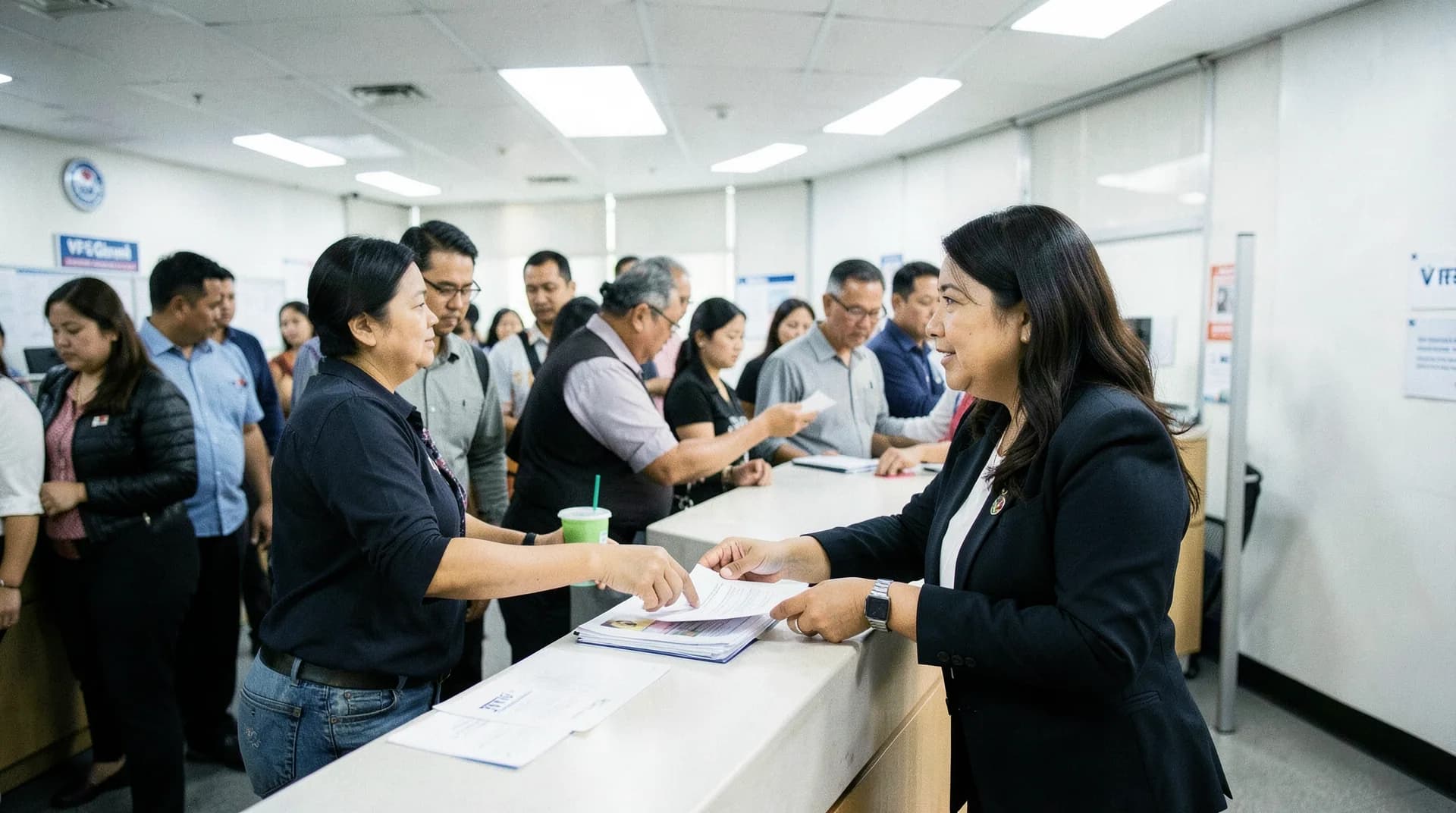
In person through VFS Global. Book a slot at the Australian Visa Application Centre in Hanoi (Trung Hoa, Cau Giay District) or Ho Chi Minh City (District 1, near the Notre Dame area). VFS will collect biometrics, check documents, and forward everything to the Department. You'll pay the AUD $430 base charge plus the VFS service fee in Vietnamese dong at the centre.
Biometrics are required either way, so even applicants who lodge online from Vietnam usually visit a VFS AVAC for fingerprints and a facial image. Book the biometrics appointment as soon as the application is lodged. Slots in peak months fill quickly.
Cost and Processing Times
The base application charge is AUD $430. VFS Global service fees are paid separately at the centre. Optional add-ons like priority document delivery, photo services, or premium lounge access are not part of the Department's published fee schedule and don't speed up the case officer's decision.
Processing times for Vietnamese applicants generally fall between two and six weeks, depending on the case officer's queue, the time of year, and whether your file is straightforward. Tet (Lunar New Year), Australian summer holidays from November through January, and the European/North American summer all push timelines longer. Apply at least six to eight weeks before your travel date and resist the urge to book non-refundable flights before the grant letter arrives.
The fee schedule is updated annually. The current numbers and recent changes are tracked in the Australian visa fees schedule.
What Vietnamese Applicants Need to Know
The Subclass 600 from Vietnam is judged on patterns, not single documents. Case officers see thousands of files a year and recognise the shape of a genuine visitor, as well as the shape of an application built to get past them.
Ties to Vietnam matter more than wealth. A modest applicant with a stable job, family at home, and a clear reason to return often does better than a high-net-worth applicant who quit their role last month and put everything on the market. Stable employment, a property in your name, school-age children in Vietnam, an aging parent you provide for, or an ongoing business: these are the anchors a case officer looks for.
Financial evidence should be calm, not impressive. A bank balance that has built steadily over six months tells a better story than a single VND 500 million deposit from "a relative" three days before lodgement. If a large deposit is real and legitimate, whether a property sale, a Tet bonus, or an inheritance, explain it in a short cover note and attach the source document.
Cover letters are not required, but they help. A one-page letter in your own words, explaining who you are, who you're visiting, the dates and reason for your trip, and what you'll be doing each day, can answer half the questions a case officer would otherwise raise.
Travel history works in your favour. Previous compliant trips to Japan, South Korea, Taiwan, the UK, the Schengen area, or the US show the Department that you understand and respect visa conditions. If you've been refused a visa anywhere, including Australia previously, you must disclose it. Concealment is a much harder failure to recover from than a past refusal.
Common Pitfalls for Vietnamese Applicants
A few recurring issues account for most refusals coming out of the Hanoi and Ho Chi Minh City processing flow:
- Sudden lump-sum deposits in the weeks before lodgement, with no documented source. Case officers read this as borrowed money and discount it.
- Mismatched documents. A CCCD address that doesn't match the bank-account address, employment letters from companies that don't appear on the General Department of Taxation register, or English translations that diverge from the Vietnamese originals.
- Weak ties evidence for unmarried applicants in their twenties with no property, no dependants, and a recently obtained job. This profile gets extra scrutiny, and the answer is usually a more detailed cover letter plus stronger employment proof.
- Unrealistic itineraries. Three weeks in Australia with no booked accommodation, no domestic flights, and a vague "stay with friends" line. Even a rough day-by-day plan is more persuasive.
- Reusing a previous refusal address. Applicants who were refused under a Vietnamese-translated name spelling and reapply using a slightly different English transliteration trigger a refusal-history match almost every time. Use the spelling on your current passport.
- Late biometrics. Some applicants assume online lodgement is the whole process. The Department won't decide the file until biometrics are captured at VFS.
Frequently Asked Questions
Can a Vietnamese citizen get an Australian ETA or eVisitor?
No. Vietnam is not on either eligibility list. Every Vietnamese passport holder applies for the full Subclass 600 Visitor visa, regardless of trip length or purpose.
How much money should I show in my bank account?
The Department doesn't publish a fixed figure for the Subclass 600. For a two- to three-week trip, most successful applications show the equivalent of around AUD $5,000 to $10,000, built up over several months. For longer stays, scale that up. Consistency matters more than the total.
How long does the visa take from Vietnam?
Most files are decided within two to six weeks, but peak-season files lodged in November through February can stretch longer. Apply at least six to eight weeks before travel.
Do I need a police clearance from Vietnam for a tourist visa?
Usually no. The Vietnamese Judicial Record (Phiếu Lý Lịch Tư Pháp) is normally only requested for longer stays, repeat visitors, or applicants with a flagged history. If the case officer asks for one, Form No. 2 is the standard format used for visa purposes.
Can my Subclass 600 be extended once I'm in Australia?
In limited cases, yes. You'd apply for a further Subclass 600 from inside Australia before the existing one expires, with a fresh reason for staying longer. Visitor visas usually carry a no-further-stay condition (8503) that blocks this, so check your grant letter conditions first.
Can I work on a Subclass 600?
No. Paid work in any form is prohibited. Unpaid volunteering with a recognised charity is sometimes permitted, but anything that displaces an Australian worker breaches the visa.
Related Guides
- Australian Visa for Vietnamese Citizens: full country overview
- How to apply for an Australian visa, step by step
- ImmiAccount setup and management guide
- Australian visa fees schedule 2026
- Australian visa photo requirements
- Police clearance certificates: country-by-country guide
- Australian visa for Thai citizens
- Australian visa for Filipino citizens