Carpenter and Joiner Visa Pathway to Australia: Complete 2026 Guide
Updated: 16 August 2026
Australia classifies Carpenter and Joiner under ANZSCO 331211. Trades Recognition Australia (TRA) conducts the skills assessment via the Job Ready Program (onshore) or the Offshore Skills Assessment Program (OSAP). The occupation sits on the Core Skills Occupation List and MLTSSL, unlocking subclasses 189, 190, 491, 482, and 186. Typical 2026 salaries range AUD $75,000-$110,000. Construction trades are a priority sector in NSW, VIC, QLD, SA, WA, and TAS.
Quick Facts: Carpenter and Joiner Migration Pathway
| Detail | Information |
|---|---|
| ANZSCO Code | 331211 (Carpenter and Joiner) |
| Skill Level | 3 (Australian Certificate III or IV, or three years on-the-job training) |
| Skills Assessment | TRA (Trades Recognition Australia) — Job Ready Program or OSAP |
| Occupation List | CSOL and MLTSSL |
| Visa Options | 189, 190, 491, 482, 186 |
| Demand Level | Critical — construction trades are the largest persistent shortage category in Australia |
| Salary Range | AUD $75,000-$110,000 (SEEK Salary Hub, 2026; Talent.com Australia 2026) |
| Typical 189 Score | 65-80 points (trades historically clear at lower thresholds than ICT) |
| Key Challenge | TRA Job Ready Program takes 12-15 months; planning the timeline correctly is the make-or-break factor |
What a Carpenter and Joiner Does in Australia
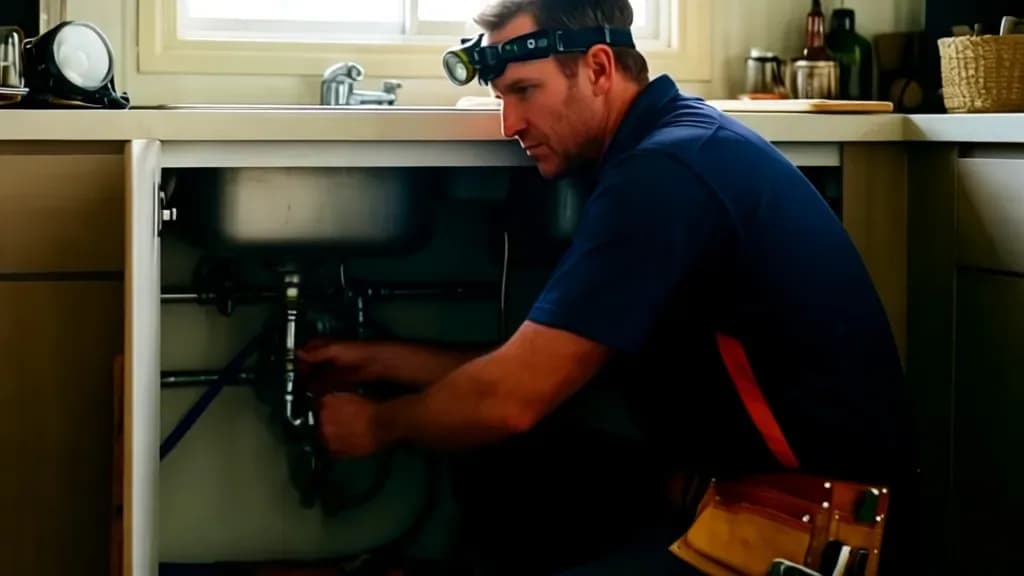
The 331211 code applies to tradespeople who both construct and erect wooden structures and fabricate, assemble, and install fitted timber components. In practical terms, this is the dual-skilled worker who frames a house on Monday and fits the kitchen cabinetry on Friday. On Australian sites, this combination is common in residential construction, renovation, and small-builder work, where one tradesperson handles both formwork and finishing joinery.
Demand is concentrated in NSW and Victoria, where the housing pipeline is largest, but Queensland's south-east corridor and Western Australia's mining-services boom have created sustained openings in regional towns. Major employers include national homebuilders such as Metricon and Simonds, mid-tier residential builders, commercial fit-out contractors, and a long tail of small subcontracting firms. The Federal Government's commitment to 1.2 million new homes by 2029 (the Housing Accord target) has hardened demand and lifted award and enterprise-bargaining rates.
ANZSCO Code Mapping
ANZSCO 331211 covers both carpentry (structural timber, framing, formwork, roof carcassing) and joinery (cabinetry, doors, fitted timber components). The Australian Bureau of Statistics positions 331211 as the combined skill — sitting above the two narrower codes 331212 (Carpenter only) and 331213 (Joiner only).
Use 331211 when your work history honestly shows both structural carpentry and fitted joinery. If you primarily install framing, roof structures, and formwork, Carpenter (331212) is the more accurate code. If you primarily build cabinetry, fitted furniture, doors, and benches in a workshop, Joiner (331213) fits better. TRA examines work evidence against the chosen code — claiming the dual code with only single-trade evidence is a common rejection trigger.
Typical 331211 tasks include studying drawings and specifications, preparing layouts, cutting and shaping timber, joining sections, erecting timber framing, installing doors, windows, panelling, and built-in fittings, and using tools such as power saws, planers, routers, and nail guns.
Skills Assessment with TRA
Trades Recognition Australia is the only authority that assesses 331211. There are two routes, and choosing the right one is the largest single decision in the application.
Job Ready Program (Onshore Pathway)
For applicants already in Australia — most commonly on a Temporary Graduate (485) visa after a Certificate III or IV in Carpentry and Joinery. The JRP has four stages and runs across roughly 12-15 months.
- Stage 1 — Provisional Skills Assessment: AUD $370. Reviews your qualification and decides whether you can enter the program.
- Stage 2 — Job Ready Employment: AUD $450. You complete 12 months of paid, full-time employment (1,725 hours minimum) in the nominated trade.
- Stage 3 — Job Ready Workplace Assessment: AUD $2,310. A registered training organisation conducts an on-site workplace assessment.
- Stage 4 — Job Ready Final Assessment: AUD $360. TRA issues the final outcome letter.
Total: approximately AUD $3,490 across stages. Processing time end-to-end is 12-15 months. Carpentry is on the prioritised construction trades list for 2024-2026, which means TRA fast-tracks specific stages where capacity allows.
Offshore Skills Assessment Program (OSAP)
For applicants outside Australia. OSAP involves a documentary review followed by a technical interview (usually conducted in your country of residence by an approved RTO). Total fee is approximately AUD $1,000-$3,000 depending on the assessing RTO and country, with a processing time of 12-26 weeks.
Common rejection reasons across both routes: employment evidence that doesn't show the breadth of carpentry-plus-joinery duties; qualifications that don't map clearly to AQF Certificate III equivalent; and (for JRP) employers who can't or won't sign the required employment verification forms. Build your evidence pack before you lodge — TRA is exacting about documentation.
Visa Pathways for Carpenters and Joiners
Subclass 482 — Skills in Demand Visa
Often the fastest entry route for offshore tradespeople. Employer-sponsored, no points test.
- Visa fee: AUD $3,210 (primary applicant)
- Salary threshold (Core Skills, pre-1 July 2026): AUD $76,515; rising to AUD $79,499 from 1 July 2026
- Processing time: 3-6 months
- Reality: Most carpentry roles in major-city builders pay above the Core Skills threshold. Regional builders sometimes underpay against threshold, which kills sponsorship eligibility — always check the offered salary against CSIT.
Subclass 186 — Employer Nomination Scheme
Permanent residency through employer sponsorship. Two streams: Direct Entry (offshore-friendly, requires positive skills assessment) and Temporary Residence Transition (after holding a 482 for two years).
- Visa fee: AUD $6,140 (primary applicant)
- Processing time: 6-12 months
- Reality: TRT is the dominant route — most carpenters land on a 482 first, then transition.
Subclass 491 — Skilled Work Regional Visa
Regional nomination adds 15 points. Five-year provisional with a pathway to PR via subclass 191 after three years of regional residence and income.
- Visa fee: AUD $6,140 (primary applicant)
- Processing time: 7-13 months
- Reality: The most realistic points-tested route for trades. Queensland and South Australia run active 491 streams for construction occupations.
Subclass 190 — Skilled Nominated Visa
State-nominated permanent residency. Adds 5 points.
- Visa fee: AUD $6,140 (primary applicant)
- Processing time: 7-13 months
- Reality: NSW and Queensland both nominate carpentry in 2026. NSW listed Carpenter as a targeted occupation in its March 2026 round.
Subclass 189 — Skilled Independent Visa
Points-only PR with no nomination requirement.
- Visa fee: AUD $6,135 (primary applicant)
- Processing time: 6-9 months (following the March 2026 Home Affairs overhaul)
- Reality: Possible but harder than for ICT. Trades clear at lower points (65-80 typically) but invitation rounds for non-priority trades are smaller.
Points Test Strategy
Carpentry and joinery applicants typically score in the 65-80 range. The points table:
| Points Factor | Points | Notes |
|---|---|---|
| Age (25-32) | 30 | Maximum bracket |
| Age (33-39) | 25 | Still strong |
| English (Competent — IELTS 6.0) | 0 | Minimum for visa, no points |
| English (Proficient — IELTS 7.0) | 10 | Worth the prep time |
| English (Superior — IELTS 8.0) | 20 | Hard for many trades applicants but unlocks the top points band |
| Qualification (Cert III/IV trade) | 10 | Standard for trades |
| Australian Study | 5 | Cert III or higher completed in Australia |
| Overseas Experience (8+ years) | 15 | Counted at the skilled level only |
| State Nomination (190) | 5 | |
| Regional (491) | 15 | Highest single boost |
| Partner Skills | 5-10 | If partner has skilled occupation |
Realistic Scenarios
Scenario 1: Offshore applicant, age 30, IELTS 6.5, 10 years experience Age 30 + English 0 + Cert III 10 + Experience 15 = 55 points. Needs 491 (+15) for 70 points, sufficient for some construction-priority states.
Scenario 2: Onshore graduate, age 27, IELTS 7.0, Australian Cert IV, 1 year post-study work Age 30 + English 10 + Cert IV 10 + Australian Study 5 = 55 points. Needs 190 or 491, plus a strong employer reference.
State Nomination for Carpenters and Joiners
New South Wales
NSW added Carpenter to its targeted occupations list in the March 2026 nomination round, signalling that construction trades sit inside the state's 2,100-place 190 allocation. Onshore applicants generally need 75 points; offshore applicants 70 points. The state's Housing Accord commitments and the Sydney rail and roads pipeline drive sustained demand.
Victoria
Victoria accepts all occupations on the federal Core Skills Occupation List for state nomination. Construction is one of the state's six priority sectors for 2025-26, with approximately 3,400 nomination places (2,700 × 190 and 700 × 491). The state requires a Registration of Interest through the Live in Melbourne portal in addition to a SkillSelect EOI.
Queensland
Queensland's Building and Construction Pathway gives carpenters higher priority in invitation rounds. The state runs both 190 and 491 streams. Registrations of Interest opened on 19 September 2025 for the 2025-26 programme year. Regional Queensland (outside Greater Brisbane) qualifies for 491 nomination with its 15-point boost.
South Australia
South Australia updated its Skilled Occupation List on 30 September 2025 and includes carpentry trades. The state runs separate streams for onshore and offshore applicants and is one of the more open jurisdictions for construction trades — useful when NSW/VIC competition is high.
Western Australia
WA's Graduate Stream and Skilled Stream both include construction trades. The state prioritises applicants with a current WA job offer or with WA work history. Mining-adjacent regional towns offer some of the highest carpentry wages in the country.
Tasmania
Tasmania's Skilled Graduate Pathway accepts construction trades completed at Tasmanian institutions where the graduate has lived in the state for at least two years. Tasmania's 2025-26 allocation is 1,200 (190) and 650 (491) places.
Salary and Employment Outlook
Typical Earnings
| Role | Annual Range (2026) |
|---|---|
| Apprentice Carpenter (final year) | AUD $50,000-$65,000 |
| Qualified Carpenter and Joiner | AUD $75,000-$95,000 |
| Senior Carpenter and Joiner (8+ years) | AUD $90,000-$110,000 |
| Leading Hand / Foreman | AUD $105,000-$130,000 |
| Self-employed contractor (day rate) | AUD $450-$700/day |
| FIFO / mining sites | AUD $130,000-$170,000+ |
Sources: SEEK Salary Hub 2026 (AUD $80,000-$95,000 average for carpenters); SalaryExpert 2026 (AUD $84,660 average for carpenter and joiner combined). Sydney rates run 8-12% above the national average.
Highest-Paying Sectors
- FIFO mining sites — Western Australia's iron-ore and gold projects, Queensland coal — premium rates, swing rosters
- Commercial fit-out — high-end retail, corporate offices in Sydney and Melbourne CBDs
- Heritage and bespoke joinery — specialist firms commanding boutique rates
- Form-work specialists — high-rise residential and infrastructure work
- Government-tier residential — Defence Housing Australia, social housing programs
Total package context: trades typically receive an 11.5% superannuation contribution, site allowances on commercial projects, and overtime loadings under most state-based enterprise agreements.
Tips for a Successful Application
1. Decide Between 331211, 331212, and 331213 Honestly
TRA wants to see employment evidence that matches your chosen code. Claiming the combined Carpenter and Joiner code (331211) when your decade of references describes only framing work will fail at the workplace assessment stage. If your work is split roughly 60/40 between carpentry and joinery, 331211 fits. If it's 90/10 either way, use the narrower code.
2. Start the Job Ready Program Before Your 485 Expires
Stage 2 (Job Ready Employment) requires 12 months of paid work in your nominated trade. A standard 485 visa gives you 18-24 months — losing six months to job-hunting or non-trade work eats your runway. Land trade-specific employment within the first three months of arrival.
3. Build a TRA-Compliant Evidence Pack
TRA wants payslips, tax records, contracts of employment, employer-signed duty statements, photographs of your work, and (for OSAP) qualification transcripts certified and translated by NAATI-accredited translators. Assemble this before you lodge, not during.
4. Push English to IELTS 7.0 If You Can
Trades applicants often stop at Competent (6.0) because it satisfies the visa English requirement. Pushing to Proficient (7.0) earns 10 points — frequently the difference between a 65-point profile and an invitable 80-point one.
5. Target a Priority State Early
Construction trades sit in priority lists for NSW, QLD, SA, WA, and VIC in 2026, but each state runs its own ROI/EOI process. Lodging an ROI with Queensland or South Australia 30 days after your TRA outcome is a faster route than waiting for a Federal 189 round.
Step-by-Step Migration Roadmap
- Confirm 331211 is your right code using the ANZSCO code finder and your work history honestly
- Verify list status — 331211 currently sits on the CSOL and MLTSSL
- Choose your TRA route — Job Ready Program (onshore) or OSAP (offshore)
- Prepare evidence pack — qualifications, payslips, signed duty statements, photos
- Sit your English test — aim for IELTS 7.0 to unlock the 10-point band
- Lodge skills assessment with TRA — see the full skills assessment guide
- Complete 12 months of paid trade employment (JRP only)
- Submit Expression of Interest in SkillSelect for 189, 190, or 491
- Lodge state/regional nomination — separate ROI/application per state
- Receive invitation and lodge visa within 60 days
- Complete health, character, and biometric checks
- Receive grant and finalise relocation
Frequently Asked Questions
Why does Australia have three carpentry codes — 331211, 331212, and 331213?
ANZSCO splits the trade by specialisation. 331212 is the carpenter who frames structures, fits roofs, and works on-site. 331213 is the joiner who works in a workshop building cabinetry, doors, and fitted timber components. 331211 is the dual-skilled tradesperson who does both. Your work history determines which code TRA will accept.
Is the Job Ready Program really 12 months of work?
Yes — Stage 2 requires 1,725 hours of paid employment in the nominated trade, which works out to roughly 12 calendar months of full-time work. There is no shortcut. Self-employment and family-business employment can be accepted with extra evidence, but most applicants do it through an arm's-length employer.
Do I need an Australian licence to work as a carpenter?
Carpentry is not nationally licensed, but most states require a building licence or contractor registration if you're working as a principal contractor or running your own business. As an employed carpenter under another builder's licence, no separate licence is needed. Check the state regulator (NSW Fair Trading, QBCC in Queensland, VBA in Victoria) for the current rules.
Which state has the fastest pathway for offshore carpenters?
In 2026, Queensland and South Australia are the two most accessible jurisdictions for offshore construction trades — both run dedicated streams for carpentry and prioritise applicants in their Building and Construction Pathways. NSW selects more selectively but has the largest 190 allocation.
What's the demand outlook through 2029?
Jobs and Skills Australia lists carpenters among the deepest persistent shortages. The Federal Housing Accord targets 1.2 million new homes by 2029, and current commencement rates are running below that target — meaning the carpentry shortage is structural rather than cyclical. Demand is expected to remain critical through the rest of the decade.
Can I bring my family on a 482 visa?
Yes. The 482 allows you to include a partner and dependent children. They get the same work and study rights as you for the duration of the visa. Each dependent has a separate application fee (AUD $3,210 for adults, AUD $805 for children under 18).