Drainer Visa Pathway to Australia: Complete 2026 Guide
Updated: 16 August 2026
Australia classifies Drainer under ANZSCO 334113. Trades Recognition Australia (TRA) conducts the skills assessment via the Job Ready Program or the Offshore Skills Assessment Program. The code sits on the Core Skills Occupation List and MLTSSL, unlocking subclasses 189, 190, 491, 482, and 186. Typical 2026 salaries range AUD $80,000-$95,000, with civil drainage and CCTV inspection specialists earning more.
Quick Facts: Drainer Migration Pathway
| Detail | Information |
|---|---|
| ANZSCO Code | 334113 (Drainer) |
| Skill Level | 3 (AQF Certificate III or IV plus state drainer/plumber licence) |
| Skills Assessment | TRA (Trades Recognition Australia) — Job Ready Program or OSAP |
| Occupation List | CSOL and MLTSSL |
| Visa Options | 189, 190, 491, 482, 186 |
| Demand Level | High — Jobs and Skills Australia identifies plumbing and drainage trades in persistent national shortage |
| Salary Range | AUD $80,000-$95,000 (SEEK Salary Hub, April 2026); civil drainage roles $100,000+ |
| Typical 189 Score | 65-80 points |
| Key Challenge | State drainer registration is separate from TRA and required to work legally; 334113 is narrower than general plumbing |
What a Drainer Does in Australia
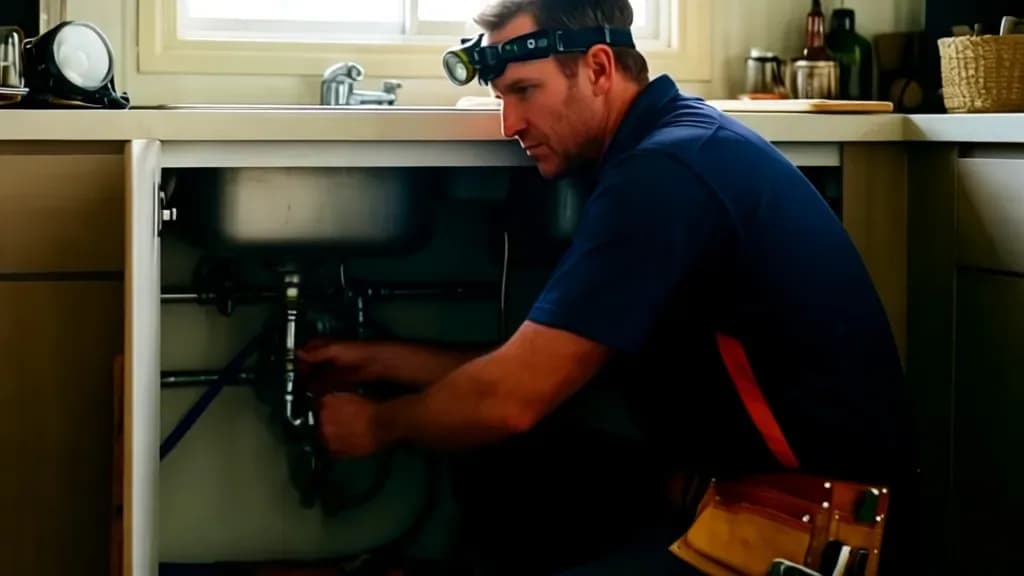
A 334113 drainer installs, repairs, and maintains sanitary drainage and stormwater drainage systems — the network of pipes that carries wastewater from buildings to the sewer main, and the gutters, downpipes, sumps, and stormwater pits that handle rainwater. The work covers residential subdivision drainage, sewer connection from property to street main, stormwater pits and trench drains, and the relining and CCTV inspection of existing drains.
The trade is distinct from a general plumber (334111). Plumbers work with potable water, gas, and sanitary fixtures inside buildings; drainers work with the buried infrastructure that carries waste and water away. The Plumbing Code of Australia and state regulations treat the two as separate licences, though many tradespeople hold both endorsements.
Demand is structural. Every new home, every renovation that touches the bathroom or kitchen, every commercial fit-out, and every subdivision requires drainer work. The Federal Government's Housing Accord targets 1.2 million new homes by 2029, against build rates running materially below pace. Major civil infrastructure programs across NSW (Sydney Metro, Western Sydney Airport, M6 Stage 1), Victoria (Suburban Rail Loop, North East Link), and Queensland (Brisbane Olympics 2032 infrastructure pipeline) all involve substantial drainage scopes.
Major employers include national civil contractors (Fulton Hogan, Downer, Ventia), specialist drainage firms (Pipe Management Australia, Interflow), the drainage divisions of residential builders, and a long tail of subcontracting drainage businesses.
ANZSCO Code Mapping
ANZSCO 334113 covers Drainer specifically — sanitary and stormwater drainage outside the building envelope. The code sits within unit group 3341 (Plumbers) alongside:
- 334111 Plumber (General) — sanitary, gas, water service, and inside-building work
- 334112 Airconditioning and Mechanical Services Plumber — HVAC pipework and mechanical services
- 334114 Gasfitter — gas pipework and gas appliance installation
- 334115 Roof Plumber — roof drainage, downpipes, and metal roofing
Use 334113 when your work history is dominated by:
- Installing sanitary drainage from buildings to the sewer main
- Installing stormwater pipes, pits, and trench drains
- Setting out grades, falls, and inverts for buried drainage
- Conducting CCTV inspection and pipe relining of existing drains
- Excavating, bedding, laying, and backfilling drainage pipework
- Connecting building drainage to municipal sewer and stormwater systems
TRA assesses each plumbing code separately. Drainers with mixed work histories should clearly delineate drainage work (which counts) from general plumbing (which doesn't, for a 334113 application).
The Australian Certificate III equivalent is CPC32420 Certificate III in Plumbing with drainage endorsement, or the specialist CPC32612 pathway covering drainage. Offshore applicants need a qualification TRA can map to this benchmark.
Skills Assessment with TRA
Trades Recognition Australia is the sole assessing body for 334113. The route depends on whether you are onshore or offshore.
Job Ready Program (Onshore Pathway)
For applicants already in Australia — typically on a Temporary Graduate (485) visa after completing an Australian Certificate III in plumbing with a drainage endorsement. The JRP runs across four stages.
- Stage 1 — Provisional Skills Assessment (PSA): AUD $130. Confirms eligibility and qualification authenticity.
- Stage 2 — Job Ready Employment (JRE): AUD $490. Begin 12 months (minimum 1,725 hours) of paid full-time work in the nominated trade.
- Stage 3 — Job Ready Workplace Assessment (JRWA): AUD $2,845. An approved RTO conducts an on-site workplace assessment.
- Stage 4 — Job Ready Final Assessment (JRFA): AUD $75. TRA issues the final outcome letter within approximately 45 days.
Total approximate cost: AUD $3,540. End-to-end timeline: 12-15 months. Drainer is currently on TRA's prioritised construction-trades list, which can accelerate PSA and JRFA processing.
Offshore Skills Assessment Program (OSAP)
For applicants outside Australia. OSAP combines a documentary review with a practical technical interview conducted by a TRA-approved Registered Training Organisation in your country (or in Australia if you travel). Costs vary by RTO but typically fall in the AUD $1,500-$3,500 range. Processing time is 12-26 weeks once the technical interview is scheduled.
Common rejection reasons across both routes: employment references describing general plumbing rather than drainage specifically; qualifications without sufficient excavation, pipe-laying, and grade-setting components; and lack of evidence for sewer connection work that requires regulator inspection.
For wider context on every assessing body, see the skills assessment bodies complete list.
State Drainer Registration (Separate)
A TRA-positive skills assessment is mandatory for migration. State drainer or plumber registration is mandatory to work legally onshore. The two processes are independent and run in parallel.
State plumbing regulators:
- VBA (Victorian Building Authority) — Victoria
- NSW Fair Trading — New South Wales
- QBCC (Queensland Building and Construction Commission) — Queensland
- Building Commission WA — Western Australia
- CBOS — Tasmania
Each state has separate Drainer endorsements distinct from general plumbing. Plan to start the registration application as soon as you have a positive TRA outcome.
Visa Pathways for Drainers
Subclass 482 — Skills in Demand Visa
Employer-sponsored temporary visa, no points test. The fastest entry route for offshore drainers with a confirmed job offer.
- Visa fee: AUD $1,895 (Core Skills stream, primary applicant)
- Salary threshold: AUD $76,515 (Core Skills Income Threshold, in force until 30 June 2026; rising to AUD $79,499 from 1 July 2026)
- Duration: Up to 4 years
- Processing time: Around 1-3 months for the Core Skills stream
Most qualified drainer roles in Australian capital cities pay above the CSIT, so the financial threshold is not usually the binding constraint. Finding a sponsoring employer with SBS accreditation is the harder step.
Subclass 186 — Employer Nomination Scheme
Permanent residency through employer sponsorship.
- Visa fee: AUD $6,140 (primary applicant)
- Streams: Direct Entry (offshore with 3 years' post-qualification experience) or Temporary Residence Transition (after 2 years on 482)
- Processing time: Around 6-12 months
The Direct Entry stream is realistic for offshore drainers with a positive OSAP outcome, three years of relevant experience, and an Australian sponsoring employer.
Subclass 190 — Skilled Nominated Visa
State-nominated permanent residency. Adds 5 points to the points test.
- Visa fee: AUD $6,140 (primary applicant)
- Obligation: Live and work in the nominating state for 2 years
- Best states: Victoria (accepts all national SOL), Queensland, Tasmania
Subclass 491 — Skilled Work Regional Visa
Regional provisional visa with a pathway to permanent residency via subclass 191 after 3 years of regional residence and income compliance.
- Visa fee: AUD $6,140 (primary applicant)
- Points boost: +15 from regional nomination
- Best states: Tasmania (invited at 40 points in 2026 rounds), regional South Australia, regional Western Australia
Subclass 189 — Skilled Independent Visa
Points-tested permanent residency, no state or employer sponsorship required.
- Visa fee: AUD $6,135 (primary applicant)
- Minimum points: 65 (typical clearing range for plumbing trades 65-80)
- Processing time: 6-12 months
Most drainer applicants pair 189 with a 190 or 491 application to maximise invitation odds.
Points Test Strategy
The points test applies to 189, 190, and 491. Typical scoring for 334113:
| Points Factor | Points | Notes |
|---|---|---|
| Age (25-32) | 30 | Maximum bracket — most trade applicants score here |
| Qualification (Cert III or IV) | 10 | AQF Certificate IV gets 10 points; Cert III alone gets 0 |
| English (Competent, IELTS 6.0) | 0 | Mandatory minimum |
| English (Proficient, IELTS 7.0) | 10 | Achievable with preparation |
| Overseas Experience (5-7 years) | 10 | Most career drainers reach this |
| State Nomination (190) | 5 | Apply where eligible |
| Regional (491) | 15 | Strongest single boost |
| Partner Skills | 5-10 | If partner has a skilled occupation |
Realistic Score Scenarios
Scenario 1: Offshore drainer, 29 years old, Certificate IV in Plumbing, 7 years' experience, Competent English, Victoria 190 nomination
Age 30 + Qualification 10 + Experience 10 + 190 5 = 55 points. Adding Proficient English (+10) brings the score to 65 — competitive for invitation.
Scenario 2: Offshore drainer, 31 years old, Cert III only, 9 years' experience, Competent English, Tasmania 491 nomination
Age 30 + Experience 15 + Regional 15 = 60 points. Tasmania has invited at 40 points in 2026, so this score is well above the clearing line.
State Nomination for Drainers
Victoria
Victoria does not publish a state-specific list — it accepts all occupations on the national SOL, including 334113. Applicants register interest through the Live in Melbourne portal. The 2025-26 allocation is approximately 2,700 places for subclass 190 and 700 for subclass 491. Drainage trades are supported under Victoria's construction priority. Melbourne's civil pipeline (Suburban Rail Loop, North East Link, growth-corridor subdivisions) sustains demand.
Queensland
Queensland's 2025-26 program lists plumbing and drainage trades under its building and construction pathway, with around 2,600 places allocated across 190 and 491. Migration Queensland prioritises offshore applicants for construction trades. The Brisbane 2032 Olympic infrastructure pipeline adds long-cycle demand.
Tasmania
Tasmania invited 491 applicants at points scores as low as 40 in early 2026 — the most accessible threshold of any state this cycle. Drainage trades are supported under Tasmania's broader construction priority.
Western Australia
WA's 2025-26 allocation totals 2,000 places for 190 and 1,400 for 491. Construction trades have been actively targeted across 2026 invitation rounds.
South Australia
SA issued 406 invitations in a single March 2026 round and continues to prioritise regional construction trades on 491. Adelaide's water and sewer infrastructure programs sustain drainer demand.
NSW does not currently list the unit group 3341 (Plumbers) on its 190 or 491 skills lists for 2025-26. Check the skilled occupation list SOL 2026 page for mid-year updates.
Salary and Employment Outlook
What Drainers Earn in 2026
| Role | Typical Salary Range |
|---|---|
| Apprentice (Year 4) | AUD $60,000-$70,000 |
| Qualified Drainer (Employed) | AUD $80,000-$95,000 |
| Drainer (Subcontractor) | AUD $95,000-$130,000 |
| Senior / Lead Drainer | AUD $100,000-$120,000 |
| CCTV / Relining Specialist | AUD $100,000-$125,000 |
| Civil Drainage Foreman | AUD $120,000-$150,000 |
| FIFO (Mining / Civil Projects) | AUD $130,000-$180,000 |
Source: SEEK Salary Hub (April 2026), cross-referenced with Talent.com Australia.
Total packages include superannuation (11.5% from 1 July 2025), site allowances on civil projects, and vehicle allowances for service roles. Drainers who specialise in CCTV inspection, no-dig relining technologies, or civil drainage on major infrastructure earn the highest premiums.
Highest-Paying Employers and Sectors
- Tier 1 civil contractors — Fulton Hogan, Downer, Ventia, John Holland
- Specialist drainage firms — Pipe Management Australia, Interflow, Vinidex
- Water utilities — Sydney Water, Melbourne Water, Urban Utilities
- Residential subdivision drainage — high-volume project work in growth corridors
- Renovation drainage — residential bathroom and kitchen renovations
Geography Matters
Sydney and Melbourne pay the highest base rates with the most consistent project pipeline. Brisbane has expanded rapidly with the Olympic infrastructure investment. Perth's resources-sector civil work pays premium rates. Regional Tasmania and SA offer the easiest 491 pathway but lower salary ceilings. FIFO civil drainage on mining projects pays the highest absolute rates.
Tips for a Successful Application
1. Distinguish Drainage From General Plumbing
The 334113 code is drainage specifically — buried sewer and stormwater pipework, not inside-building plumbing. TRA expects employment references to clearly describe drainage work, excavation, grade-setting, and connection to municipal mains. Plumbers with mixed work histories should describe the proportion of drainage work explicitly.
2. Plan State Drainer Registration in Parallel
State drainer registration is separate from the TRA skills assessment and is required to work legally. Each state has different requirements and a separate Drainer endorsement distinct from general plumbing. Start the registration application as soon as you have a positive TRA outcome.
3. Document Compliance Inspection Work
Australian drainage work is heavily regulated — sewer connections require regulator inspection (PIC approval in Victoria, NSW Fair Trading inspection in NSW, etc.). Offshore applicants whose home-country work didn't involve formal compliance inspection should plan for this gap. Reference any quality assurance, council inspection, or utility audit work in your employment history.
4. Apply Through Victoria or Queensland 190
Victoria accepts the national SOL and routinely supports drainage trades. Queensland prioritises construction trades on its 2025-26 nomination program. Either state offers a more reliable 190 pathway than NSW (which doesn't currently list 3341 Plumbers).
5. Consider the Subcontractor Route Once Onshore
Most qualified Australian drainers run their own ABN and subcontract to builders or civil contractors. The transition typically happens 2-3 years after qualification. Subcontracting requires public liability insurance, vehicle, basic excavation tools, and the time to chase invoices — but earnings are materially higher than PAYG employment.
Step-by-Step Migration Roadmap
- Confirm ANZSCO 334113 is the right code — review the how to find ANZSCO code guide and compare against 334111
- Verify list status — confirm 334113 on the skilled occupation list SOL 2026
- Gather qualification and employment evidence — Certificate III equivalent with drainage endorsement, payslips, tax records, project references
- Sit your English test — IELTS or PTE, aim for at least Competent (IELTS 6.0)
- Choose JRP (onshore) or OSAP (offshore) — depending on current location
- Lodge TRA application — pay PSA fee or engage an OSAP-approved RTO
- Complete skills assessment — JRP runs 12-15 months; OSAP 12-26 weeks
- Begin state drainer registration application — independent of TRA, required to work onshore
- Calculate points and choose pathway — 189, 190, 491, or 482 employer sponsorship
- Submit EOI in SkillSelect — for 189, 190, or 491
- Apply for state nomination — Victoria, Queensland, Tasmania, WA, or SA
- Receive invitation and lodge visa within 60 days
- Complete health and character checks
- Receive visa grant, complete state registration, and relocate
Frequently Asked Questions
What's the difference between Drainer (334113) and Plumber (334111) for migration?
Drainer covers buried sewer and stormwater drainage outside the building envelope. General Plumber covers sanitary, water, gas, and inside-building plumbing. Both sit on the CSOL and MLTSSL with the same visa eligibility. The right code is the one that matches your actual employment history. Many tradespeople do both kinds of work — for TRA assessment, choose the code matching the majority of your experience.
Do I need state drainer registration to migrate, or just to work?
State registration is required to work legally as a drainer in any Australian state, but it is not strictly required for the visa grant itself. The visa is of limited practical use without registration. Plan the two processes in parallel: complete the TRA skills assessment for visa purposes and apply for state registration so you can start work soon after arrival.
Is drainer the same trade as plumber in Australia?
No. The Plumbing Code of Australia and state regulations treat drainage and general plumbing as separate licences with separate competency requirements. Many tradespeople hold both endorsements — and most full-service residential plumbers are licensed in both. For migration purposes (ANZSCO 334113), you need to be assessed specifically as a drainer.
Which states currently nominate Drainers for 190 or 491?
In the 2025-26 program year, Victoria (which accepts all national SOL occupations), Queensland, Tasmania, Western Australia, and South Australia have all supported plumbing and drainage trades through their nomination programs. NSW does not list unit group 3341 (Plumbers) on its current skills lists.
Can self-employed drainage work count toward the TRA assessment?
Yes, but it requires verifiable evidence. Submit tax returns, ABN registration, contracts with arms-length clients, council compliance inspection records, and bank statements showing income deposits. TRA scrutinises self-employment more closely than employee work because the applicant controls the evidence. Where possible, supplement with references from builders or civil contractors who subcontracted to you.
How much does the full drainer migration pathway cost?
A realistic offshore pathway costs around AUD $11,500 once you add OSAP ($1,500-$3,500), visa fee ($1,895 for 482 Core or $6,135-$6,140 for 189/190/491/186), IELTS or PTE ($350-$500), medicals ($500-$800), and police clearances. State drainer registration adds AUD $300-$1,500 depending on jurisdiction. The JRP onshore pathway sits closer to AUD $7,000 plus visa application costs.