Computer Network and Systems Engineer Visa Pathway to Australia: Complete 2026 Guide
Updated: 16 August 2026
Australia classifies Computer Network and Systems Engineers under ANZSCO 263111. The Australian Computer Society (ACS) conducts the skills assessment. The occupation sits on the MLTSSL and CSOL, unlocking subclasses 189, 190, 491, 482 and 186. Typical 2026 salaries range AUD $95,000-$145,000. NSW and the ACT have named Digital and Cyber as priority migration sectors for 2026.
Quick Facts: Computer Network and Systems Engineer Migration Pathway
| Detail | Information |
|---|---|
| ANZSCO Code | 263111 (Computer Network and Systems Engineer) |
| Skill Level | 1 (Bachelor degree or higher, or five years relevant experience and certifications) |
| Skills Assessment | ACS (Australian Computer Society) |
| Occupation List | MLTSSL and CSOL |
| Visa Options | 189, 190, 491, 482, 186 |
| Demand Level | High — feeds NSW and ACT's Digital and Cyber priority sectors for 2026 |
| Salary Range | AUD $95,000-$145,000 (SEEK Salary Hub, Talent.com Australia, 2026) |
| Typical 189 Score | 90-100 points (less crowded than developer codes, but still competitive) |
| Key Challenge | ACS distinguishes engineering work from administration — administrators are 263112, not 263111 |
What This Occupation Covers in Australia
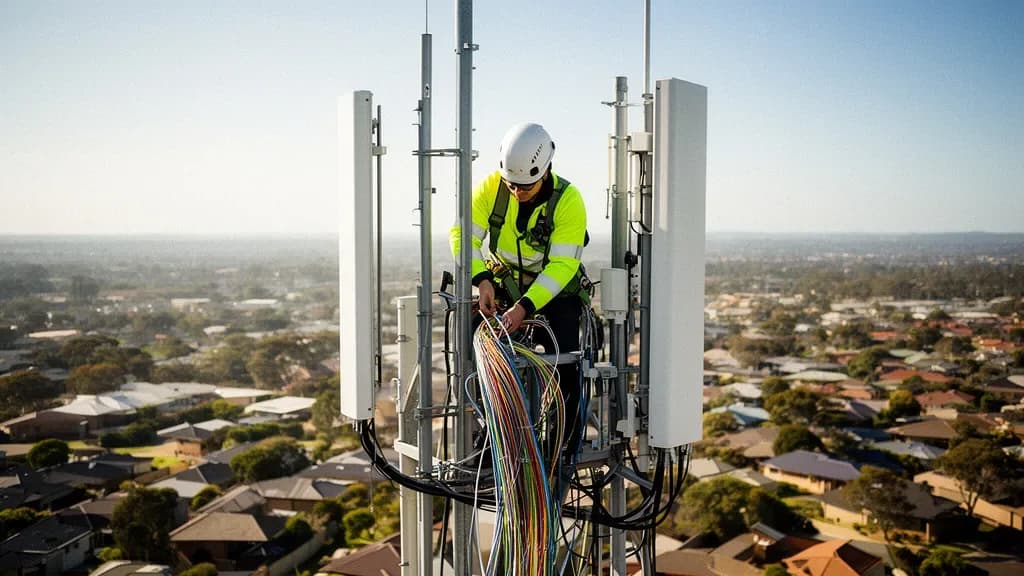
ANZSCO 263111 covers the engineers who design, deploy, and harden the networks that underpin Australian business. These are the people who architect cloud network topologies on AWS and Azure, design segmented data-centre fabrics, build the Zero Trust networking layer that security teams sit on top of, and run capacity planning across multi-site enterprises. The role is engineering in substance — building systems, not running them day to day.
Demand in 2026 is led by two streams. The first is hybrid-cloud network engineering: enterprises moving from on-premises infrastructure to AWS, Azure or Google Cloud need engineers who can re-architect connectivity, security, and observability across the transition. The second is the cyber-adjacent work: secure access service edge (SASE) rollouts, network segmentation for ransomware resilience, and identity-aware networking. NSW and the ACT have formally listed Digital and Cyber as priority migration sectors for the 2025-26 program year, and 263111 is one of the codes that benefits.
Geographically, Sydney leads on financial-services network roles, Canberra on government and defence (typically requiring Australian citizenship for security clearance), and Melbourne on enterprise and consulting. Brisbane and Perth host smaller markets driven by government and resources.
ANZSCO 263111 — Code Mapping
The official ANZSCO description for 263111 covers engineers who plan, develop, deploy, test, and optimise network and system services. Specialisations include Network Architect, Network Engineer, Network Administrator (where engineering tasks dominate), and Systems Engineer.
The most common code confusion is with 263112 (Network Administrator), which sits on the STSOL. Administrators run and monitor existing networks; engineers design and build them. ACS will probe the substance of your duties. If your day is mostly ticket response, provisioning, and password resets, you are an administrator. If you are running design reviews, capacity modelling, and architecture decisions, you are an engineer.
For closely related occupations, see ICT Security Specialist and Software and Applications Programmers nec.
Skills Assessment — ACS
ACS assesses all ICT occupations including 263111. The process is well-trodden but the experience deduction is the trap.
Requirements:
- An ICT qualification (bachelor's or higher with an ICT major), OR
- Vendor certifications (CCNA, CCNP, CCIE, AWS Certified Advanced Networking Specialty, Microsoft equivalents) plus relevant experience under the RPL pathway
- Post-qualification employment in network and systems engineering duties
ACS Experience Deduction:
- 2 years if your degree is closely related (computer science, IT, network engineering)
- 4 years if your degree has an ICT major but is not closely related
- 6 years if you hold a non-ICT degree
For 263111, vendor certifications can carry weight where the formal degree is non-ICT — but they replace the qualification under RPL, they do not reduce the deduction.
Assessment Cost: AUD $1,498 (General Skills pathway); $625 (RPL pathway) Processing Time: 10-16 weeks standard; priority processing available where an Australian visa deadline falls within 12 weeks
Common rejection reasons: Duties described as administration rather than engineering; vendor certifications submitted without supporting employment evidence; and gaps in employment timeline that ACS reads as career breaks rather than overlap.
For the full list of assessing authorities, see the skills assessment bodies reference.
Visa Pathways
Subclass 482 — Skills in Demand (Core Skills stream)
The dominant pathway for offshore network engineers in 2026. Banks, telcos, government contractors, and consulting firms are practiced sponsors.
- Visa fee: AUD $4,015
- Salary threshold: Core Skills Income Threshold $79,423 (from 1 July 2026; previously $76,515). Most senior network engineers clear this comfortably; specialist roles exceed the Specialist Skills threshold of $146,576
- Processing time: Up to 8 months for 90% of Core Skills applications (Home Affairs, April 2026)
- Quirk: Roles requiring NV1 or NV2 security clearance typically default to Australian citizens; if you are targeting defence or intelligence work, plan for commercial roles first and clearance later
Subclass 186 — Employer Nomination Scheme
Permanent residency through employer sponsorship.
- Visa fee: AUD $6,140
- Streams: Direct Entry (requires three years post-assessment skilled experience and a positive ACS) or TRT after two years on a 482
- Quirk: TRT applications from network engineers have one of the higher approval rates in ICT — the duty descriptions are easier for the Department to verify than for ambiguous "developer" titles
Subclass 189 — Skilled Independent
- Visa fee: AUD $6,135
- Points needed: Realistically 90-100 in 2026 invitation rounds — less crowded than 261313 or 261312, but still requires high English
- Processing time: 6-9 months median, following the March 2026 processing overhaul
Subclass 190 — Skilled Nominated
- Visa fee: AUD $6,140
- Points boost: +5 from state nomination
- Best states: NSW (Digital and Cyber priority), Victoria (Melbourne enterprise sector), ACT (Canberra government cluster)
- Quirk: NSW invitation rounds in 2026 have included network engineering occupations at cut-offs around 90-100 points after state boost
Subclass 491 — Skilled Work Regional
- Visa fee: AUD $6,140
- Points boost: +15 from regional nomination
- Quirk: Regional 491 is particularly viable for 263111 because much network work is now remote-friendly — Newcastle, Wollongong, Geelong, and the ACT are eligible regional areas
Points Test Strategy
| Points Factor | Points | Notes |
|---|---|---|
| Age 25-32 | 30 | Maximum |
| Age 33-39 | 25 | |
| Qualification (Master's) | 15 | Common for senior engineers |
| Qualification (Bachelor's) | 15 | Minimum for Skill Level 1 |
| English (Superior 8.0+) | 20 | The biggest single lever |
| English (Proficient 7.0) | 10 | Realistic for many applicants |
| Overseas Experience (after ACS deduction) | 5-15 | |
| Australian Experience | 5-20 | |
| State Nomination (190) | 5 | |
| Regional (491) | 15 | |
| Partner Skills | 5-10 | If partner has a skilled occupation |
| Professional Year | 5 | If completed in Australia |
| NAATI/CCL | 5 | Community language credential |
Realistic Scenarios
Scenario 1: Senior offshore network engineer
Age 31, Bachelor's in computer science, Proficient English (PTE 65), 9 years experience (7 after ACS deduction), no Australian experience.
30 + 15 + 10 + 15 = 70 points. Add 491 regional nomination from SA or Tasmania: 85 points. Workable for 491 invitation.
Scenario 2: ACT-based contractor
Age 35, Master's in cyber, Superior English (PTE 79), 12 years experience (10 after ACS deduction), 3 years in Canberra.
25 + 15 + 20 + 15 + 10 = 85 points. Add ACT 190 nomination: 90 points. Competitive.
State Nomination
New South Wales
NSW lists Digital and Cyber as a priority migration sector for 2025-26. Network engineering occupations sit comfortably within that priority. NSW prioritises applicants with NSW employment and recent residence in the state. Invitation rounds in early 2026 have included 263111 with cut-offs in the 90-100 range after state boost. Sydney's financial-services sector is the dominant employer base.
Victoria
Victoria's 2025-26 allocation includes 2,700 subclass 190 places and 700 subclass 491 places. Live in Melbourne names ICT priority occupations including network and systems engineers. Victoria tends to favour onshore applicants in tech roles.
Australian Capital Territory
The ACT runs the Canberra Matrix scoring system. Network and systems engineers score well in the matrix when they have ACT residence and an ACT job offer. Commonwealth contractors in Canberra hire 263111 routinely, though many senior roles require Australian citizenship for security clearance. The entire ACT is classified regional for 491 purposes.
South Australia and Tasmania
Both states accept 263111 nominations, typically with a regional residence and employment requirement. South Australia has 2,250 allocations across 190 and 491 for 2025-26. Tasmania remains attractive for offshore applicants who can credibly commit to two years' residence in Hobart or Launceston.
Salary and Employment Outlook
| Role | Typical Salary Range (2026) |
|---|---|
| Junior Network Engineer (0-2 yrs) | AUD $80,000-$100,000 |
| Mid-Level Network Engineer | AUD $100,000-$130,000 |
| Senior Network Engineer | AUD $125,000-$155,000 |
| Network Architect | AUD $145,000-$185,000 |
| Cloud Network Specialist | AUD $130,000-$170,000 |
| Network Security Engineer | AUD $135,000-$175,000 |
| Contractor (day rate) | AUD $700-$1,300/day |
Sources: SEEK Salary Hub 2026, Talent.com Australia 2026, Hays Salary Guide 2026. Superannuation at 11.5% sits on top of the base salary. Banks and consulting firms add 10-25% bonus structures.
Highest-paying sectors
- Banking and capital markets (CBA, Macquarie, NAB, Westpac)
- Federal government and defence contractors (Canberra base, clearance typical)
- Telecommunications (Telstra, Optus, TPG/Vodafone)
- Cloud-native consulting (Versent, Mantel Group, AC3)
- Big 4 advisory (Deloitte, EY, PwC, KPMG)
Tips for a Successful Application
1. Lead with engineering verbs in references
ACS reads references for verbs that signal design and build work: "designed", "architected", "implemented", "deployed", "optimised", "modelled capacity for". Verbs that signal administration ("monitored", "supported", "responded to tickets", "provisioned accounts") push you toward 263112 (Network Administrator), which is on the STSOL and has weaker visa pathways.
2. Use vendor certifications as evidence, not as substitute
CCNP, CCIE, AWS Advanced Networking Specialty, and Azure Network Engineer Associate certifications strengthen your application. They do not replace the ICT-major degree under the General Skills pathway, but they support the RPL pathway and reinforce the engineering nature of your work.
3. Separate your work from your previous job titles
Many offshore network engineers carry titles like "IT Engineer" or "Systems Administrator" that read administrative. ACS assesses duties, not titles. Have referees confirm engineering responsibilities in their letters even if the title sounds administrative.
4. If targeting Canberra, understand the clearance reality
Many of the highest-paying Canberra roles require NV1, NV2, or Positive Vetting security clearance, which is typically restricted to Australian citizens. Plan for commercial roles in your first three to five years; the clearance pathway opens later.
5. Hit Superior English on PTE Academic
Twenty points for Superior English is the single most leveraged decision in your application. PTE Academic is the most consistent route for non-native speakers.
Step-by-Step Migration Roadmap
- Confirm 263111 fits your duties — review the official ANZSCO description carefully via the ANZSCO code finder
- Audit your qualifications — ICT-major bachelor's or RPL with certifications
- Sit an English test — aim for Superior (PTE 79+ / IELTS 8.0+)
- Prepare detailed employment references — letterhead, dates, hours, engineering verbs
- Lodge the ACS skills assessment ($1,498, 10-16 weeks)
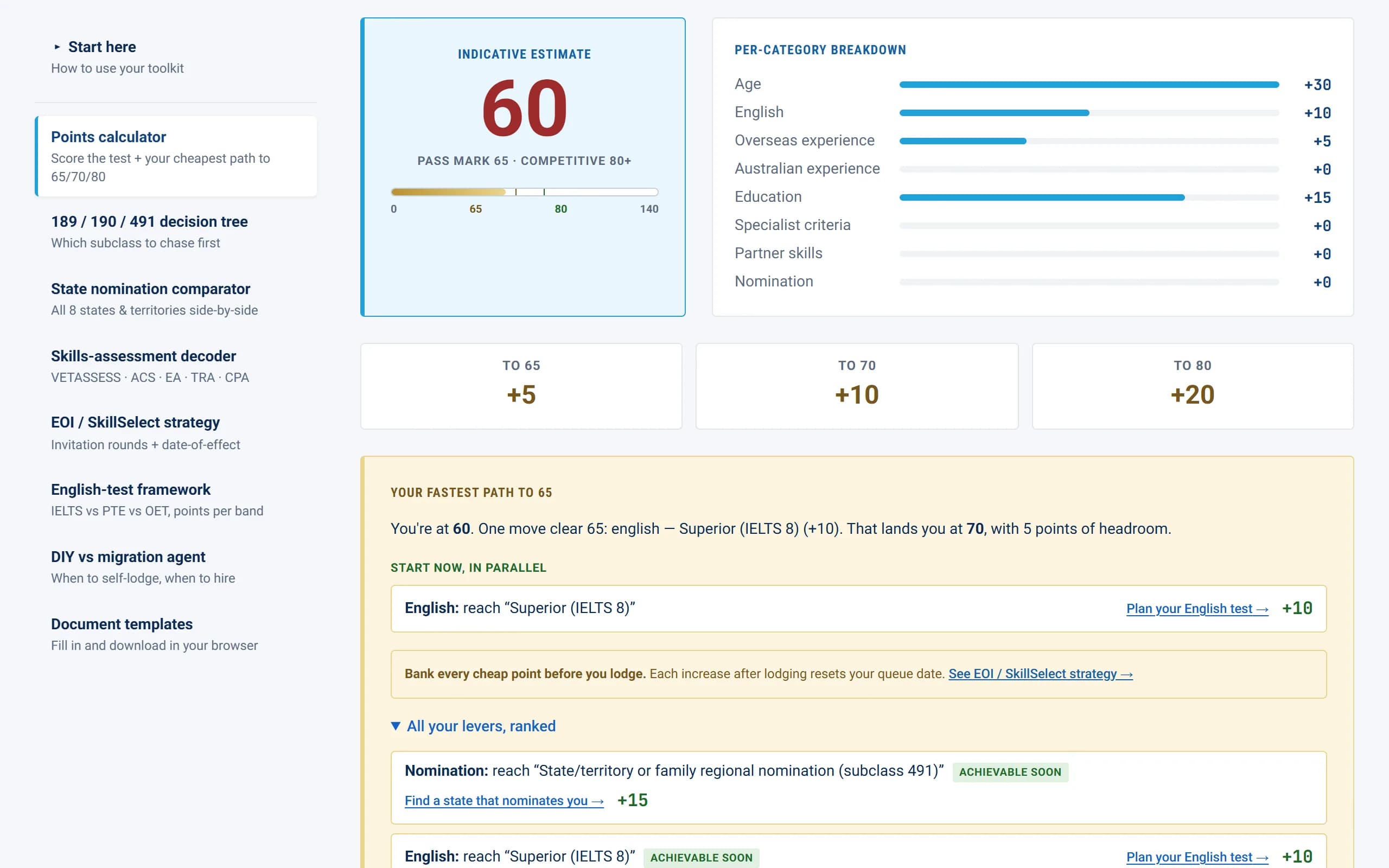
- Calculate points with the experience deduction factored in
- Submit an EOI in SkillSelect for 189, 190 or 491
- Apply for state nomination — NSW for cyber, ACT for government, VIC for enterprise
- In parallel, pursue 482 sponsorship if points are marginal
- Receive invitation, lodge visa within 60 days
- Complete health and character checks
- Receive grant and plan relocation
Frequently Asked Questions
Is Computer Network and Systems Engineer the same as Network Administrator?
No. ANZSCO 263111 covers design and engineering work; 263112 (Network Administrator) covers operational and administrative work. The visa consequences are significant: 263111 is on the MLTSSL with all five mainstream visa pathways; 263112 is on the STSOL with fewer permanent options. ACS will reclassify applications it considers administrative in substance.
Can I use vendor certifications instead of a degree for ACS?
Yes, through the Recognition of Prior Learning pathway. You will need 6 years of relevant experience (or 8 if you have no qualifications at all) and supporting evidence of vendor certifications (CCNP, CCIE, AWS, Azure equivalents). The RPL pathway costs $625 rather than $1,498.
Which state is the best for a network engineer in 2026?
NSW for finance-sector roles and the Digital and Cyber priority listing; ACT for government and defence-adjacent work (with clearance caveats); Victoria for Melbourne's enterprise and consulting market. The "best" state depends on your specialisation: SASE and cyber work is concentrated in Sydney; secure-government work in Canberra; cloud-migration and consulting in Melbourne.
How long until I can apply for permanent residency from a 482?
The Transition (TRT) stream of the subclass 186 requires at least two years of full-time employment with your sponsoring employer on a 482. Most network engineers move to 186 after two to three years on the 482. The 186 visa application fee is $6,140 and processing time has improved significantly under the March 2026 reforms.
Are there 263111 roles that don't require security clearance?
Yes — the majority. Banking, telecommunications, consulting, retail, and most enterprise roles do not require government security clearance. Clearance is typically restricted to federal government, defence, and certain critical-infrastructure contractor roles. If you are an offshore applicant without Australian citizenship, target commercial roles first.
Will my Cisco/AWS certifications transfer to Australia?
Yes. CCNP, CCIE, AWS Certified Advanced Networking Specialty, Microsoft Azure Network Engineer Associate, and equivalent certifications are recognised globally and carry strong weight in Australian hiring. They also support the ACS RPL pathway if your degree is non-ICT or you have no formal qualification.